Every british designer knows the power of light can shape how we feel in a room. Reflective surfaces play a crucial role in the world of architecture and event design, offering control over brightness and mood like never before. In fact, using the right material can increase ambient light by up to 50 percent without extra energy costs. Discover how thoughtful choices in reflective surfaces can completely transform your space’s visual impact and atmosphere.
Table of Contents
- Reflective Surfaces: Definition And Core Principles
- Types Of Reflective Surfaces In Event Lighting
- How Reflective Surfaces Enhance Ambience
- Selecting The Right Surface For Your Venue
- Safety, Installation, And Maintenance Considerations
Key Takeaways
| Point | Details |
|---|---|
| Understanding Reflective Surfaces | Reflective surfaces are essential in design for controlling light, mood, and ambience in spaces. Selection hinges on surface characteristics like texture and colour to achieve desired effects. |
| Types of Reflective Materials | Specular and diffuse categories influence light behaviour, with metallic finishes offering additional options for dynamic lighting. Each type serves particular purposes based on event needs and venue specifics. |
| Impact on Ambience | Reflective surfaces significantly alter spatial perception and emotional response; their strategic use can transform environments. Light mapping and material testing are crucial for optimising effects. |
| Maintenance and Safety | Proper installation and maintenance of reflective surfaces ensure long-term efficacy and safety, emphasising the need for professional handling and adherence to guidelines. |
Reflective Surfaces: Definition and Core Principles
Reflective surfaces represent strategic materials engineered to redirect, manipulate, and enhance light within architectural and design environments. These sophisticated surfaces fundamentally transform how illumination interacts with physical spaces, enabling designers to control brightness, mood, and visual dynamics.
At their core, reflective surfaces operate through precise light redirection principles. Materials with specific optical properties can dramatically alter light pathways, redirecting illumination to maximise coverage and minimise shadows. Their effectiveness depends critically on surface characteristics like texture, colour, and micro-structural composition. Smooth surfaces typically reflect light more directly, while textured surfaces scatter and diffuse light more broadly.
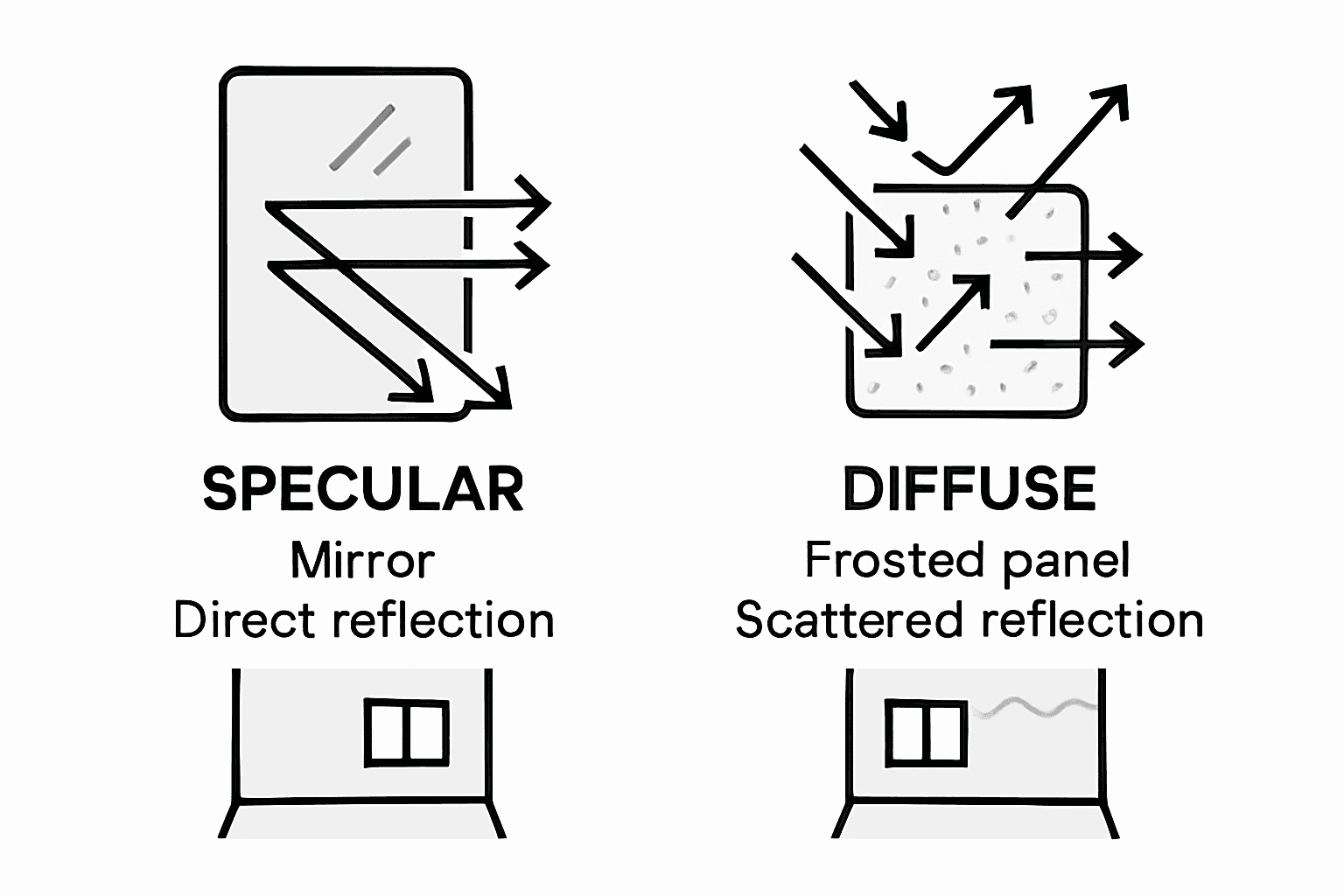
Designers distinguish between two primary reflective surface categories: specular and diffuse. Specular surfaces create mirror-like reflections with minimal light scattering, producing sharp, concentrated light patterns. Diffuse surfaces, conversely, scatter incoming light across wider angles, creating softer, more evenly distributed illumination. High-reflectance materials with matte finishes are particularly valuable for minimising glare while maximising light distribution.
Lighting Expert Tip: When selecting reflective surfaces, prioritise materials that balance light transmission with aesthetic requirements, considering both functional illumination needs and visual design goals.
The strategic application of reflective surfaces extends far beyond mere decoration. These materials serve as sophisticated optical instruments, transforming how spaces are perceived, experienced, and illuminated. Whether in theatrical lighting, architectural design, or event production, understanding reflective surface principles enables precise environmental control.
Pro Tip: Experiment with different reflective surface angles and textures to discover unexpected lighting effects that can dramatically enhance your design’s visual impact.
Types of Reflective Surfaces in Event Lighting
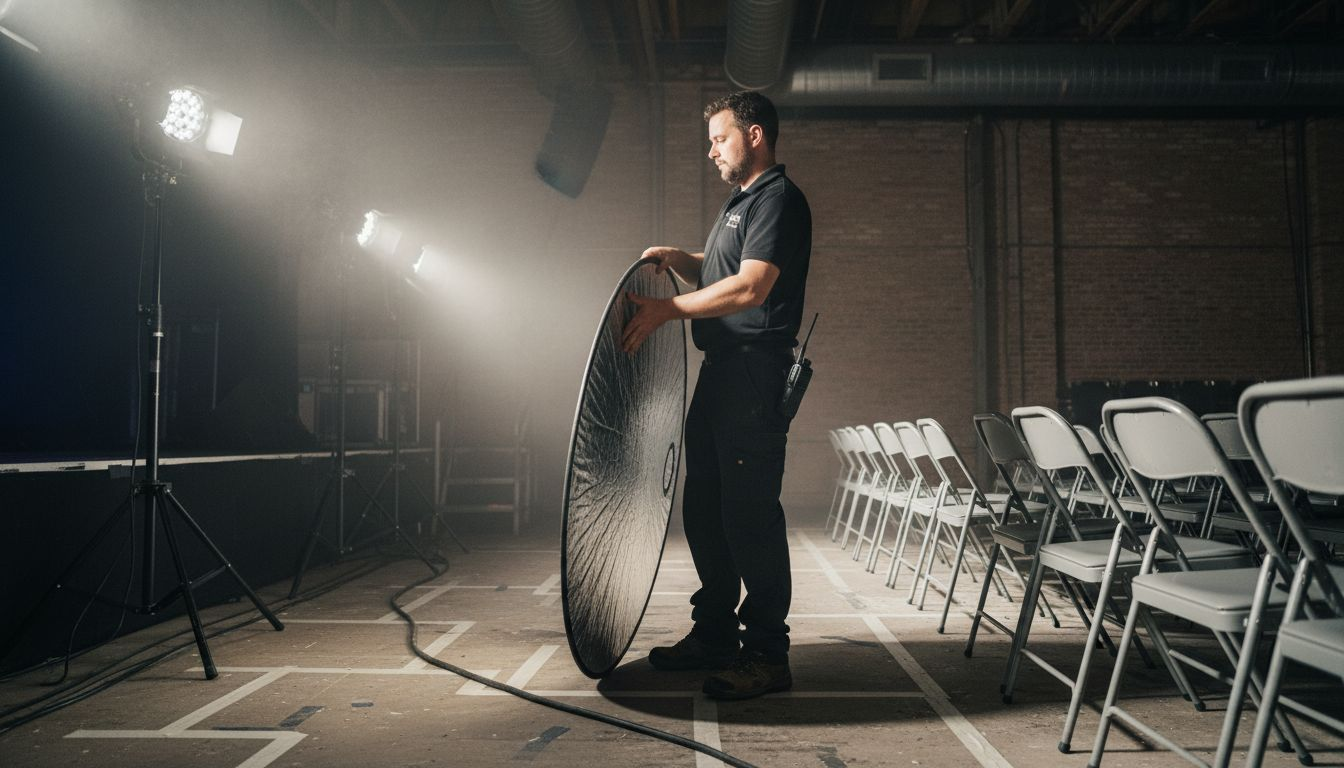
Event lighting demands sophisticated reflective surfaces that can transform ordinary spaces into dynamic visual experiences. Silver and gold reflectors represent fundamental tools for creating nuanced lighting effects, each offering unique optical characteristics that enable precise environmental manipulation.
Designers typically categorise reflective surfaces into several key types. Metallic reflectors like silver provide crisp, high-contrast illumination with sharp light distribution. Gold-toned reflectors introduce warmer colour temperatures, softening the overall lighting aesthetic. Soft silver and sunfire variants offer intermediate solutions, allowing sophisticated light modulation.
Disco balls stand out as particularly iconic reflective surfaces in event environments. Composed of numerous mirrored facets, these spherical installations scatter light in multiple directions, creating dynamic, immersive visual experiences. Their ability to transform ordinary spaces through intricate light patterns makes them invaluable in entertainment and performance settings.
The strategic selection of reflective surfaces depends on specific event requirements. Factors like venue size, desired atmosphere, colour temperature, and intended emotional response all influence surface selection. Smooth mirrors produce different effects compared to textured metallic surfaces, enabling designers to craft precise visual narratives.
Lighting Design Expert Tip: Always conduct preliminary light tests with different reflective surfaces to understand their unique light distribution characteristics before finalising your event design.
Pro Tip: Experiment with multiple reflective surface angles to discover unexpected light interactions that can dramatically enhance your event’s visual atmosphere.
Here is a comparison of common reflective surface types and their ideal applications:
| Reflective Surface Type | Key Characteristics | Best Application |
|---|---|---|
| Specular (Mirror) | Sharp, clear reflection | Precision lighting designs |
| Diffuse (Matte/White) | Soft, broad light scatter | General ambience control |
| Metallic (Silver) | High contrast, cool tone | Dynamic event lighting |
| Metallic (Gold) | Warm, subtle glow | Atmospheric or themed events |
| Disco Ball | Multi-directional reflections | Entertainment and dance floors |
How Reflective Surfaces Enhance Ambience
Architectural lighting designers understand that reflective surfaces are far more than mere decorative elements. They are sophisticated tools capable of transforming spatial perceptions, manipulating emotional responses, and creating immersive environmental experiences through strategic light interaction.
Reflective surfaces function as secondary light sources, dramatically altering a space’s atmospheric qualities. By carefully positioning and selecting surfaces with specific optical properties, designers can redirect, soften, or intensify light, fundamentally changing how people perceive and experience an environment. Strategic surface placement in architectural design allows for nuanced control over light distribution, enabling precise mood modulation.
The psychological impact of reflective surfaces extends beyond pure illumination. Different surface textures and materials can evoke distinct emotional responses. Smooth, polished surfaces create a sense of sleekness and modernity, while textured, matte surfaces generate warmth and intimacy. Metallic finishes can introduce dynamism, whereas softer reflective materials provide a more subdued, contemplative atmosphere.
Key factors influencing ambient enhancement through reflective surfaces include surface angle, material composition, colour temperature, and light source positioning. Designers must consider how each reflective element will interact with existing lighting, understanding that even minor adjustments can produce dramatically different spatial experiences.
Lighting Design Expert Tip: Always conduct preliminary light mapping to understand how different reflective surfaces will interact within your specific environment.
Pro Tip: Experiment with varying reflective surface angles and materials to discover unexpected atmospheric transformations that can elevate your spatial design.
Selecting the Right Surface for Your Venue
Choosing appropriate reflective surfaces requires a sophisticated understanding of how material properties interact with lighting design. Each venue presents unique challenges that demand careful consideration of reflectance values, surface textures, and optical characteristics.
The selection process involves evaluating multiple critical factors. Material composition plays a pivotal role in determining light distribution and quality. Metallic surfaces offer crisp, high-intensity reflections, while matte finishes provide softer, more diffused illumination. Venue-specific lighting requirements should guide material selection, ensuring that the chosen surfaces complement both functional needs and aesthetic objectives.
Key considerations include surface reflectance percentage, colour temperature interaction, and potential glare reduction. Venues like performance spaces might prioritise surfaces that minimise harsh reflections, whereas entertainment environments could benefit from more dynamic, light-scattering materials. Professional lighting designers typically create mock-ups to test how different surfaces interact with existing light sources and architectural elements.
Beyond technical specifications, aesthetic harmony remains crucial. The selected reflective surfaces must integrate seamlessly with the venue’s overall design language, enhancing rather than competing with the existing architectural elements. This requires a nuanced approach that balances technical performance with visual coherence.
Lighting Design Expert Tip: Conduct comprehensive light mapping tests with sample materials before making final surface selections.
Pro Tip: Always request material samples and test them under actual venue lighting conditions to understand their true optical performance.
The following table summarises key considerations when selecting reflective surfaces for venues:
| Consideration | Importance | Practical Example |
|---|---|---|
| Surface Reflectance | Determines brightness and light efficiency | High-reflectance for galleries |
| Texture/Finish | Affects glare, softness, and shadow formation | Matte for conference rooms |
| Colour Temperature | Influences mood and overall ambience | Gold surfaces for warm settings |
| Glare Reduction | Ensures user comfort and safety | Anti-glare in public buildings |
Safety, Installation, and Maintenance Considerations
Illumination safety protocols demand meticulous attention when installing and maintaining reflective surfaces. Professional installations require comprehensive understanding of material-specific requirements, potential structural implications, and environmental interactions.
Safety considerations extend beyond mere physical installation. Glare reduction and material selection are critical for preventing visual discomfort and potential hazards. Professionals must evaluate surface gloss levels, reflection angles, and potential light intensity to ensure user comfort and compliance with building regulations.
Maintenance represents a crucial aspect of long-term reflective surface performance. Different materials require unique cleaning approaches and preservation techniques. Metallic surfaces might need specialised cleaning agents, while glass or acrylic reflective surfaces demand microfibre cloths and gentle handling. Regular inspections help identify potential degradation, structural weaknesses, or mounting issues before they become significant problems.
Professional installations typically involve multiple safety checks. These include assessing load-bearing capabilities, verifying secure mounting mechanisms, evaluating potential thermal expansion issues, and ensuring electrical safety for illuminated reflective surfaces. Qualified technicians should always perform complex installations, particularly in public venues or high-traffic environments.
Lighting Design Expert Tip: Develop a comprehensive maintenance schedule specific to each reflective surface material to preserve optical performance and structural integrity.
Pro Tip: Always consult manufacturer guidelines and engage professional installers when dealing with complex reflective surface installations.
Elevate Your Lighting Design with Expert Mirror Ball Solutions
Reflective surfaces play a vital role in creating immersive and dynamic lighting experiences. Whether you seek to soften ambient light or add dazzling multi-directional reflections, selecting the right reflective elements can transform any venue or event space. If you want to address challenges like achieving precise light distribution and enhancing atmosphere through sophisticated optical effects, exploring the potential of mirror balls is an excellent next step.

Discover the extensive range of professional and decorative mirror balls available at https://mirror-balls.co.uk. From small glittering designs perfect for cosy home settings to large, high-quality disco balls ideal for theatres and nightclubs, you will find solutions tailored to your lighting goals. Take advantage of expert advice and detailed product listings to select reflective surfaces that balance breathtaking visual impact with practical installation and maintenance needs. Visit our landing page to explore options and bring your lighting design vision to life with precision and style.
Frequently Asked Questions
What are reflective surfaces in lighting design?
Reflective surfaces are materials specifically engineered to redirect and enhance light within architectural and design environments, influencing how illumination interacts with physical spaces.
What types of reflective surfaces exist and how do they differ?
Reflective surfaces are primarily categorised into specular and diffuse types. Specular surfaces create mirror-like reflections with minimal scattering, while diffuse surfaces scatter light across wider angles for softer illumination.
How do reflective surfaces enhance ambience in a space?
Reflective surfaces act as secondary light sources, altering a space’s atmospheric qualities by redirecting, softening, or intensifying light, thereby influencing how people perceive and experience their environment.
What considerations should be made when selecting reflective surfaces for a venue?
Key considerations include surface reflectance percentage, texture, colour temperature, glare reduction, and how the chosen materials fit into the overall design aesthetic and functional requirements of the venue.
Recommended
- Role of Reflective Lighting at Home – Enhancing Ambience and Design – Mirror Balls
- What Is a Mirrored Surface? Complete Guide for Events – Mirror Balls
- Spotlight vs Wash Lights – Choosing the Right Effect – Mirror Balls
- Role of Mirrors in Décor – Impact on Spaces and Atmosphere – Mirror Balls
- Role of Light in Photography: Complete Guide – Amateur Photographer Guide