Most advice about stage lighting overlooks a key detail: the difference between spotlights and wash lights can make or break a visual design. In professional production, these lighting tools shape every audience experience, whether in a British theatre or a bustling concert hall. Spotlights can intensify a scene by up to ten times compared to standard lighting, while wash lights blanket spaces in rich, even color. Understanding these differences helps anyone transform any venue into a captivating environment.
Table of Contents
- Spotlight And Wash Lights Defined And Debunked
- Different Types And Typical Applications
- Light Coverage, Beam Angle And Effects
- Visual Impact On Mirror Balls And Venues
- How To Select The Right Lighting Solution
Key Takeaways
| Point | Details |
|---|---|
| Spotlights and Wash Lights Serve Different Purposes | Spotlights focus intense light on specific areas, while wash lights provide uniform illumination across larger spaces for ambient effects. |
| Beam Angle Influences Illumination | Understanding beam angles (narrow vs. wide) is essential for targeted lighting or general coverage in various environments. |
| Strategic Lighting Selection Enhances Visual Experience | Choosing the right lighting techniques requires balancing technical parameters with creative vision to transform spaces effectively. |
| Interaction with Reflective Surfaces Creates Dynamics | The interplay between lighting techniques and materials, such as mirror balls, significantly enhances the visual atmosphere of events. |
Spotlight and Wash Lights Defined and Debunked
In professional lighting design, spotlights and wash lights are two fundamental tools that create dramatically different visual experiences. Stage lighting instruments are broadly categorized into spotlights and floodlights, each serving unique purposes in illumination and atmosphere creation.
Spotlights are precision instruments designed to focus intense light on specific areas or subjects. These targeted beams draw audience attention, create dramatic highlights, and allow designers to sculpt visual narratives through controlled illumination. Their narrow, concentrated light allows for intricate shaping and precise direction, making them essential for theatrical performances, concerts, and architectural lighting where specific elements need emphasis.
In contrast, wash lights operate differently. These instruments bathe large areas in uniform light, creating a broad, even illumination that enhances overall ambiance. Instead of highlighting individual elements, wash lights provide comprehensive coverage, softening shadows and creating a consistent background environment. They’re particularly useful in scenarios requiring general visibility or creating mood through colour and intensity.
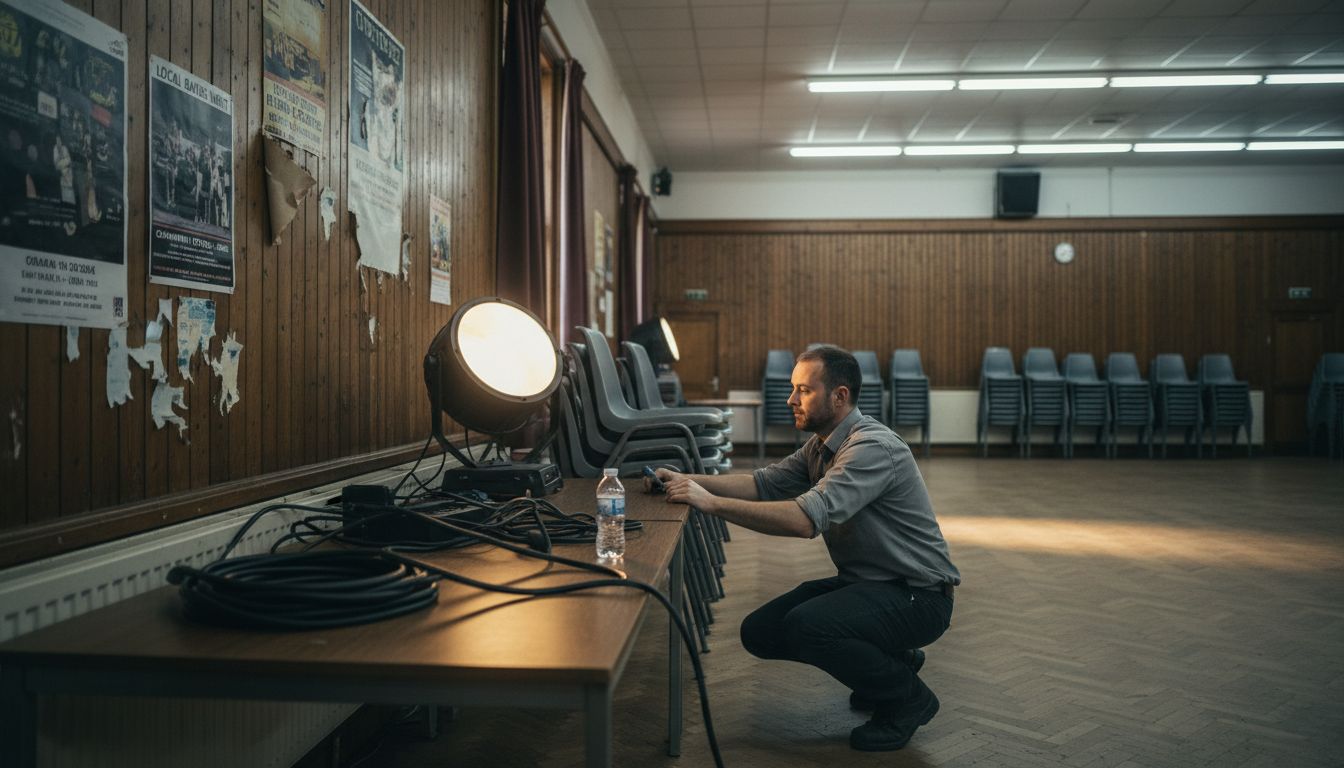
Understanding the distinct characteristics of these lighting types allows event designers, theatre technicians, and creative professionals to craft nuanced visual experiences. Whether you’re designing an intimate stage performance or a large-scale event, selecting the right lighting technique can transform an ordinary space into an extraordinary visual landscape.
Different Types and Typical Applications
The world of professional lighting features multiple sophisticated spotlight types, each engineered for specific performance requirements. Intelligent lighting fixtures include profile (spot) and wash versions, presenting designers with nuanced tools for creative illumination.
Spotlight variations include several critical categories. Ellipsoidal reflector spotlights (often called profile spots) are precision instruments featuring movable shutters and gobo holders, enabling complex pattern projection and precise beam shaping. Fresnel spotlights offer softer-edged beams with adjustable focus, making them ideal for theatrical productions where subtle light transitions are paramount. Pin spots provide extremely narrow, intense light beams perfect for highlighting specific objects or creating dramatic focal points in events and stage performances.
Wash lights provide wide, soft-edged beams used for stage fill and creating ambient lighting, functioning differently from their more focused counterparts. These versatile instruments come in multiple configurations, including LED wash lights that offer colour-mixing capabilities, par can lights for broad coverage, and cyclorama lights specifically designed for illuminating background scenery. Their primary purpose remains consistent: generating comprehensive, even illumination that establishes atmospheric context.
Professional lighting designers strategically combine these spotlight and wash light types to craft immersive visual experiences. By understanding each instrument’s unique characteristics, technicians can transform spaces through carefully orchestrated illumination, whether designing an intimate theatre production, a high-energy concert, or a sophisticated corporate event.
Light Coverage, Beam Angle and Effects
Beam angle is the critical technical parameter that determines how light disperses across a given space, fundamentally shaping visual experiences in professional lighting design. Beam angles determine light coverage across multiple distinct ranges, from ultra-narrow spot beams to expansive wide flood configurations.
Typical beam angle classifications include precise categories that serve different lighting requirements. Spot beams (5°–18°) create intensely focused illumination, perfect for highlighting specific objects or creating dramatic focal points. Narrow beams (18°–30°) offer targeted lighting for more concentrated areas, while narrow flood beams (30°–60°) provide moderate coverage. Flood and wide flood beams (60°–120°) generate broad, encompassing illumination ideal for establishing overall ambient lighting conditions.
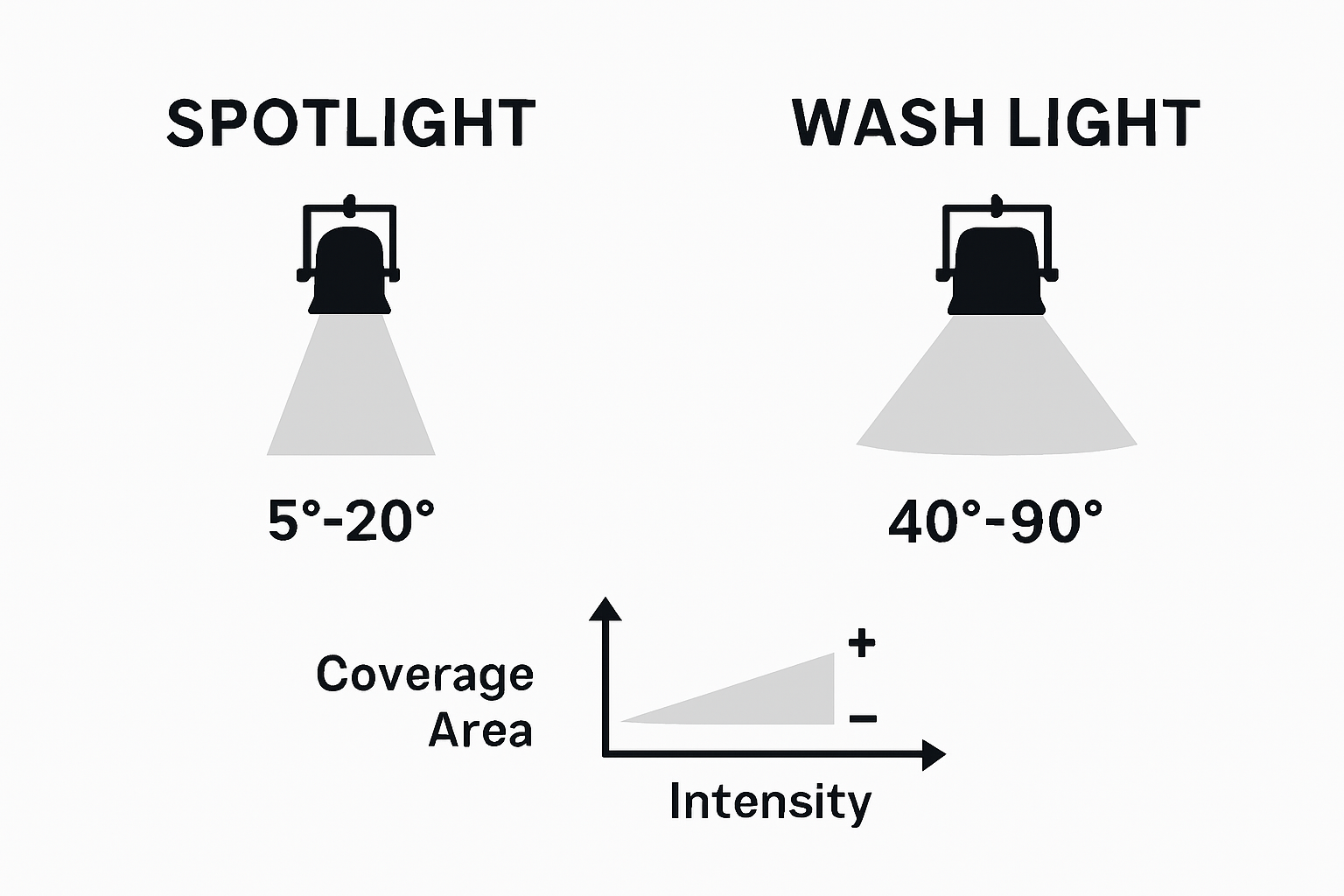
Beam angle significantly affects illumination levels, with narrower beams concentrating light and producing higher lux levels on specific surfaces. Wider beam angles distribute light more evenly, creating softer, more diffused illumination across larger areas. Professional lighting designers strategically select beam angles to manipulate visual perception, control audience focus, and create nuanced atmospheric environments.
Understanding these technical distinctions allows lighting professionals to craft precise visual experiences. Whether designing an intimate theatre production, a high-energy concert stage, or a sophisticated architectural installation, the strategic selection of beam angles transforms ordinary spaces into extraordinary visual narratives.
Visual Impact on Mirror Balls and Venues
The interaction between lighting fixtures and mirror balls creates mesmerising visual spectacles that transform ordinary spaces into dynamic environments. Spotlights, with their focused beams, create sharp, defined reflections on mirror balls, producing intricate, eye-catching patterns that capture audience attention and generate visual excitement.
Spotlights produce concentrated light streams that strike mirror balls with precision, generating complex, fragmented reflections. These targeted light sources can create dramatic visual effects, breaking mirror ball surfaces into intricate geometric patterns that dance and shift with minute lighting adjustments. Professional designers strategically position spotlights to maximise these spectacular visual transformations, using angle and intensity to control the reflection’s complexity and movement.
Floodlights offer broader illumination, resulting in softer, less defined reflections that contribute to overall ambient atmosphere. Where spotlights create sharp, distinct light patterns, wash lights generate more diffused, gentle illumination that softens mirror ball reflections and establishes a more immersive environmental mood. This versatility allows lighting professionals to craft nuanced visual experiences tailored to specific event requirements.
The strategic manipulation of light sources around mirror balls demonstrates the sophisticated interplay between illumination techniques and visual design. Whether creating high-energy dance environments, sophisticated corporate events, or intimate theatrical settings, understanding how different lighting approaches interact with reflective surfaces enables designers to craft truly transformative spatial experiences.
How to Select the Right Lighting Solution
Professional lighting design requires a strategic approach to selecting the most appropriate illumination techniques for specific environments and purposes. Selecting appropriate lighting involves carefully considering beam angle and lumen output to achieve desired illumination levels, with each technical parameter playing a crucial role in creating the intended visual experience.
Key considerations for lighting selection include understanding the specific requirements of your space and event. Beam angle emerges as a critical factor, with narrow beam configurations ideal for targeted highlighting and precise illumination. Narrow beams (5°–30°) concentrate light intensity, creating dramatic focal points perfect for theatrical performances, art exhibitions, and architectural accent lighting. Wider beam angles (60°–120°) generate comprehensive illumination, making them suitable for establishing ambient environments in large venues, dance floors, and corporate event spaces.
Directional lamps like LED spotlights offer concentrated light within specified beam angles, providing remarkable versatility for targeted lighting applications. Professional designers must balance technical specifications with creative vision, considering factors such as colour temperature, luminous intensity, and the specific reflective properties of the environment. This nuanced approach ensures that lighting solutions not only illuminate but also enhance the aesthetic and emotional experience of the space.
Selecting the right lighting solution is ultimately an art form that combines technical precision with creative intuition. Whether designing an intimate theatre production, a high-energy nightclub, or a sophisticated corporate event, understanding the subtle interplay between different lighting techniques allows designers to transform ordinary spaces into extraordinary visual narratives.
Elevate Your Event Lighting with Perfect Mirror Ball Solutions
Choosing the right lighting effect between spotlights and wash lights can transform your venue, but pairing these with the ideal mirror ball takes your visual experience to the next level. The article highlights the impact of beam angles and focused illumination to create sharp reflections or a soft ambient glow. If you want to harness these lighting principles to generate unforgettable dazzling effects, the quality and size of your mirror ball become crucial factors.
Explore our extensive collection at mirror-balls.co.uk where you will find high-quality mirror balls tailored for any setting—from intimate home parties using smaller glitter balls to professional venues requiring large disco balls designed for theatrical and nightclub environments. Don’t wait to create stunning reflective scenes that maximise your lighting strategy. Visit our site now to discover package deals and accessories that perfectly complement your spotlight or wash light setup, ensuring you capture attention and set the perfect mood every time.
Frequently Asked Questions
What is the main difference between spotlights and wash lights?
Spotlights are designed to focus intense light on specific areas, creating dramatic highlights, while wash lights provide broad, even illumination to enhance overall ambiance without highlighting individual elements.
When should I use spotlights instead of wash lights?
Use spotlights when you need to emphasize specific subjects or create dramatic focal points, such as in theatrical performances or exhibitions. Wash lights are ideal for creating general visibility and atmospheric effects in larger areas.
What are the different types of spotlights and their applications?
Types of spotlights include ellipsoidal reflector spotlights, which allow for complex pattern projection; fresnel spotlights, which create softer transitions; and pin spots, which produce narrow, intense beams for highlighting specific objects. Each is suited for different performance environments and artistic needs.
How does beam angle affect the visual impact of lighting?
Beam angle determines how light disperses in an area. Narrow beam angles (5°–30°) create focused illumination, ideal for dramatic highlights, while wider angles (60°–120°) allow for broader coverage, making them suitable for ambient lighting in larger venues.