A single mirror ball can fill a room with thousands of spinning beams when paired with the right spotlight. Event studies reveal that over 70 percent of memorable light displays rely on precise spotlight placement to maximize the effect. Whether for dance floors or dramatic theater scenes, understanding how different spotlights interact with mirror balls can redefine any atmosphere. The right combination helps professionals achieve stunning visuals that keep audiences captivated and ensure every event shines.
Table of Contents
- Defining Spotlights For Mirror Balls
- Types Of Spotlights And Light Sources
- How Spotlights Enhance Mirror Ball Effects
- Installation, Positioning, And Power Considerations
- Common Mistakes And Safety Guidelines
Key Takeaways
| Point | Details |
|---|---|
| Spotlight Functionality | Spotlights are essential for enhancing mirror ball effects through concentrated beams, precise targeting, and vibrant color manipulation. |
| Types of Spotlights | Key spotlight types include Ellipsoidal Reflector Spotlights for focused effects, PAR Lights for broad washes, and LED Spotlights for dynamic, energy-efficient lighting. |
| Installation Considerations | Successful spotlight installation requires optimal height, angle, and power management to achieve desired lighting effects while ensuring safety and structural stability. |
| Safety Protocols | Prioritizing safety is crucial; technicians must avoid common mistakes like improper electrical load and inadequate ventilation to prevent hazards during operation. |
Defining Spotlights for Mirror Balls
Spotlights are specialised lighting instruments designed to illuminate and enhance the visual effect of mirror balls in entertainment and performance settings. According to research from theatrical lighting resources, these precision lighting tools produce a concentrated, well-defined beam that dramatically transforms how mirror balls reflect and scatter light across spaces.
Traditionally, ellipsoidal reflector spotlights (ERS) serve as the primary lighting mechanism for mirror ball installations. As technical theatre documentation indicates, these versatile fixtures generate a strong, narrow light beam that can effectively transmit illumination over significant distances. Their optical design allows precise control of light direction, intensity, and focus – critical characteristics when creating dynamic visual displays.
The primary functions of spotlights for mirror balls include:
- Generating a concentrated light beam
- Controlling beam angle and spread
- Producing vibrant colour effects
- Enabling precise targeting of the mirror ball’s reflective surface
For event professionals seeking to elevate their lighting design, understanding spotlight mechanics is crucial. When selecting a spotlight, considerations like beam width, colour temperature, and mounting flexibility become paramount. Role of Pin Spots guide offers additional insights into advanced spotlight techniques for mirror ball installations.
Types of Spotlights and Light Sources
In the world of mirror ball illumination, spotlights come in several distinct categories, each offering unique characteristics for different lighting requirements. According to technical theatre research, lighting fixtures are fundamentally categorized into two primary types: hard-edged (profile) and soft-edged (wash) fixtures, which provide versatile options for event and performance lighting.
The most prominent spotlight types include:
- Ellipsoidal Reflector Spotlights (ERS): Considered the workhorses of theatrical lighting, these fixtures produce a strong, well-defined beam with exceptional precision. Their optical design allows for sharp focus and controlled light projection, making them ideal for targeted mirror ball illumination.
- Parabolic Aluminized Reflector (PAR) Lights: These soft-edged fixtures offer broader, more diffused lighting, creating ambient effects that complement mirror ball reflections.
- LED Spotlights: Modern alternatives providing energy efficiency, colour versatility, and programmable lighting dynamics.
When selecting spotlights for mirror balls, professionals must consider factors like beam angle, colour temperature, and mounting flexibility. LED Spotlights for Events guide provides deeper insights into contemporary lighting technologies that can dramatically enhance mirror ball performances. Understanding these spotlight variations enables event designers to create truly spectacular visual experiences.
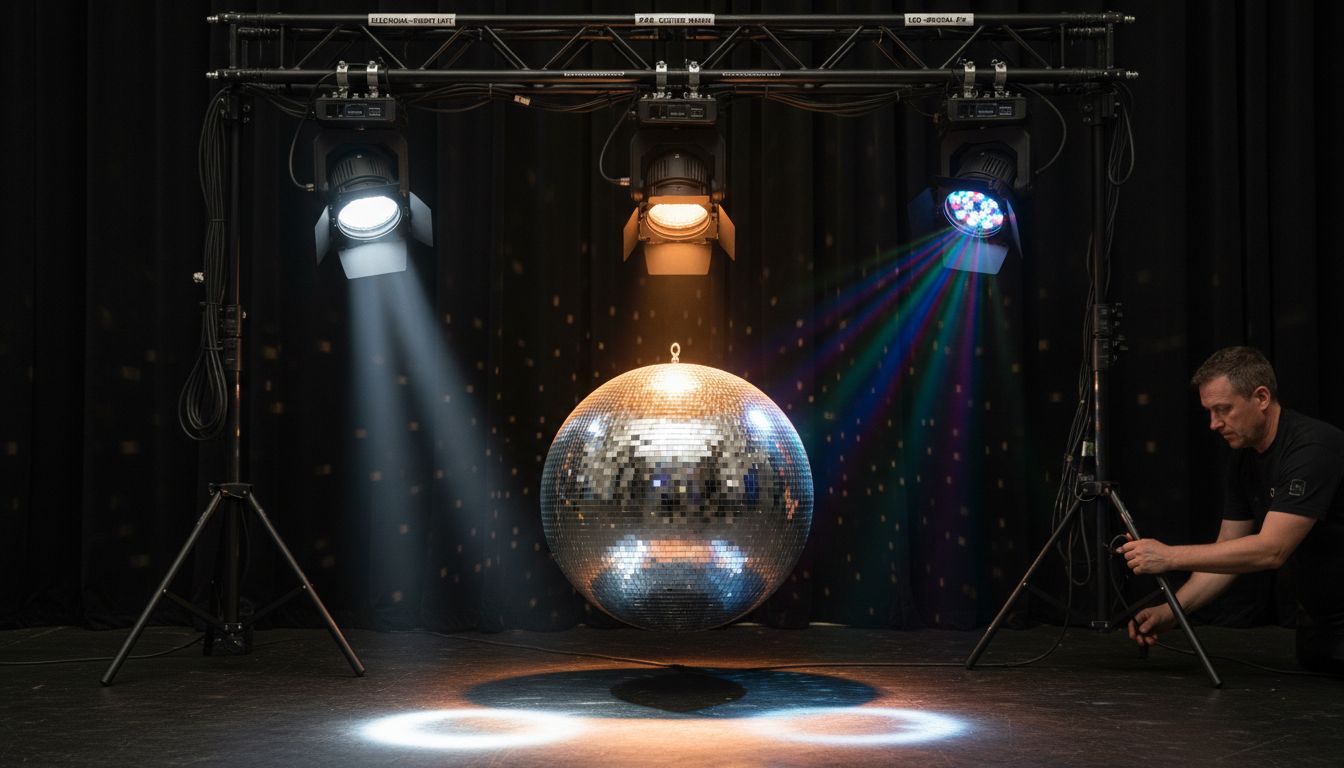
Here’s a comparison of the main spotlight types used for mirror ball installations:
| Spotlight Type | Beam Quality | Colour Capabilities | Typical Use Case |
|---|---|---|---|
| Ellipsoidal Reflector Spotlight (ERS) | Hard-edged, precise | Gel filters Variable temperatures |
Focused, dramatic effects |
| PAR Light | Soft-edged, broad | Limited gel choice | Ambient wash lighting |
| LED Spotlight | Programmable, variable | RGB mixing Custom presets |
Dynamic, energy-efficient displays |
How Spotlights Enhance Mirror Ball Effects
Understanding light’s intricate properties is fundamental to creating spectacular mirror ball displays. According to research from physics education sources, the interaction between light reflection and precise spotlight positioning dramatically transforms how mirror balls disperse light across spaces.
Spotlights enhance mirror ball effects through several critical mechanisms:
- Angle of Incidence: By strategically positioning spotlights, professionals can control the exact angle of light hitting the mirror ball’s surface
- Colour Manipulation: Advanced spotlights allow precise colour filtering, creating vibrant and dynamic light projections
- Intensity Control: Modern lighting technologies enable nuanced control over light brightness and spread
- Programmable Dynamics: Contemporary spotlights can create rhythmic, synchronized light patterns
The science behind these effects is rooted in understanding light’s fundamental behaviors.
Research indicates that careful manipulation of light’s reflection and refraction properties can transform a simple mirror ball into a mesmerizing visual spectacle. DIY Mirror Ball Lighting guide offers additional insights for event designers and lighting enthusiasts looking to master these intricate techniques.
Installation, Positioning, and Power Considerations
Properly installing and positioning spotlights for mirror balls requires meticulous planning and technical understanding. According to research from physics education sources, the precise placement of light sources is crucial in achieving desired lighting effects, making careful positioning a fundamental aspect of successful mirror ball installations.
Key considerations for effective spotlight installation include:
- Height and Angle: Mounting spotlights at optimal heights and angles to maximize light reflection
- Power Requirements: Ensuring appropriate electrical infrastructure and voltage compatibility
- Mounting Stability: Selecting robust mounting solutions that provide secure and adjustable positioning
- Heat Management: Implementing adequate ventilation and cooling for high-intensity lighting fixtures
The technical complexity of mirror ball spotlight installations demands a comprehensive approach. Professionals must balance aesthetic requirements with practical electrical and structural considerations, carefully evaluating factors like power consumption, heat generation, and structural support. LED Pinspots and Disco Ball Spotlights provides additional technical guidance for event designers navigating these intricate installation challenges.
Common Mistakes and Safety Guidelines
Spotlight safety is critical when working with mirror ball lighting systems. According to stage electrical research, professional technicians must prioritize comprehensive safety protocols to prevent potential accidents during installation and operation of lighting equipment.
Common mistakes that can compromise safety and performance include:
- Incorrect Electrical Load: Overloading circuits or using inappropriate power connections
- Improper Mounting: Failing to secure spotlights with appropriate rigging mechanisms
- Heat Management Negligence: Ignoring potential thermal risks from high-intensity lighting fixtures
- Inadequate Ventilation: Blocking airflow around electrical equipment
- Cable Management Issues: Creating potential tripping hazards or electrical strain
Safety guidelines for mirror ball spotlight installations require a systematic approach. Professionals must conduct thorough equipment inspections, ensure proper grounding, maintain clear workspace protocols, and use appropriate personal protective equipment. Understanding light principles and electrical safety becomes paramount in preventing potential hazards. DIY Mirror Ball Lighting guide offers additional insights for safely navigating complex lighting installations, helping event designers and technicians mitigate risks effectively.
Illuminate Your Mirror Balls with the Perfect Spotlights
Achieving the dazzling effects described in the article requires more than just any light. You need precision spotlights that offer control over beam angle, intensity and colour to truly make your mirror balls shine. Whether it is an ellipsoidal reflector spotlight for sharp focus or energy-efficient LED spotlights for dynamic colour mixing, selecting the right lighting gear is essential to bring your vision to life. Avoid common pitfalls like poor positioning or unsafe installations by equipping yourself with professional-grade fixtures.
Explore our extensive collection of mirror balls and expert accessories designed to enhance your setup at https://mirror-balls.co.uk. For detailed lighting solutions that match the technical insights from the article, check our guides on LED Spotlights for Events and DIY Mirror Ball Lighting. Start creating spectacular lighting experiences today by visiting our online store and take the first step toward mastering your mirror ball illumination.
Frequently Asked Questions
What are spotlights designed for mirror balls?
Spotlights for mirror balls are specialised lighting instruments that create a concentrated, well-defined beam of light to enhance the visual effect of mirror balls in entertainment and performance settings.
What types of spotlights are best for illuminating mirror balls?
The primary types of spotlights suitable for mirror balls include Ellipsoidal Reflector Spotlights (ERS), Parabolic Aluminized Reflector (PAR) lights, and LED spotlights, each providing different beam qualities and colour capabilities.
How do spotlights enhance the effects of mirror balls?
Spotlights enhance mirror ball effects by controlling the angle of incidence of light, allowing for colour manipulation, intensity control, and the ability to create dynamic, programmable lighting patterns.
What should I consider when installing spotlights for mirror balls?
When installing spotlights for mirror balls, consider factors such as height and angle for optimal light reflection, power requirements, mounting stability, and heat management to ensure safe and effective operation.