Did you know that modern pin spots use up to 80 percent less energy than traditional lighting options? The right lighting can transform any event, guiding attention to key details and setting the mood in subtle or dramatic ways. Discover how these tiny yet powerful lights bring precision and style to weddings, exhibits, and celebrations, revealing the secret behind unforgettable visual moments.
Key Takeaways
| Point | Details |
|---|---|
| Precision Lighting | Pin spots are essential tools for creating concentrated illumination, transforming spaces by focusing attention on specific elements such as centerpieces and artwork. |
| Modern Technology Advantages | Modern LED pin spots offer energy efficiency, lower heat output, and flexible mounting options, making them superior to traditional lighting solutions. |
| Optimal Placement Strategies | Effective pin spot placement requires careful consideration of height, angle, and distance to maximize visual impact and prevent shadows. |
| Safety and Compliance | Ensuring electrical safety through compliance with standards, proper maintenance, and checks is crucial for secure and successful event lighting. |
Table of Contents
- Defining Pin Spots And Their Core Purpose
- Types Of Pin Spots And Key Differences
- How Pin Spots Work With Mirror Balls
- Best Practices For Pin Spot Placement And Setup
- Safety, Compliance, And Maintenance Considerations
Defining Pin Spots and Their Core Purpose
Pin spots represent precision lighting tools designed to create targeted, concentrated illumination for specific objects or areas within an event space. Pin spot lighting transforms ordinary scenes by drawing immediate visual attention exactly where you want it, acting like a spotlight’s sophisticated cousin.
According to research from Article Ted, modern LED pin spot technology offers remarkable advantages for event professionals and designers. These compact lighting solutions deliver exceptional benefits:
- Energy efficiency that reduces electricity consumption
- Cool operational temperatures preventing heat damage to delicate items
- Adjustable beam angles for precise highlighting
- Discrete mounting options for seamless visual integration
Typically measuring between 1-3 inches in diameter, pin spots can dramatically enhance centrepieces, signage, artwork, or architectural features by creating focused light pools. Their ability to isolate and illuminate specific elements makes them invaluable for wedding receptions, corporate events, museum displays, and theatrical productions. Professional lighting designers appreciate pin spots for their surgical precision in creating visual storytelling moments without overwhelming the broader environment.
Types of Pin Spots and Key Differences
Pin spots have evolved dramatically over the years, presenting event professionals with an array of technological options tailored to specific lighting requirements. Understanding these variations can help you select the most appropriate lighting solution for your specific event or design context.
Traditional pin spots typically used halogen or tungsten bulbs, but according to research from Article Ted, modern LED units have revolutionised the market. These contemporary pin spots offer significant advantages:
- Reduced energy consumption compared to traditional lighting
- Dramatically lower operational temperatures
- Flexible beam angle adjustments
- Multiple colour temperature options
- Compact and discrete mounting capabilities
These technological advancements mean event designers and lighting professionals now have unprecedented flexibility in creating precisely illuminated visual experiences across various settings.
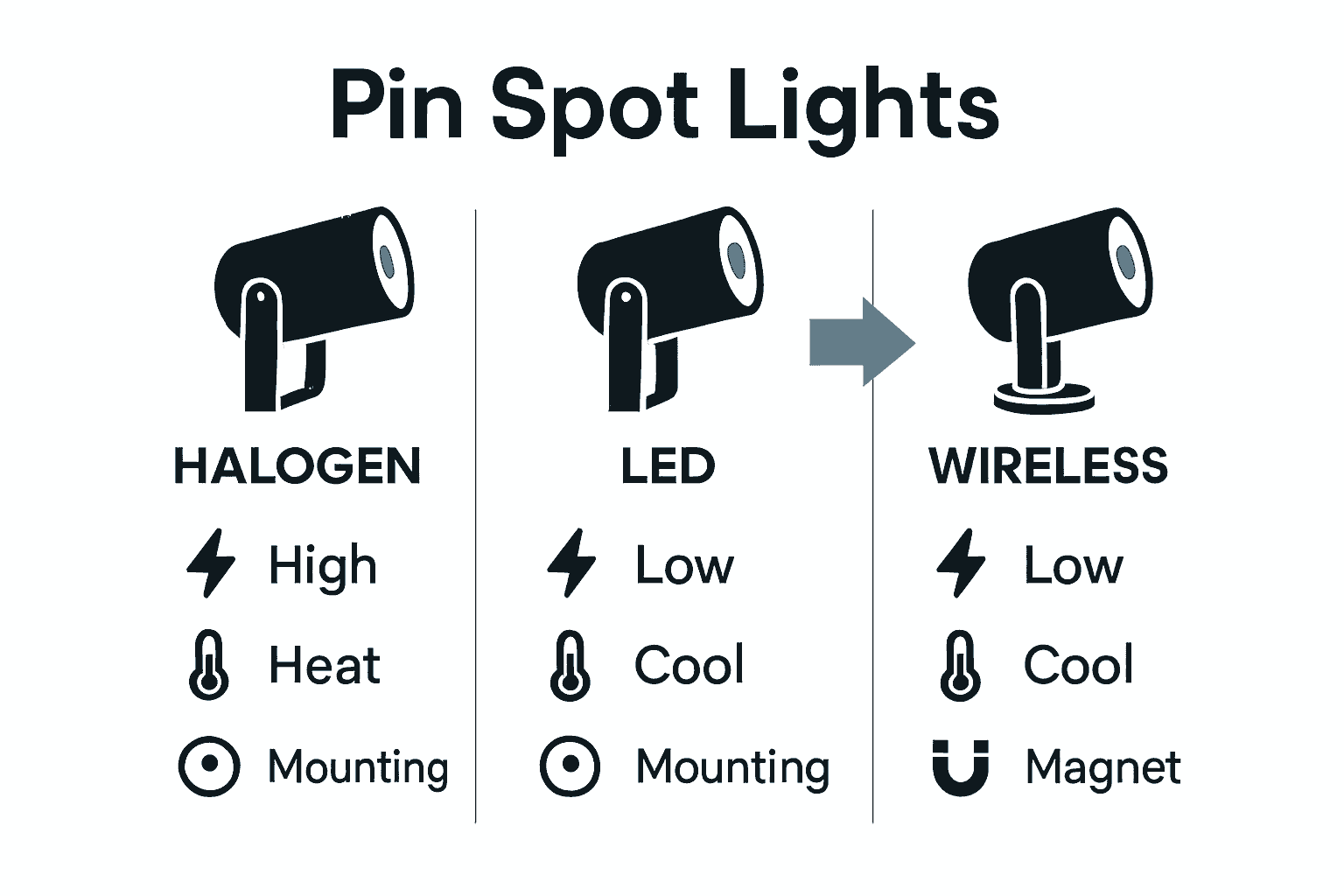

Here’s a comparison of traditional and modern pin spot lighting options:
| Feature | Traditional Pin Spots | Modern LED Pin Spots | PinPoint MK3 |
|---|---|---|---|
| Light Source | Halogen Tungsten |
LED | LED |
| Energy Efficiency | Low | High | Very High |
| Heat Output | High | Low | Very Low |
| Beam Angle Adjustment | Limited | Adjustable | Zoomable (5°–45°) |
| Mounting Options | Standard | Compact Discreet |
Magnetic Standalone |
| Colour Temperatures | Limited | Multiple options | Multiple options |
| Wireless Control | No | Optional | Yes |
| Weather Resistance | No | Some models | IP65 rated |
How Pin Spots Work with Mirror Balls
Understanding the synergy between pin spots and mirror balls reveals a mesmerising dance of light and reflection that transforms ordinary spaces into dynamic visual experiences. These precision lighting tools create breathtaking effects by strategically illuminating disco balls, generating stunning light patterns across dance floors and event spaces.
According to Mirror Balls UK, a compact 3W LED pinspot with a remarkably narrow 4° beam angle can produce crisp, concentrated light perfect for mirror ball illumination. When positioned correctly, these pinspots shine intensely focused beams directly onto mirror ball surfaces, creating spectacular sparkling reflections.
The magic happens through precise beam manipulation:
- Pinspots create concentrated light beams
- Narrow beam angles ensure precise targeting
- Light reflects off mirror ball’s faceted surface
- Reflections scatter across surrounding surfaces
As Bax Shop notes, pinspots are frequently used to generate visual interest on dance floors by transforming mirror balls into dynamic light sources. Professional lighting designers strategically position these compact lights to maximize light dispersion, turning a simple mirror ball into a captivating centrepiece that dynamically transforms event atmospheres. Read more about mirror ball lighting techniques to elevate your event design.
Best Practices for Pin Spot Placement and Setup
Precise pin spot placement can transform an ordinary event space into a visually stunning environment. Professional lighting designers understand that strategic positioning is just as critical as the lighting equipment itself. Getting the angle, height, and distance right makes all the difference in creating magical illumination.
According to EMS Events, optimal pin spotlight positioning involves several key technical considerations. Recommended guidelines include:
- Mounting fixtures 10–15 feet above the target
- Using tight beam angles between 5–10 degrees
- Implementing frost filters for softer light edges
- Installing backup fixtures to ensure reliability
Additionally, AVNews provides nuanced advice for highlighting specific features. Their recommendations focus on creating dimension and preventing unwanted shadows:
- Position pin lights 8–10 feet above key features
- Angle lights at 30–45 degrees for optimal coverage
- Place fixtures 3–8 feet from the subject
- Avoid direct eye-level glare by carefully controlling beam direction
For those wanting to explore advanced LED spotlight techniques, careful preparation and strategic placement can elevate any event’s visual impact. Remember, the goal is creating controlled, intentional illumination that enhances rather than overwhelms the space.
Safety, Compliance, and Maintenance Considerations
Event lighting safety goes far beyond simply setting up equipment. Professional event managers understand that comprehensive safety protocols protect both equipment and participants, ensuring smooth and risk-free experiences. Pin spot installations require meticulous attention to electrical standards and operational best practices.
According to Blindspot Gigs, UK event electrical safety mandates several critical requirements for temporary installations:
- All electrical equipment must be tested by a competent professional
- Comply with British Standard wiring regulations
- Install residual current devices (RCDs)
- Manage cables to prevent trip hazards
- Ensure equipment is appropriately weather-protected for outdoor use
AVNews emphasizes proactive maintenance as a key safety strategy. Their recommended pre-event checklist includes:
- Clean pin spot lenses thoroughly
- Check power and battery status
- Inspect mounting hardware for stability
- Test equipment functionality before event setup
- Have backup fixtures readily available
By prioritizing safety, compliance, and systematic maintenance, event professionals can create stunning lighting experiences while minimizing potential risks. Explore our LED spotlight safety guidelines to ensure your next event is both spectacular and secure.
Elevate Your Event Lighting with Precision Pin Spot Solutions
Do you ever struggle to make your main event features truly stand out? As highlighted in our in-depth guide, the challenge of using pin spots is all about achieving focused illumination that grabs attention without overwhelming the space. Whether you want to transform mirror balls into stunning centrepieces or bring your venue décor to life, the key is combining the right equipment with expert placement and reliable safety standards. Our comprehensive range of high-quality mirror balls and precision LED pinspots is designed to solve these exact pain points, ensuring breathtaking visual effects that capture every eye. You can explore expert advice on advanced LED spotlight techniques and find products suited for both professional setups and personal events.
Want your next event to shine the brightest? Visit https://mirror-balls.co.uk now and discover our exclusive selection of LED pinspots for mirror balls as well as a full range of event lighting accessories. Let us help you create unforgettable experiences with flawless lighting solutions. Act today to unlock expert recommendations and premium products for your upcoming event.
Frequently Asked Questions
What are pin spots in event lighting?
Pin spots are precision lighting tools designed to create concentrated illumination for specific objects or areas within an event space, enhancing the visual appeal and drawing attention to key features such as centrepieces and artwork.
How do modern LED pin spots differ from traditional pin spots?
Modern LED pin spots offer greater energy efficiency, lower heat output, adjustable beam angles, and multiple color temperature options compared to traditional pin spots that typically used halogen or tungsten bulbs.
How should I position pin spots for optimal effect?
For best results, mount pin spots 10-15 feet above the target and use beam angles between 5-10 degrees. It’s also recommended to angle lights at 30-45 degrees for coverage while avoiding unwanted shadows.
What safety considerations should I keep in mind when using pin spots?
Ensure that all electrical equipment is tested by a professional, complies with wiring regulations, and is equipped with residual current devices (RCDs). Regular maintenance, such as cleaning lenses and checking mounting hardware, is also essential for safe operation.