Most british homes overlook one simple secret to extraordinary interiors: brilliant spotlight placement. The right strategy does more than just brighten a room. It underscores focal points and transforms everyday spaces into striking showcases. Studies reveal that well designed lighting can increase a room’s visual appeal by over 60 percent. This guide unpacks each key step for achieving a polished, inviting look that rivals professional British design.
Table of Contents
- Step 1: Assess Your Space And Focal Points
- Step 2: Select Suitable Spotlights For Your Needs
- Step 3: Plan Optimal Angles And Mounting Positions
- Step 4: Install Fixtures Securely And Safely
- Step 5: Test And Adjust Lighting For Desired Effect
Quick Summary
| Key Insight | Explanation |
|---|---|
| 1. Assess Your Space Effectively | Identify natural focal points in your room to determine ideal spotlight placements. |
| 2. Choose the Right Spotlight | Select spotlights based on lumen output, beam angle, and desired visual effects. |
| 3. Plan Angles and Positions | Mount spotlights at a 30 to 45-degree angle for optimal illumination and design impact. |
| 4. Ensure Safe Installation | Follow safety guidelines for electrical connections and proper mounting of light fixtures. |
| 5. Test and Adjust Your Lighting | Fine-tune lighting by testing during different times of day to achieve desired effects. |
Step 1: Assess your space and focal points
Discovering the perfect spotlight placement begins with a thoughtful assessment of your environment. Understanding how light interacts with your space will transform an ordinary setting into a visually stunning experience.
Start by walking through your room and identifying natural focal points. These might be architectural features like a fireplace, an elegant artwork, or a statement piece of furniture. Design principles emphasise creating visual harmony through strategic lighting that draws attention to these key areas. Consider the room’s shape, ceiling height, and existing colour palette when mapping out potential spotlight locations.
Pro tip: Use your smartphone to take quick photos of different angles. This helps you objectively analyse potential lighting positions and understand how shadows and highlights might interact. Remember that good lighting design isn’t just about brightness it’s about creating atmosphere and guiding the viewer’s eye precisely where you want it to travel.
As you complete this assessment, you’re preparing for the next critical stage selecting the right types of spotlights for your unique space.
Step 2: Select suitable spotlights for your needs
Choosing the right spotlights requires careful consideration of your specific lighting requirements and aesthetic goals. Your selection will dramatically impact the overall visual experience of your space.
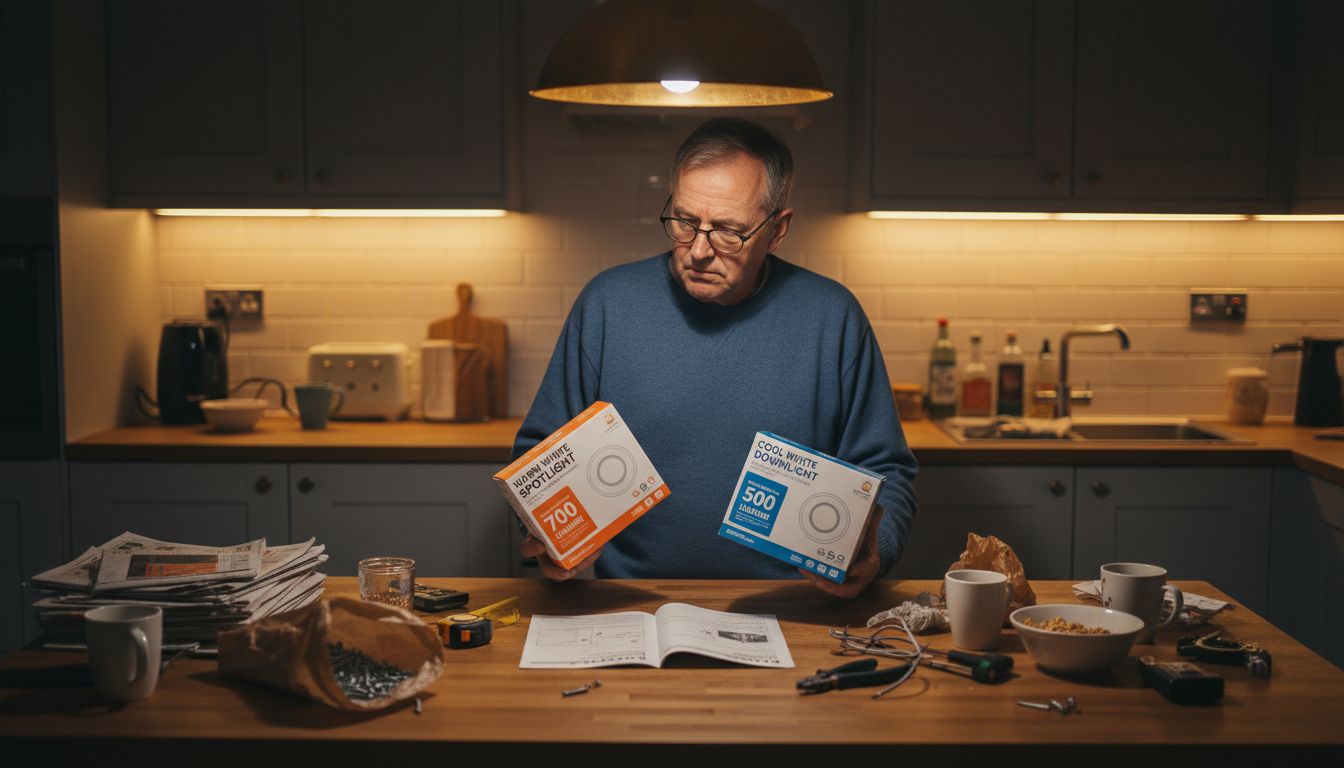
Start by understanding the fundamental lighting considerations that influence workplace and event environments. Consider factors like beam angle, colour temperature, and intensity to match your specific needs. For event spaces, narrow beam angles work best for precise highlighting, while wider angles suit larger areas requiring more diffused illumination. LED spotlights offer versatility with adjustable colour temperatures ranging from warm amber tones to cool white light.
Pro tip: Always check the lumen output and beam angle specifications before purchasing. These technical details determine how effectively your spotlights will illuminate your chosen focal points. Some spotlights feature interchangeable lenses, allowing you to modify their light spread without replacing the entire unit.
As you finalise your spotlight selection, you are now prepared to move into the practical installation phase of your lighting project.
Step 3: Plan optimal angles and mounting positions
The strategic positioning of your spotlights can transform an ordinary space into a mesmerising visual experience. Precise angle and mounting considerations will determine how effectively you highlight your chosen focal points.
Drawing inspiration from professional design practices like sophisticated restaurant lighting installations that accentuate architectural features, consider the height and distance of your mounting points. Typically, spotlights work best when mounted at a 30 to 45 degree angle from your focal point, creating dramatic shadows and depth. For standard ceiling heights, position your lights approximately 1.5 to 2 metres away from the area you want to illuminate, allowing for a concentrated yet soft illumination effect.
Pro tip: Experiment with adjustable mounting positions. Dimmable rafter spotlights offer incredible flexibility for creating dynamic lighting environments. Test different angles by using temporary mounting brackets or asking a friend to hold the spotlight while you assess the visual impact. Remember that subtle adjustments can dramatically change the mood and perception of your space.
With your mounting positions carefully planned, you are now ready to move forward to the precise installation of your spotlights.
Step 4: Install fixtures securely and safely
Safety is paramount when installing spotlights, requiring meticulous attention to electrical connections, mounting stability, and potential hazards. Your goal is to create a stunning lighting setup without compromising personal or property safety.
Begin by thoroughly reviewing fire safety risk assessment guidelines for lighting installations. Ensure your electrical circuit can handle the additional load, and use appropriately rated fixtures and mounting hardware. Check that your mounting surface can support the weight of the spotlights, using robust anchoring methods for ceiling or wall installations. Professional grade toggle bolts or electrical box mounting brackets provide superior support compared to standard screws.
Pro tip: Follow workplace lighting safety recommendations by wearing protective eyewear and using a stable ladder during installation. Always turn off electricity at the main circuit breaker before beginning work, and consider having a qualified electrician verify your connections if you are uncertain about any aspect of the installation.
With your spotlights securely mounted, you are now prepared to fine tune and test your lighting configuration.
Step 5: Test and adjust lighting for desired effect
Creating the perfect lighting environment requires patience, observation, and strategic fine tuning. Your initial installation is just the beginning of crafting a truly mesmerising visual experience.
Drawing inspiration from professional design approaches like sophisticated lighting techniques used in high end residential spaces, start by testing your spotlights during different times of day. Observe how the light interacts with your room’s architectural features, furniture, and colour palette. Use dimmer switches or adjustable fixtures to create layered lighting effects that can transform the mood from vibrant and energetic to soft and intimate. Pay close attention to shadows and highlights, making incremental adjustments to angle and intensity.
Pro tip: Professional interior designers often use concealed lighting techniques to create depth and drama. Take photographs of your lighting setup at different times and angles to help you critically assess the visual impact. Move your spotlights by small increments sometimes just a few centimetres can make a dramatic difference in how light plays across your chosen focal points.
With your lighting now precisely tuned, you have successfully completed the process of creating stunning visual effects through strategic spotlight placement.
Illuminate Your Space with Expert Lighting and Mirror Ball Solutions
Achieving stunning visual effects with perfectly placed spotlights is an art that transforms your environment into a captivating experience. The article highlights challenges like selecting the right beam angle, mounting positions, and fine tuning lighting intensity to highlight focal points effectively. If your goal is to create atmosphere and drama, why stop at lighting alone? Complement your carefully planned spotlights with high-quality mirror balls to reflect light beautifully and add dynamic sparkle to your space.
Explore a wide range of professional-grade and home-use mirror balls at Mirror Balls. Combining your spotlight setup with our expertly crafted disco balls will elevate your venue, whether it is a stylish nightclub, elegant ballroom or a lively event. Visit us now to discover package deals, expert advice, and accessories that perfectly enhance your lighting design. Start transforming your space today by visiting Mirror Balls and unlock the full potential of your visual effects.
Frequently Asked Questions
How do I assess my space for spotlight placement?
Start by walking through your room and identifying natural focal points such as artwork or architectural features. Use your smartphone to take photos from different angles to help analyse potential lighting positions.
What factors should I consider when selecting spotlights?
Consider the beam angle, colour temperature, and intensity of the spotlights based on your lighting needs. For instance, use narrow beam angles for precise highlighting and wider angles for more diffused illumination in larger areas.
How do I determine the best angles and mounting positions for spotlights?
Mount spotlights at a 30 to 45 degree angle from your focal points for dramatic shadows and depth. Typically, position them about 1.5 to 2 metres away from the area you want to illuminate for the best results.
What safety precautions should I take when installing spotlights?
Ensure electrical connections are safe and that fixtures are securely mounted. Always turn off electricity at the main circuit breaker before beginning work and consider using professional-grade mounting hardware for extra support.
How can I fine-tune my spotlight placement after installation?
Test your spotlights at different times of day to observe how the light interacts with the space. Make incremental adjustments to angle and intensity to create the desired mood, noting that small changes can significantly impact the overall effect.
What should I do if I’m unsure about my spotlight installation?
If you feel uncertain about any aspect of the installation, consult a qualified electrician to verify your electrical connections. This ensures not only the quality of your lighting but also the safety of your space.
Recommended
- What Is a Spotlight for Mirror Balls? Complete Overview – Mirror Balls
- Understanding Why Choose LED Spotlights for Events – Mirror Balls
- Complete Guide to Pin Spots: Uses and Types – Mirror Balls
- Role of Pin Spots: Complete Guide for Event Lighting – Mirror Balls
- Understanding Using Projector in Daylight for Best Results – Projector Display