Bold event planners and UK venue owners constantly seek fresh ways to create memorable atmospheres for their guests. Ambient lighting serves as the heartbeat of immersive event design, offering a gentle layer of illumination that shapes mood and enhances every corner of a space. When combined with the dazzling effects of mirror balls, even ordinary rooms can transform into vibrant scenes filled with movement and energy. Discover how thoughtful choices in ambient lighting and dynamic features like mirror balls can turn your venue into a truly unforgettable destination.
Table of Contents
- Ambient Lighting: Core Meaning And Common Myths
- Types Of Ambient Lighting For Events
- Key Features: Colour, Brightness And Control
- How Mirror Balls Enhance Ambient Lighting
- Common Pitfalls And Practical Safety Tips
Key Takeaways
| Point | Details |
|---|---|
| Ambient Lighting’s Purpose | It creates a soft, consistent brightness to enhance visibility and atmosphere in venues. |
| Common Myths | Misconceptions include that more light equals better ambiance and that one light source can suffice for all settings. |
| Types of Ambient Lighting | Various techniques, such as uplighting and mood lighting, serve distinct purposes in event design. |
| Safety Considerations | Regular inspections and professional installation are crucial to ensure electrical and safety compliance in lighting setups. |
Ambient lighting: Core meaning and common myths
Ambient lighting represents the foundational layer of any sophisticated lighting design, providing uniform illumination that sets the mood and enhances visibility across UK venues. Unlike directional or task-specific lighting, ambient lighting creates a soft, consistent brightness that fills an entire space with gentle, balanced light.
At its core, ambient lighting is about creating an overall atmosphere rather than highlighting specific areas. Uniform light distribution serves multiple purposes in event and venue settings:
- Establishes a base level of visibility
- Creates a welcoming environment
- Reduces harsh shadows
- Provides consistent background illumination
However, numerous myths surround ambient lighting that can mislead venue managers and event planners. One persistent misconception is that brighter always means better. In reality, lighting effectiveness depends on nuanced control and strategic placement.
Effective ambient lighting balances brightness, colour temperature, and layering to create visual comfort and optimal atmosphere.
Common myths about ambient lighting include:
- More light equals better illumination
- A single light source can serve all purposes
- Ambient lighting alone is sufficient for all environments
Professional lighting designers understand that proper ambient lighting requires careful planning to avoid glare, energy waste, and visual discomfort.
To clarify common misunderstandings, here is a summary contrasting ambient lighting myths with the actual facts:
| Myth | Reality |
|---|---|
| More brightness always improves outcomes | Proper control is essential for comfort |
| One light source suffices | Layered lighting is necessary |
| Ambient light alone works for all spaces | Task and accent lighting are often required |
Pro tip: Experiment with dimmer switches and layered lighting techniques to create adaptable ambient environments that can transform from professional to atmospheric with simple adjustments.
Types of ambient lighting for events
Ambient lighting for events represents a sophisticated toolkit that transforms venues from ordinary spaces into extraordinary experiences. Ambient lighting techniques provide event managers with versatile options to create dynamic and memorable atmospheres across different settings and occasions.
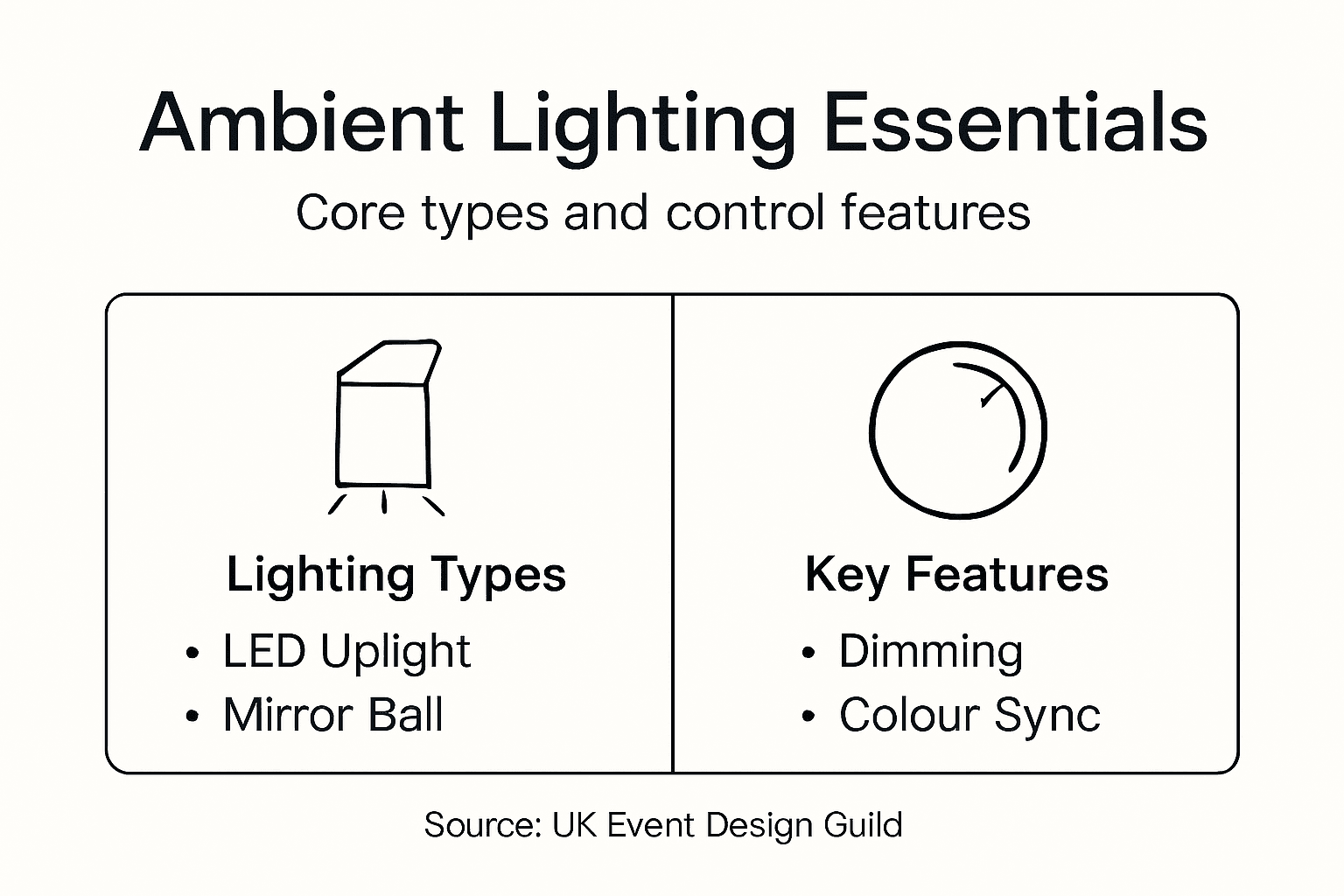
The primary types of ambient lighting for UK events include:
- Uplighting: Projecting coloured light upwards to wash walls and architectural features
- Colour wash lighting: Creating uniform, immersive coloured illumination across entire spaces
- Festoon lighting: Providing warm, soft illumination for outdoor and indoor environments
- Architectural lighting: Highlighting unique venue structural elements
- Mood lighting: Adjusting colour temperatures to match event energy levels
Each lighting type serves a distinct purpose in creating atmosphere. Architectural ambient lighting allows designers to enhance venue features while maintaining comfortable visual environments.
The table below highlights how various ambient lighting types enhance different event settings:
| Lighting Type | Ideal Venue Area | Key Benefit |
|---|---|---|
| Uplighting | Architectural walls | Enhances mood and structure |
| Colour wash | Whole event space | Provides complete atmosphere control |
| Festoon lighting | Indoor/outdoor social areas | Adds warmth and intimacy |
| Mood lighting | Dining zones | Matches energy levels |
| Architectural lighting | Unique features | Draws attention to design |
Professional lighting design balances intensity, colour, and placement to support the event’s emotional trajectory.
Event lighting professionals understand that ambient illumination is not just about brightness, but about creating sensory experiences. Different event segments require nuanced lighting approaches:
- Soft, warm tones for welcome receptions
- Bright, energetic colours for dance floors
- Subtle, sophisticated lighting for dinner settings
- Dynamic, changing lights for entertainment segments
Pro tip: Invest in programmable LED lighting systems that allow rapid colour and intensity transitions to match your event’s evolving mood.
Key features: Colour, brightness and control
Ambient lighting’s sophistication lies in its ability to transform spaces through three critical dimensions: colour, brightness, and intelligent control mechanisms. Advanced lighting control systems enable venue managers to create precise, dynamic lighting environments that adapt to every event’s unique requirements.
The key features of modern ambient lighting encompass:
- Colour Spectrum: Full RGBW colour range capabilities
- Brightness Levels: Infinitely adjustable illumination intensities
- Control Interfaces: Wireless and smartphone-compatible management
- Programmability: Custom scene creation and automation
- Energy Efficiency: Smart power management systems
Lighting control technologies provide unprecedented flexibility in managing venue atmospheres. Professionals can now precisely manipulate:
- Colour temperature ranges
- Illumination uniformity
- Glare reduction
- Energy consumption
Professional lighting design transforms spaces by balancing technological precision with emotional responsiveness.
Modern ambient lighting goes beyond simple illumination, serving as an interactive design element that responds dynamically to event requirements. Colour temperatures can shift from warm, inviting amber tones during welcome receptions to cool, energetic blues for dance segments, creating seamless emotional transitions.
Pro tip: Invest in lighting systems with smartphone integration to enable real-time adjustments and create memorable, responsive event experiences.
How mirror balls enhance ambient lighting
Mirror balls represent a dynamic and transformative element in ambient lighting design, capable of turning ordinary venues into extraordinary experiences. Mirror ball lighting effects create mesmerising visual displays that energise and captivate event spaces across the United Kingdom.
These iconic lighting accessories offer multiple enhancements to ambient environments:
- Visual Dynamism: Creating constantly moving light patterns
- Spatial Transformation: Reflecting light across entire venue surfaces
- Mood Amplification: Generating excitement and energy
- Versatility: Adapting to different event styles and scales
- Atmospheric Depth: Adding complexity to lighting design
The technical magic of mirror balls lies in their precision-engineered design. Hundreds of tiny mirrors strategically positioned on a rotating sphere capture and refract light, generating spectacular multi-directional beams that dance across walls, floors, and ceilings.
Mirror balls transform static lighting into a living, breathing visual experience that responds dynamically to music and movement.
Venues can leverage mirror balls across various event types:
- Nightclub dance floors
- Wedding receptions
- Corporate celebration spaces
- Theatre and performance environments
- Themed party venues
Pro tip: Select mirror balls with adjustable motor speeds to create subtle background shimmer or intense, high-energy light shows depending on your event’s requirements.
Common pitfalls and practical safety tips
Ambient lighting design requires meticulous attention to safety and performance standards to prevent potential risks in event venues. Workplace lighting safety guidelines emphasise the critical importance of understanding potential hazards associated with complex lighting installations.
Common pitfalls in ambient lighting implementation include:
- Electrical Risks: Improper wiring and overloaded circuits
- Mounting Hazards: Inadequate fixture securing mechanisms
- Heat Management: Insufficient cooling for high-intensity lighting
- Cable Management: Unorganised and exposed electrical connections
- Glare Problems: Improperly positioned light sources
Event managers must prioritise several key safety considerations:
- Regular equipment inspection
- Professional installation by certified technicians
- Compliance with current electrical safety regulations
- Comprehensive risk assessments
- Emergency lighting preparedness
Effective lighting design balances aesthetic appeal with rigorous safety protocols.
Professional venues must implement systematic approaches to mitigate potential lighting-related risks. This involves understanding load capacities, thermal management, and maintaining clear pathways around lighting installations to prevent accidents.
Pro tip: Conduct quarterly technical inspections of lighting systems and maintain a detailed maintenance log to track potential wear and performance degradation.
Elevate Your Venue Atmosphere with Expert Mirror Ball Lighting
Ambient lighting plays a crucial role in setting the perfect mood for any UK venue by balancing colour, brightness, and control. One of the most dynamic tools to enhance this foundational layer of light is the mirror ball. Recognised for their ability to create mesmerising, moving light patterns, mirror balls transform ordinary spaces into extraordinary and immersive environments. If you are striving to captivate guests and provide a sensory lighting experience that shifts effortlessly from warm welcome receptions to energetic dance floors, integrating a high-quality mirror ball is essential.
Discover a wide selection of mirror balls tailored to different venue sizes and event requirements at https://mirror-balls.co.uk. Whether you need professional-grade mirror balls for ballrooms or versatile accessories for smaller spaces, our range offers precise control and vibrant effects that complement ambient lighting perfectly. Explore practical options and expert advice on our site and bring the magic of sparkling, interactive lighting into your events today to create unforgettable atmospheres with ease.
Frequently Asked Questions
What is ambient lighting?
Ambient lighting is the foundational layer of lighting design that provides uniform illumination, creating a welcoming environment and enhancing visibility in spaces without focusing on specific areas.
How does ambient lighting differ from task lighting?
Unlike task lighting, which is designed to illuminate specific tasks or areas, ambient lighting aims to provide a soft, consistent brightness that fills an entire space, contributing to the overall atmosphere and comfort.
Why is layering important in ambient lighting design?
Layering is crucial in ambient lighting design because it combines different types of lighting (such as task and accent lighting) to achieve balanced illumination, prevent glare, and enhance visual comfort.
What are some common types of ambient lighting for events?
Common types of ambient lighting for events include uplighting, colour wash lighting, festoon lighting, architectural lighting, and mood lighting, each serving distinct purposes to enhance the event atmosphere.
Recommended
- Uplighting Explained: Transforming Venue Ambience in the UK – Mirror Balls
- Accent Lighting: Transforming UK Nightclub Atmosphere – Mirror Balls
- Wash Lighting: Transforming Event Venue Ambiance – Mirror Balls
- Lighting Gels: Enhancing Atmosphere in UK Venues – Mirror Balls
- Alternative Art Spaces: Redefining Art Communities – The Mansion Press