For UK event organisers and nightclub owners, achieving truly memorable lighting effects can seem costly or complex. The right lighting gels offer a simple, affordable solution to transform any space with vibrant colours and moods without investing in new fixtures. These thin sheets, made from heat-resistant polycarbonate or polyester, remain a favourite in British venues because they provide both versatility and durability for frequent use. Whether you want rich hues or subtle corrections, lighting gels deliver creative control for every performance.
Table of Contents
- What Are Lighting Gels And How Are They Used
- Types Of Lighting Gels And Their Properties
- Using Lighting Gels Safely And Legally In The UK
- Real-World Applications In Venues And Events
- Common Mistakes When Choosing And Using Gels
Key Takeaways
| Point | Details |
|---|---|
| Understanding Lighting Gels | Lighting gels are affordable, versatile tools that change light colour and enhance atmospheres without costly equipment replacements. |
| Choosing the Correct Type | Selecting the appropriate gel type is crucial, as different types serve distinct purposes and have varying durability in high-temperature settings. |
| Maintaining Safety Compliance | Ensure compliance with safety regulations by correctly matching gels to fixtures and performing routine inspections to prevent hazards. |
| Avoiding Common Mistakes | Common mistakes include poor colour selection and inadequate maintenance; testing gels and keeping records can mitigate these issues effectively. |
What Are Lighting Gels and How Are They Used
Lighting gels are thin, transparent sheets that sit in front of your lighting fixtures to transform the colour of the beam or correct existing colour casts. Traditionally made from gelatine, modern gels are manufactured from heat-resistant polycarbonate or polyester materials that can withstand the intense heat from stage and event lighting without warping or discolouring. Think of them as coloured filters that sit between your light source and the audience, subtly or dramatically shifting the emotional tone of your venue. They come in hundreds of standardised colours with specific names or codes, making it straightforward to order replacements or match your vision across multiple fixtures. Gels are secured using metal gel frames that slot into the front of lighting instruments, keeping them safely in place throughout your event.
For nightclub owners and event organizers in the UK, the practical benefit is straightforward: you can achieve sophisticated colour changes and atmospheric effects without replacing expensive lighting rigs. Want to shift from cool blue tones during the opening act to warm amber for the main performance? Swap your gels. Need to correct the harsh warmth of traditional halogen lights to match your venue’s aesthetic? Gels handle that too. You can even layer multiple gels together to create nuanced, custom hues that single colours cannot produce. The key consideration is light loss. Darker gels absorb more light wavelengths, so a deep red or saturated blue will reduce brightness compared to pale tints. This means positioning them strategically and potentially adjusting fixture intensity to compensate.
The beauty of gels lies in their affordability and flexibility. Unlike LED fixtures that require substantial capital investment, gels cost just a few pounds per sheet and last months with proper care. They work brilliantly in combination with mirror balls and other lighting accessories, creating cohesive, immersive atmospheres that keep your crowd engaged. You can experiment with colour combinations during setup, test different moods, and adjust on the fly without technical complications. Many venues maintain stock of essential colours like deep blues, warm ambers, and clean whites, switching them between events or creating signature looks that define their brand.
Pro tip: Store your gels flat in a cool, dry space away from direct sunlight, and always handle them by the edges to avoid fingerprints that reduce light transmission and create distracting shadows on your dancefloor.
Types of Lighting Gels and Their Properties
Lighting gels are far from one-size-fits-all products. The market offers distinct categories designed for different lighting challenges and venue requirements. The main types include colour filters, which alter the hue of your light beam, diffusion gels that soften and spread light across wider areas, and specialised high-temperature gels engineered to resist degradation near intense heat sources. Understanding which type suits your setup prevents wasted money on unsuitable products and ensures your lighting delivers the atmospheric impact you’re after.
Colour filters dominate most venue applications because they deliver straightforward colour transformation. Deep-dyed gels manufactured from polycarbonate or polyester outperform surface-dyed alternatives because the colour runs throughout the material rather than sitting on the surface, meaning they resist fading even after months of regular use near hot fixtures. This durability matters for nightclub owners running nightly events where gels experience constant thermal stress. Diffusion gels operate differently, scattering light wavelengths to eliminate harsh shadows and create softer, more diffused illumination across your dancefloor or stage area. These work brilliantly when combined with mirror balls, spreading light more evenly so the rotating spheres cast gentle highlights rather than intense spotlights. High-temperature gels, sometimes called “super gels,” handle extreme heat environments where standard gels would warp or discolour within hours. If your venue uses traditional halogen or tungsten fixtures running at full intensity, these specialist gels justify their higher cost by lasting significantly longer.
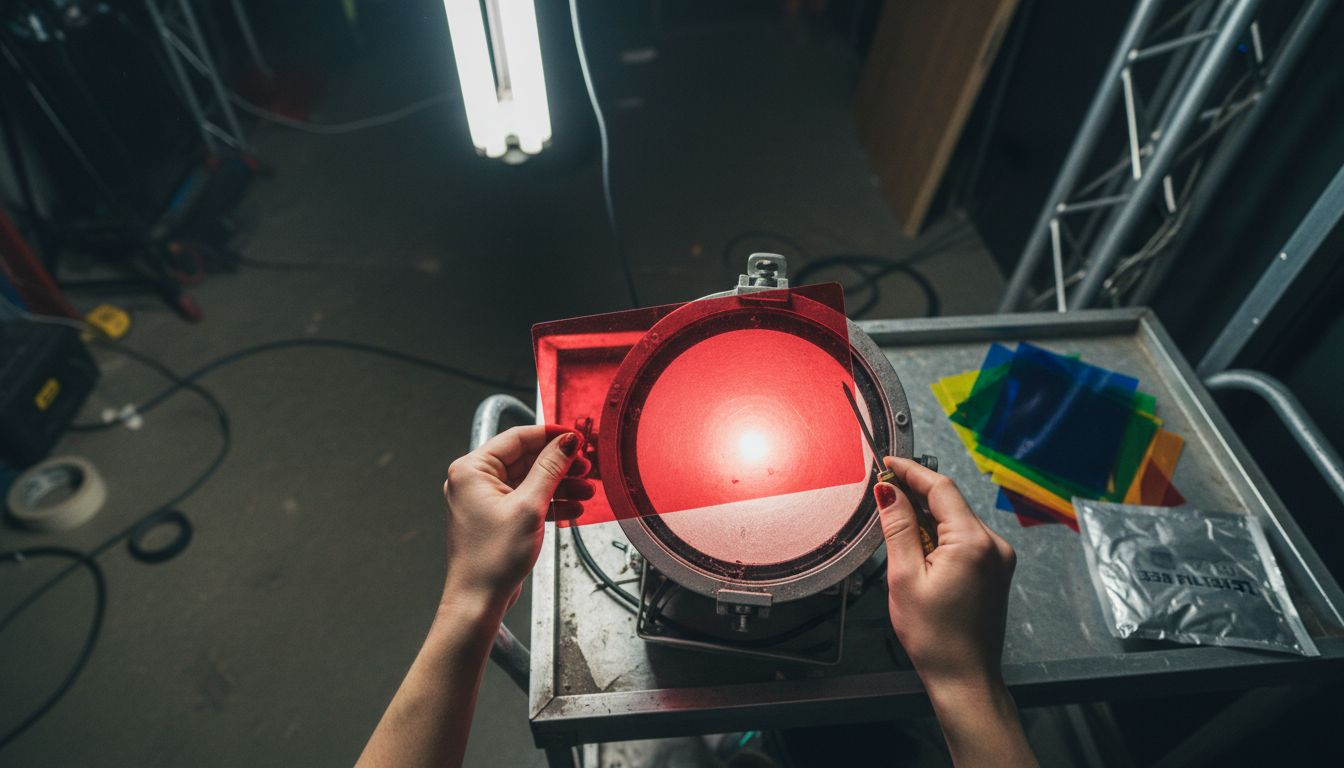
Gels are catalogued using standardised naming systems, with major manufacturers like Rosco and Lee offering hundreds of colours in their ranges. Colour gels come in chromatic and numerical ordering systems, allowing you to reference specific shades by code rather than description, which prevents ordering confusion when reordering stock. A swatch book from your chosen manufacturer is invaluable for in-person colour matching, as screen colours rarely match physical gels accurately. Heat resistance varies considerably between product lines, so cheaper alternatives might fade or degrade within weeks under intensive use, whereas premium options maintain colour vibrancy for months. Consider your fixture types, usage frequency, and budget when selecting which range suits your venue best.
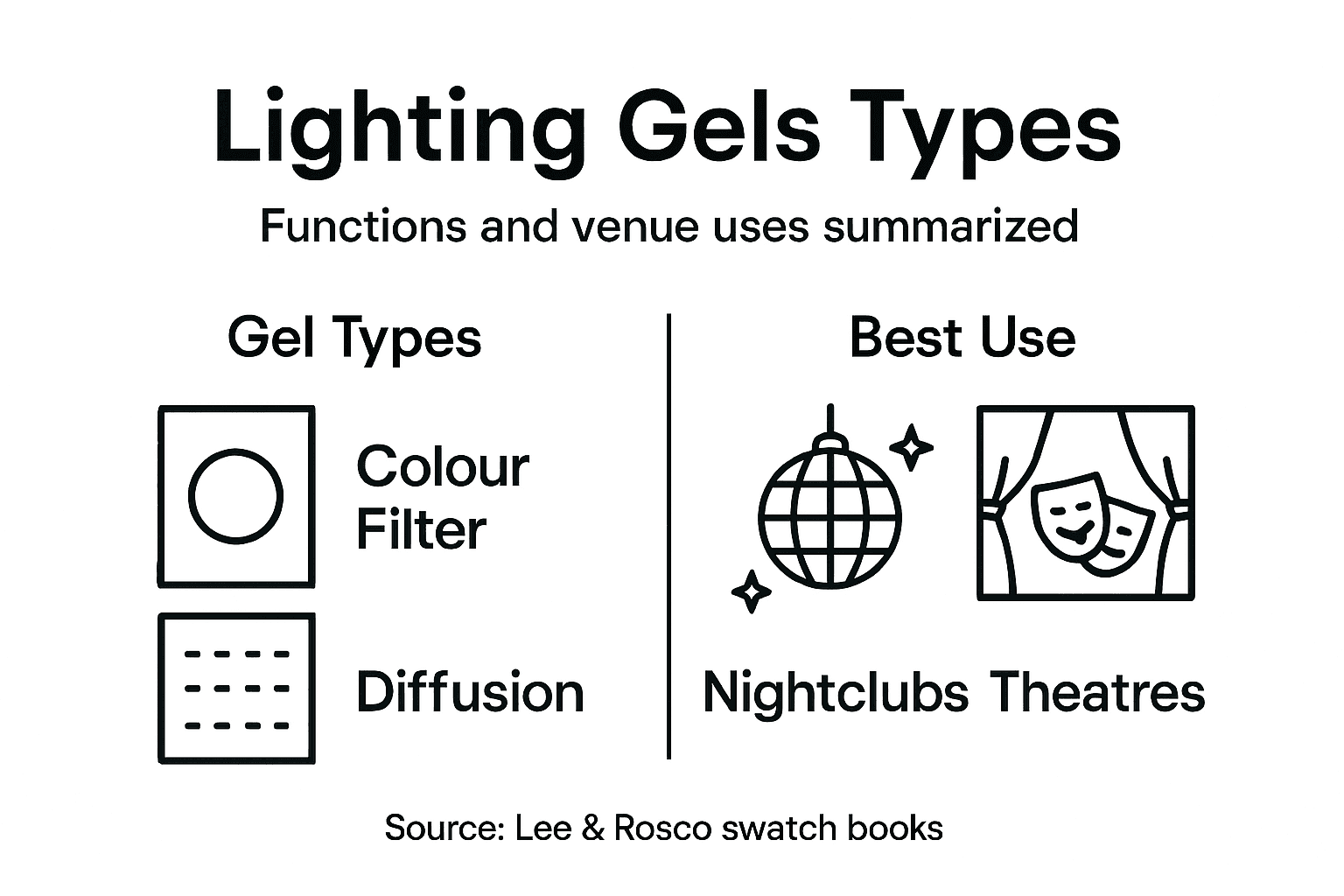
Here’s a quick overview of lighting gel types and their ideal venue applications:
| Gel Type | Main Function | Best Venue Use | Durability |
|---|---|---|---|
| Colour Filter | Changes light colour | Nightclubs, theatres, events | Months, with care |
| Diffusion Gel | Softens, spreads light | Stages, dance floors, bars | Moderate, watch for warping |
| High-Temperature Gel | Resists heat damage | Halogen/tungsten lamp venues | Long-lasting under stress |
Pro tip: Order a sample swatch book from your preferred manufacturer and test gels on your actual fixtures before committing to bulk purchases, since colour appearance varies dramatically depending on your light source’s colour temperature and intensity.
Using Lighting Gels Safely and Legally in the UK
Safety and compliance aren’t afterthoughts when working with lighting gels. They’re non-negotiable foundations that protect your staff, your patrons, and your venue’s operating licence. The primary hazard is heat damage. When gels sit directly in front of high-powered fixtures, they absorb intense thermal energy. If the gel isn’t rated for that fixture’s heat output, it melts, discolours, or catches fire. This risk escalates dramatically with traditional halogen and tungsten lamps, which operate at temperatures between 2500 and 3200 Kelvin. Using the wrong gel type isn’t just wasteful; it’s genuinely dangerous. Standard gels and high-temperature variants exist specifically to match different fixture heat outputs, so selecting the correct product for your lighting rig prevents most thermal incidents before they start. Modern LED fixtures produce significantly less heat, reducing gel-related hazards considerably, though you still need to verify compatibility with any gel you purchase.
UK venues operating with lighting gels must comply with strict health and safety regulations governing stage and event lighting. Secure mounting of gels in proper frames is mandatory, along with routine inspections for damage or deterioration, as degraded gels become brittle and flammable. Your venue’s risk assessment must address lighting hazards specifically, documenting how you manage thermal risks, secure fixtures, and inspect equipment regularly. Local fire codes apply rigorously to public venues, and breaching them exposes you to prosecution, hefty fines, and potential loss of your entertainment licence. Insurance companies also scrutinise lighting safety practices, and inadequate gel management could invalidate your cover if an incident occurs. This means keeping detailed records of gel replacement dates, fixture maintenance logs, and safety inspections. It sounds bureaucratic, but it’s the difference between running confidently and operating under constant liability risk.
Practical compliance boils down to three commitments. First, match your gels to your fixtures. Check the lamp specifications on each fixture, confirm the wattage and colour temperature, then purchase gels specifically rated for that output. Second, secure everything properly. Gels must sit in metal frames that slot securely into your fixtures, never held in place with tape or clamps. Third, inspect regularly. Before each event, walk through your rig and visually check every gel for discolouration, brittleness, or damage. Replace anything questionable immediately. This routine takes thirty minutes and prevents ninety-nine percent of gel-related problems. Work with experienced suppliers who understand UK compliance requirements, as they’ll guide you toward products that meet local standards and won’t jeopardise your operating status.
Pro tip: Create a simple spreadsheet documenting each fixture’s location, wattage, and the gel type currently installed, then set a quarterly reminder to inspect and update it, ensuring your records always reflect your actual setup for compliance verification.
Real-World Applications in Venues and Events
Walk into a nightclub on a Saturday night and you’re experiencing lighting gels in action, even if you don’t realise it. The deep cobalt blue washing across the dancefloor, the warm amber highlights framing the DJ booth, the dramatic reds during the peak hours, the cool greens during transition sets. These colour transformations aren’t magic. They’re gels doing exactly what they’re designed to do: setting mood and emotion through light. Lighting gels alter colour and intensity to create atmospheres ranging from dramatic to subtle, enhancing the visual experience across theatres, concerts, and nightlife environments. For event organisers in the UK, this versatility translates directly into tangible outcomes. A private party client books your venue specifically because your lighting creates an energy that competitors simply don’t match. A corporate event coordinator returns year after year because your gels help their brand messaging land more powerfully with attendees. The difference between a forgettable event and one people talk about for months often comes down to lighting atmosphere, and gels deliver that affordably.
Theatres use gels to support narrative storytelling. A dimly lit tragedy might employ deep purples and blacks to emphasise emotional weight, whilst a comedy thrives under bright yellows and warm ambers that make audiences feel relaxed and receptive to humour. Bars and restaurants employ gels for practical branding. A venue with a signature deep teal theme becomes instantly recognisable to regulars. Weddings benefit enormously from gel work, transforming a blank event space into an intimate, personalised celebration through colour psychology alone. Sports and entertainment venues use gels to build anticipation before major moments, shifting colour palettes as energy builds. The common thread across all these applications is the same: gels instantly modify lighting appearance and create ambiance whilst remaining economical and adaptable. You’re not replacing expensive fixtures or rewiring infrastructure. You’re simply swapping colour sheets to deliver completely different atmospheres.
For nightclub owners specifically, gels become a competitive advantage. Your competitors might have similar speaker systems, similar dance floors, similar sound engineering. Your lighting creates the differentiator. Strategic gel choices during different set times guide the emotional journey of your crowd. An opening act might run under cool blues and purples that create mystery and anticipation. The main performer gets warm ambers and deep reds that amplify energy and excitement. The wind-down phase shifts to softer pinks and cool whites that encourage lingering without overstimulation. This intentional colour progression keeps people engaged throughout the night, extends their stay, and generates higher spend on drinks and table bookings. Event venues benefit equally, creating signature lighting packages that justify premium pricing and attract clients seeking professional production values without professional budgets.
Pro tip: Document your best lighting combinations by photographing the dancefloor under different gel configurations, then share these images with potential clients during sales calls to demonstrate your atmospheric capabilities and justify your pricing.
Common Mistakes When Choosing and Using Gels
Most venue owners learn gel management through costly trial and error. The mistakes tend to cluster around three areas: poor colour choices, inadequate fixture matching, and careless maintenance. Starting with colour selection, many organisers grab gels based purely on aesthetics without considering how those colours interact with skin tones, venue décor, or the emotional tone they want to create. A saturated magenta might look stunning on a swatch under shop lighting, then clash horrifically with your venue’s neutral walls and make your staff look sickly under the dancefloor fixtures. Failing to consider colour impact on skin tones and overall mood leads to unflattering visuals that undermine your atmosphere. This is why swatch books matter so much. They show you exactly how colours perform under realistic conditions. Testing gels on your actual fixtures before committing to bulk orders prevents expensive mistakes. Yet many venue operators skip this step entirely, ordering dozens of gels they’ve never seen in action, then discovering halfway through their first event that the colour doesn’t work.
The second cluster of mistakes involves fixture incompatibility and installation. Using a standard gel in front of a high-powered halogen fixture that runs at 2800 Kelvin sounds like a minor detail, but it causes gels to degrade rapidly, discolour unpredictably, or fail entirely during crucial moments. Incorrect gel types for fixture heat outputs cause premature deterioration and fire hazards, yet this remains shockingly common in under-resourced venues. Equally damaging is improper mounting. Gels secured with tape, blu-tack, or casual clipping rather than proper metal frames slip during events, fall, or melt onto your fixtures. Beyond installation, many venues fail to account for light loss with darker gels. A deep blue or rich red absorbs significant light energy, reducing overall brightness considerably. Organisers often assume their existing fixture intensity will compensate, then discover mid-event that the dancefloor looks dim and uninviting. Accounting for light loss during your initial planning prevents this.
The third mistake cluster involves maintenance and record keeping. Using outdated, faded, or physically damaged gels produces poor colour quality and unexpected shifts that ruin your carefully planned lighting aesthetic. A gel that’s been stored in sunlight for months becomes brittle and discoloured. One that’s been folded or creased develops visible lines across your lighting effect. Many venues lack systems for tracking which gels are installed where, when they were last replaced, or what condition they’re in. This creates situations where you’re unknowingly running degraded gels, creating unprofessional lighting that reflects poorly on your venue. Additionally, failing to reference manufacturer specifications or swatch books during ordering leads to incompatible colour choices or duplicates of colours you already stock. Proper organisation, basic record keeping, and routine visual inspections prevent nearly all these problems.
This table summarises common lighting gel mistakes and ways to avoid them in UK venues:
| Mistake | Risk/Consequence | Avoidance Method |
|---|---|---|
| Poor Colour Selection | Unsuitable atmosphere or visuals | Test with swatch books |
| Fixture Mismatch | Gel melting, fire hazard | Match gel to lamp specs |
| Poor Maintenance | Fading, brittle gels, bad mood | Inspect and record regularly |
Pro tip: Create a simple inventory system noting each gel type, its location, installation date, and condition, then perform a five-minute visual inspection before each event to catch fading, brittleness, or damage before it affects your lighting quality.
Elevate Your Venue Atmosphere with Expert Lighting and Mirror Ball Solutions
Capturing the perfect mood with lighting gels can transform any UK venue into an unforgettable experience. Yet pairing those gels with the right accessories is essential to create a captivating ambience that enchants your crowd. At Mirror Balls, we understand how crucial lighting synergy is for nightclubs, theatres, and event spaces aiming for that flawless visual impact. Our extensive range of mirror balls perfectly complements your gelled lighting, reflecting colours beautifully and enhancing atmosphere without costly fixture upgrades.
Explore our selection from subtle decorative glitter balls to professional-grade mirror balls built for high-energy venues. Combining your lighting gels with these quality accessories allows you to craft signature looks that keep patrons engaged throughout every event. Do not let your lighting potential fall short. Visit Mirror Balls today to discover package deals and expert advice that helps you maximise your venue’s ambience and stand out in the competitive UK entertainment scene. Take the next step now and create atmospheres worth remembering with professional lighting gels and mirror balls working together.
Frequently Asked Questions
What are lighting gels and how do they work?
Lighting gels are thin, transparent sheets placed in front of lighting fixtures to change or correct the colour of the light beam. They can create various atmospheric effects without the need for expensive lighting replacements.
How can I choose the right type of gel for my venue?
Consider the purpose of the lighting: colour filters change the hue, diffusion gels soften light, and high-temperature gels resist extreme heat. Ensure you match the gel type to your fixtures for optimal performance and safety.
What maintenance do lighting gels require to ensure their effectiveness?
Regularly inspect gels for discolouration or brittleness, store them properly away from sunlight, and record their installation dates. Replace damaged or faded gels promptly to maintain lighting quality.
How do I address light loss when using darker gels?
Darker gels absorb more light wavelengths, which can reduce brightness. To compensate, adjust the fixture intensity or consider using lighter gels to maintain adequate illumination while achieving the desired colour effect.