Every UK venue owner and event planner knows the right lighting can transform a space from ordinary to unforgettable. Creating immersive atmospheres and highlighting performers relies on more than just hanging a few bulbs. A lighting rig is a strategic assembly of equipment engineered to shape ambiance, guide audience focus, and enrich storytelling. Whether you run a theatre, coordinate concerts, or host galas, understanding the essentials of lighting rigs helps you choose solutions that truly elevate the experience.
Table of Contents
- Defining Lighting Rigs And Core Concepts
- Types Of Lighting Rigs For Events
- Key Components And How They Function
- Safety Standards And Legal Requirements
- Choosing And Installing The Right Rig
Key Takeaways
| Point | Details |
|---|---|
| Importance of Lighting Rigs | Lighting rigs are essential for shaping atmosphere and enhancing audience experiences in event production. |
| Diverse Types of Fixtures | Various fixtures, such as PAR units and LED stage lighting, serve specific functions to achieve desired visual effects. |
| Safety Compliance | Adhering to safety standards and conducting thorough inspections is crucial for ensuring secure lighting rig operations. |
| Strategic Design Considerations | Comprehensive venue assessments and strategic fixture selections are vital for optimising the effectiveness of lighting systems. |
Defining Lighting Rigs and Core Concepts
A lighting rig represents a sophisticated technical infrastructure designed to illuminate and enhance performance environments across various event settings. At its core, a lighting rig is more than just a collection of lights – it is a strategic assembly of equipment engineered to shape atmosphere, direct audience attention, and create transformative visual experiences.
In professional event production, lighting rigs play a critical role in storytelling and emotional communication. These systems combine multiple light sources, controllers, and mounting hardware to produce precise illumination that can dramatically alter a venue’s mood and perception. Event professionals utilise complex configurations including theatrical spotlights, LED panels, colour-changing fixtures, and programmable lighting consoles to craft immersive environments.
The fundamental components of a lighting rig typically include several key elements. Mounting structures such as truss systems provide the physical framework, while intelligent lighting fixtures offer programmable colour, intensity, and movement capabilities. Control systems like DMX512 protocols allow precise management of individual lights, enabling intricate lighting sequences and dynamic visual transitions. Additional components might feature moving head lights, par cans, ellipsoidal reflector spotlights, and specialised atmospheric effects generators.
Pro tip: When designing a lighting rig, always consider the specific requirements of your venue, event type, and desired emotional impact before selecting equipment and configuring your setup.
Types of Lighting Rigs for Events
Lighting rigs in UK event production encompass a diverse range of configurations designed to meet specific performance and atmospheric requirements. Stage lighting systems vary significantly depending on venue size, event type, and desired visual impact, with professionals selecting specialised equipment to achieve precise illumination objectives.
The primary categories of lighting rigs include several key types. PAR (Parabolic Aluminised Reflector) units provide broad, uniform illumination ideal for washing entire stages with colour and light. LED stage lighting offers remarkable versatility, allowing rapid colour changes and energy-efficient performance across concerts, theatre productions, and corporate events. Profile and spot fixtures deliver focused, sharp-edged beams perfect for highlighting performers, speakers, or specific stage areas with exceptional precision.
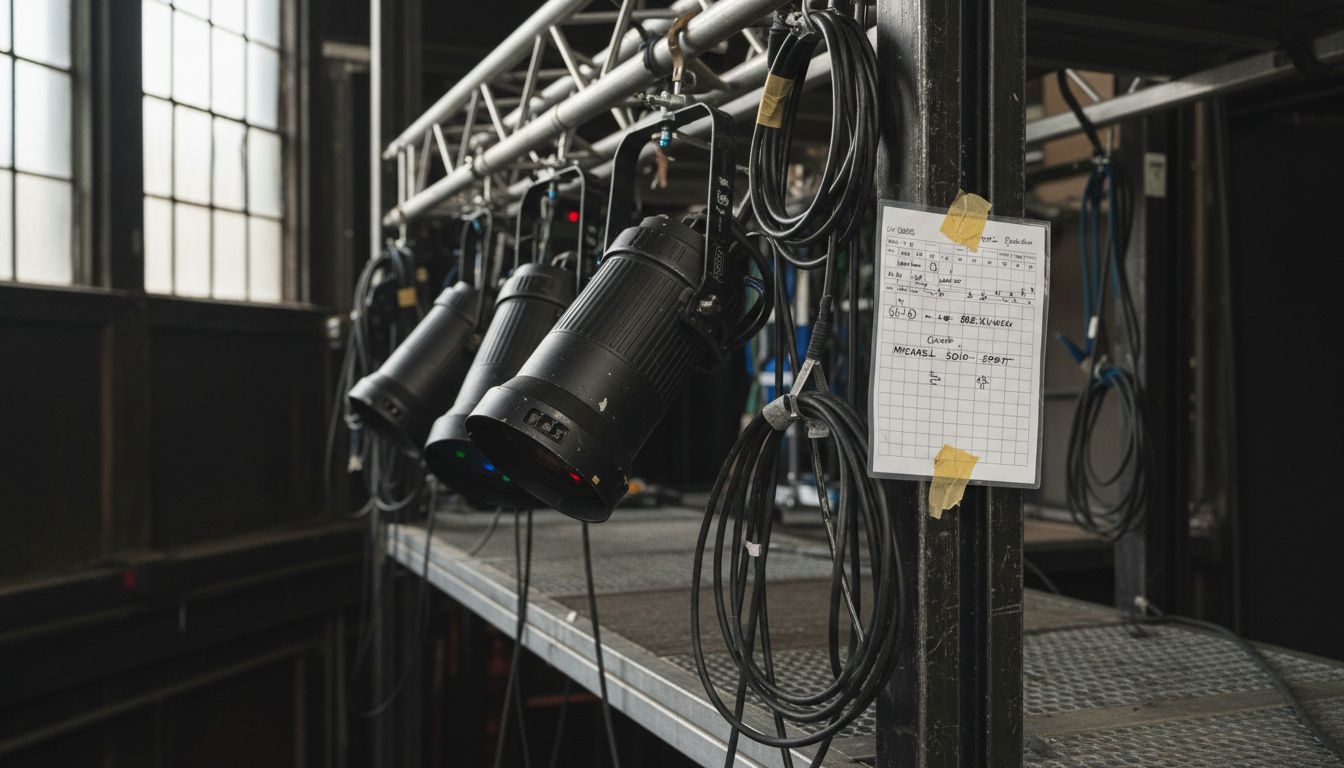
Moreover, contemporary lighting rigs often integrate multiple fixture types to create dynamic, layered lighting experiences. Wash lights generate ambient atmospheric conditions, while moving head fixtures enable complex programmed movements and dramatic visual transitions. Specialised units like ellipsoidal reflector spotlights allow precise beam shaping, enabling lighting designers to sculpt visual narratives through light manipulation. Intelligent control systems such as DMX512 protocols further enhance these capabilities, providing granular management of individual lighting elements.
Here is a comparison of common lighting fixture types used in event rigs:
| Fixture Type | Typical Use | Visual Impact |
|---|---|---|
| PAR Units | Wide stage washes | Even, colourful ambient light |
| LED Stage Lighting | Concerts, flexible events | Fast colour changes, low power |
| Profile/Spot Fixtures | Performer highlighting | Sharp, focused beams |
| Moving Head Fixtures | Dynamic effects | Programmable movement |
| Ellipsoidal Spotlights | Shape-specific highlights | Precise beam control |
Pro tip: When designing a lighting rig, strategically layer different light types to create depth, dimension, and emotional resonance within your event space.
Key Components and How They Function
Modern lighting rigs are intricate systems composed of multiple sophisticated components working in seamless synchronisation. Lighting control and rigging infrastructure represents a complex network of structural, mechanical, and electronic elements designed to create precise illumination environments for various UK event spaces.
The fundamental structural component of most lighting rigs is the truss system, which provides robust and flexible mounting platforms for lighting fixtures. These aluminium or steel frameworks create stable overhead grids capable of supporting multiple light units simultaneously. Hoists and motors enable precise vertical positioning and movement, allowing lighting designers to adjust fixture heights and angles dynamically. Integrated safety mechanisms ensure stable, secure positioning during live events, preventing potential equipment displacement or accidental movements.
Electronic control systems form the intelligent backbone of contemporary lighting rigs. DMX512 protocols facilitate granular management of individual lighting fixtures, enabling complex programmed sequences and real-time adjustments. Digital lighting consoles provide intuitive interfaces where technicians can programme intricate colour transitions, movement patterns, and synchronised effects. Additional critical components include power distribution units, signal converters, and redundant backup systems that ensure continuous, reliable performance throughout extended event productions.
Pro tip: Always conduct comprehensive pre-event equipment checks, verifying every connection, motor tension, and control interface to guarantee seamless lighting rig performance.
Safety Standards and Legal Requirements
Safety represents the paramount consideration in lighting rig design and operation across UK event production environments. Professional lighting control standards mandate rigorous protocols to ensure equipment integrity, personnel protection, and comprehensive risk management throughout live event scenarios.
The legal framework surrounding lighting rigs involves multiple regulatory dimensions. Health and Safety Executive (HSE) guidelines specify detailed requirements for equipment installation, structural loading, electrical safety, and operational procedures. Venues must demonstrate comprehensive risk assessments, including load-bearing calculations for truss systems, electrical connection integrity, and systematic equipment inspection protocols. Certification requirements include regular professional testing of mounting hardware, electrical systems, and mechanical components, with documented evidence of compliance mandatory for insurance and legal purposes.
Professional bodies like the Professional Lighting and Sound Association (PLSA) establish industry-specific safety standards that extend beyond basic legal requirements. These guidelines encompass comprehensive training mandates for technicians, specifying minimum qualification levels, periodic skills recertification, and mandatory safety awareness programmes. Additional critical safety considerations include personal protective equipment specifications, emergency shutdown procedures, load management protocols, and detailed documentation requirements for complex lighting installations across different event environments.
Below is a summary of key safety measures for lighting rig installation:
| Aspect | Best Practice | Reason |
|---|---|---|
| Structural Assessment | Calculate maximum loads on truss systems | Prevent physical collapse |
| Electrical Checks | Inspect all connections and cable routes | Avoid electrical faults and fire risk |
| Technician Training | Ensure operators are fully certified | Reduce risk of human error |
| Equipment Certification | Document and verify all tests and inspections | Comply with UK legal and insurance rules |
Pro tip: Maintain a comprehensive digital logbook documenting every equipment inspection, certification, and maintenance procedure to ensure legal compliance and operational safety.
Choosing and Installing the Right Rig
Selecting an appropriate lighting rig demands careful consideration of multiple technical and creative factors. Event lighting rig design requires a strategic approach that balances venue specifications, performance requirements, and technical capabilities to achieve optimal visual outcomes.
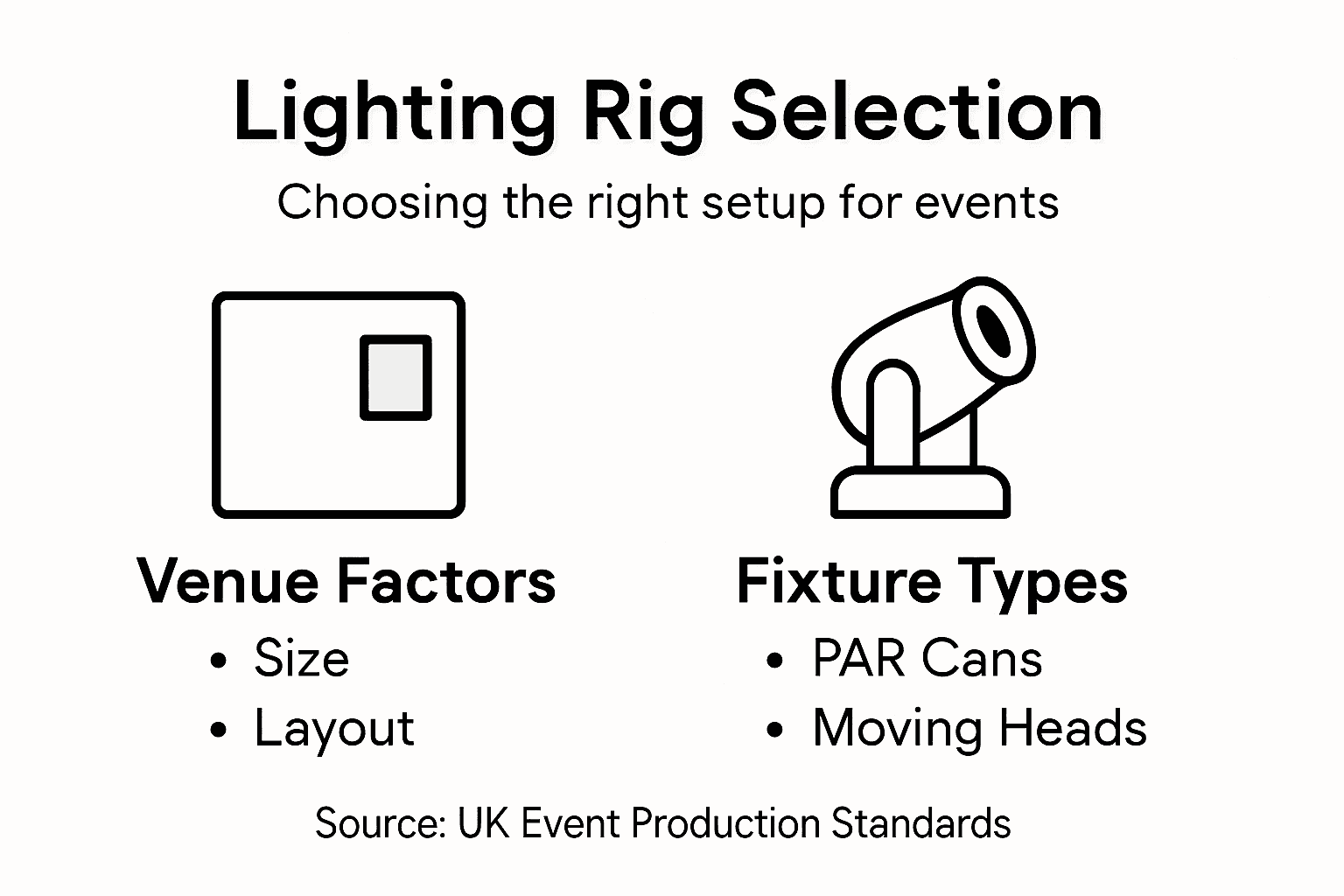
The initial phase of rig selection involves comprehensive venue assessment. Event professionals must meticulously evaluate critical parameters including ceiling height, structural load-bearing capacity, available power infrastructure, and physical space constraints. Truss configurations must align precisely with architectural limitations, ensuring safe and efficient fixture mounting. Different venue types demand specific approaches: theatre productions might require intricate overhead grid systems, while corporate events may need more flexible, modular lighting solutions that can be rapidly reconfigured.
Fixture selection represents another crucial decision-making dimension in lighting rig design. Intelligent lighting fixtures offer remarkable versatility, allowing rapid colour transitions and programmable movement patterns. Professionals typically combine multiple fixture types to create layered, dynamic lighting environments. LED wash lights provide broad colour coverage, moving head units enable precise targeting and dramatic transitions, while profile spotlights deliver sharp, focused illumination for specific performance elements. Considerations extend beyond mere technical specifications to include power consumption, heat generation, control compatibility, and overall aesthetic contribution to the event’s visual narrative.
Pro tip: Always conduct a comprehensive venue site survey and create a detailed lighting plot before purchasing or installing any lighting rig components.
Elevate Your Lighting Rig with Stunning Mirror Balls
Creating the perfect lighting rig to transform your UK event venue demands careful attention to atmosphere and visual impact. The article highlights how versatile lighting fixtures and strategic rig configurations shape unforgettable experiences. One often overlooked element that adds magical dimension to any lighting rig is a high-quality mirror ball. These reflective wonders amplify dynamic lighting setups, casting captivating patterns that enhance every performance and event ambience.
Discover how incorporating professional-grade mirror balls from Mirror Balls can bring your lighting rig to life. Whether you need compact glitter balls for intimate venues or large disco balls for grand theatrical productions, selecting the right mirror ball complements your lighting strategy while meeting safety and installation standards. Explore our extensive collection and accessories today to ensure your next event dazzles with brilliance and style. Visit Mirror Balls now and transform your lighting rig into an immersive spectacle.
Frequently Asked Questions
What is a lighting rig?
A lighting rig is a collection of equipment designed to illuminate and enhance performance environments, playing a crucial role in storytelling and creating visual experiences during events.
What types of lighting fixtures are commonly used in event lighting rigs?
Common lighting fixtures include PAR units for wide stage washes, LED stage lighting for versatility, profile and spot fixtures for precise highlighting, moving head fixtures for dynamic effects, and ellipsoidal spotlights for detailed beam control.
How does DMX512 control enhance lighting rigs?
DMX512 allows for precise management of individual lighting fixtures, enabling complex sequences and real-time adjustments, which are crucial for creating dynamic and immersive lighting environments during events.
What safety measures should be considered when installing a lighting rig?
Essential safety measures include conducting structural assessments to calculate load capacities, inspecting electrical connections, ensuring technician certifications, and maintaining records of equipment certifications and inspections.
Recommended
- Effect Lights: Transforming UK Discos and Events – Mirror Balls
- What Is a Light Fixture and Why Venue Design Depends on It – Mirror Balls
- What Is Lighting Design and Its Impact on Events – Mirror Balls
- 7 Key Advantages of LED Lighting for Event Spaces – Mirror Balls
- Stages Versus Mobile Bands: Impact on Events