Over 90 percent of British event venues rely on carefully selected light fixtures to create unforgettable atmospheres. For event planners and venue owners, the choice of lighting goes far beyond basic functionality—it plays a vital role in transforming entertainment spaces, especially when designing with mirror balls. This guide reveals how advanced fixture types and strategic placement deliver dazzling visual effects, helping you elevate every British celebration and entertainment experience.
Table of Contents
- Defining A Light Fixture: Core Concepts
- Major Light Fixture Types For Venues
- Key Features And Operating Principles
- Safety Standards And Uk Legal Requirements
- Selecting Light Fixtures For Mirror Ball Displays
Key Takeaways
| Point | Details |
|---|---|
| Understanding Light Fixtures | Light fixtures are complex systems that manage electrical connections and enhance light distribution. They include various components, such as housing and lamp holders, to ensure efficient illumination. |
| Types of Light Fixtures | Different fixture types, like wash lights and moving heads, serve specific purposes in venue design, such as ambient lighting or focused highlights. |
| Technological Features | Advanced control systems and thermal management are crucial for maintaining performance and energy efficiency in modern fixtures. |
| Compliance with Safety Standards | Adherence to UK safety regulations, such as BS 7671 and Building Regulations Part L, is essential to ensure safe and effective lighting installations. |
Defining a Light Fixture: Core Concepts
A light fixture (also known as a luminaire in technical terms) represents a comprehensive electrical device engineered to provide illumination through strategic design and functionality. These sophisticated systems do more than simply hold a light source; they represent intricate assemblies that manage electrical connections, light distribution, and user safety.
At its core, a light fixture comprises several critical components that work in seamless harmony. Key structural elements include the housing, lamp holder, electrical wiring, and power conversion mechanisms. The housing provides structural support and protection, while lamp holders ensure secure and precise electrical connections. Advanced fixtures also incorporate sophisticated elements like reflectors, diffusers, and heat management systems to optimise light quality and performance.
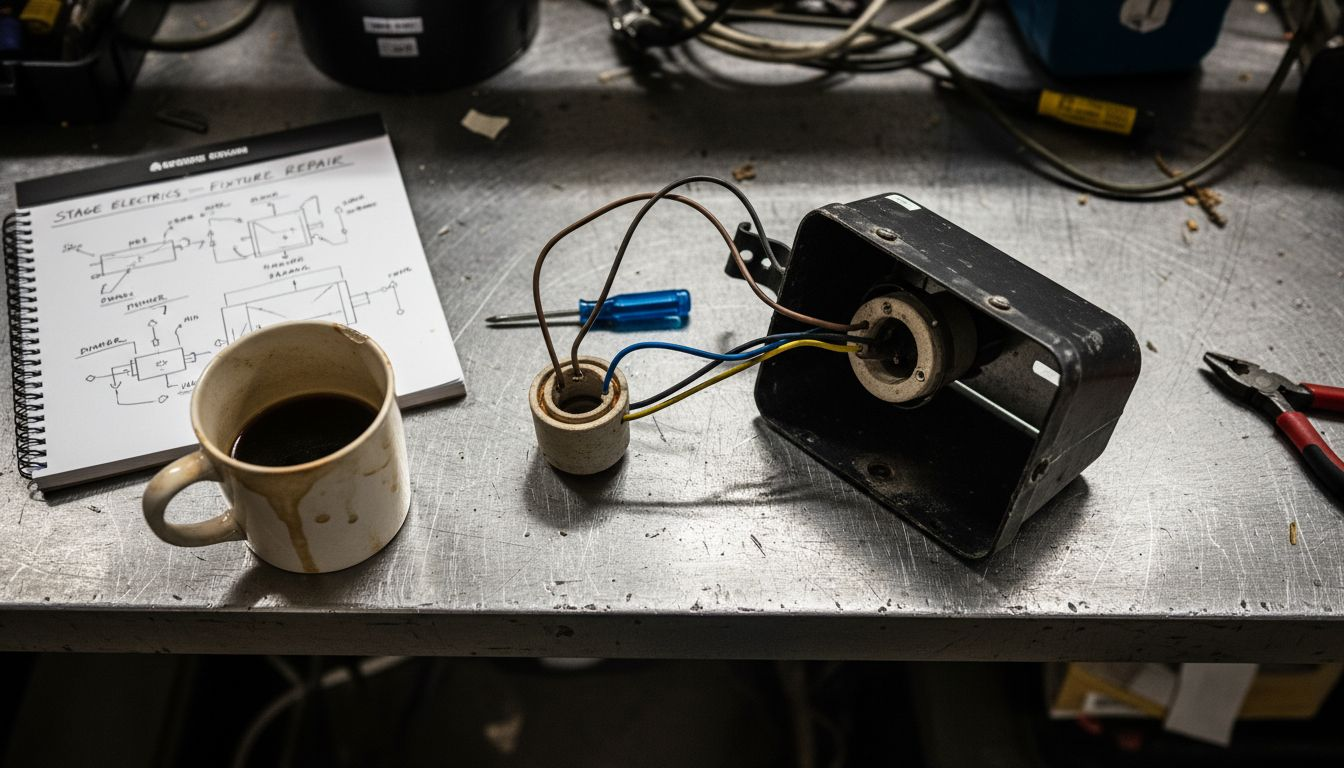
Light fixtures can be categorised into two primary installation types: permanently wired and portable. Permanent installations involve direct electrical connection and are typically found in commercial and residential settings, whereas portable fixtures offer flexibility through plug-in mechanisms. Each design considers critical factors such as electrical safety standards, thermal management, and aesthetic integration within specific environments.
Professional Tip: When selecting a light fixture, always consider both its functional requirements and aesthetic compatibility with your existing space to ensure optimal illumination and design harmony.
Major Light Fixture Types for Venues
Venue lighting design requires a sophisticated understanding of multiple light fixture categories that serve distinct functional and aesthetic purposes. Professional event spaces leverage an intricate array of lighting solutions to create immersive environments that adapt to various performance and entertainment requirements.
The primary light fixture types include wash lights, which provide broad and even illumination across large areas, creating foundational ambient lighting. Moving head lights offer dynamic capabilities, enabling colour changes and precise beam movements that can transform a venue’s atmosphere instantly. Spotlights and profile lights represent precision instruments, allowing event designers to highlight specific performers, decor elements, or architectural features with sharp, focused beams.
Additional specialised fixtures contribute to comprehensive lighting strategies. Pin spots create intimate highlighting for specific objects, while uplights add dramatic accent lighting along walls and architectural structures. Modern LED panels have revolutionised venue lighting by providing energy-efficient, programmable colour mixing capabilities that can rapidly shift mood and visual aesthetics without extensive equipment changes.
Professional Tip: When designing venue lighting, always plan a layered approach that combines different fixture types to create depth, flexibility, and visual interest.
To help clarify common venue lighting options, here is a comparison of major light fixture types used in event spaces:
| Fixture Type | Primary Function | Unique Benefit | Typical Event Use |
|---|---|---|---|
| Wash Light | Broad area illumination | Creates ambient lighting | Stage background |
| Moving Head | Motorised dynamic effects | Versatile colour changes | Concerts, nightclubs |
| Profile Spotlight | Focused, shaped beams | Highlights specific areas | Theatre, presentations |
| Pin Spot | Narrow beam focus | Accentuates small objects | Table centrepieces |
| Uplight | Accent architectural features | Adds dramatic wall effect | Weddings, galleries |
Key Features and Operating Principles
Light fixtures represent complex technological systems with intricate operating principles that extend far beyond simple illumination. These sophisticated devices integrate multiple advanced technologies to convert electrical energy into precisely controlled light output, addressing both functional and aesthetic requirements of modern venues.
The core technological features include sophisticated optical elements designed to manipulate light distribution. These components encompass reflectors, lenses, and diffusers that precisely control beam spread, intensity, and colour characteristics. Advanced control systems enable dynamic management of lighting environments, incorporating sensors, programmable dimmers, and networked protocols that allow instantaneous adjustments to changing performance or venue requirements.
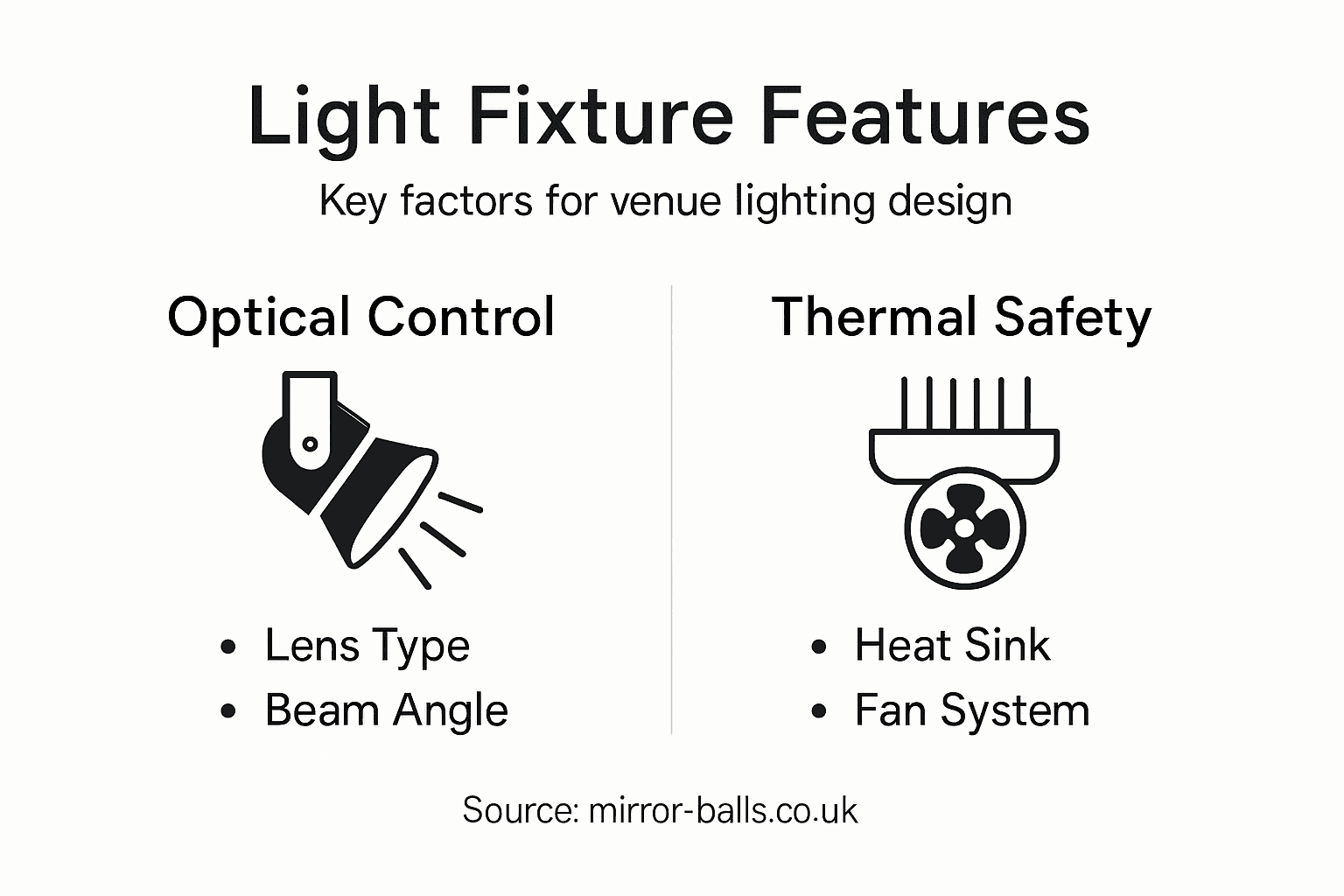
Thermal management represents another critical operating principle, particularly for energy-efficient LED fixtures. Sophisticated heat dissipation mechanisms prevent performance degradation and extend equipment lifespan, while integrated sensors continuously monitor temperature and adjust electrical input. Modern fixtures also prioritise human-centric design, minimising glare, creating comfortable shadow patterns, and delivering lighting that supports visual comfort and spatial perception.
Professional Tip: When selecting light fixtures, prioritise systems with flexible control interfaces and robust thermal management to ensure long-term performance and adaptability.
Safety Standards and UK Legal Requirements
Light fixture installations in the United Kingdom are governed by rigorous safety standards and regulatory frameworks that ensure electrical safety, performance, and user protection. These comprehensive guidelines encompass multiple dimensions of lighting design, from electrical installation to energy efficiency and potential hazard mitigation.
The primary regulatory documents include BS 7671 (IET Wiring Regulations) and Building Regulations Part L, which establish stringent requirements for electrical connections, grounding mechanisms, and heat management. Venue operators must ensure that all lighting installations comply with these standards, which mandate specific ingress protection (IP) ratings, mechanical durability specifications, and comprehensive risk assessment protocols.
Additional guidance from professional bodies like the Chartered Institution of Building Services Engineers (CIBSE) and the Institution of Lighting Professionals (ILP) provides nuanced recommendations for lighting quality, glare control, and obtrusive light reduction. These standards address critical considerations such as illuminance levels, electrical safety during installation, ventilation requirements to prevent overheating, and safe mounting practices that minimise fire risks.
Professional Tip: Conduct annual professional electrical inspections to ensure your lighting installations consistently meet UK safety standards and maintain compliance with current regulations.
For a quick reference, here are leading UK safety standards relevant to light fixture installation:
| Standard / Body | Main Focus | Key Requirement |
|---|---|---|
| BS 7671 (IET Wiring Regulations) | Electrical installation | Safe connections, earthing |
| Building Regulations Part L | Energy efficiency | Minimised energy consumption |
| CIBSE | Lighting quality guidance | Optimal illuminance levels |
| ILP | Professional practice | Glare and light pollution |
Selecting Light Fixtures for Mirror Ball Displays
Choosing the right light fixtures for mirror ball displays requires a strategic approach that balances technical precision with creative vision. Mirror ball effect creation demands careful consideration of light source type, positioning, and interaction with the reflective surface to achieve maximum visual impact.
The primary light fixture types recommended for optimal mirror ball performance include pin spots, which provide concentrated, narrow beam angles that create intense, focused reflections. Moving head lights offer dynamic capabilities, allowing precise beam movement and colour transitions that can transform the mirror ball’s visual effect throughout an event. Complementary fixtures like wash lights help create ambient background illumination, enhancing the overall lighting environment and supporting the mirror ball’s reflective capabilities.
Technical considerations are crucial when selecting light fixtures. Factors such as beam angle, colour temperature, intensity control, and distance from the mirror ball significantly influence the final visual outcome. Venue-specific variables like ceiling height, architectural features, and intended mood must also guide fixture selection. Professional lighting designers typically recommend using multiple fixture types in layered configurations to create depth, dimension, and visual complexity around the mirror ball.
Professional Tip: Always conduct a preliminary light plot and test your lighting setup before the event to ensure precise mirror ball illumination and desired visual effects.
Elevate Your Venue Lighting with Expert Mirror Ball Solutions
Understanding the critical role of light fixtures in venue design unlocks new possibilities for creating truly captivating atmospheres. The article highlights challenges such as choosing the right fixture types like pin spots and moving head lights to maximise mirror ball effects and achieve precise lighting control. These technical complexities can often feel overwhelming when aiming to deliver immersive visual experiences without compromising safety and efficiency.
At mirror-balls.co.uk, we specialise in providing high-quality mirror balls and accessories tailored to complement sophisticated lighting setups. Whether you require professional-grade mirror balls that harmonise seamlessly with dynamic light fixtures or seek expert advice to perfect your venue’s ambiance, our comprehensive offerings can help you overcome the challenges of venue lighting design. Discover how the right mirror ball combined with carefully selected lighting can transform your event space into a stunning spectacle.
Are you ready to master the art of venue illumination with flawless mirror ball displays?
Explore our exclusive range today and take the first step towards creating breathtaking lighting effects. Visit mirror-balls.co.uk to find your perfect match and benefit from our expert guidance tailored to your venue’s unique needs.
Frequently Asked Questions
What are the main components of a light fixture?
A light fixture typically consists of several key components, including the housing, lamp holder, electrical wiring, and power conversion mechanisms. These elements work together to ensure secure electrical connections, optimal light distribution, and user safety.
How do different types of light fixtures impact venue design?
Various types of light fixtures serve distinct purposes in venue design. For example, wash lights provide broad ambient lighting, while moving head lights enable dynamic effects and colour changes. Using a combination of fixture types can enhance visual interest and adaptability in lighting design.
What should I consider when selecting light fixtures for a specific venue?
When choosing light fixtures, consider factors such as the type of event, desired ambiance, space layout, and architectural features. It’s also crucial to evaluate the fixture’s beam angle, intensity, and thermal management capabilities to ensure effective performance.
How do safety standards affect light fixture installations?
Safety standards for light fixtures govern electrical safety, performance, and user protection. Compliance with regulations like BS 7671 and Building Regulations Part L is essential to ensure safe connections, adequate energy efficiency, and reduced risk of hazards during installation and operation.
Recommended
- LED Lighting Terminology: Decoding Key Terms for Venues – Mirror Balls
- Uplights vs Spotlights – Creating Distinct Event Ambience – Mirror Balls
- Role of Reflective Surfaces in Lighting Design – Mirror Balls
- 7 Essential Club Lighting Tips for UK Event Planners – Mirror Balls
- Understanding the Venue Selection Process for Events – Winelands Function – For Every Occasion, Your Celebration