Most british event venues rely on lighting as the secret ingredient for dramatic transformation, yet many organisers remain unclear about the true differences between uplights and spotlights. With over 80 percent of UK corporate events now incorporating advanced lighting techniques, understanding how beam direction and fixture type impact ambience is crucial. This guide breaks down the practical contrasts and helps you design spaces that feel vibrant, focused, and memorable for every audience.
Table of Contents
- What Are Uplights and Spotlights?
- Key Differences In Beam Direction And Effect
- Common Types For Event Venues
- How Each Suits Different Event Needs
- Pairing With Mirror Balls And Decor
Key Takeaways
| Point | Details |
|---|---|
| Uplighting vs. Spotlighting | Uplighting creates broad, ambient illumination, whereas spotlighting focuses on specific elements for dramatic effect. |
| Technical Differences | Uplights use wider beam angles for expansive coverage, while spotlights employ narrower beams for precision. |
| Fixture Selection | Combining uplights and spotlights can enhance spatial dynamics and engagement at events. |
| Mirror Ball Integration | Incorporating mirror balls with uplights and spotlights creates dynamic, captivating lighting effects. |
What Are Uplights and Spotlights?
Uplighting and spotlighting represent two fundamental approaches to architectural and event lighting, each serving distinct purposes in creating visual atmosphere. Uplights project illumination vertically from ground level, washing walls and surfaces with colour and ambient radiance, while spotlights deliver concentrated, directional beams designed to highlight specific elements within a space.
Traditionally, uplighting transforms event spaces by casting soft, expansive light from the floor upward, effectively changing the visual perception of a venue. These fixtures are strategically positioned along walls or architectural features, creating dramatic colour washes that can instantly modify the mood and aesthetic of an environment. Spotlights, in contrast, function more precisely – delivering intense, focused illumination that draws immediate attention to key focal points such as speakers, performers, centrepieces, or critical visual elements.
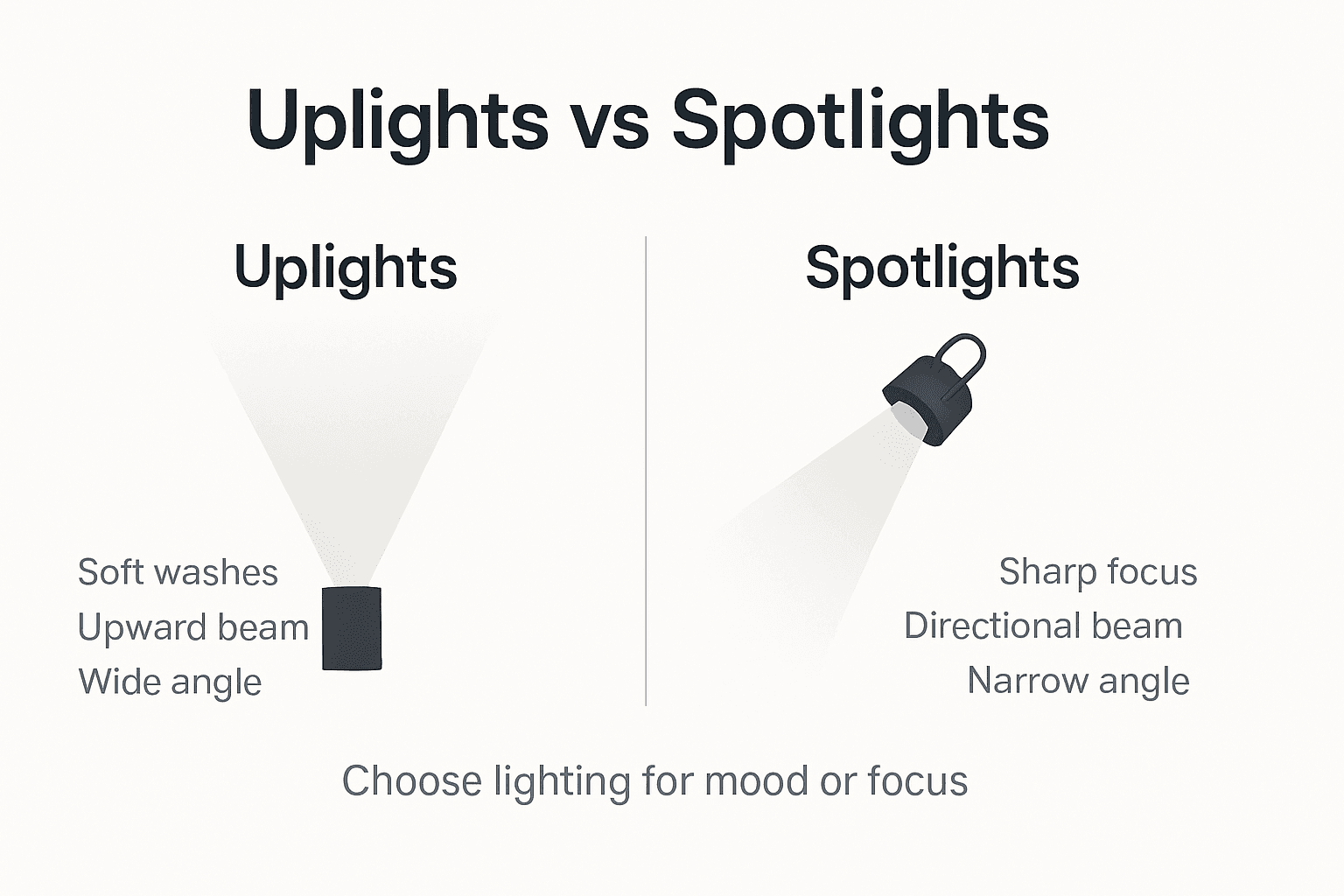
The technical distinctions between these lighting techniques are significant. Uplights typically utilise wider beam angles, often between 25 to 60 degrees, enabling broad colour coverage. Spotlights, however, employ narrower beam configurations ranging from 10 to 25 degrees, allowing for pinpoint accuracy and dramatic intensity. Event designers frequently combine both techniques to create multidimensional lighting landscapes that engage viewers and enhance spatial dynamics.
Here’s a concise overview of how uplighting and spotlighting differ in critical event lighting aspects:
| Aspect | Uplighting | Spotlighting |
|---|---|---|
| Beam Direction | Vertical, from ground up | Directional, aimed at target |
| Atmospheric Effect | Creates ambient, colourful washes | Produces focused, dramatic highlights |
| Typical Beam Angle | 25–60 degrees | 10–25 degrees |
| Venue Usage | Enhances mood, adds dimension | Draws attention to specific elements |
Pro tip: When planning event lighting, experiment with colour temperatures and positioning to create layered, nuanced illumination that transforms your venue’s atmosphere.
Key Differences in Beam Direction and Effect
The fundamental distinction between uplights and spotlights lies in their directional illumination strategies, which dramatically impact how event spaces are visually experienced and perceived. Beam direction fundamentally transforms spatial aesthetics, with each lighting technique offering unique visual capabilities that serve different atmospheric objectives.
Uplights generate vertical light waves that travel upward from ground level, creating soft, expansive illumination that washes walls and architectural features with gentle, diffused colour. This approach allows designers to subtly reshape venue perception by introducing depth, dimension, and mood through gradual light transitions. Spotlights, conversely, operate with surgical precision – delivering concentrated, downward-angled beams that create sharp visual punctuation, drawing immediate attention to specific focal points such as speakers, performers, or decorative elements.
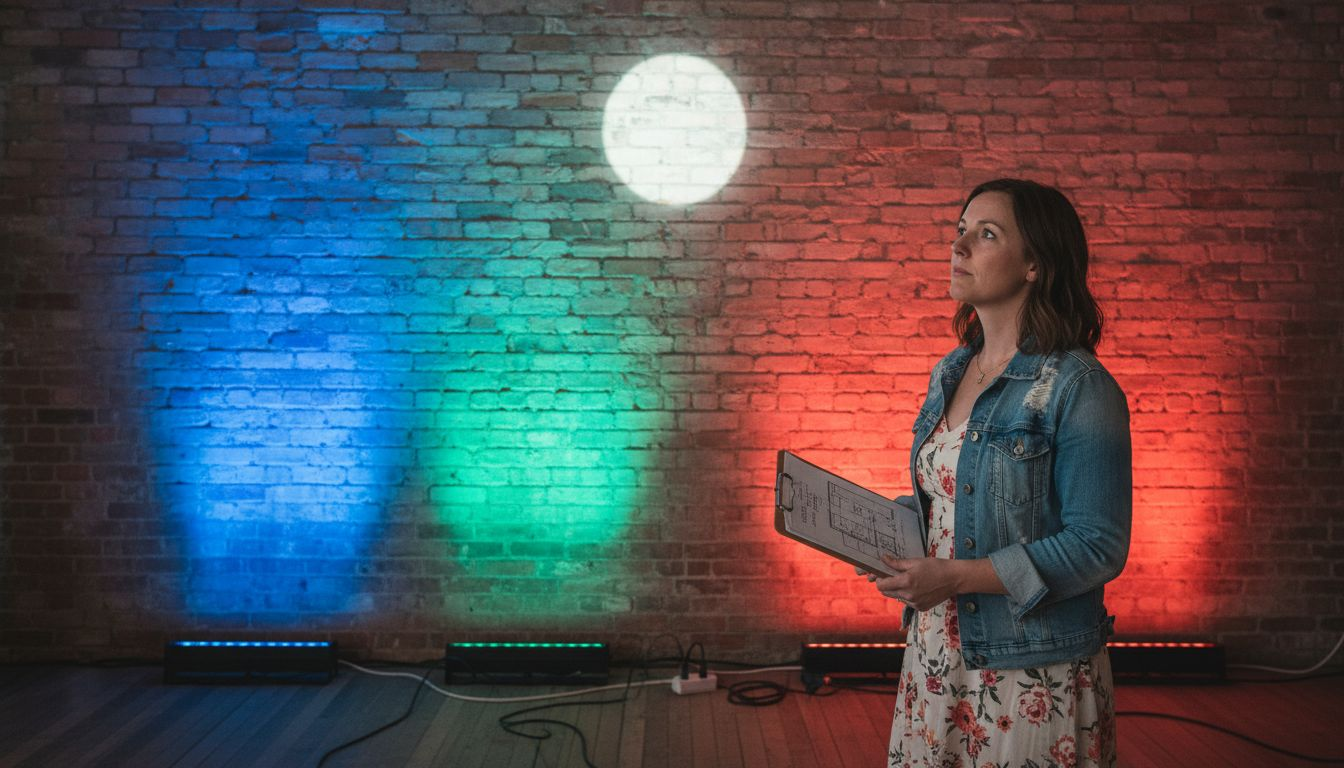
Technical specifications further underscore these differences. Uplights typically employ wider beam angles ranging from 25 to 60 degrees, enabling broad, immersive coverage that blends seamlessly across surfaces. Spotlights utilise narrower beam configurations between 10 to 25 degrees, facilitating pinpoint accuracy and dramatic intensity. Professional event designers often strategically combine these techniques, layering uplighting’s ambient wash with spotlight’s focused illumination to craft multidimensional visual experiences that dynamically engage audiences.
Pro tip: Experiment with colour temperature variations and strategic fixture positioning to create nuanced, adaptable lighting landscapes that transform event spaces.
Common Types for Event Venues
Event lighting encompasses a diverse range of fixture types, each designed to create specific atmospheric effects and visual experiences. Comprehensive lighting strategies involve multiple fixture types that transform venues from mundane spaces into dynamic, engaging environments. Understanding these lighting options enables event designers to craft precisely tailored visual landscapes.
The primary lighting fixtures commonly deployed in event venues include uplights, spotlights, PAR cans, and moving lights. Uplights serve as foundational elements, casting vertical light waves that wash walls and architectural features with rich, immersive colour. Spotlights provide surgical precision, delivering concentrated beams that highlight specific performers, speakers, or decorative elements. PAR cans offer broad colour washes, while moving lights introduce dynamic, programmable visual movements that can dramatically shift a venue’s ambience throughout an event.
Event professionals carefully select and combine these lighting types based on venue characteristics, event scale, and desired emotional impact. Smaller venues might require more intimate, focused lighting configurations, whereas large conference halls or wedding venues demand more comprehensive, layered illumination strategies. Technical considerations such as beam angle, colour temperature, and fixture positioning become critical in creating seamless, engaging visual experiences that guide audience attention and enhance overall event atmosphere.
The table below summarises common lighting fixtures and their ideal event applications:
| Fixture Type | Ideal Event Use | Atmosphere Produced |
|---|---|---|
| Uplight | Weddings, celebrations | Soft, immersive ambience |
| Spotlight | Corporate, performances | Clear, professional focus |
| PAR Can | Parties, broad coverage | Vibrant colour fill |
| Moving Light | Large-scale, dynamic shows | Animated, energetic vibe |
Pro tip: Always conduct a venue site visit and create a detailed lighting design sketch that maps out specific fixture placements and anticipated visual effects before the event day.
How Each Suits Different Event Needs
Lighting selections profoundly transform event experiences, with different fixtures serving unique purposes across various event types. Corporate and social events demand distinctly tailored lighting approaches that align with their specific emotional and functional requirements, making strategic fixture selection crucial for creating desired atmospheres.
In corporate environments, spotlights excel at maintaining professional clarity and directing audience attention. These precise lighting tools ensure speakers remain visually prominent, creating a focused environment that supports presentation dynamics. Weddings and social celebrations, by contrast, benefit from uplights that generate soft, romantic illumination. These versatile fixtures wash venue walls with gentle, transformative colours, creating immersive environments that enhance decor and evoke emotional responses. The warm, diffused light of uplights can metamorphose a standard venue into an intimate, magical space.
Technical considerations further differentiate lighting applications across event categories. Large conference halls might require high-intensity, directional lighting that maintains professional aesthetics, while intimate wedding venues demand more nuanced, mood-driven illumination strategies. Theatrical performances typically combine both spotlight precision for performer highlighting and broader wash lighting to create depth and dimensionality. Cultural events, museums, and gallery openings often leverage sophisticated lighting designs that emphasise architectural features and artwork, requiring a delicate balance between focused illumination and ambient atmosphere.
Pro tip: Always conduct a comprehensive venue assessment and create a detailed lighting mood board that illustrates how different fixtures will interact with the specific architectural and emotional characteristics of your event space.
Pairing With Mirror Balls and Decor
Mirror balls represent a quintessential element in sophisticated event lighting design, offering unique opportunities for creative illumination when strategically combined with uplights and spotlights. Advanced lighting techniques transform mirror ball reflections into dynamic visual experiences, creating multi-dimensional atmospheric effects that captivate event guests.
Uplighting provides an essential foundational layer when integrating mirror balls into event decor, generating soft ambient colour washes that complement the mirror ball’s reflective capabilities. Spotlights play a crucial role by directing precise beams onto the mirror ball, generating intricate light patterns that dance across venue surfaces. This strategic combination allows event designers to create depth, movement, and visual intrigue, transforming ordinary spaces into immersive environments that stimulate multiple sensory experiences.
The technical nuances of pairing lighting fixtures require careful consideration of placement, colour temperature, and beam angles. Mirror balls function most effectively when positioned at strategic heights and angles, allowing spotlights to create maximum light dispersion. Event professionals often experiment with different fixture configurations, using uplights to establish base colour palettes while employing spotlights to generate dynamic, sparkling effects that animate the mirror ball’s reflective surface. Complementary decor elements such as fabric drapes, metallic accents, and reflective surfaces can further enhance these lighting techniques, creating a cohesive and visually stunning event environment.
Pro tip: Experiment with mirror ball positioning at varying heights and angles to discover unexpected light reflection patterns that can dramatically transform your event’s visual landscape.
Elevate Your Event Lighting with Mirror Balls for Stunning Ambience
Struggling to create the perfect balance between uplighting’s soft ambient washes and spotlights’ sharp focused beams The challenge lies in crafting a truly immersive atmosphere that engages every guest and transforms your venue from ordinary to extraordinary. Integrating beautifully reflective mirror balls can solve this puzzle by adding dynamic light patterns that complement your uplights and spotlights seamlessly. By combining these lighting techniques with high-quality mirror balls you create layers of visual intrigue that captivate and energise any event.
Discover our extensive collection of mirror balls designed for venues of all sizes whether you want intimate romantic settings or vibrant large-scale shows. At mirror-balls.co.uk you will find professional-grade mirror balls and accessories that perfectly enhance your strategic lighting plans described in this article. Take the next step and explore how mirror balls can transform your lighting design your guests will remember. Start crafting striking event ambience today by visiting our landing page and unlock possibilities for dazzling illumination that uplifts every celebration.
Frequently Asked Questions
What is the main difference between uplights and spotlights?
Uplights project vertical illumination that washes walls and surfaces with colour, creating ambient light, while spotlights deliver focused, directional beams aimed at specific elements to highlight them.
When should I use uplights at my event?
Uplights are ideal for enhancing the mood and ambience of an event. They work best in venues where soft, immersive lighting is needed, such as weddings and celebrations, by casting gentle colour washes on walls and features.
What are the best applications for using spotlights?
Spotlights are best employed in environments that require clarity and focus, such as corporate events and performances, where they can direct attention to speakers, performers, or specific decorative elements.
How can I effectively combine uplights and spotlights in my event design?
Combining uplights and spotlights creates a multidimensional lighting landscape. Use uplights to create an ambient wash and highlight architecture, while strategically placing spotlights to draw attention to key features or individuals, enhancing the overall visual experience.