Modern British venues are embracing LEDs at a remarkable pace, with over 85 percent now adopting this technology as their main lighting source. Efficient lighting not only shapes the mood of an event but also affects operational costs and audience experience. Grasping the language around LED lighting unlocks better design choices, from creating vibrant atmospheres to managing long-term maintenance, giving professionals the insight needed to excel in any British event space.
Table of Contents
- Understanding LED Lighting Terminology In Venues
- Types Of LEDs And Their Distinctions
- Essential Performance Metrics Explained
- Installation And Safety Considerations For LEDs
- Common Pitfalls When Selecting LED Lighting
Key Takeaways
| Point | Details |
|---|---|
| LED Technology Advantages | LEDs offer energy efficiency, extended lifespan, and varied colour temperatures, essential for modern lighting design. |
| Control and Programming | Understanding DMX controllers and lighting control consoles is vital for creating intricate light sequences. |
| Performance Metrics Importance | Key metrics like Luminous Efficacy, CRI, and CCT are crucial for selecting the right LED lighting for desired effects. |
| Installation Considerations | Proper thermal management, electrical compatibility, and safety protocols are essential to ensure reliable LED performance. |
Understanding LED Lighting Terminology in Venues
LED lighting has transformed event spaces, offering unprecedented flexibility and creative control. Modern venues rely on these sophisticated illumination technologies to craft immersive atmospheric experiences. From theatrical productions to nightclub environments, understanding core LED lighting terminology becomes crucial for professionals seeking to maximise their lighting design potential.
At its fundamental level, LED (Light Emitting Diode) technology represents a revolutionary approach to illumination. LEDs operate through semiconductor components that generate light when electrical current passes through them, producing significantly more efficient and controllable lighting compared to traditional incandescent sources. Venue managers and production designers appreciate LEDs for their remarkable energy efficiency, extended lifespan, and ability to generate multiple colour temperatures without requiring physical filter replacements.
Controlling these advanced lighting systems requires specialised equipment. Lighting control consoles enable precise management of multiple LED fixtures, allowing technicians to programme complex lighting sequences and transitions. Professional venues typically employ sophisticated DMX (Digital Multiplex) controllers which permit intricate programming of individual fixtures, colour mixing, and dynamic effect generation. These systems support everything from subtle ambient lighting shifts to dramatic, synchronised light shows.
Key LED lighting terminology professionals should understand includes:
- Colour Temperature: Measured in Kelvin, indicating the warmth or coolness of white light
- Beam Angle: The spread of light from a single fixture
- Lumens: Total light output measurement
- RGB: Red, Green, Blue colour mixing system for creating diverse colour palettes
- Pixel Mapping: Ability to control individual LED segments within a fixture
By mastering these technical concepts, venue managers can transform spaces, create memorable experiences, and leverage cutting-edge lighting technologies with precision and creativity.
Types of LEDs and Their Distinctions
LED technology has evolved dramatically, presenting venue managers and lighting designers with an impressive array of options tailored to specific performance requirements. Contemporary LED classifications range from phosphor-converted LEDs to sophisticated organic and micro-LED technologies, each offering unique characteristics that dramatically influence lighting design potential.
Phosphor Converted LEDs represent the most traditional variety, utilising a blue LED chip coated with yellow phosphor to generate white light. These versatile fixtures provide consistent colour temperature and are particularly popular in venues requiring stable, uniform illumination. Multi-Chip LEDs represent a more advanced variant, combining multiple LED chips within a single package to produce more complex colour mixing and greater light output, making them ideal for dynamic stage environments.
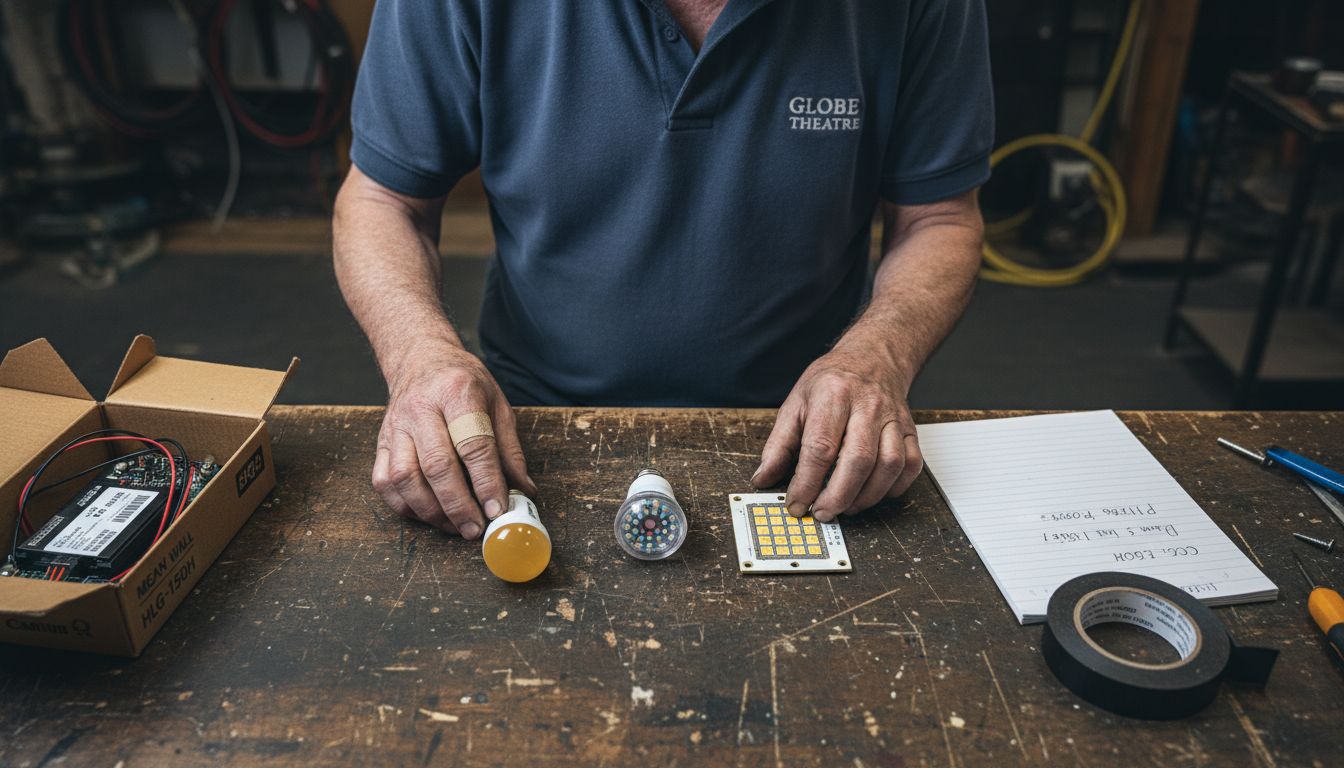
Specialist LED types include Alphanumeric and Flash LEDs, which serve distinctive niche applications across different technical contexts. Organic LEDs (OLEDs) and Micro-LEDs are emerging technologies offering unprecedented design flexibility. OLEDs provide incredibly thin, potentially transparent lighting solutions perfect for architectural integration, whilst Micro-LEDs promise superior brightness and energy efficiency.
Key distinctions between LED types include:
- Colour Rendering: Ability to accurately represent colours
- Beam Angle: Width of light projection
- Luminous Efficacy: Efficiency of converting electrical energy to visible light
- Colour Temperature Range: Spectrum of white light from warm to cool
- Power Consumption: Energy requirements for operation
Understanding these nuanced differences enables venue professionals to select precisely the right LED technology for their specific atmospheric and technical requirements.
Essential Performance Metrics Explained
Venue lighting professionals must understand critical LED performance metrics to make informed equipment selections. Comprehensive LED performance evaluation encompasses multiple sophisticated technical indicators that determine overall lighting quality and efficiency, each offering unique insights into fixture capabilities.
Luminous Efficacy represents the primary measurement of LED efficiency, quantifying how effectively electrical energy transforms into visible light. Typically measured in lumens per watt, this metric reveals the lighting system’s energy conversion potential. Higher efficacy ratings indicate more economical and environmentally responsible lighting solutions, critical for venues seeking to minimise operational costs while maintaining exceptional illumination standards.
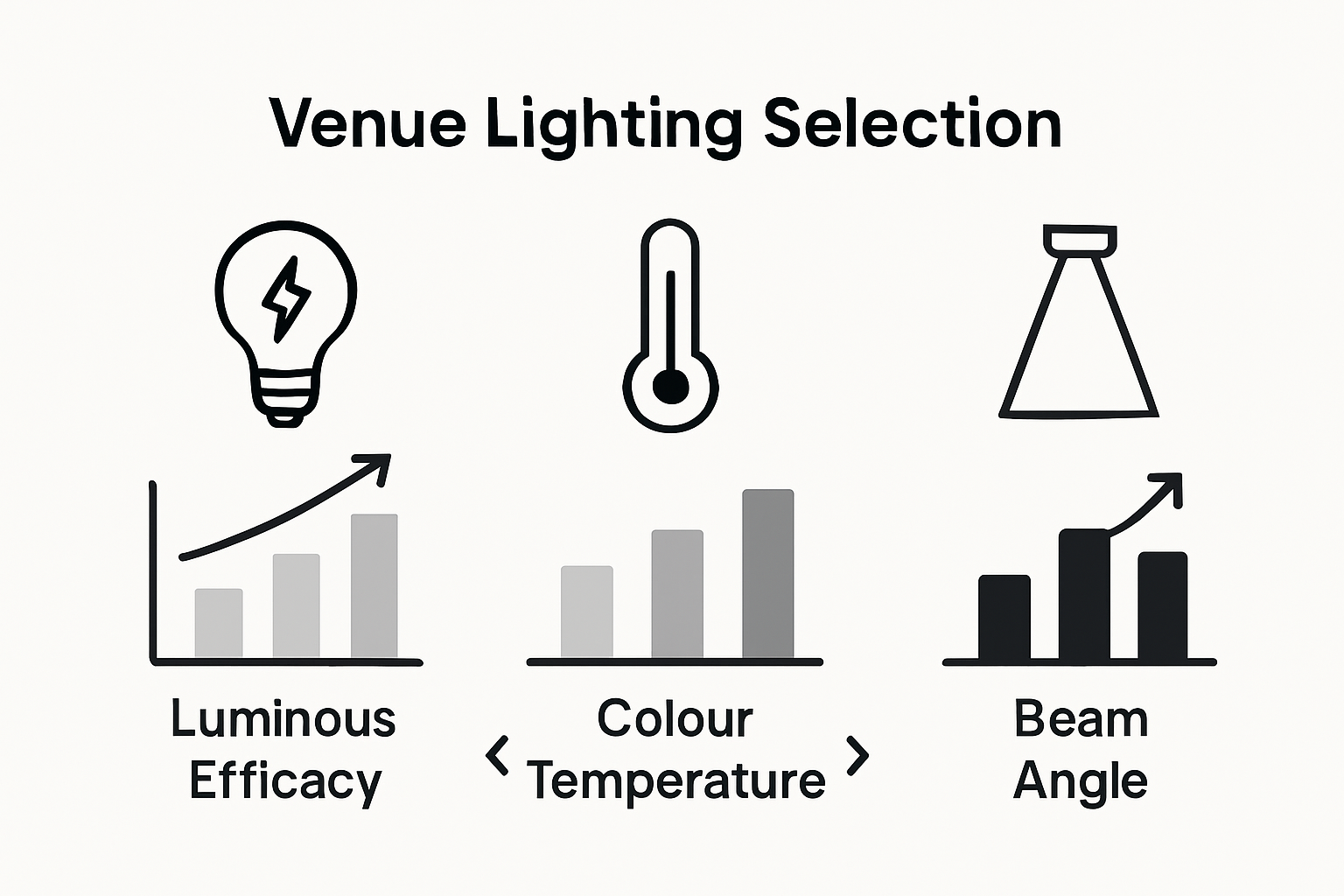
Two additional paramount metrics demand careful consideration. The Colour Rendering Index (CRI) assesses a light source’s ability to reveal object colours accurately compared to natural daylight, with higher scores indicating more faithful colour reproduction. Correlated Colour Temperature (CCT) describes the perceived warmth or coolness of white light, measured in Kelvin, enabling precise atmospheric control across diverse venue environments.
Key performance metrics venues should evaluate include:
- Luminous Flux: Total light output measurement
- Beam Angle: Light distribution width
- Colour Rendering Index (CRI): Colour accuracy rating
- Colour Temperature: Light’s perceived warmth
- Power Consumption: Energy utilisation efficiency
By mastering these intricate performance indicators, lighting designers can craft precisely tailored illumination experiences that meet both technical requirements and creative vision.
Installation and Safety Considerations for LEDs
Effective LED installation requires meticulous attention to thermal management, electrical compatibility, and safety protocols. Venue professionals must understand that successful LED implementation extends far beyond simple fixture placement, demanding comprehensive technical expertise and strategic planning.
Thermal management represents a critical consideration in LED installation. These sophisticated lighting systems generate significant heat, necessitating appropriate ventilation and mounting techniques to prevent performance degradation. Proper heat dissipation mechanisms, such as aluminium heat sinks and strategic positioning, ensure optimal LED longevity and consistent illumination quality. Compatibility with existing electrical systems and dimmer switches requires careful assessment to prevent potential electrical interference or fixture malfunction.
Safety considerations extend beyond electrical parameters. Venue managers must prioritise:
- Electrical Compliance: Ensuring fixtures meet current safety standards
- Thermal Protection: Implementing adequate heat dissipation strategies
- Mounting Stability: Securing fixtures to prevent accidental dislodgement
- Voltage Regulation: Matching power supply to specific LED requirements
- Environmental Protection: Selecting fixtures appropriate for specific venue conditions
By embracing a holistic approach to LED installation, professionals can create stunning, safe, and reliable lighting environments that meet both aesthetic and technical demands.
Common Pitfalls When Selecting LED Lighting
Selecting appropriate LED lighting involves navigating a complex landscape of technical specifications and performance requirements that can easily overwhelm venue managers and lighting designers. Uninformed decisions can lead to significant operational challenges, potentially compromising the entire lighting design’s effectiveness and efficiency.
Colour Quality represents a critical consideration frequently overlooked by professionals. Many venue managers mistakenly prioritise raw brightness over nuanced colour reproduction, resulting in lighting that appears harsh or unnatural. Comprehensive LED selection demands careful evaluation of thermal management, power requirements, and compatibility with existing electrical systems, aspects that extend far beyond simple wattage comparisons.
The most prevalent pitfalls venue professionals encounter include:
- Inadequate Colour Rendering: Selecting LEDs with poor colour accuracy
- Thermal Management Failures: Neglecting heat dissipation requirements
- Power Compatibility Issues: Mismatching voltage and electrical specifications
- Limited Fixture Flexibility: Choosing non-adaptable lighting solutions
- Performance Specification Misunderstandings: Misinterpreting technical ratings
Successful LED lighting selection requires a holistic approach that balances technical specifications, aesthetic requirements, and long-term operational considerations.
Enhance Your Venue Lighting with Stunning Mirror Ball Solutions
Mastering LED lighting terminology such as colour temperature, beam angle and luminous efficacy is essential for creating the perfect atmosphere in any venue. Yet every great lighting design becomes even more captivating when paired with dynamic reflective elements. If you are looking to complement your LED setup with high-quality mirror balls to add sparkle and movement, explore the variety at Mirror Balls. Our collection ranges from intimate disco balls for smaller spaces to large professional-grade mirror balls designed for nightclubs and theatres.
Unlock the full potential of your venue’s lighting by incorporating expertly crafted mirror balls that reflect and amplify your LED effects. Visit https://mirror-balls.co.uk now to browse our selection, get expert advice and choose the perfect accessories. Don’t wait to create a memorable experience for your guests with lighting solutions that truly shine.
Explore the possibilities today at Mirror Balls and elevate your lighting design to a new level.
Frequently Asked Questions
What is colour temperature in LED lighting?
Colour temperature, measured in Kelvin, indicates the warmth or coolness of the light produced by an LED fixture. Lower Kelvin values (around 2700K) produce warm light, while higher values (up to 6500K) provide cooler, daylight-like illumination.
How does beam angle affect LED lighting?
Beam angle refers to the spread of light emitted from a fixture. A narrow beam angle creates focused, intense light ideal for highlighting specific areas, while a wider beam angle offers broader coverage for general illumination in a space.
What is the difference between CRI and CCT?
The Colour Rendering Index (CRI) measures a light source’s ability to accurately render colours compared to natural light, with higher scores indicating better colour fidelity. Correlated Colour Temperature (CCT) indicates the appearance of the light itself (warm or cool) and is measured in Kelvin.
What should I consider for LED installation in a venue?
When installing LEDs, it’s crucial to consider thermal management to prevent overheating, compatibility with electrical systems, safety standards, and proper mounting techniques to ensure stability and performance.
Recommended
- Complete Guide to DMX Lighting Systems – Mirror Balls
- Understanding Why Choose LED Spotlights for Events – Mirror Balls
- Complete Guide to Pin Spots: Uses and Types – Mirror Balls
- Lighting Accessories Explained: Essential Guide for Events – Mirror Balls
- Electrical Lighting – At Your Service Pros
- Complete Guide to E-Bike Technology Essentials