Over 90 percent of successful British nightclubs credit advanced lighting for shaping their signature atmosphere. For nightclub owners across the United Kingdom, mastering lighting is more than a trend; it is a cornerstone of engaging and memorable nightlife. Choosing the right lighting transforms ordinary dance floors into entertainment destinations, setting your venue apart and giving every patron a night to remember.
Table of Contents
- Dance Floor Lighting Fundamentals
- Popular Lighting Types And Technologies
- How Lighting Shapes Energy And Ambience
- Safety, Compliance And Patron Wellbeing
- Cost Considerations And Common Pitfalls
Key Takeaways
| Point | Details |
|---|---|
| Lighting Influences Atmosphere | Effective lighting shapes mood and energy, enhancing the nightclub experience through strategic colour and intensity management. |
| Invest in Quality Technologies | Utilising LED fixtures, moving head lights, and intelligent systems ensures energy efficiency and adaptability, reducing long-term costs. |
| Safety and Compliance Are Critical | Regular safety inspections and compliance with electrical guidelines protect patrons and maintain venue legality. |
| Plan for Long-Term Costs | Developing a comprehensive financial strategy for lighting investment, maintenance, and upgrades is essential for sustainability. |
Dance Floor Lighting Fundamentals
Dance floor lighting goes far beyond mere illumination – it is a strategic design element that transforms nightclub spaces and creates immersive sensory experiences. In UK nightclubs, lighting serves as a critical atmospheric conductor, manipulating mood, energy, and visual dynamics. Technical lighting design principles demonstrate how precise light placement and colour manipulation can dramatically alter audience perception and engagement.
The fundamental components of effective dance floor lighting include strategic colour selection, dynamic movement patterns, and intelligent positioning. Professional lighting designers understand that each light serves multiple purposes: highlighting performers, creating spatial depth, guiding crowd movement, and generating emotional responses. Colour temperature matters significantly – cooler blues and purples generate different emotional states compared to warmer reds and oranges, allowing club managers to subtly influence crowd energy throughout the evening.
Professional dance floor lighting typically incorporates several key technologies and techniques. These include LED par lights for broad colour washes, moving head fixtures for precise beam control, strobe lights for rhythmic intensity, and intelligent lighting systems that synchronise with music beats. Lighting design exploration reveals how these technologies can create layered visual experiences that transform simple dance spaces into dynamic, immersive environments.
Pro tip: Invest in programmable LED lighting systems that allow real-time colour and intensity adjustments to match your venue’s specific musical genres and crowd demographics.
Popular Lighting Types and Technologies
UK nightclubs have evolved to embrace sophisticated lighting technologies that transform dance environments into immersive sensory experiences. Lighting technician expertise reveals the complex array of equipment used to create dynamic visual landscapes, ranging from traditional fixtures to cutting-edge intelligent lighting systems.
The most popular lighting technologies in modern UK nightclubs include several key categories. LED fixtures dominate contemporary installations, offering unprecedented colour flexibility and energy efficiency. Moving head lights provide precise beam control and dramatic movement, allowing lighting designers to create intricate visual narratives that synchronise perfectly with musical rhythms. Additional technologies like strobe lights, UV systems, and laser projections add layers of visual complexity, enabling venues to craft unique atmospheric experiences.
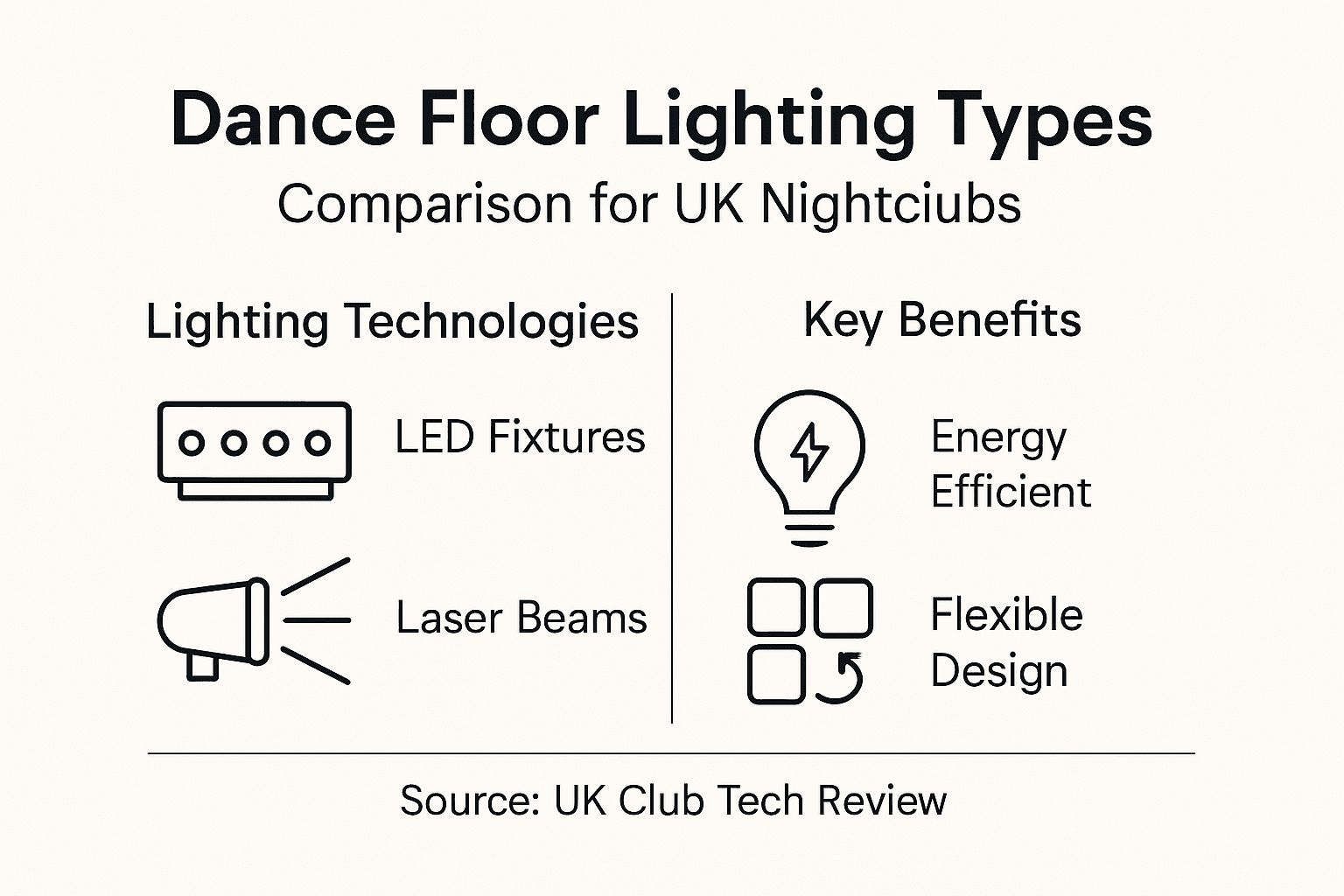
Intelligent lighting systems represent the pinnacle of nightclub technological innovation. These sophisticated setups incorporate programmable LED arrays, DMX control protocols, and advanced synchronisation technologies that can respond in real-time to music beats, crowd movement, and ambient sound levels. Modern systems integrate sound-reactive capabilities, allowing lights to pulse, change colour, and shift intensity dynamically, creating an immersive environment that feels responsive and alive.
Here’s a comparison of major nightclub lighting technologies and their business impact:
| Technology Type | Key Benefit | Typical Use Case | Long-Term Impact |
|---|---|---|---|
| LED Fixtures | High energy efficiency | Colour washes, ambience | Lower running costs |
| Moving Head Lights | Dynamic movement control | Spotlight effects, drama | Greater visual versatility |
| Strobe Lights | Creates rhythmic intensity | Maximising dance floor energy | Enhances peak-time excitement |
| Intelligent Systems | Real-time synchronisation | Responsive immersive shows | Adaptability to music trends |
Pro tip: Invest in lighting control software that allows pre-programming multiple lighting sequences, enabling seamless transitions between different musical genres and crowd energy levels.
How Lighting Shapes Energy and Ambience
Lighting is far more than a visual element in nightclubs – it’s a powerful psychological tool that directly influences human emotion and behaviour. Workplace lighting research demonstrates how strategic light manipulation can profoundly impact mood, energy levels, and social interactions within enclosed spaces.
The psychological impact of lighting emerges through several key mechanisms. Colour temperature plays a crucial role in emotional modulation – warm amber tones create intimate, relaxed environments, while cool blue and white lights generate high-energy, intense atmospheres. Brightness levels and light movement also significantly influence crowd dynamics. Low, pulsing lights can create a sense of mystery and anticipation, whereas bright, rapid strobing effects generate excitement and encourage more dynamic dance floor interactions.
Professional lighting designers understand that dance floor lighting is a nuanced art of emotional engineering. By carefully selecting colour palettes, adjusting intensity, and choreographing light movements, they can guide crowd energy through different stages of an evening. The progression might start with softer, more subdued lighting during early evening hours, gradually transitioning to more aggressive, high-intensity illumination as the night progresses and crowd energy peaks. This deliberate manipulation transforms the nightclub from a simple venue into an immersive, responsive environment that feels almost alive.
Pro tip: Experiment with gradual lighting transitions that subtly guide crowd energy, using colour and intensity shifts to create natural emotional progression throughout the evening.
Safety, Compliance and Patron Wellbeing
Nightclub lighting systems are not just about creating atmosphere – they are critical components of venue safety and legal compliance. Electrical safety guidelines mandate rigorous standards for equipment installation, maintenance, and operational protocols to protect both patrons and staff from potential hazards.
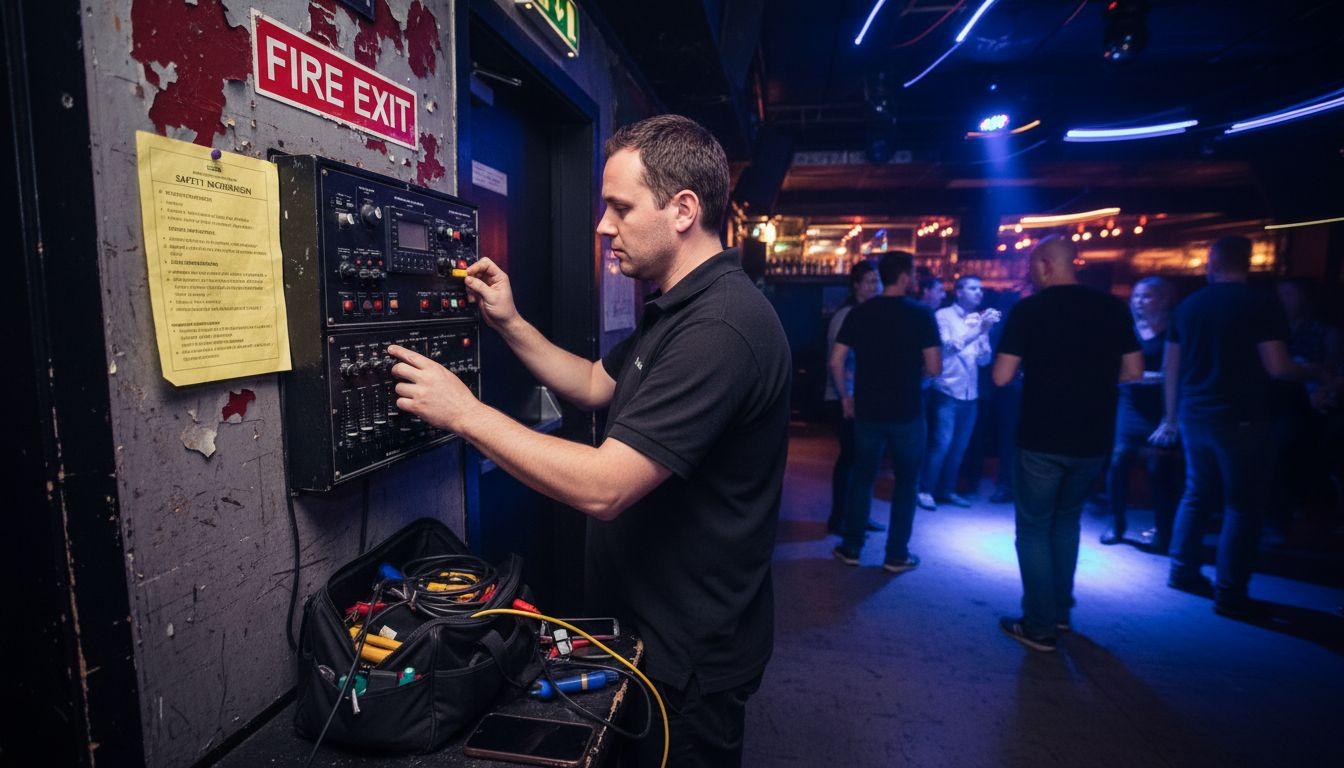
Electrical safety represents a paramount concern for nightclub venues. Electrical equipment must undergo regular professional testing, with specific attention to lighting rigs, power connections, and control systems. Key safety considerations include preventing cable exposure, ensuring proper earthing of electrical systems, and maintaining safe distances between high-temperature lighting fixtures and flammable materials. Professional venues must implement comprehensive risk assessments that identify potential electrical hazards and develop mitigation strategies to prevent accidents.
Fire safety represents another crucial dimension of patron wellbeing. Modern nightclub lighting designs must incorporate emergency lighting systems that activate immediately during power failures, ensuring clear visibility for evacuation routes. Fire safety protocols require venues to maintain clear emergency exits, install appropriate fire detection systems, and train staff in rapid response procedures. Intelligent lighting systems can be programmed to automatically illuminate escape routes during emergencies, providing critical guidance when standard lighting fails.
Pro tip: Conduct monthly electrical safety inspections and maintain detailed maintenance logs to demonstrate compliance and protect your venue from potential legal liabilities.
Cost Considerations and Common Pitfalls
Designing an effective nightclub lighting system requires strategic financial planning and technical expertise. Lighting technology research demonstrates that initial equipment costs represent only a fraction of the total investment, with ongoing energy consumption and maintenance being critical financial considerations.
The most significant cost pitfalls emerge from poorly planned lighting infrastructure. Initial investment should prioritize energy-efficient LED technologies that offer lower long-term operational expenses. Venues frequently make mistakes by purchasing cheap, low-quality fixtures that require frequent replacement or consume excessive electricity. Professional lighting systems might demand higher upfront costs but deliver substantial savings through reduced energy consumption, longer equipment lifespan, and more sophisticated control capabilities. Key financial considerations include assessing the total cost of ownership, which encompasses equipment purchase, installation, maintenance, electricity consumption, and potential future upgrades.
Technical complexity represents another potential financial risk for nightclub owners. Live event technology professionals emphasise the importance of understanding lighting control systems and their integration capabilities. Incompatible or outdated technologies can lead to significant unexpected expenses, requiring complete system redesigns or complex retrofitting. Nightclub managers must invest in versatile, scalable lighting solutions that can adapt to changing musical trends, audience expectations, and technological advancements without necessitating complete system replacements.
The following table summarises common nightclub lighting pitfalls and how to avoid them:
| Pitfall | Typical Consequence | Prevention Strategy |
|---|---|---|
| Cheap fixtures | Frequent replacements, higher bills | Invest in quality LED equipment |
| Poor infrastructure planning | Expensive redesigns, incompatibility | Assess scalability from the outset |
| Neglecting maintenance | Equipment failure, compliance risk | Schedule regular system checks |
| Ignoring upgrade cycles | Outdated experience, higher costs | Develop a phased upgrade roadmap |
Pro tip: Develop a comprehensive five-year lighting infrastructure plan that includes projected upgrade cycles and potential technological transitions to manage long-term financial investments effectively.
Elevate Your Nightclub Atmosphere with Perfect Mirror Balls
Creating the ideal dance floor lighting is key to shaping mood and energising your crowd. The article highlights the importance of dynamic lighting systems that synchronise with music and guide emotional progression using colours and intensity. However, achieving this immersive ambience also relies on captivating reflective effects that amplify light movement and depth – this is where high-quality mirror balls become indispensable. Whether it is broad colour washes or pulsating strobes, mirror balls add a unique sensory layer that complements LED and moving head lights.

Discover an extensive selection of mirror balls designed for professional venues that demand reliability and stunning visual impact at Mirror Balls. Our collection ranges from compact glitter balls perfect for intimate areas to large-scale mirror spheres that create spectacular light shows within your venue. Take control of your nightclub’s vibe today by integrating expertly crafted reflective accessories that transform your lighting design into a memorable experience. Explore our range now and enhance your lighting setup with proven crowd-pleasing solutions available at https://mirror-balls.co.uk.
Frequently Asked Questions
How does dance floor lighting impact the atmosphere in nightclubs?
Dance floor lighting plays a crucial role in setting the mood and energy levels of a nightclub. Using different colours and intensities, lighting can evoke specific emotional responses and enhance the overall sensory experience for patrons.
What are the benefits of using LED lighting in nightclubs?
LED lighting offers high energy efficiency, vibrant colour flexibility, and long lifespan. It helps in lowering operational costs while providing the ability to create dynamic visual effects that can adapt to the music and crowd dynamics.
How can intelligent lighting systems enhance the clubbing experience?
Intelligent lighting systems can synchronise with music beats and crowd actions, creating a responsive environment. These systems can adjust colours, intensity, and movement in real time, allowing for immersive and engaging visual experiences that change throughout the night.
What safety considerations should be taken into account when designing nightclub lighting?
Key safety considerations include ensuring proper electrical maintenance and compliance with fire safety regulations. Regular inspections, maintaining clear emergency exits, and installing automatic emergency lighting are essential to protect both patrons and staff.
Recommended
- Trends in Nightclub Lighting 2025 – Transforming UK Venues – Mirror Balls
- Why Lighting Matters for Clubs and Events – Mirror Balls
- UV Lighting in Nightclubs – Impact on Venue Experience – Mirror Balls
- How to Choose Disco Lights for Events and Venues – Mirror Balls
- Dancing At Weddings: Essentials For Unforgettable Moments