Most people forget that british nightlife is influenced by much more than flashing lights and pulsing music. UV lighting, often misunderstood as simply decorative, plays a central role in shaping crowd energy and the overall experience in clubs. In fact, studies reveal that over 60 percent of venues rely on UV lighting for creating striking visual effects, yet persistent myths surround its safety and purpose. Unpacking these misconceptions helps venue operators and partygoers alike better understand both the science and the risk management behind those glowing nights.
Table of Contents
- UV Lighting: Defining Purpose And Misconceptions
- Types Of UV Lights Used In Nightclubs
- Creating Visual Impact With UV Effects
- Legal Standards And Safety Responsibilities
- Integrating UV With Mirror Balls And Lighting
Key Takeaways
| Point | Details |
|---|---|
| Purpose of UV Lighting | UV lighting in nightclubs serves complex roles in atmosphere design and crowd experience beyond mere decoration. |
| Health Risks and Safety | UV lights can pose health risks, necessitating proper management and safety protocols for patrons. |
| Types of UV Technologies | Different UV lights like Black Light Fluorescent Tubes and LED UV Fixtures create unique visual effects, each with varying intensity and energy efficiency. |
| Regulatory Compliance | Venues must adhere to safety standards and monitor UV emissions to ensure audience protection and legal compliance. |
UV Lighting: Defining Purpose and Misconceptions
UV lighting represents a sophisticated illumination technology that extends far beyond simple aesthetic appeal in nightclub environments. While many assume these specialised lights serve purely decorative purposes, they actually play complex roles in atmospheric design and crowd experience. Exploring the scientific principles behind UV radiation reveals fascinating nuances about their functionality and potential limitations.
Contrary to popular misconceptions, UV lights do not produce significant health benefits like vitamin D synthesis. Scientific research confirms that nightclub UV lights typically emit UVA radiation around 365nm wavelengths, which are insufficient for triggering meaningful biological processes. Moreover, the light intensity remains substantially lower than natural sunlight, rendering claims about physiological advantages largely unfounded.
Healthcare professionals have raised legitimate concerns about UV lighting risks. A significant case study documented mass photokeratitis incidents among nightclub attendees resulting from unprotected UV-B light exposure. These findings underscore the critical importance of proper UV lighting management, emphasising that venue operators must prioritise safety protocols and understand potential physiological impacts.
Pro Expert Tip: Always verify the specific UV light specifications and safety ratings before installation in any entertainment venue, ensuring appropriate wavelength control and minimal potential for unintended health consequences.
The technology behind UV lighting involves precise electromagnetic radiation manipulation. Different wavelength ranges produce distinct visual effects – from subtle atmospheric glows to dramatic fluorescent transformations. Understanding these technical nuances helps event organisers and venue designers create more intentional, sophisticated lighting experiences that balance aesthetic appeal with audience safety.
Practical Pro Tip: Consult professional lighting technicians who can provide detailed guidance on UV lighting selection, placement, and safety standards for your specific venue requirements.
Types of UV Lights Used in Nightclubs
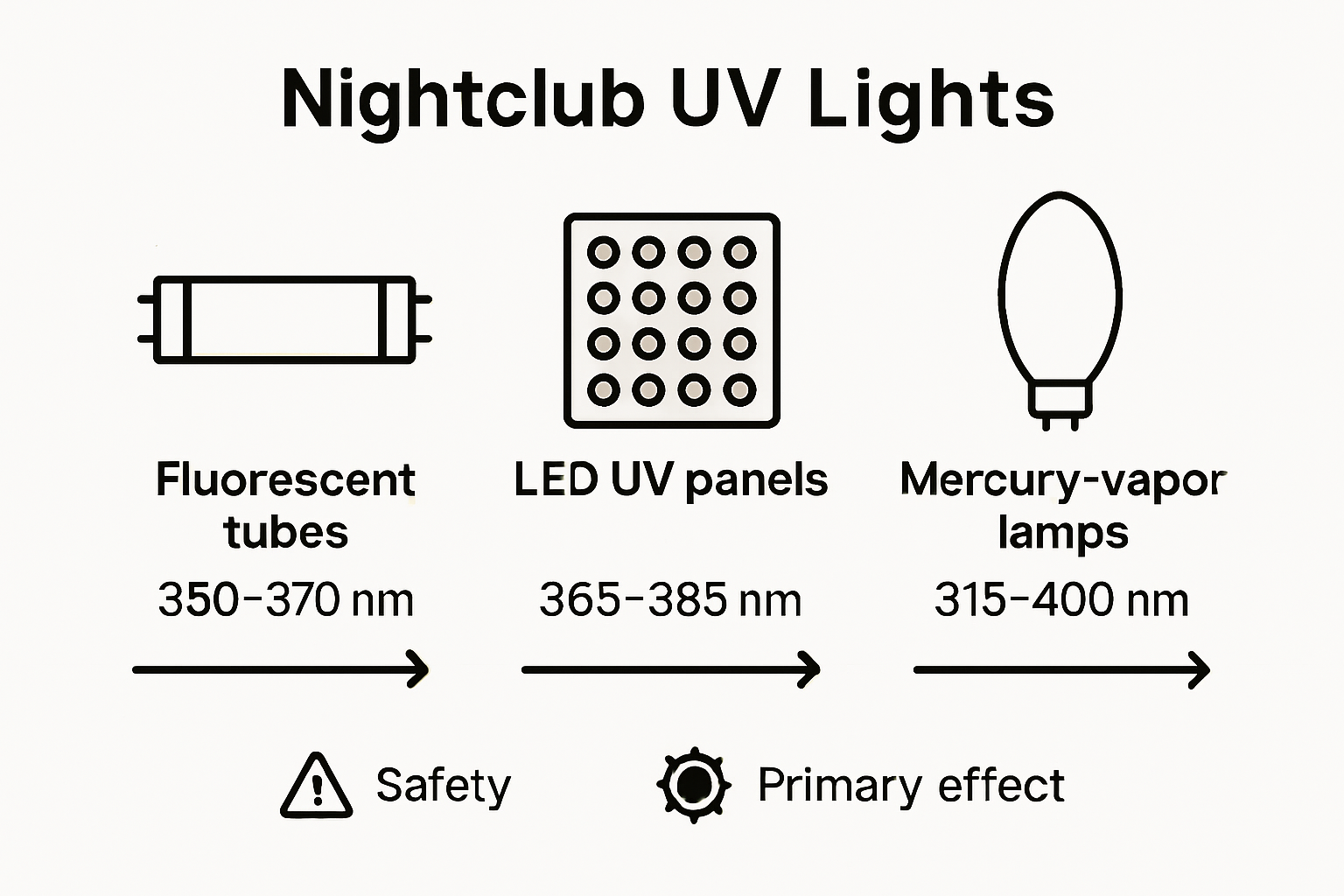
UV lighting technologies play a pivotal role in creating immersive nightclub atmospheres, with multiple specialised light sources delivering distinctive visual experiences. Black light lamps represent the most common ultraviolet illumination method, utilising long-wave UVA radiation to generate dramatic fluorescent effects that transform venue aesthetics.
Nightclub lighting engineers frequently employ multiple UV light varieties to achieve nuanced visual impacts. Mercury-vapor lamps offer another sophisticated option for generating powerful ultraviolet emissions, producing light through electric arc technology in mercury vapor. These sophisticated fixtures emit both visible and ultraviolet wavelengths, enabling technicians to craft intricate lighting designs that transcend traditional illumination approaches.
The primary categories of UV lights used in nightclub environments include:
- Black Light Fluorescent Tubes: Phosphor-coated lamps filtered through Wood’s glass
- Mercury-Vapor Lamps: High-intensity discharge lights with strong UV radiation
- LED UV Fixtures: Modern, energy-efficient alternatives with programmable colour capabilities
- Speciality UV Par Cans: Compact lighting units designed for targeted illumination
Technical considerations remain paramount when selecting UV lighting systems. Wavelength range, intensity, and potential thermal output must be carefully evaluated to ensure optimal performance and audience safety. Professional lighting designers typically conduct comprehensive assessments to determine the most appropriate UV technologies for specific venue requirements.
Pro Expert Tip: Always consult certified lighting professionals who can provide tailored recommendations for UV lighting installations, ensuring both aesthetic excellence and regulatory compliance.
Practical Pro Tip: Invest in high-quality UV fixtures with adjustable intensity controls, enabling precise atmospheric management throughout different stages of your entertainment event.
Here is a concise comparison of common UV lighting technologies in nightclub environments:
| UV Light Type | Typical Wavelength | Primary Effect | Energy Efficiency |
|---|---|---|---|
| Black Light Fluorescent | ~365nm | Strong fluorescence, wide spread | Moderate |
| Mercury-Vapour Lamp | 254–365nm | Intense UV with visible light mix | Low |
| LED UV Fixture | 365–400nm | Programmable glow effects | High |
| Speciality UV Par Can | 365–385nm | Focused, targeted illumination | Variable |
Creating Visual Impact with UV Effects
Ultraviolet lighting transforms nightclub environments by creating mesmerising visual experiences that transcend traditional illumination techniques. Black light theatre techniques demonstrate how UV lighting can generate stunning visual illusions, strategically illuminating fluorescent elements against dark backgrounds to produce extraordinary sensory effects.
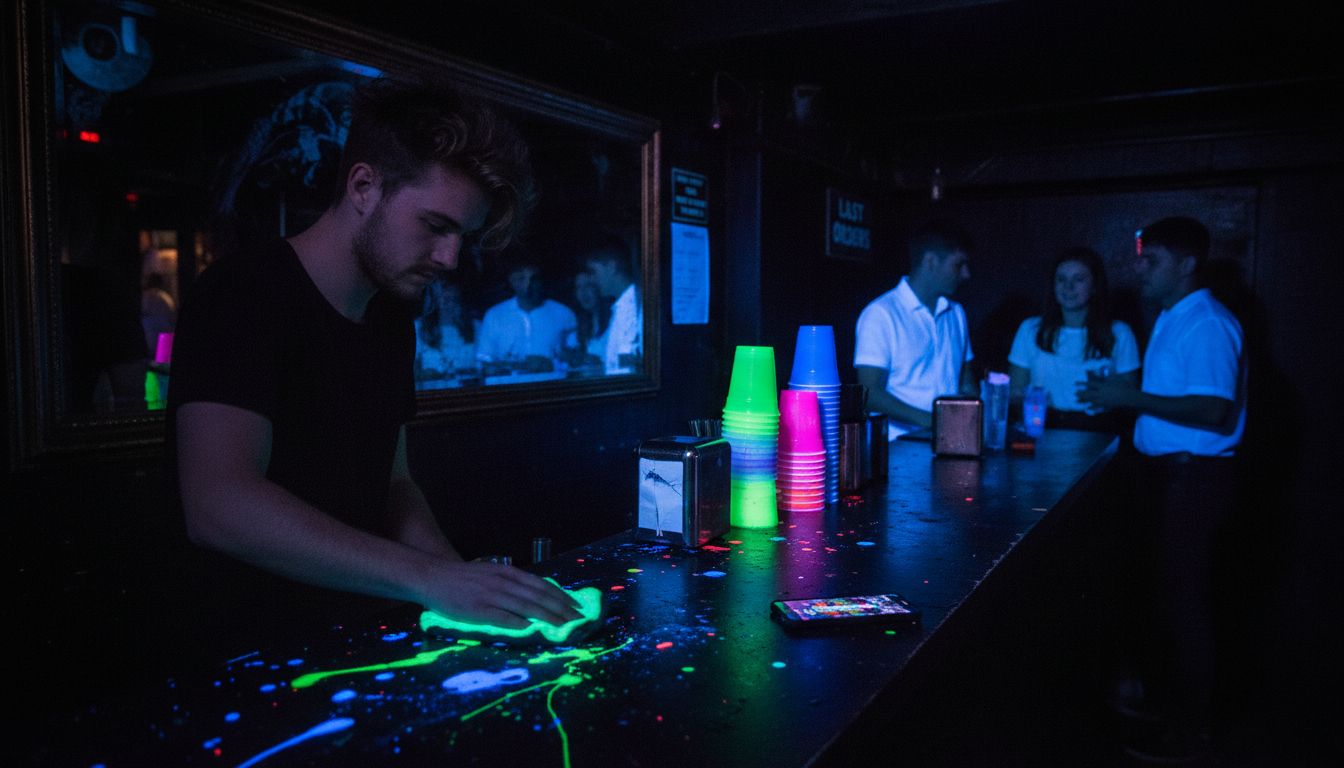
UV lighting enables nightclub designers to craft immersive ‘glow in the dark’ atmospheres, leveraging specialised mercury vapor lamps to generate vibrant ultraviolet wavelengths. These sophisticated lighting approaches allow venues to create dynamic visual landscapes that dramatically enhance audience engagement and emotional response.
Key strategies for maximising UV lighting visual impact include:
- Selecting high-quality fluorescent materials
- Designing strategic lighting placement
- Incorporating multi-wavelength light sources
- Experimenting with reflective surface configurations
- Utilising programmable lighting controllers
Successful UV effect implementation requires nuanced understanding of colour theory, light wavelengths, and audience perception. Lighting professionals must carefully balance intensity, coverage, and spectral characteristics to achieve optimal visual outcomes that transform ordinary spaces into extraordinary sensory environments.
Technical considerations involve precise wavelength management, ensuring that UV emissions create desired aesthetic effects without compromising audience comfort or safety. Advanced venues incorporate sophisticated DMX lighting systems that allow real-time colour and intensity adjustments, enabling dynamic atmospheric transformations throughout entertainment events.
Pro Expert Tip: Conduct comprehensive testing of UV lighting setups using specialised measurement equipment to verify optimal visual performance and safety parameters.
Practical Pro Tip: Invest in high-quality fluorescent materials and professionally calibrated UV lighting systems to guarantee consistently impressive visual experiences.
Legal Standards and Safety Responsibilities
Regulatory compliance represents a critical consideration for venues implementing ultraviolet lighting technologies. Documented incidents of mass photokeratitis demonstrate the potential health risks associated with improper UV exposure, underscoring the paramount importance of stringent safety protocols in entertainment environments.
Venues must navigate complex legal landscapes governing UV lighting implementations. European regulations have already established precedents by banning low-efficiency mercury-vapor lamps, signalling a broader trend towards prioritising audience safety and environmental sustainability. These legislative frameworks compel nightclub operators to continually reassess their lighting technologies and safety management strategies.
Key legal and safety considerations for UV lighting include:
- Comprehensive risk assessment protocols
- Regular equipment maintenance and calibration
- Precise wavelength emission monitoring
- Audience exposure limitation strategies
- Documented safety management procedures
- Compliance with regional health and safety regulations
Effective safety management demands a multifaceted approach that integrates technical expertise, regulatory knowledge, and proactive risk mitigation. Professional lighting designers must collaborate closely with health and safety experts to develop comprehensive frameworks that protect both audience experiences and individual well-being.
Technical documentation, regular equipment inspections, and staff training programmes form the cornerstone of responsible UV lighting management. Venues must develop robust systems that track equipment performance, monitor potential health risks, and ensure continuous compliance with evolving regulatory standards.
Pro Expert Tip: Engage specialised lighting safety consultants to conduct comprehensive audits of your UV lighting systems, ensuring complete regulatory alignment and audience protection.
Practical Pro Tip: Maintain detailed maintenance logs and implement strict periodic testing protocols for all UV lighting equipment to demonstrate ongoing commitment to safety standards.
To better understand UV lighting compliance, here is a summary of key venue safety responsibilities:
| Compliance Area | Description | Business Benefit |
|---|---|---|
| Wavelength Monitoring | Regular checks of emitted UV spectrum | Ensures legal and safe operation |
| Equipment Maintenance | Scheduled inspections and calibration | Reduces breakdown risk |
| Staff Training | Ongoing education on UV handling | Minimises exposure incidents |
| Documentation and Record Keeping | Logs of maintenance and safety checks | Demonstrates due diligence |
Integrating UV with Mirror Balls and Lighting
Lighting design requires sophisticated integration techniques that transform ordinary entertainment spaces into extraordinary sensory environments. UV blacklight effects offer remarkable opportunities for creating dynamic visual experiences when combined with mirror ball technologies, enabling venues to craft immersive atmospheric landscapes that captivate audience attention.
Combining UV lighting with reflective surfaces like mirror balls generates vibrant and multilayered visual presentations, where fluorescent materials interact dynamically with dispersed light patterns. This sophisticated approach allows lighting technicians to create depth, movement, and unexpected visual transformations that elevate audience engagement.
Key strategies for successful UV and mirror ball integration include:
- Selecting complementary fluorescent materials
- Understanding wavelength interactions
- Positioning mirror balls for optimal light dispersion
- Experimenting with multiple light source angles
- Calibrating intensity and coverage
- Implementing programmable lighting controllers
Technical precision remains crucial when orchestrating these complex lighting arrangements. Lighting designers must carefully calculate reflective angles, understand material properties, and anticipate how different wavelengths interact to produce desired visual outcomes. Professional venues invest significant time in testing and refining these intricate lighting configurations.
The interplay between UV lighting and mirror balls creates multidimensional visual experiences that transcend traditional illumination approaches. By strategically manipulating light sources, reflective surfaces, and fluorescent materials, venues can generate immersive environments that stimulate audience perception and emotional response.
Pro Expert Tip: Conduct comprehensive lighting rehearsals using modular equipment to experiment with different UV and mirror ball configurations before finalising your design.
Practical Pro Tip: Invest in high-quality, adjustable lighting equipment that allows precise control over wavelength, intensity, and reflection to achieve optimal visual effects.
Elevate Your Nightclub Atmosphere with Expert Lighting Solutions
Creating an unforgettable venue experience hinges on mastering complex lighting challenges like UV integration and reflective effects. This article highlights critical issues such as UV radiation safety, precise wavelength control, and the dynamic interplay between UV lighting and mirror balls to captivate audiences. If you aim to transform your space into an immersive sensory environment while maintaining safety and legal compliance, high-quality mirror balls are essential tools.
Discover a wide range of professional-grade mirror balls and accessories at https://mirror-balls.co.uk designed for venues just like yours. Our products help you achieve stunning visual impacts when paired with UV lighting, allowing you to create brilliant fluorescent reflections and multi-layered effects that mesmerise your guests. Act now to enhance your nightclub’s lighting strategy with solutions that combine aesthetic brilliance and practical safety. Explore our collection and get expert advice today at mirror-balls.co.uk to start designing your next-level lighting setup.
Frequently Asked Questions
What are the primary purposes of UV lighting in nightclubs?
UV lighting in nightclubs serves to enhance the visual atmosphere by creating dramatic fluorescent effects and transforming the overall aesthetic environment, far beyond mere decor.
What types of UV lights are commonly used in nightclubs?
Common types of UV lights used in nightclubs include black light fluorescent tubes, mercury-vapour lamps, LED UV fixtures, and speciality UV par cans, each offering unique visual experiences and characteristics.
What safety precautions should be considered when using UV lighting in venues?
Venues should conduct comprehensive risk assessments, maintain regular equipment inspections and calibrations, monitor wavelength emissions, and provide staff training to ensure the safety of both employees and patrons.
How can UV lighting be integrated effectively with other lighting technologies?
Effective integration of UV lighting with other technologies, such as mirror balls, involves strategic selection of fluorescent materials, optimal positioning for light dispersion, and careful calibration of intensity and angle to create visually captivating experiences.