Transforming an ordinary venue into an unforgettable space often comes down to more than decor choices or floral arrangements. For event planners across the UK, uplighting uses fixtures positioned at ground level to cast light upwards, dramatically enhancing both ambience and architectural features while maintaining essential safety considerations. Whether you are orchestrating a corporate gala or a wedding celebration, exploring uplighting techniques empowers you to highlight venue character, control mood, and achieve professional visual impact suited to any occasion.
Table of Contents
- What Is Uplighting in Event Design?
- Types of Uplighting and Their Effects
- Core Features and How Uplighting Works
- Top Event Uses for Uplighting in the UK
- Cost, Set-Up, and Common Mistakes to Avoid
Key Takeaways
| Point | Details |
|---|---|
| Uplighting Transforms Spaces | Uplighting enhances venue aesthetics by casting light from below, highlighting architectural features and creating dynamic atmospheres. |
| Versatility of Lighting | The ability to change colours throughout an event allows for mood shifts, making uplighting adaptable for various occasions. |
| Planning and Placement Are Crucial | Thoughtful fixture placement and careful planning are essential to avoid common mistakes like shadows or glare that can detract from the event experience. |
| Cost Considerations | Event planners should account for equipment rental, installation, and power needs to prevent budget surprises. |
What Is Uplighting in Event Design?
Uplighting is a deceptively simple yet transformative technique that fundamentally changes how your venue appears to guests. At its core, uplighting uses fixtures positioned at ground level to cast light upwards, illuminating walls, architectural features, and the overall space from below rather than above. This low-angle approach creates dramatic visual effects that traditional overhead lighting cannot achieve. For event planners in the UK, understanding how proper event management involves lighting setup ensures both aesthetic excellence and guest safety.
The magic of uplighting lies in how it transforms familiar spaces into entirely new environments. When you illuminate a historic stone wall from below, the texture becomes suddenly prominent and inviting. A plain white ceiling gains depth and dimension when coloured uplights wash across it. The architectural bones of your venue become part of the design narrative rather than simply background infrastructure. Unlike overhead spotlights that can create harsh shadows on faces and create uncomfortable brightness, uplighting works with your venue’s existing architecture to establish mood and atmosphere. Corporate function rooms, hotel ballrooms, and wedding venues across the UK have discovered that strategic uplighting costs less than major structural changes yet delivers comparable visual impact.
What makes uplighting particularly valuable for your events is its versatility and control. You can adjust colours throughout the evening to suit different portions of your programme. A sophisticated deep blue during the welcome reception transitions to energetic amber for the main event, then perhaps to soft pink for the evening reception. The same fixtures serve multiple purposes without requiring repositioning. Since uplights typically sit on the floor or mount discreetly on existing structures, they don’t clutter sightlines or interfere with other event elements. The technique works equally well in grand period venues with soaring ceilings and contemporary event spaces with clean, minimal aesthetics. When designing lighting for your events, understanding how architectural features can be highlighted helps you select the right uplighting approach for your specific venue.
From a practical standpoint, uplighting requires thoughtful planning. You need to assess which architectural elements deserve emphasis and which should remain subtle. A feature wall might warrant vibrant colour whilst adjacent walls receive softer, more neutral tones to maintain visual balance. Cable management matters more than you might think, as equipment positioned at floor level must be secured safely so guests cannot trip over connections. Power availability, fixture placement angles, and colour selection all influence the final result. Event planners who start by mapping their venue and identifying key architectural features before selecting uplighting equipment avoid costly repositioning and ensure cohesive results that genuinely enhance rather than distract from their event.
Pro tip: Begin any uplighting plan by visiting your venue during different times of day and with various lighting conditions, then photograph the spaces you want to enhance; this reference helps you select appropriate uplighting colours and positioning that complements rather than competes with natural light.
Types of Uplighting and Their Effects
Uplighting isn’t a one-size-fits-all solution, and understanding the different types available helps you select exactly what your venue needs. The primary categories of uplighting fixtures each produce distinctly different visual results, and your choice depends on your venue’s architecture, budget, and the atmosphere you want to create. LED Par cans represent the modern standard for most UK events. These compact fixtures produce consistent colour and intensity across the illuminated surface, offering remarkable control through wireless dimming systems. They’re energy efficient, run cooler than older technology, and allow you to shift colours throughout your event without changing physical equipment. Metal halide floodlights remain popular for large-scale installations where brightness and throw distance matter most. These fixtures produce intense white light with excellent penetration, making them ideal for illuminating expansive stone walls or high ceilings in grand venues. The trade-off is higher energy consumption and heat output compared to LEDs. Understanding how different lighting types accentuate architectural details helps ensure you select fixtures that genuinely enhance rather than overpower your venue’s character.
Colour capabilities distinguish another crucial dimension of uplighting choice. Static colour uplighting uses fixed-colour lamps, typically in warm white, cool white, or amber tones. This approach suits corporate events where you want sophisticated, unchanging ambience throughout the evening. The fixtures are straightforward to operate and create reliable results without technical complexity. Dynamic or RGB uplighting gives you the flexibility to change colours at will, shifting from one palette to another as your event progresses. A wedding reception might begin with soft pastels during the ceremony, transition to energetic blues and greens during the reception, then transition to romantic reds and purples for the evening dance. RGB systems require more technical expertise to programme and coordinate, but the creative freedom they offer justifies the investment for many event planners. Wattage and fixture placement significantly affect how these colours appear in your space. A 500-watt LED Par positioned 2 metres from a wall creates entirely different results than a 1500-watt unit positioned 5 metres away.
The physical characteristics of your venue determine which uplighting types work best. Tight, controlled coverage from spotlights or narrow-beam Par cans works beautifully for highlighting specific architectural features, such as a decorative pilaster or alcove. These fixtures create sharp edges and defined light pools. Broad wash coverage from wide-angle Pars or floodlights smoothly illuminates large wall sections or entire room perimeters without visible beam edges. Consider whether your venue features textured surfaces that benefit from angled uplighting to emphasise three-dimensional detail, or smooth surfaces where flat, even illumination looks more professional. Historic venues with exposed brickwork often look spectacular with uplighting that accentuates the texture, whilst contemporary spaces with painted plasterboard benefit from more uniform colour fields. The wattage you choose affects both the visual intensity and the practical considerations of power availability and cooling.
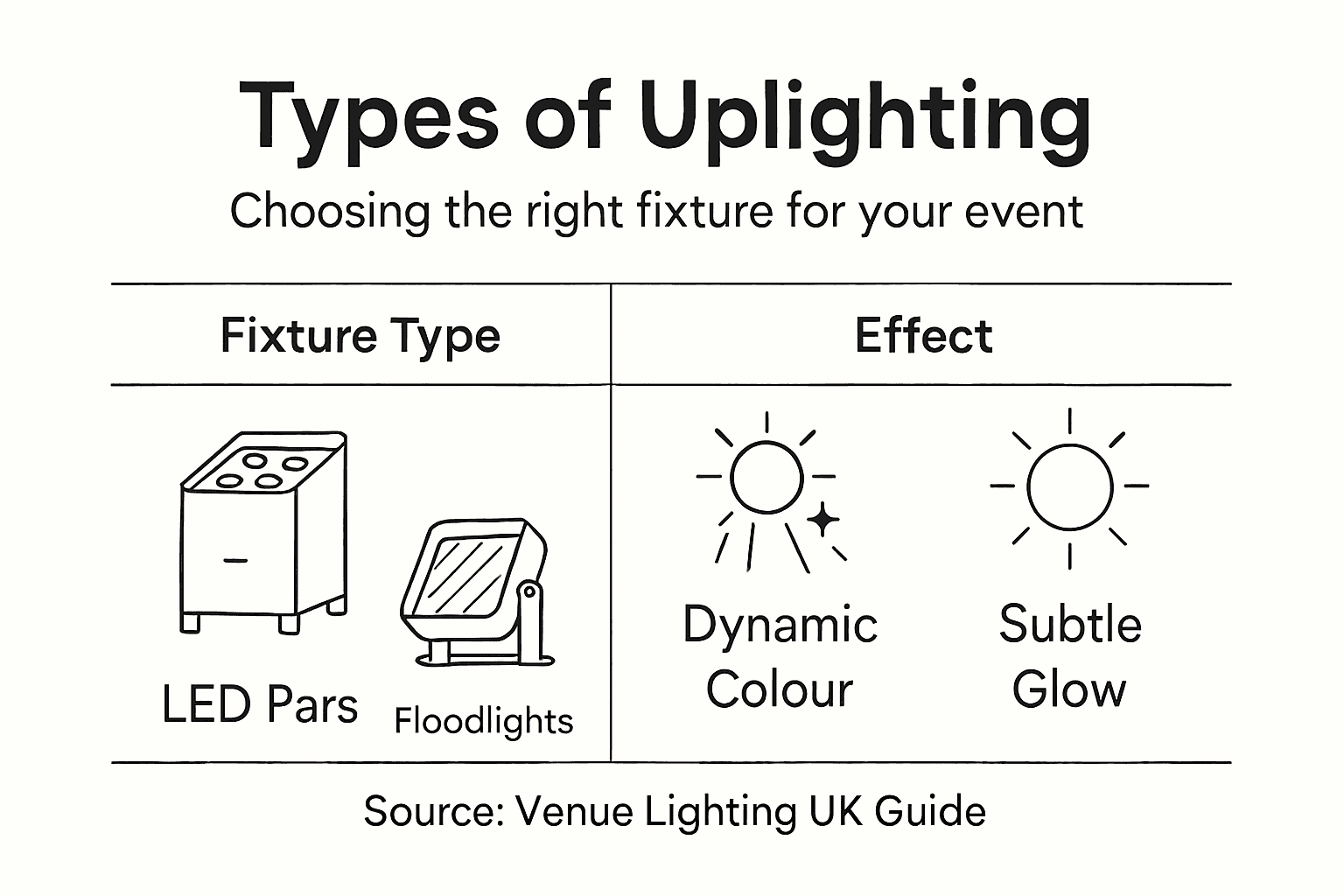
Here’s a concise comparison of popular uplighting fixture types used in UK events:
| Fixture Type | Key Advantages | Typical Use Case |
|---|---|---|
| LED Par Can | Energy efficient, colour control | Versatile for all event types |
| Metal Halide Flood | Intense brightness, large area | Historic venues, outdoor walls |
| Static Colour Lamp | Reliable ambience, easy setup | Corporate dinners, weddings |
| Dynamic RGB System | Flexible colour shifts, creative | Parties, music venues |
The effects you can achieve with uplighting span an impressive range. A single colour wash creates calm, sophisticated atmosphere ideal for formal dinners. Subtle gradations between adjacent walls add visual interest without distraction. Bold saturated colours inject energy and excitement for social events. Layered lighting, where overlapping beams of different colours blend together, creates sophisticated depth and prevents flat appearance. Time-synchronised colour changes that respond to music production dramatic impact without requiring manual adjustment throughout the evening. The key to successful uplighting lies in matching your fixture selection to both your technical capacity and your creative vision.
Pro tip: Start with a simple two-colour uplighting scheme using LED Pars for your first event, then gradually build your knowledge and equipment library; this approach lets you master the basics before investing in more complex RGB systems or larger floodlighting arrays.
Core Features and How Uplighting Works
Uplighting operates through a straightforward yet effective principle: positioning light sources at ground level and directing them upwards to illuminate surfaces, architectural features, and spatial volumes that overhead lighting cannot reach. The core mechanics involve three essential elements working together. First, you need appropriately positioned fixtures placed at floor level or mounted low on existing structures. These fixtures must be angled upwards at angles typically ranging from 30 to 60 degrees depending on what you want to illuminate and how far the light needs to travel. Second, you require adjustable intensity and colour controls that allow you to modify the light output and tone throughout your event. Modern systems use wireless dimming, allowing technicians to adjust dozens of fixtures simultaneously from a single control point. Third, you must select suitable light sources that balance brightness with energy efficiency and heat output. Understanding how fixture placement and light sources work together helps ensure your uplighting system delivers the visual impact you’re aiming for without wasting power or creating excessive heat in your venue.
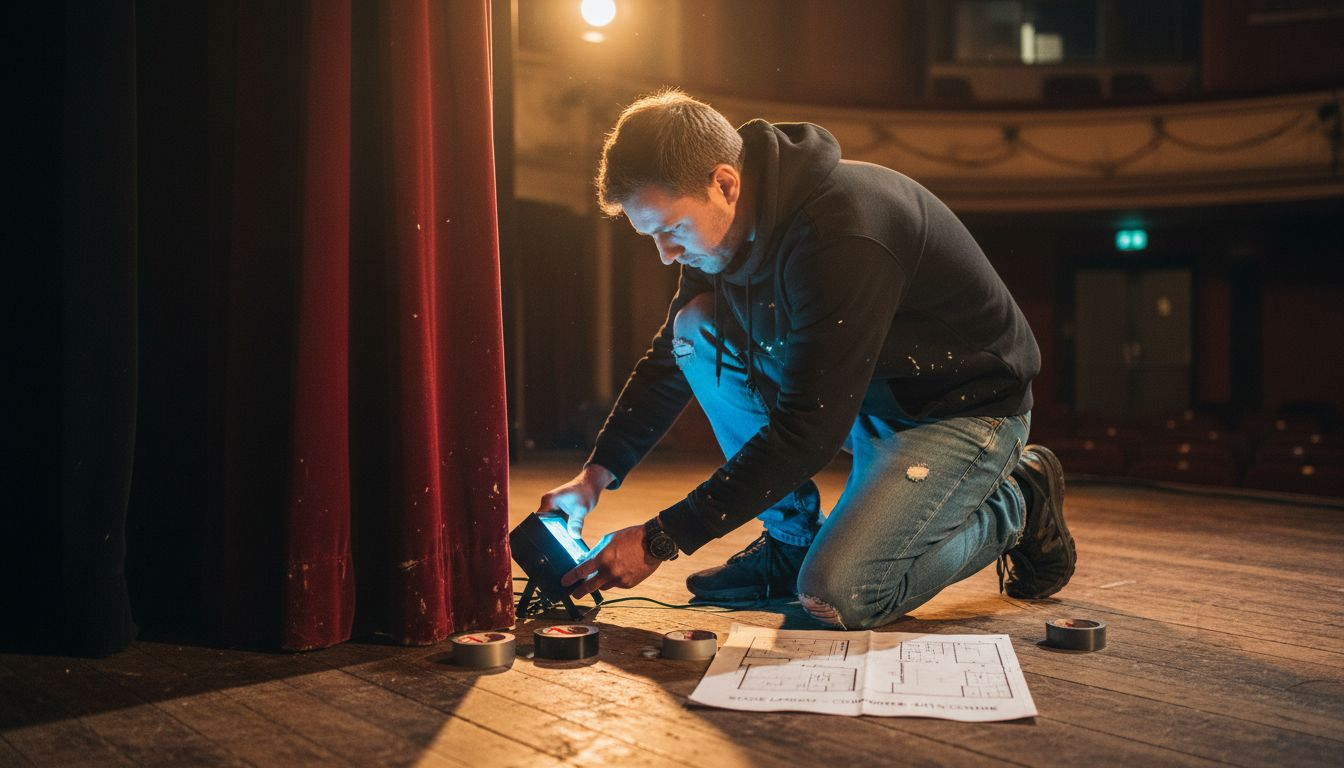
The transformation that uplighting achieves happens because light behaves predictably when directed from below rather than above. When you illuminate a textured wall from a low angle, the surface irregularities cast tiny shadows that emphasise texture and depth, making a plain wall suddenly appear three-dimensional and visually interesting. A smooth ceiling washed with colour from below appears to float above the room rather than pressing down on it, psychologically opening the space. Coloured uplighting creates focal points that draw attention without requiring physical changes to your venue. A corporate function room with plain beige walls becomes a sophisticated blue venue simply by switching on blue uplights, then transforms into an energetic red space moments later. This flexibility means you can adapt the same venue to multiple brand colours, themes, or moods without redecorating. The key feature that makes this possible is layered lighting design, where you combine uplighting with other lighting elements to create visual complexity and prevent flat, one-dimensional appearance. A wall might receive upward-facing coloured light whilst secondary fixtures create subtle edge highlights or accent specific architectural features.
Control systems represent another crucial feature differentiating modern uplighting from basic floodlighting approaches. DMX512 control systems allow technicians to programme complex colour sequences, fade timing, and intensity changes across multiple fixtures. You can synchronise uplighting to match music beats, create sunrise effects that gradually shift from deep orange through pink to gold, or programme dramatic colour transitions between event segments. Wireless control systems eliminate cable management headaches and let you adjust settings from anywhere in the venue. Battery-powered remote controls mean you don’t need technicians stationed at control consoles. Basic systems offer manual dimming switches for simpler events where you want static colour throughout. The control system you select depends on your event’s technical complexity and your team’s experience level. Environmental considerations also matter within UK event contexts, particularly regarding light spill and sustainable practices within urban settings. Well-positioned uplighting contains light within your venue rather than creating unnecessary sky glow or spilling onto neighbouring properties.
The practical operation of uplighting requires understanding colour temperature and beam angles as core features that directly affect your results. Colour temperature, measured in Kelvin, ranges from warm white around 2700K (similar to candlelight) through neutral white at 4000K to cool blue-white at 6500K. Warm white creates intimate, romantic atmosphere suitable for wedding receptions and fine dining. Cool white delivers corporate sophistication ideal for business functions. Beam angles determine how broadly or narrowly light spreads. A 15-degree narrow beam creates distinct light pools perfect for accent lighting specific architectural features. A 60-degree wide beam smoothly washes large wall areas with even coverage. Understanding how these features combine lets you select fixtures that genuinely solve your venue challenges. An event planner might choose tight-beam warm-white uplights to highlight decorative cornicing whilst simultaneously deploying wide-beam cool-white fixtures to subtly illuminate the entire perimeter, creating visual interest without overwhelming the space.
Pro tip: Create a simple uplighting layout diagram on paper before your event, marking each fixture’s position, beam angle, colour, and approximate coverage area; this reference prevents costly repositioning during setup and ensures your vision translates accurately to the actual venue.
Top Event Uses for Uplighting in the UK
Uplighting has become indispensable across virtually every category of professional event in the UK, with applications spanning corporate gatherings, weddings, festivals, and theatrical productions. Corporate functions and gala dinners represent one of the most common uses, where uplighting transforms standard hotel ballrooms into branded environments that reinforce company identity. A technology company’s annual conference might feature cool blue uplighting to communicate innovation and professionalism, whilst a luxury brand’s product launch employs warm amber and rose tones to convey exclusivity and sophistication. The flexibility of colour-changing uplighting means you can adapt the same venue multiple times within a single evening, moving from formal welcome receptions through energetic networking sessions to elegant seated dinners without requiring physical changes. Uplighting also solves the practical challenge of making generic corporate spaces feel bespoke without expensive decoration, allowing event planners to deliver premium experiences within tighter budgets.
Wedding receptions and celebrations showcase uplighting’s emotional impact perhaps more vividly than any other application. Romantic soft pastels during the ceremony transition to vibrant celebration colours during the reception and evening party, with each colour shift marking a psychological transition in the event flow. Historic country house venues benefit tremendously from uplighting that emphasises original stonework, exposed beams, and architectural character. Contemporary hotel venues gain warmth and personality through carefully selected colour palettes that suit the couple’s aesthetic preferences. Uplighting proves particularly valuable for outdoor marquee events, where uplighting the tent’s interior fabric creates a glowing, intimate atmosphere that contrasts beautifully with the darkness outside. Wedding planners increasingly recognise that professional lighting design significantly enhances the overall event experience and justifies its investment through dramatically improved photography, guest experience, and venue transformation.
Conferences, exhibitions, and trade shows utilise uplighting to highlight branded environments and exhibition stands, creating visual focal points that attract attendee attention. Uplighting the perimeter of conference spaces makes large halls feel less cavernous and more inviting. Exhibition stands benefit from targeted uplighting that illuminates product displays and draws the eye to key features. The Institution of Lighting Professionals documents extensive use of uplighting in professional event design across varied UK venues, including conferences, exhibitions, and theatrical productions where functional and aesthetic lighting requirements must work together seamlessly.
Sporting events, cultural festivals, and community celebrations employ uplighting to create visually engaging atmospheres and enhance accessibility for large crowds. Major sporting venues use uplighting to dramatise architectural features and create memorable pre-event experiences. Cultural festivals incorporate uplighting into their design to create distinct zones within event spaces, helping attendees navigate between areas whilst experiencing varied atmospheric cues. Community celebrations and outdoor festivals use uplighting to transform public spaces into special event environments, supporting social impact goals and making events feel distinctive and memorable. Street festivals, outdoor markets, and civic celebrations across the UK have discovered that strategic uplighting extends event visibility into evening hours and creates Instagram worthy moments that amplify event reach through social media.
Theatrical productions and music venues rely on uplighting as a core technical tool, using it both functionally and creatively. Theatre productions employ uplighting to illuminate sets, emphasise architectural elements of the stage space, and create mood alongside other lighting systems. Nightclubs and live music venues use dynamic, colour changing uplighting to enhance the energy and match the entertainment being performed. The versatility of uplighting in theatrical contexts demonstrates its value as a precise design tool capable of subtle nuance or dramatic impact depending on the production’s requirements. Wedding venues with theatre capabilities particularly benefit from uplighting systems that serve multiple functions across different event types.
Pro tip: When booking your venue, ask specifically whether the space already includes uplighting infrastructure or has suitable power availability and fixture mounting points; venues without these features require renting complete uplighting systems and arranging installation, which significantly increases your costs and complexity.
Cost, Set-Up, and Common Mistakes to Avoid
Uplighting costs vary dramatically depending on your event’s scale, venue type, and technical complexity. A basic uplighting package for a small wedding or corporate function typically runs between £300 and £800 for the evening, covering perhaps four to eight fixtures with straightforward colour control. Mid-range installations for larger venues or events requiring more sophisticated colour programming range from £800 to £2,500. Large-scale events with dozens of fixtures, professional-grade DMX512 control systems, and experienced technicians can easily exceed £5,000. These figures represent equipment rental only. Installation charges, typically £150 to £400 depending on complexity, cover the labour required to position fixtures, run cables, conduct testing, and ensure everything works safely before guests arrive. Often overlooked are ongoing operational costs if you employ a technician to adjust colours and intensity throughout your event, which adds £200 to £500 depending on event duration. Power requirements represent another hidden expense many planners underestimate. Uplighting demands substantial electrical capacity, and venues without adequate circuits may require temporary power distribution installation, adding £500 to £1,500 to your budget. Understanding comprehensive event planning budgets and hidden costs helps ensure you account for all uplighting expenses rather than discovering costly surprises during setup.
Here is a summary of uplighting costs and common hidden expenses to consider:
| Expense Category | Typical Cost Range | Impact on Budget |
|---|---|---|
| Basic Equipment Hire | £300–£800 per event | Entry-level solutions |
| Advanced Programming | £800–£2,500 per event | Professional ambience |
| Installation Labour | £150–£400 per event | Safety and compliance |
| On-site Technician | £200–£500 per event | Dynamic adjustments |
| Extra Power Setup | £500–£1,500 per event | Large venues, reliability |
Proper setup begins with thorough site assessment weeks before your event. Visit your venue during similar lighting conditions to how your event will actually occur. Identify which architectural features deserve uplighting and which areas would benefit from avoiding light. Check for existing electrical outlets, circuit capacity, and potential cable routing challenges. Verify that mounting options exist for fixtures without creating trip hazards. Testing the venue’s existing lighting systems reveals how natural light interacts with your uplighting plans. During physical setup, position fixtures to avoid creating harsh shadows across faces or uncomfortable glare for guests. Cable management matters enormously, as loose wires represent genuine safety hazards. All cables must be secured firmly to floors or walls and clearly marked with brightly coloured tape so guests and staff can navigate safely. Test every fixture individually before connecting them to control systems, ensuring bulbs work and colours appear as expected. Run through your entire colour sequence and timing before guests arrive, allowing time to troubleshoot any technical issues. Conducting comprehensive risk assessments that identify electrical and trip hazards prevents accidents and ensures compliance with local event regulations.
Common mistakes in uplighting setup often stem from inadequate planning rather than technical limitations. Underestimating power requirements leads to overloaded circuits and potential electrical failures mid-event. Newer LED systems actually consume far less power than older metal halide fixtures, but planners often fail to account for all equipment drawing power simultaneously. Poor fixture placement creates unwanted shadows, glare across dining areas, or lighting that washes out rather than emphasises architectural features. Fixtures positioned too close to walls create harsh bright spots rather than even coverage. Fixtures angled incorrectly miss the architectural elements you wanted to highlight. Neglecting cable management results in unsightly tangled wires visible in photographs and genuine tripping hazards for guests navigating dimly lit spaces. Ignoring light pollution and environmental impact causes problems with venues in city centres where external light spill affects neighbouring properties and violates local lighting regulations. Failing to integrate uplighting cohesively with other design elements creates visual clutter rather than sophistication. Uplighting that clashes with your décor colours or competes with other focal points overwhelms rather than enhances the space. Insufficient testing before the event means discovering colour mismatches, flickering fixtures, or control system failures once guests have arrived. Planners occasionally make the mistake of assuming rental equipment works perfectly without verification. Not communicating clearly with venue staff and rental companies leads to mismatched expectations about what uplighting can achieve or how much space equipment requires.
Pro tip: Request a site visit with your uplighting rental company at least two weeks before your event so technicians can assess power availability, suggest optimal fixture placement, and identify potential challenges; their experience prevents costly mistakes and ensures your uplighting vision translates accurately to your specific venue.
Elevate Your Event Atmosphere with Perfect Uplighting and Mirror Balls
Uplighting transforms venue ambience by highlighting architectural features and setting dynamic moods through colour and light intensity. Yet, the challenge remains in creating a truly immersive atmosphere that balances sophistication with excitement. This is where combining uplighting techniques with the reflective brilliance of mirror balls makes all the difference. Mirror balls amplify light, creating captivating patterns and energy that uplighting alone cannot achieve. Whether you want to enhance a corporate gala, a wedding reception, or a lively party, smart pairing of these elements adds emotional depth and visual intrigue.
Discover the ideal mirror ball to complement your uplighting scheme at Mirror Balls. Our selection ranges from subtle decorative pieces to professional-grade disco balls for venues requiring impactful lighting effects that energise every corner of your space. Don’t settle for plain illumination when you can transform your venue into an unforgettable experience. Visit https://mirror-balls.co.uk today and explore how combining expert uplighting concepts with premium mirror balls creates the ultimate event environment. Start your venue transformation now before your next event arrives.
Frequently Asked Questions
What is uplighting and how does it transform a venue?
Uplighting is a technique that uses fixtures placed at ground level to cast light upwards, illuminating walls and architectural features. This creates dramatic effects and enhances the overall ambiance of the venue beyond what traditional overhead lighting can achieve.
What types of uplighting fixtures are commonly used for events?
Common uplighting fixtures include LED Par cans, metal halide floodlights, static colour lamps, and dynamic RGB systems. Each type offers different advantages in terms of brightness, colour versatility, and application suitability based on your venue’s characteristics.
How can I plan effective uplighting for my event?
Effective uplighting planning involves assessing your venue’s architecture, determining which features to highlight, and ensuring proper cable management. Visiting the venue in various lighting conditions helps you select the right colours and positioning to create the desired effect.
What are the common mistakes to avoid when setting up uplighting?
Common mistakes include underestimating power requirements, poor fixture placement, neglecting cable management, and insufficient testing of equipment. Proper planning and consultation with experienced technicians can help prevent these pitfalls.
Recommended
- Uplights vs Spotlights – Creating Distinct Event Ambience – Mirror Balls
- Trends in Nightclub Lighting 2025 – Transforming UK Venues – Mirror Balls
- Effect Lights: Transforming UK Discos and Events – Mirror Balls
- What Is Lighting Design and Its Impact on Events – Mirror Balls
- 7 Unique Staffordshire Venues for Unforgettable Weddings