Many event organisers in the UK struggle to achieve the right balance of mood and visibility across their venues. Wash lighting often sits at the heart of this challenge, offering more than just basic illumination. Properly designed, wash lighting delivers a smooth, uniform glow that transforms performances, weddings, and corporate events by removing harsh shadows and adding visual depth. This guide highlights the key features and common misconceptions around wash lighting, ensuring your next event stands out for all the right reasons.
Table of Contents
- Wash Lighting Defined And Common Misconceptions
- Types Of Wash Lighting For UK Events
- Key Features And How Wash Lighting Works
- Applications For Venues And Performances
- Costs, Risks, And Safety Considerations
- Alternatives And Common Mistakes To Avoid
Key Takeaways
| Point | Details |
|---|---|
| Understanding Wash Lighting | Wash lighting provides smooth, uniform light essential for setting the mood and guiding audience attention in any venue. |
| Choosing the Right Type | Selecting the correct wash lighting fixtures, such as LED washes, Par Cans, or Fresnels, is crucial based on venue requirements and event type. |
| Layering Lighting Techniques | Effective lighting design requires layering wash lighting with spotlights and effects to create visual interest and depth. |
| Safety and Compliance | Proper installation and safety compliance are essential to prevent risks associated with inadequate ventilation and electrical systems. |
Wash lighting defined and common misconceptions
Wash lighting might sound like a simple concept, but it’s one of the most misunderstood tools in event lighting design. At its core, wash lighting refers to smooth, uniform light that covers large areas of a stage, backdrop, or venue without creating harsh shadows or bright spots. Think of it like painting with light instead of applying spotlight beams. Rather than highlighting a single performer or object, wash lighting bathes entire zones in colour and illumination, creating the foundation upon which all other lighting effects sit.
Traditionally achieved through PAR can fixtures and Fresnels, modern venues increasingly rely on LED wash lights that deliver superior colour mixing, significantly lower power consumption, and hardware that’s genuinely lighter to transport and install. A typical misconception suggests that wash lighting is “just basic lighting” or only suitable for small clubs and theatres. The reality is quite different. Wash lighting serves as the backbone of sophisticated lighting design, working in layers with spotlights, gobos, and dynamic effects to establish mood, guide audience attention, and add visual depth to performances. Without proper wash lighting, even the most impressive spotlights look disconnected and harsh. Your stage or event space needs that foundational layer of colour and even illumination to truly transform the atmosphere.
Another common mistake venue owners and event organisers make involves underestimating how wash lighting affects audience perception. Many assume it’s merely decorative or that their existing fixtures are sufficient. The truth is that effective wash lighting design directly influences how guests experience an event, whether that’s creating intimacy at a wedding reception, energy at a corporate gala, or professionalism at a conference. Proper wash lighting eliminates dark corners, removes unflattering shadows from performers, and allows you to shift the entire atmosphere of a space in seconds simply by changing colours or intensity. Venues that master wash lighting report higher client satisfaction and often command premium pricing for their services.
Pro tip: Start with your wash lighting design before layering in spotlights or effects—establish your colour palette and base illumination first, then add drama with accent lights rather than attempting to fix inadequate wash coverage afterwards.
Types of wash lighting for UK events
When you’re planning lighting for an event venue, understanding the different wash lighting options available makes all the difference between a mediocre setup and something truly impressive. The primary types of wash lighting used in UK venues break down into three main categories, each with distinct strengths depending on your event type and budget.
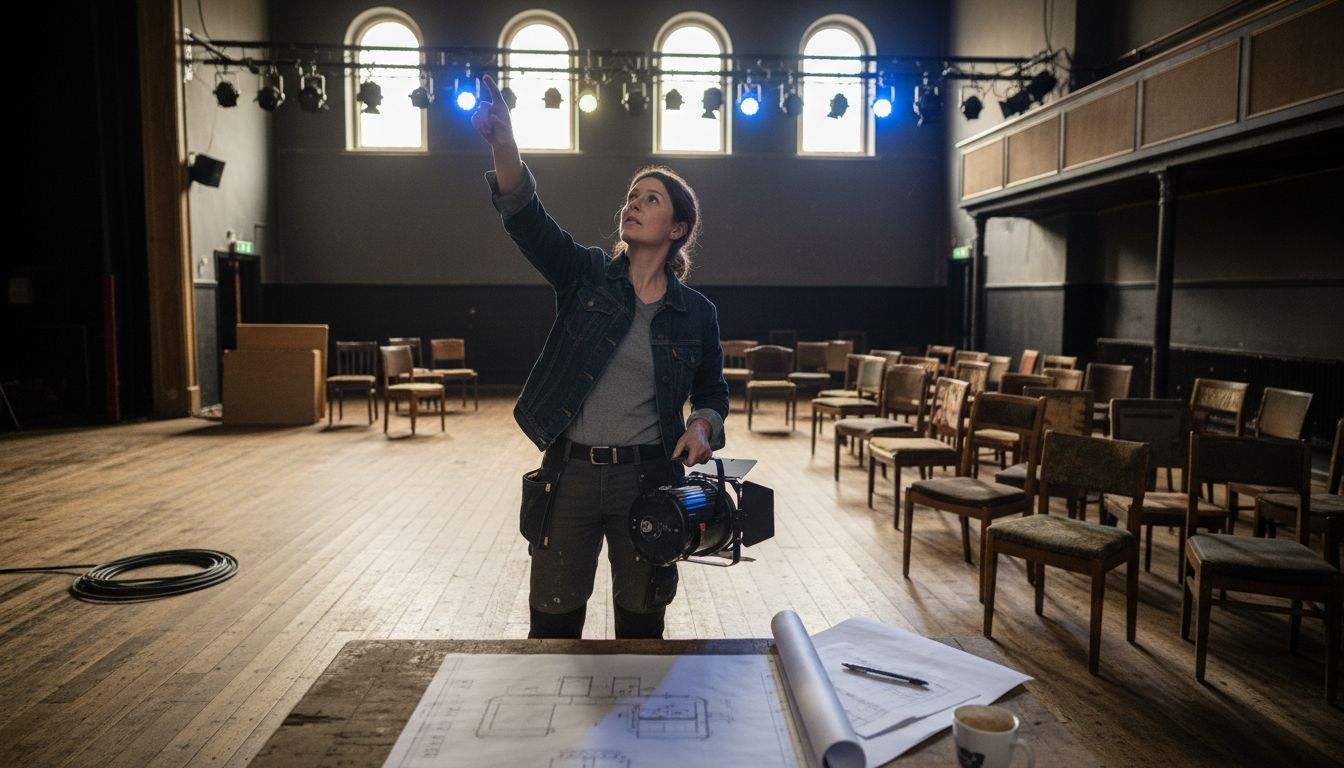
LED wash lights have become the go-to choice for modern venues and touring productions. These energy-efficient, colour-controllable fixtures consume significantly less power than traditional options whilst delivering superior colour mixing capabilities. LED washes integrate seamlessly with DMX control systems and sound-reactive modes, allowing you to synchronise lighting changes with music or live events. They generate minimal heat, which matters tremendously in smaller venues where audience comfort is critical. For wedding receptions, corporate events, and festival installations, LED washes offer flexibility you simply cannot achieve with older technology. Professional UK event companies increasingly favour flat-colour LED washes and multi-segment zone wash fixtures because they provide smooth coverage across scenic backdrops, façades, and mood lighting applications without breaking the bank on running costs.
Par Can fixtures represent the traditional workhorse of stage lighting. These powerful, straightforward units produce intense light output and remain popular in theatres and larger venues where robust coverage matters. However, they consume considerably more energy than LEDs and generate substantial heat, which can be problematic during lengthy events or in temperature-sensitive spaces. Fresnel fixtures occupy a middle ground, using special lenses to create soft, diffused light with adjustable beam angles. Theatres particularly favour Fresnels for their subtle lighting effects and smooth colour transitions, making them ideal when you need precision over raw power.
Choosing the right type depends on your venue’s infrastructure, event duration, and creative vision. A small nightclub benefits from LED washes for cost efficiency. A theatre production might combine Fresnels for accent work with strategic LED coverage. Larger events often layer multiple types together, using LED washes as the foundation and Par Cans or spotlights for dramatic emphasis. Understanding how different lighting types interact helps you design cohesive lighting schemes rather than random combinations that confuse rather than enhance your space.
To help you distinguish between common types of wash lighting, here’s a concise comparison:
| Fixture Type | Typical Application | Energy Efficiency | Key Benefit |
|---|---|---|---|
| LED Wash Light | Modern venues, festivals | Very high | Precise colour control, low heat |
| Par Can Fixture | Theatres, large stages | Low | Intense, robust light output |
| Fresnel Fixture | Theatres, accent lighting | Moderate | Adjustable beam, soft transitions |
Pro tip: Start with LED wash lights for new installations or renovations—their energy savings, low maintenance requirements, and colour-mixing flexibility typically deliver better return on investment than traditional fixtures within two to three years of operation.
Key features and how wash lighting works
Wash lighting might seem straightforward on the surface, but understanding how it actually functions and what makes it effective reveals why professional venues treat it as a critical design component. At its most basic level, wash lighting operates by using fixtures that produce broad, even beams of light to uniformly illuminate entire surfaces or areas. Unlike spotlights that concentrate light into tight pools, wash lights spread illumination across wide zones, eliminating the harsh shadows and bright spots that distract audiences and create visual discomfort.
The real magic lies in the key features that give you control over the atmosphere. Adjustable colour temperature allows you to shift from warm, intimate tones at 2700K for wedding receptions to cool, energetic blues at 5600K for product launches or nightclub events. Intensity control lets you gradually brighten or dim a space without jarring transitions, creating sophisticated mood shifts that audiences perceive subconsciously. Beam angle adjustment means a single fixture can produce anything from narrow focused coverage to wide, diffused washes depending on your venue’s geometry and creative needs. These features combine to let designers craft smooth transitions and textured lighting effects that transform a bland space into something memorable.
One particularly effective technique involves ceiling wash lighting, which directs light upwards to bounce off the ceiling rather than directly at the audience. This indirect approach creates soft, glare-free illumination that fills a room evenly whilst eliminating uncomfortable shadows across faces and bodies. Think of it like diffusing harsh sunlight through net curtains. The ceiling becomes your reflective surface, scattering light gently throughout the space. Proper fixture placement, beam angle selection, and aiming precision determine whether you achieve uniform ambiance or uneven patches of brightness and darkness. Venues that master this technique report guests feeling more comfortable and better able to focus on performances or social interactions rather than battling visual distractions.
The foundational purpose of wash lighting is to provide the bedrock illumination for your entire event. Everything else—spotlights highlighting performers, coloured uplighting creating atmosphere, intelligent lights producing patterns—sits on top of proper wash coverage. Without this base layer functioning correctly, other lighting elements look disconnected and artificial, no matter how sophisticated they are. Professional event organisers prioritise getting wash lighting right before adding complexity.
Pro tip: Test your wash lighting at full intensity first, then dial back to 60 to 70 percent for most events—this reserve headroom allows dramatic lighting changes when you need them without pushing fixtures to their limits and reducing their lifespan.
Applications for venues and performances
Wash lighting finds its way into nearly every professional event space you can imagine, and understanding where it works best helps you make smarter decisions about your own venue setup. The applications span far wider than many event organisers initially realise, extending well beyond the obvious theatre or nightclub scenarios. Whether you’re running a boutique wedding venue, managing a corporate events space, or operating a performance theatre, wash lighting solves real problems and creates opportunities you might not have considered.
Concerts and theatrical productions represent the most visible applications, where LED wash lights change colours and intensity quickly to create dynamic, vibrant effects matching musical energy or dramatic moments. But the applications extend far beyond stages. Wedding venues use soft, warm washes to create intimate atmospheres during ceremonies and receptions, then shift to cooler, more energetic tones for dancing. Corporate event spaces employ wash lighting to brand environments, shifting colour schemes for different sessions or presentations throughout a single day. Museums and galleries utilise wash lighting to highlight architectural features and artworks without creating harsh glare or heat damage to sensitive items. Outdoor events, from garden parties to festival grounds, benefit from wash lighting’s ability to function effectively in semi-lit environments, extending usable hours well into evening.
The real advantage wash lighting provides across all these applications is versatility without compromise. You get energy efficiency that keeps running costs manageable, minimal heat emission that preserves comfort and protects delicate environments, and the ability to shift mood instantly. A single wash lighting rig can transform a bland conference room into an intimate networking space, then reset for a formal awards dinner just hours later. This flexibility means smaller venues can compete with larger facilities, and established venues can offer clients options previously impossible with fixed lighting infrastructure.
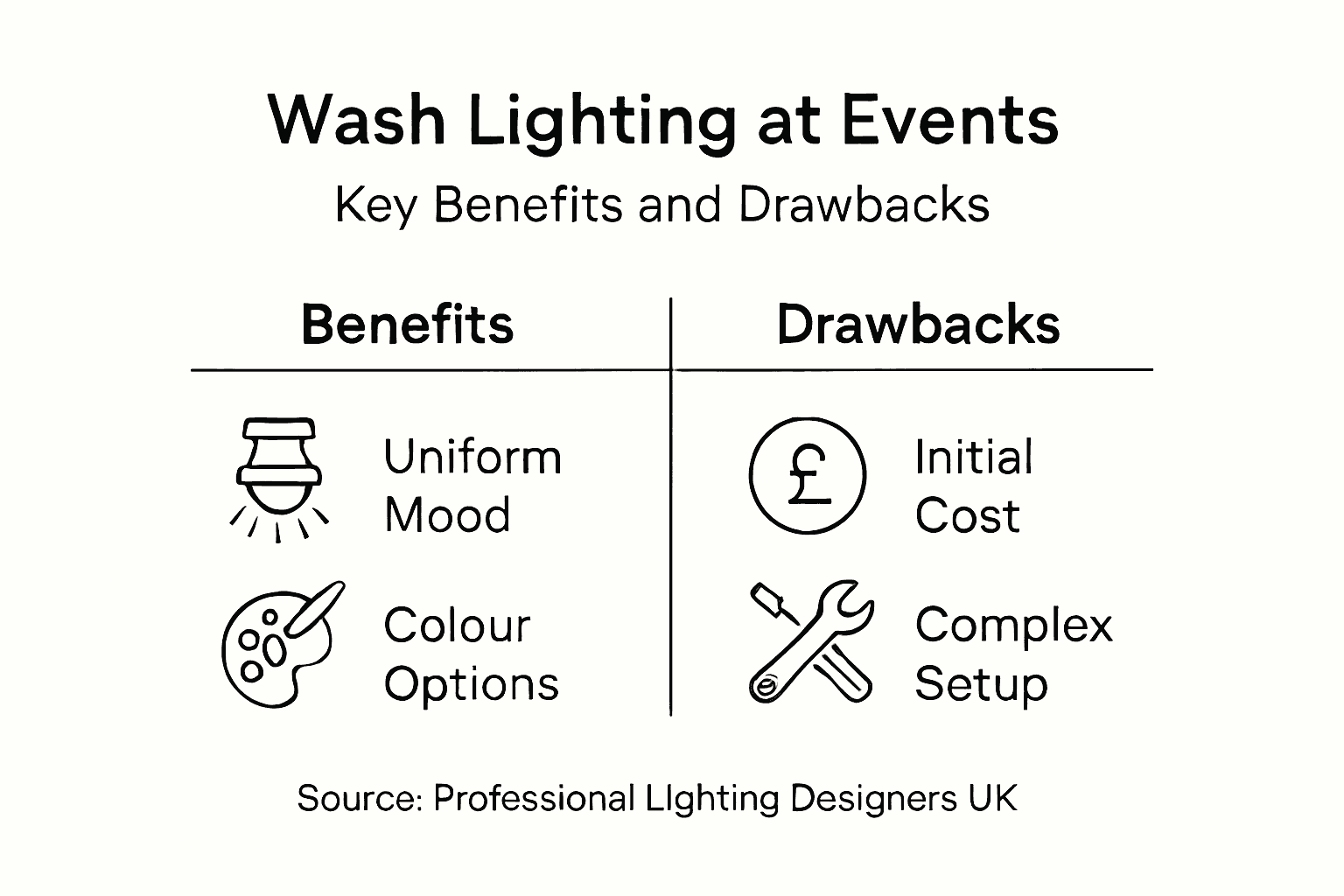
Wash lighting also solves the practical problem of creating inviting, visible environments. Poor venue lighting drives guests away, literally. People feel uncomfortable in dimly lit or harshly lit spaces, and they perceive venues negatively regardless of other qualities. Proper wash lighting eliminates dark corners, removes unflattering shadows, and creates the psychological comfort that encourages guests to stay longer, book return visits, and recommend your venue to others. Museums use this principle to guide visitors naturally through spaces. Performance venues use it to focus audience attention on stages while maintaining sightlines throughout the room. Wedding venues use it to flatter guests and create photo-friendly environments.
Pro tip: Map your venue’s architecture before purchasing wash lights—identify ceiling heights, wall materials, and fixture mounting points, then select fixtures with beam angles matching your space geometry rather than overspecifying power that simply gets wasted.
Costs, risks, and safety considerations
Wash lighting represents a significant investment for any venue, and understanding both the financial commitment and the safety implications ensures you make decisions that protect your business, your guests, and your staff. The costs vary dramatically depending on fixture type, quantity, and control sophistication. LED wash lights typically range from £200 to £2,000 per unit depending on power output and features, whilst traditional Par Cans cost considerably less upfront but consume far more electricity over their operational lifetime. A modest 12-fixture LED wash rig might cost £3,000 to £8,000 including mounting hardware and basic control systems. Professional installations with DMX control integration, rigging infrastructure, and backup power systems easily exceed £15,000 to £40,000. However, these costs must be viewed against operational savings. LED wash lights reduce electricity consumption by 60 to 80 percent compared to halogen alternatives, delivering payback periods of two to four years depending on event frequency and runtime hours.
Beyond the purchase price, safety considerations demand serious attention. Proper electrical installation and adequate ventilation are not optional extras—they are legal requirements under UK Building Regulations and BS 7671 electrical standards. Wash lighting fixtures generate heat, particularly older Par Can models, and inadequate ventilation around fixtures creates fire risk and can damage surrounding infrastructure. Electrical systems must be installed by qualified professionals following strict codes, with proper grounding, circuit protection, and isolation switches. Many venue owners discover too late that their existing electrical infrastructure cannot support the power demands of comprehensive wash lighting systems. A professional electrical assessment before purchase prevents costly retrofitting.
Staff safety and guest wellbeing represent another critical dimension. Improper lighting design causes eyestrain, headaches, and fatigue in staff managing events. Adequate, suitable lighting prevents health issues whilst avoiding glare and light pollution that disturbs guests or nearby residents. Risk assessment for your specific venue layout is essential—identify potential hazards like overhead fixtures creating shadows on walkways, colour combinations that trigger discomfort, or intensity levels that cause temporary blindness when guests move between lit and dark areas. Maintenance schedules matter tremendously. Dust accumulation on fixtures reduces light output and increases heat concentration, whilst worn electrical connections become fire hazards. Budget 10 to 15 percent of equipment costs annually for professional maintenance and inspections.
Insurance presents another often overlooked cost. Many standard venue insurance policies exclude inadequate or improperly installed lighting from coverage. Professional installation certifications and compliance documentation become essential for claims purposes. Professional event organisers budget 20 to 30 percent additional costs beyond equipment purchase for proper installation, electrical work, safety certification, and maintenance planning.
Consider these potential risks and cost factors when investing in wash lighting:
| Consideration | Impact on Venue | Example or Detail |
|---|---|---|
| Upfront Cost | Budget planning | £3,000–£8,000 for modest LED setup |
| Operating Costs | Ongoing expenses | LEDs save up to 80% on electricity |
| Safety Compliance | Legal requirements | Must meet UK electrical standards |
| Maintenance Needs | System reliability | Annual inspections and cleaning |
Pro tip: Engage a qualified electrical contractor and a professional lighting designer during the planning phase rather than after purchase—their input typically prevents costly mistakes that dwarf their consultation fees.
Alternatives and common mistakes to avoid
Wash lighting forms the foundation of professional venue lighting, but treating it as a complete solution on its own is where many venue owners stumble. Understanding what wash lighting cannot do, and recognising the mistakes that undermine even well-intentioned installations, separates venues that truly transform their spaces from those that simply throw equipment at the problem.
The most critical mistake involves relying solely on wash lighting without layering in complementary techniques. Wash lighting alone creates a flat, undifferentiated visual experience that fails to guide audience attention or create dramatic impact. Think of it like painting an entire room in a single colour—technically uniform, but visually boring. Proper lighting design requires balancing wash with spotlights, beams, and effects to create depth, contrast, and visual interest. Spotlights draw focus to specific performers or objects. Moving heads add dynamic movement and colour changes that shift with performances. Gobos project patterns that add texture and complexity. The best venues layer these elements strategically, using wash lighting as the foundational layer rather than the entire solution.
Another prevalent mistake involves poor fixture positioning and colour saturation. Over-saturating a space with intense colour or positioning fixtures incorrectly creates uneven coverage, unwanted shadows, and visual chaos rather than cohesion. Many venue operators discover too late that their fixtures cast harsh shadows across performer faces, create dead zones in corners, or wash the entire space in a single colour that looks amateurish rather than professional. Inadequate planning before installation leads to mounting fixtures in suboptimal locations, forcing compromises that persist for years. Projection mapping offers detailed imagery and dynamic visuals that wash lighting cannot achieve alone, presenting an alternative for venues seeking more sophisticated visual effects.
Additional common errors include underestimating control system complexity, installing insufficient fixtures for your venue size, and failing to plan for future upgrades. Venues often purchase fixtures without considering whether their control systems can actually manage them. A £10,000 wash lighting rig becomes worthless if your control infrastructure cannot address individual fixtures or create smooth transitions. Budget constraints sometimes force venues to install fewer fixtures than necessary, resulting in dark spots and uneven coverage that cannot be fixed without complete reinstallation. Plan your lighting infrastructure as scalable from the beginning, allowing for additions without replacing existing equipment.
Pro tip: Commission a professional lighting designer to create a detailed plan for your specific venue before purchasing any equipment, mapping fixture positions, control requirements, and integration with alternative lighting types to avoid expensive mistakes.
Elevate Your Venue Ambiance with Perfect Lighting and Mirror Balls
Achieving seamless wash lighting coverage is vital for setting the right mood and atmosphere at any event venue. Yet, as the article highlights, relying on wash lighting alone often results in flat or uninspiring spaces. Combining foundational wash lighting techniques with dynamic mirror balls creates a truly immersive and captivating experience. Whether you are aiming to add vibrant colour shifts or create sparkling reflections that mesmerise your guests, integrating high-quality disco balls with your wash lighting elevates your venue’s visual appeal instantly.
Discover an extensive selection of professional and decorative mirror balls at Mirror Balls to complement your lighting design. From large venues requiring dramatic stage effects to intimate spaces looking for subtle reflective ambience, our range supports your creative vision with expert advice and competitive pricing. Don’t let your wash lighting stand alone. Act now to transform your venue atmosphere and impress clients with sophisticated, layered lighting solutions. Explore our product range and find the perfect mirror ball match for your event today!
Frequently Asked Questions
What is wash lighting, and how is it different from spotlights?
Wash lighting refers to a smooth, uniform illumination that covers large areas without creating harsh shadows or bright spots. Unlike spotlights that focus light on specific performers or objects, wash lighting bathes entire zones in colour and light, setting the foundational atmosphere for events.
What are the main types of wash lighting used in event venues?
The three primary types of wash lighting are LED wash lights, Par Can fixtures, and Fresnel fixtures. LED washes are energy-efficient and offer superior colour control, while Par Cans provide intense light but consume more energy. Fresnels produce soft, diffused light and are used for precision lighting in theatres.
How does wash lighting affect audience perception during events?
Effective wash lighting plays a critical role in how guests experience an event. It eliminates dark corners, removes unflattering shadows, and creates comfortable visibility, ensuring guests can focus on performances and social interactions without distractions.
What are some common mistakes to avoid when using wash lighting?
One common mistake is relying solely on wash lighting without integrating other types of lighting, which can lead to a flat visual experience. Additionally, poor fixture positioning and colour saturation can create uneven coverage and unwanted shadows. Proper planning and a balanced combination of lighting types are essential for achieving professional results.