Over 70 percent of event professionals rely on rotating motors to create eye-catching displays, yet many still misunderstand how these devices actually work. From powering dazzling mirror balls to driving intricate stage effects, rotating motors are essential for smooth, reliable movement at any scale. With so much riding on their performance, it is crucial to separate fact from fiction and uncover what makes these motors truly effective in entertainment and technical settings.
Table of Contents
- Rotating Motor Defined and Common Misconceptions
- Types of Rotating Motors for Mirror Balls
- How Rotating Motors Work in Event Settings
- Essential Safety and Installation Standards
- Comparing Power, Speed, and Load Capacities
- Choosing the Right Rotating Motor for Your Needs
Key Takeaways
| Point | Details |
|---|---|
| Understanding Rotating Motors | Rotating motors convert electrical energy into rotational motion using electromagnetic principles, with various motor types serving distinct applications. |
| Importance of Selection | Choosing the right motor involves considering load capacity, rotation speed, control mechanisms, and venue requirements for optimal performance. |
| Safety Standards | Adhering to safety installation standards is crucial to prevent accidents and ensure reliability in dynamic event environments. |
| Creative Potential | Properly utilized rotating motors can transform static displays into dynamic experiences, enhancing the overall atmosphere of events. |
Rotating Motor Defined and Common Misconceptions
A rotating motor represents a sophisticated electromechanical device designed to transform electrical energy into precise rotational motion. Despite their ubiquity across entertainment and technical applications, many people misunderstand their fundamental mechanics and operational principles.
At its core, a rotating motor operates through an intricate interplay of electromagnetic forces. According to Wikipedia, a brushless DC electric motor utilises an electronic controller to strategically switch DC currents through motor windings, generating magnetic fields that effectively rotate in space. The permanent magnet rotor then follows these dynamically shifting magnetic fields, creating smooth and efficient rotational movement.
Common misconceptions about rotating motors frequently revolve around their complexity and perceived limitations. Many individuals assume all motors function identically, when in reality, different motor types serve vastly different purposes. For instance, some motors are designed for massive industrial applications, while others like nanoscale plasmonic motors can be incredibly precise. As Wikipedia demonstrates, certain nanoscale motors can even convert light energy into rotational motion by using gold sheets embedded within silica layers and activated by laser light.
Key misconceptions about rotating motors include:
- All motors generate the same amount of torque
- Mechanical complexity always means reduced efficiency
- Motors cannot operate at microscopic scales
- Electrical input always produces linear, predictable motion
Understanding these nuanced differences helps event professionals, designers, and technical experts select the most appropriate rotating motor for their specific requirements. Whether you need smooth rotation for a disco ball, precise movement for stage lighting, or intricate mechanical design for a film set, recognising the fundamental principles of rotating motors empowers more informed decision-making.
Types of Rotating Motors for Mirror Balls
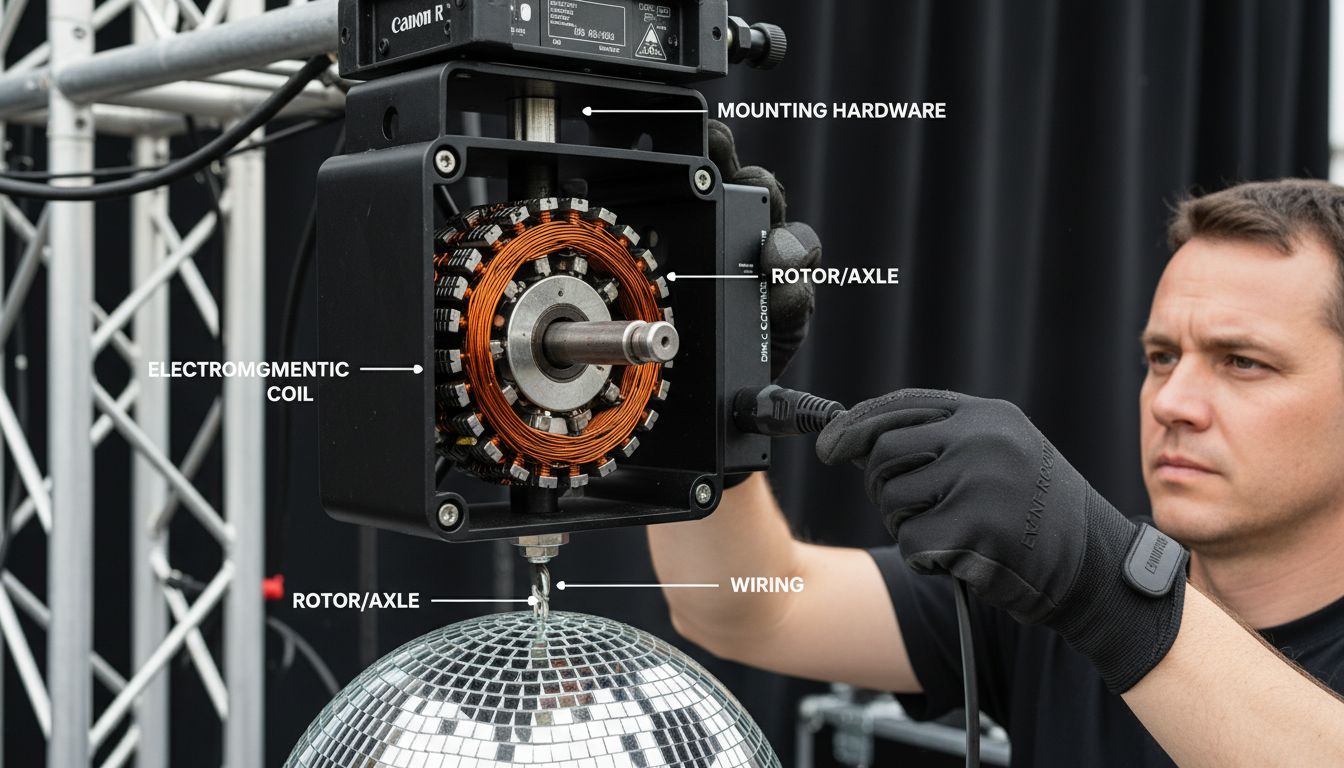
Rotating motors for mirror balls represent a sophisticated technology designed to bring dynamic movement and visual excitement to entertainment spaces. These specialized motors transform static disco balls into mesmerising centrepieces that enhance the atmosphere of events, clubs, and performance venues.
Professional-grade mirror ball motors come in various configurations, each tailored to specific performance requirements. According to Thomann, motors like the Stairville MBM40D offer remarkable versatility, capable of supporting mirror balls up to 100 cm in diameter weighing up to 35 kg. These advanced motors typically provide multiple control modes, including automatic and DMX-controlled options, allowing event professionals to precisely adjust rotation direction and speed ranging from 0.5 to 5 rotations per minute.
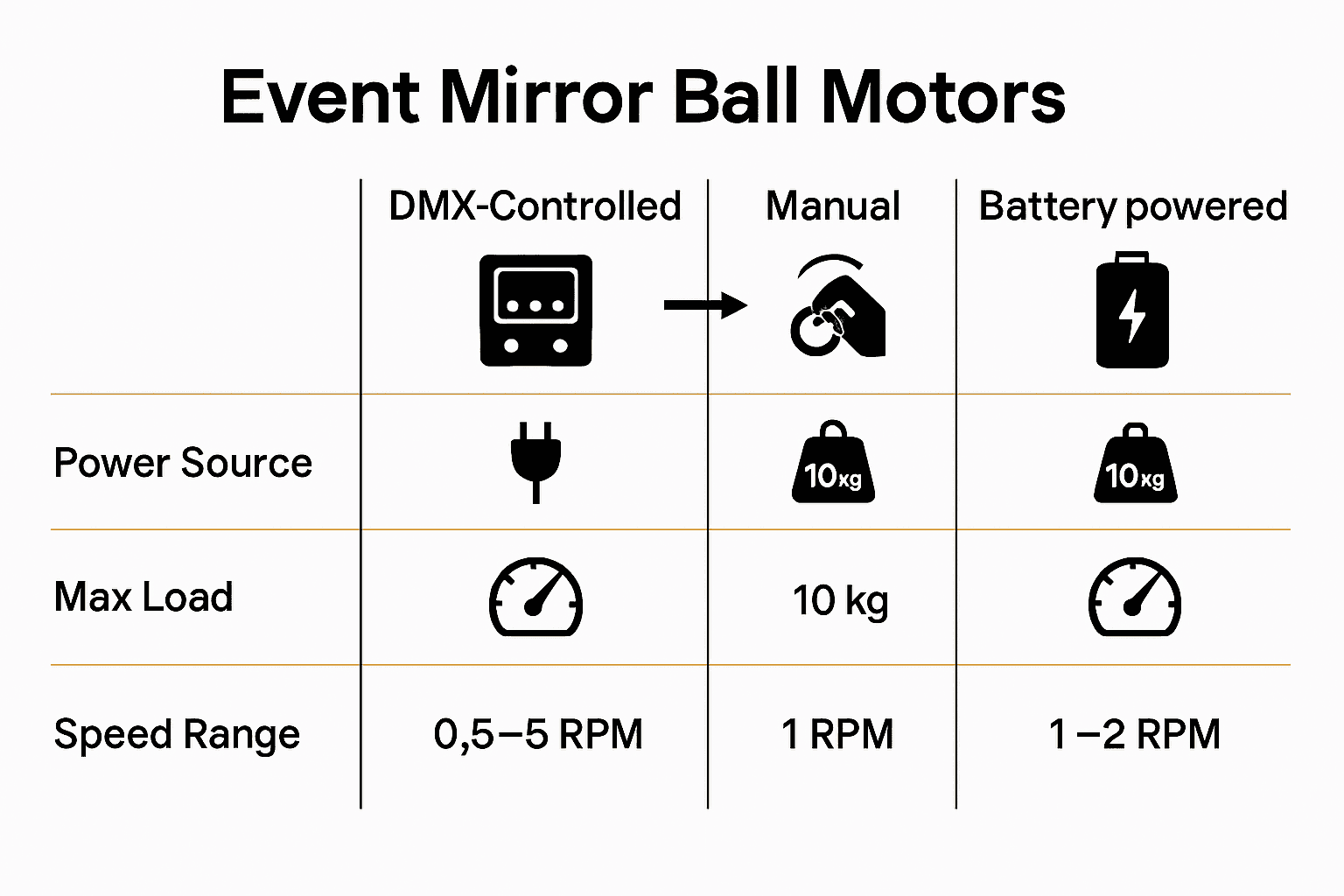
The primary types of rotating motors for mirror balls can be categorised based on their control mechanisms and power sources:
- DMX-Controlled Motors: Offer precise digital control for professional lighting setups
- Manual Rotation Motors: Simple, mechanical motors with basic speed adjustments
- Battery-Powered Motors: Ideal for portable or wireless installations
- Mains-Powered Motors: Provide consistent, long-duration rotation for fixed installations
As highlighted by Thomann, professional models like the Eurolite MD-3030 demonstrate the sophisticated engineering behind these devices. Such motors can handle substantial mirror balls up to 100 cm in diameter and weighing 40 kg, making them suitable for large venues like discotheques, concert halls, and significant event spaces. When selecting a rotating motor, event professionals must consider factors such as mirror ball size, weight, desired rotation speed, and control requirements to ensure optimal performance and visual impact.
How Rotating Motors Work in Event Settings
Rotating motors are the unsung heroes of event lighting and visual design, transforming static equipment into dynamic, mesmerising displays that captivate audiences. These sophisticated devices enable mirror balls, lighting fixtures, and decorative elements to create immersive environmental experiences across various entertainment venues.
In event settings, rotating motors function through a precise mechanism of electrical energy conversion. They typically employ electromagnetic principles to transform electrical input into controlled rotational movement. The motor’s core components include an electric power supply, an electronic controller, and a mechanical system that translates electrical signals into smooth, consistent rotation. This allows event professionals to program exact movement patterns, rotation speeds, and directional changes that synchronise perfectly with music, lighting designs, and overall event atmospheres.
The practical applications of rotating motors in events are remarkably diverse:
- Dance Venues: Creating dynamic mirror ball effects
- Theatre Productions: Moving scenic elements and lighting fixtures
- Concert Stages: Rotating platforms and overhead lighting rigs
- Corporate Events: Sophisticated visual display mechanisms
- Film and Television Sets: Precise mechanical movement for complex shots
For event designers and technical directors, understanding rotating motor mechanics means unlocking unprecedented creative possibilities. Whether you’re designing an intimate nightclub experience or a large-scale arena spectacle, these motors provide the mechanical precision necessary to transform static environments into immersive, dynamic spaces that engage and surprise audiences. The ability to control rotation speed, direction, and synchronisation opens up entirely new dimensions of visual storytelling and atmospheric design.
Essential Safety and Installation Standards
Safety is paramount when installing rotating motors in event settings, where complex equipment operates in dynamic environments filled with performers, equipment, and spectators. Understanding and implementing rigorous safety installation standards can prevent potential accidents and ensure smooth, reliable performance of mirror ball and lighting systems.
According to Thomann, professional mirror ball motors must adhere to specific safety regulations, including compliance with EN 292 safety standards and accident prevention guidelines. These standards mandate critical safety protocols such as mechanical drop protection mechanisms and mandatory independent suspension systems. Specifically, professional motors require expert inspection before initial operation and must be installed with precision to prevent unintentional equipment failure.
Key safety considerations for rotating motor installation include:
- Load Capacity: Verify motor can support mirror ball weight
- Perpendicular Alignment: Ensure motor axis is exactly level with ceiling
- Secondary Suspension: Always use independent backup safety mounting
- Regular Inspection: Conduct routine equipment checks
- Electrical Safety: Use proper power connections and surge protection
As highlighted by Thomann, professional rotating motors like the Stairville MBM40D demonstrate the importance of precise installation. Event professionals must meticulously follow manufacturer guidelines, understanding that safety isn’t just about preventing immediate risks but also ensuring long-term equipment reliability and performance. This approach protects not only the equipment but also the performers, technicians, and audience members who depend on these sophisticated mechanical systems.
Comparing Power, Speed, and Load Capacities
Selecting the right rotating motor involves carefully balancing performance specifications that directly impact the visual and technical effectiveness of event lighting and decorative installations. Understanding the nuanced differences between motor capabilities can mean the difference between a spectacular display and a technical disappointment.
According to Thomann, professional mirror ball motors like the Stairville MBM40D demonstrate the critical interplay between power consumption, load capacity, and rotation speed. These motors typically consume around 16 W of power while supporting mirror balls up to 100 cm in diameter and weighing up to 35 kg. The ability to adjust rotation speeds from 0.5 to 5 rotations per minute provides event professionals with remarkable flexibility in creating dynamic visual experiences.
Key comparative factors for rotating motors include:
- Load Capacity: Maximum weight of mirror ball supported
- Power Consumption: Electrical energy required for operation
- Rotation Speed Range: Minimum and maximum rpm capabilities
- Control Mechanism: DMX, manual, or automated control options
- Size Compatibility: Maximum mirror ball diameter supported
As Thomann highlights with the Eurolite MD-3030, professional motors can handle mirror balls up to 100 cm in diameter and 40 kg in weight. Event designers must carefully match motor specifications to their specific requirements, considering factors like venue size, lighting design, and desired visual effects. The right motor transforms a simple mirror ball from a static decoration into a dynamic, mesmerising centrepiece that can dramatically enhance the atmosphere of any event.
Choosing the Right Rotating Motor for Your Needs
Selecting the perfect rotating motor requires a strategic approach that balances technical specifications with your specific event requirements. Event professionals must consider multiple factors to ensure they choose a motor that not only meets their immediate needs but also provides reliable performance across diverse entertainment environments.
The selection process involves evaluating several critical parameters that directly impact motor performance. Key considerations include the physical dimensions and weight of your mirror ball, the desired rotation speed, venue characteristics, and the specific visual effect you want to create. Professional event designers understand that a motor isn’t just a mechanical component, but a critical element in crafting immersive atmospheric experiences.
Essential factors to evaluate when choosing a rotating motor include:
- Mirror Ball Weight and Size: Maximum load capacity compatibility
- Rotation Speed Range: Flexibility in movement and visual dynamics
- Power Source Requirements: Mains, battery, or hybrid options
- Control Mechanisms: DMX, manual, or automated control interfaces
- Noise Level: Acoustic performance in different event settings
- Installation Flexibility: Ceiling, truss, or standalone mounting options
Successful motor selection goes beyond technical specifications. It requires understanding the nuanced relationship between equipment capabilities and creative vision. Whether you’re designing an intimate nightclub experience, a high-energy concert, or a sophisticated corporate event, the right rotating motor can transform a simple mirror ball into a captivating centrepiece that elevates the entire spatial atmosphere. Professional event designers approach motor selection as an art form, carefully matching mechanical precision with artistic imagination.
Discover the Perfect Rotating Motor for Your Mirror Ball Experience
Understanding how rotating motors work and their vital role in event settings can be the difference between a static display and a captivating showpiece. If you want to achieve smooth rotation, precise speed control, and reliable load support for your mirror balls, it is essential to choose the right motor that fits your event needs. This includes considering control mechanisms like DMX options, load capacity, and safety features to avoid costly installation errors or mechanical failures.
Find exactly what you need for your venue or project at mirror-balls.co.uk, where a wide range of professional and decorative mirror balls and accessories await. Whether you require sturdy motors fit for large 100 cm disco balls or compact options for smaller setups, you can browse expertly curated products that meet strict safety and performance standards. Do not settle for less than reliable operation—take action now and explore our professional mirror ball motors and accessories to elevate your event’s atmosphere with effortless and controlled rotation.
Frequently Asked Questions
What is the purpose of a rotating motor in events?
Rotating motors are used in events to transform static elements, such as mirror balls and lighting fixtures, into dynamic displays that enhance the visual atmosphere and engage audiences.
How do I choose the right rotating motor for my event?
When selecting a rotating motor, consider the mirror ball’s size and weight, desired rotation speed, power source options, control mechanisms, and installation flexibility to ensure optimal performance and visual impact.
What types of rotating motors are available for mirror balls?
Rotating motors for mirror balls come in various types, including DMX-controlled motors for precise digital control, manual rotation motors for basic adjustments, battery-powered motors for portable use, and mains-powered motors for fixed installations.
What safety standards should I consider when installing rotating motors?
Key safety standards for installing rotating motors include verifying load capacity, ensuring perpendicular alignment, using secondary suspension, conducting regular inspections, and following electrical safety guidelines to prevent accidents and ensure reliable operation.