Nearly every memorable event features some glittering spectacle, and mirror balls remain at the heart of these moments. With over 75 percent of professional event venues relying on sophisticated mirror ball accessories for their visual impact, understanding these components can make all the difference. From seamless motor control to advanced lighting tricks, the right accessories transform an ordinary sphere into a dazzling piece of event technology that captures attention and sets the tone.
Table of Contents
- Mirror Ball Accessories: Core Definitions Explained
- Mounting Hardware and Suspension Solutions
- Motor Types and Power Control Options
- Controllers and Special Effects Integration
- Lighting Enhancements for Mirror Balls
- Safety, Installation, and Maintenance Considerations
Key Takeaways
| Point | Details |
|---|---|
| Mirror Ball Accessories | Essential components such as mounting hardware, motors, and lighting equipment enhance the functionality and visual impact of mirror balls for various applications. |
| Motor Types | Different motor types offer unique benefits for mirror ball performance, with options for smooth rotation, precise positioning, and dynamic control tailored to venue requirements. |
| Controllers | Advanced control systems enable intricate programming and synchronization of mirror ball movements with lighting and audio, elevating the overall creative design. |
| Safety Considerations | Proper installation and maintenance protocols are crucial for ensuring the safety and reliability of mirror ball setups across diverse environments. |
Mirror Ball Accessories: Core Definitions Explained
Mirror ball accessories represent the specialised equipment and supplementary components designed to enhance the functionality, performance, and visual impact of disco and decorative mirror balls. These accessories transform a simple reflective sphere into a dynamic lighting and entertainment tool, crucial for event professionals, stage designers, and entertainment venues.
At the core, mirror ball accessories include essential components like mounting hardware, rotators, motor systems, and specialised lighting equipment. According to research from the University of Birmingham, these components play critical roles in controlling mirror positioning and creating sophisticated lighting effects. A typical mirror ball accessory setup might include:
- Mounting Brackets: Secure suspension systems for precise ball placement
- Rotator Motors: Enabling smooth, controlled spinning mechanisms
- Specialised Spotlights: Designed to maximise light reflection and dispersion
- Control Systems: Allowing programmable movement and lighting sequences
The complexity of mirror ball accessories ranges from simple home entertainment setups to sophisticated professional stage lighting configurations. Mirror Ball Rotators Guide provides deeper insights into how these mechanical systems function, demonstrating the technological sophistication behind what might seem like simple decorative elements. Understanding these core definitions helps event organisers, production designers, and lighting technicians select the most appropriate accessories for their specific performance or decorative requirements.
Mounting Hardware and Suspension Solutions
Mounting hardware and suspension solutions represent the critical infrastructure that enables mirror balls to be securely and dynamically positioned in various performance and entertainment environments. According to research from the University of Glasgow, these systems are fundamentally designed to isolate mirror components and minimise potential vibration interference, ensuring optimal visual performance.
The complexity of mounting solutions ranges from simple fixed brackets to advanced motorised suspension systems. Research from the University of Birmingham highlights the sophisticated integration of sensors and actuators in professional mounting configurations, which allow for precise positioning and controlled movement. Key mounting hardware typically includes:
- Ceiling Mounts: Direct overhead suspension points
- Truss Mounting Brackets: For stage and event lighting setups
- Adjustable Suspension Rings: Enabling flexible positioning
- Safety Cables: Providing additional security for suspended mirror balls
Professional mirror ball installations demand meticulous hardware selection to ensure safety, stability, and performance.
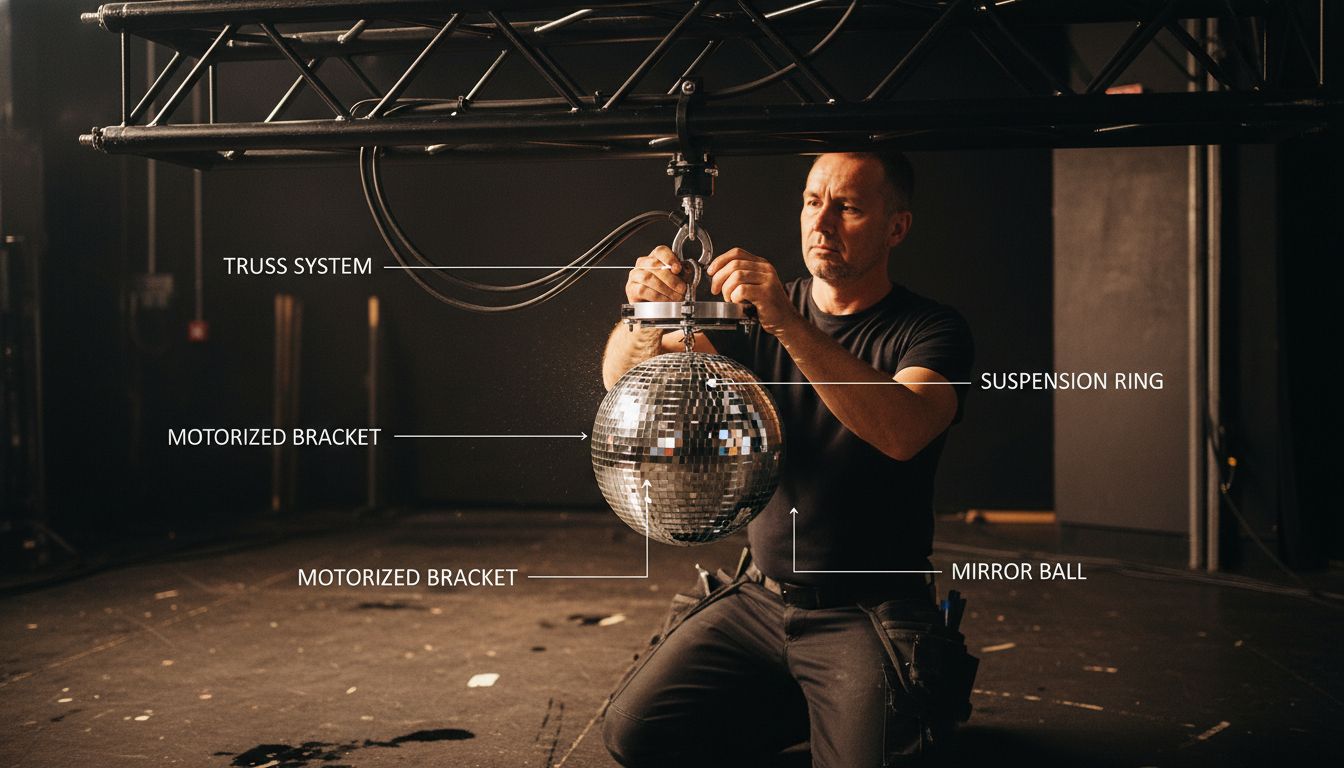 Mirror Ball Mounting Kit Guide offers comprehensive insights into selecting appropriate mounting solutions for different venues and performance requirements. Understanding these mounting hardware nuances helps event professionals, stage designers, and lighting technicians create stunning visual experiences with maximum reliability and minimal technical complexity.
Motor Types and Power Control Options
Motor systems are the essential dynamic components that transform mirror balls from static decorative elements into vibrant, interactive lighting experiences. Research from the University of Glasgow reveals the intricate engineering behind precision mirror positioning, highlighting the critical role of motorized systems in creating sophisticated visual displays.
The landscape of mirror ball motor types encompasses a range of sophisticated technologies designed for different performance requirements. According to research from the University of Birmingham, motor control systems integrate advanced sensors and actuators to enable precise movement and positioning.
The primary motor types include:
Here’s a comparison of key motor types and their typical applications:
| Motor Type | Key Features | Typical Applications |
|---|---|---|
| Direct Current (DC) | Smooth rotation Easy control |
Home setups Small event venues |
| Stepper | Precise angles Position accuracy |
Theatre shows Custom effects |
| Brushless DC | High efficiency Low maintenance |
Large venues Professional events |
| Variable Speed | Adjustable pace Dynamic control |
Nightclubs Synchronised displays |
- Direct Current (DC) Motors: Providing smooth, consistent rotation
- Stepper Motors: Enabling precise angular positioning
- Brushless DC Motors: Offering high efficiency and reduced mechanical wear
- Variable Speed Motors: Allowing dynamic rotation control
Power control options have evolved significantly, moving from simple on-off mechanisms to complex programmable systems that can synchronise mirror ball movements with music, lighting sequences, and event dynamics. What Are Mirror Ball Rotators provides in-depth insights into the technological sophistication behind these mechanical systems. Event professionals, stage designers, and lighting technicians can now select motor systems that offer unprecedented control, transforming mirror balls from simple decorative elements into dynamic, responsive lighting instruments.
Controllers and Special Effects Integration
Controllers represent the sophisticated technological interface that transforms mirror ball systems from simple rotating mechanisms into dynamic, programmable lighting experiences. Research from the University of Glasgow highlights the intricate control systems that enable precise manipulation of mirror ball movements and visual effects, bridging the gap between mechanical hardware and creative performance design.
Modern mirror ball controllers integrate advanced sensor technologies and digital interfaces to provide unprecedented control and customisation. According to research from the University of Birmingham, these systems utilise complex actuator networks that allow for nuanced positioning and synchronised lighting sequences. Key integration features typically include:
- DMX512 Protocol Compatibility: Enabling standardised lighting control
- Programmable Rotation Patterns: Creating complex movement sequences
- Sound-Activated Responsive Controls: Synchronising movement with audio inputs
- Multi-Channel Management: Controlling multiple mirror balls simultaneously
- RGB Colour Synchronisation: Integrating lighting colour changes with movement
The evolution of special effects integration has dramatically expanded the creative possibilities for event designers and performance technicians. Spotlight for Mirror Balls Guide provides comprehensive insights into how these advanced control systems can transform a simple mirror ball into a sophisticated lighting instrument. From nightclub environments to theatrical productions, these intelligent controllers allow professionals to choreograph intricate visual experiences with remarkable precision and creativity.
Lighting Enhancements for Mirror Balls
Lighting enhancements represent the technological innovations that transform mirror balls from simple reflective objects into dynamic visual instruments. Research from Imperial College London highlights groundbreaking developments in materials that can dynamically switch between reflective and transparent states, opening unprecedented possibilities for creative lighting design.
The sophisticated landscape of mirror ball lighting encompasses a range of advanced technologies designed to maximise visual impact. According to research from the University of Glasgow, innovative surface treatments and coating technologies can significantly enhance the performance and light-dispersal characteristics of mirror balls. Key lighting enhancement strategies include:
- LED Integration: Embedding colour-changing LED systems
- Programmable Colour Washes: Creating dynamic background lighting effects
- Dichroic Filters: Producing complex light spectrum transformations
- Advanced Reflective Coatings: Improving light dispersion and intensity
- Sound-Reactive Lighting: Synchronising light patterns with audio inputs
DIY Mirror Ball Lighting Guide provides comprehensive insights into transforming standard mirror balls into sophisticated lighting instruments. From intimate home environments to large-scale professional productions, these lighting enhancements allow designers and event professionals to create immersive, responsive visual experiences that transcend traditional lighting limitations.
Safety, Installation, and Maintenance Considerations
Safety protocols are the cornerstone of successful mirror ball installations, ensuring both optimal performance and protection for performers, equipment, and audience members. Research from the University of Glasgow emphasizes the critical importance of precise installation techniques and ongoing maintenance to prevent potential structural failures and performance degradation.
Professional mirror ball installations demand a comprehensive approach that balances technical expertise with rigorous safety standards. Key safety and maintenance considerations include:
- Load Capacity Assessment: Verifying structural support strength
- Regular Inspection Schedules: Checking mounting hardware and mechanical components
- Weight Distribution Calculations: Ensuring balanced and secure suspension
- Electrical Safety Compliance: Implementing proper wiring and grounding techniques
- Environmental Protection: Shielding equipment from humidity, dust, and temperature variations
- Vibration Dampening: Minimising mechanical stress during operation
7 Essential Tips for Mirror Balls in Events provides comprehensive guidance for professionals navigating the complex landscape of mirror ball installation and maintenance. Event organisers, production managers, and lighting technicians must approach these systems with meticulous attention to detail, recognising that proper safety considerations are not just a regulatory requirement but a fundamental aspect of creating stunning, reliable visual experiences.
Discover the Perfect Mirror Ball Accessories for Your Event
Selecting the ideal mirror ball accessories can be a challenge when you need precise mounting hardware, motor systems, and specialised lighting that guarantee safety and stunning effects. Whether you want smooth rotation with professional motor controls or advanced lighting enhancements to create unique moods, understanding the right components is crucial for flawless installations and unforgettable visual experiences.
At Mirror Balls, we offer a comprehensive selection of high-quality accessories tailored for every setting – from intimate home setups to grand theatre stages. Our products cover everything from secure mounting kits to efficient rotators and lighting solutions designed to maximise brilliance and impact.
Elevate your event by choosing accessories crafted for reliability and creative control. Explore our full range now at Mirror Balls and let our expert guidance help you find the perfect match for your mirror ball needs. Don’t settle for less when you can create mesmerising moments with the right equipment today.
Frequently Asked Questions
What are the core components of mirror ball accessories?
Mirror ball accessories include essential components such as mounting hardware, rotators, motor systems, and specialized lighting equipment that enhance the functionality and visual impact of mirror balls.
How do mounting hardware and suspension systems work for mirror balls?
Mounting hardware and suspension systems secure mirror balls in place, allowing for precise positioning and minimizing vibration. These systems can range from simple fixed brackets to advanced motorized setups.
What types of motors are available for mirror balls?
There are several types of motors for mirror balls, including Direct Current (DC) Motors for smooth rotation, Stepper Motors for precise angles, Brushless DC Motors for high efficiency, and Variable Speed Motors for dynamic control.
How can I integrate controllers with mirror ball systems for better performance?
Controllers can enable programmable rotation patterns, sound-activated responses, and multi-channel management, allowing for sophisticated synchronisation of movement and lighting, enhancing the overall visual experience.