Mirror ball motors might sound like something only nightclubs care about, but these tiny machines have a surprising reach. Professional-grade mirror ball motors can support mirror balls weighing up to 150 kilograms, spinning them at just 1-3 rotations per minute. That kind of precision? It is what turns simple party decorations into dazzling light experiences that steal the spotlight anywhere from weddings to rock concerts.
Table of Contents
- What Are Mirror Ball Motors? A Definition
- The Importance of Mirror Ball Motors in Entertainment
- The Mechanics of Mirror Ball Motors Explained
- Key Components and Features of Mirror Ball Motors
- Real-World Applications of Mirror Ball Motors in Events
Quick Summary
| Takeaway | Explanation |
|---|---|
| Mirror ball motors enable dynamic lighting | They rotate mirror balls to create captivating and immersive light patterns in various settings. |
| Low rotational speeds create visual effects | Operating at speeds of 0.5 to 3 RPM ensures smooth light distribution, enhancing the atmosphere. |
| Versatile for multiple event types | They are suitable for nightclubs, weddings, theatrical productions, and home entertainment. |
| Precision engineering allows seamless integration | Advanced components enable controlled rotation and minimal vibration for enhanced visual aesthetics. |
| Essential for creating memorable experiences | These motors help elevate ordinary spaces into extraordinary sensory environments through light manipulation. |
What are Mirror Ball Motors? A Definition
A mirror ball motor is a specialized electrical device engineered to create dynamic visual effects by rotating mirror balls or disco balls smoothly and consistently. Unlike standard motors, these precision instruments are designed specifically for entertainment and lighting applications, transforming static mirror balls into mesmerizing light-reflecting instruments.
The Core Mechanics of Mirror Ball Motors
At its fundamental level, a mirror ball motor operates through a low-speed, gear-driven mechanism that enables continuous, controlled rotation. Electronics tutorials suggest these motors typically function at extremely slow rotational speeds, usually between 1-3 rotations per minute, ensuring a gradual and hypnotic light dispersion effect.
Key characteristics of mirror ball motors include:
- Precise rotational control
- Low-noise operation
- Designed for continuous performance
- Specialized mounting brackets for secure installation
Applications and Performance Considerations
Mirror ball motors find widespread use across multiple entertainment settings, from nightclubs and wedding venues to theatrical productions and home entertainment spaces. Read more about rotating mirror ball options to understand the versatility of these motors.
The motor’s performance depends on several critical factors: weight capacity, rotation speed, electrical requirements, and durability. Professional-grade motors can support mirror balls weighing up to 10 kilograms, making them suitable for various ball sizes and performance environments.
Whether creating atmospheric lighting for a dance floor or adding dramatic visual interest to a stage production, mirror ball motors transform static reflective surfaces into dynamic, light-scattering instruments that captivate audiences and enhance spatial aesthetics.
The Importance of Mirror Ball Motors in Entertainment
Mirror ball motors are critical technological components that transform ordinary entertainment environments into extraordinary sensory experiences. By enabling controlled, dynamic light reflection, these motors play a pivotal role in creating immersive atmospheric environments across multiple performance and social settings.
Creating Dynamic Visual Atmospheres
The primary significance of mirror ball motors lies in their ability to generate mesmerizing light patterns that transcend static lighting designs. Learn more about stunning mirror ball effects to appreciate the visual complexity these devices generate. When a mirror ball rotates slowly, it disperses light across surfaces in unpredictable, fractal-like patterns, instantly elevating the emotional intensity of any space.
Key atmospheric contributions include:
- Transforming mundane spaces into dynamic environments
- Creating immersive sensory experiences
- Generating unexpected light interactions
- Providing visual movement without complex technological setups
Versatility Across Entertainment Platforms
Mirror ball motors demonstrate remarkable adaptability across diverse entertainment contexts. From intimate home parties to large-scale theatrical productions, these motors enable lighting designers to craft unique visual narratives. Professional sound and lighting engineers recognize them as essential tools for creating memorable spatial experiences.
The motors are particularly crucial in environments where mood and ambiance are paramount:
- Nightclubs requiring continuous dynamic lighting
- Wedding venues seeking romantic atmospheric effects
- Theatre productions needing precise lighting transitions
- Television and film sets requiring controlled visual dynamics
Professional lighting designers appreciate mirror ball motors not just for their aesthetic value, but for their precision engineering. A well-designed motor can rotate a mirror ball with such subtle control that the light transformation appears almost organic and fluid, blurring the lines between technological mechanism and artistic expression.
The Mechanics of Mirror Ball Motors Explained
Mirror ball motors represent a sophisticated fusion of precision engineering and entertainment technology. These specialized devices transform simple rotating mechanisms into complex light manipulation instruments that create captivating visual experiences.
Electrical and Mechanical Design
The core design of a mirror ball motor focuses on delivering smooth, consistent rotation with minimal vibration. Learn more about rotator mechanics to understand the intricate engineering behind these devices. Typically constructed with high-quality electrical components, these motors utilize gear reduction systems that enable extremely controlled and slow rotational speeds.
Key mechanical components include:
- Low-voltage DC electric motors
- Precision gear reduction mechanisms
- Robust mounting brackets
- Silent ball bearing systems
- Electronic speed control circuits
Rotation Speed and Performance Dynamics
Unlike standard electric motors, mirror ball motors are engineered to operate at extraordinarily low rotational speeds. Professional models can achieve precise rotations ranging from 0.5 to 3 revolutions per minute, ensuring a hypnotic and gradual light dispersal effect. The slow, deliberate movement allows mirror balls to create intricate light patterns that transform spaces without abrupt or jarring movements.
Professional mirror ball motors often incorporate advanced features like:
- Variable speed control mechanisms
- Remote operation capabilities
- Load-bearing capacities up to 150 kilograms
- Silent operational design
- Compact and lightweight construction
The sophistication of these motors lies not just in their mechanical design, but in their ability to seamlessly integrate with lighting systems. By providing controlled, predictable rotation, they enable lighting designers to create immersive environments that transcend traditional static lighting approaches.
Key Components and Features of Mirror Ball Motors
Mirror ball motors represent precision engineering designed to deliver seamless, controlled rotation for light reflection devices. Understanding their intricate components provides insight into their sophisticated functionality and performance capabilities.
Fundamental Electrical and Mechanical Elements
Automation technology research indicates that mirror ball motors consist of several critical interconnected components. These specialized devices integrate advanced electrical and mechanical systems to achieve precise, controlled rotation with minimal mechanical interference.
Key electrical components include:
- Low-voltage DC electric motors
- Electronic speed regulation circuits
- Robust power management systems
- Thermal protection mechanisms
- Precision electrical connectors
Advanced Design Features and Performance Specifications
Professional mirror ball motors distinguish themselves through exceptional engineering details that enable superior performance. Check our comprehensive troubleshooting guide for deeper insights into motor maintenance and operational parameters.
Critical performance features encompass:
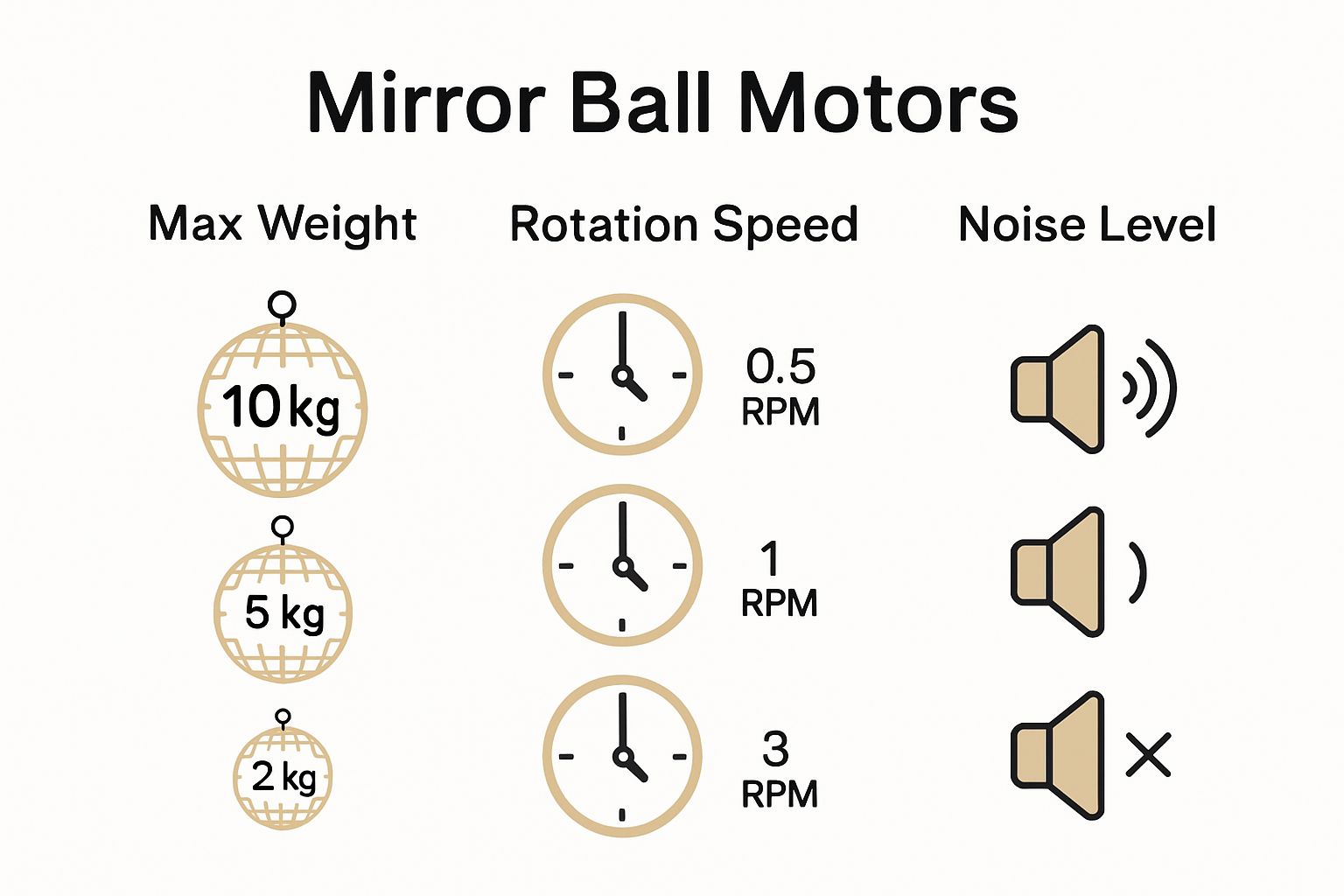
- Extremely low rotational speeds (0.5-3 RPM)
- Silent operational characteristics
- Vibration dampening technologies
- Variable speed control mechanisms
- Load-bearing capacities up to 150 kilograms
The sophisticated design of mirror ball motors transcends simple mechanical rotation.
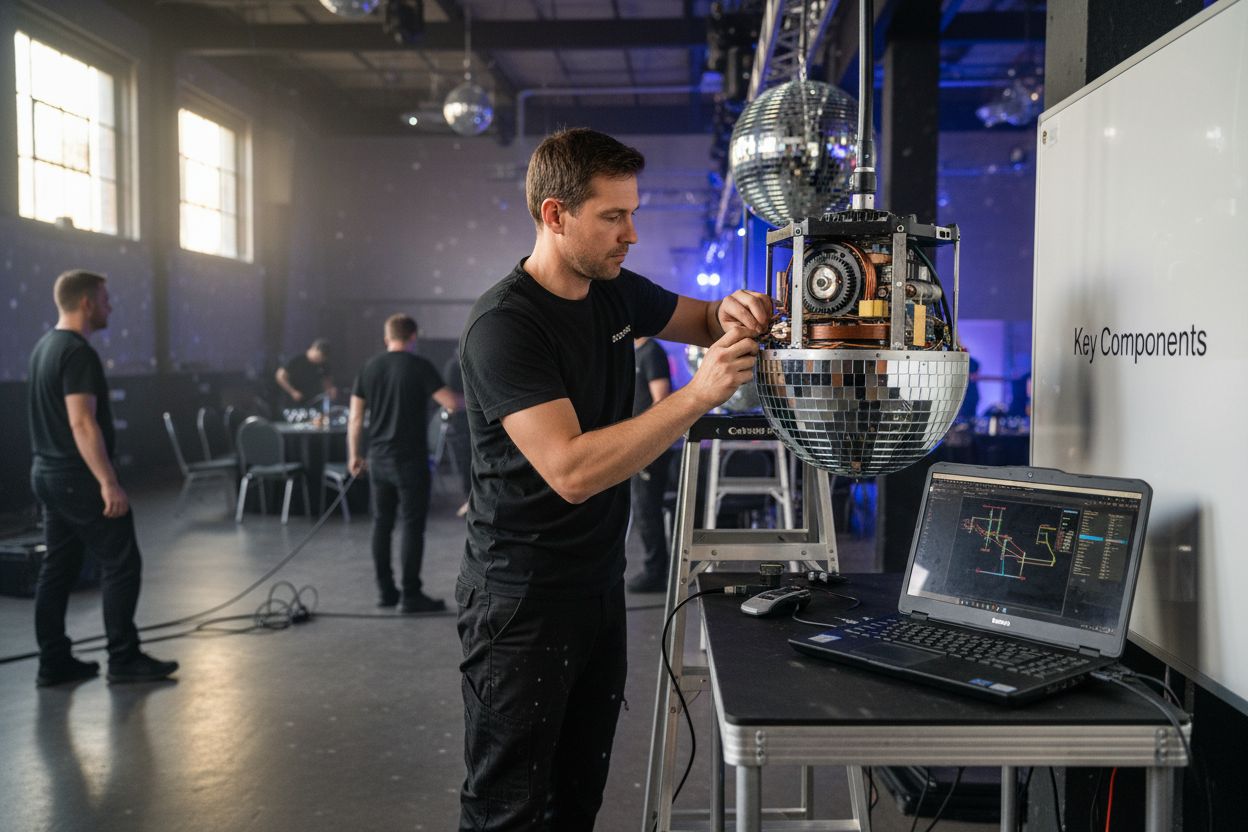 By integrating advanced electronic control systems with precision mechanical engineering, these devices transform static lighting environments into dynamic, immersive visual experiences that captivate audiences across entertainment, theatrical, and commercial settings.
Below is a table summarizing the key components and advanced features found in professional mirror ball motors, providing a quick reference for understanding their core design and performance attributes.
| Component or Feature | Description |
|---|---|
| Low-voltage DC electric motors | Provide precise, consistent power for controlled rotation |
| Precision gear reduction mechanisms | Ensure slow, smooth rotation to enhance light dispersion |
| Robust mounting brackets | Securely attach and support the mirror ball and motor assembly |
| Silent ball bearing systems | Minimize operational noise and mechanical friction |
| Electronic speed control circuits | Allow variable rotation speeds and remote operation |
| Vibration dampening technologies | Reduce vibration for seamless and stable light patterns |
| Load-bearing capacities up to 150 kg | Accommodate a range of mirror ball sizes and weights |
| Thermal protection mechanisms | Prevent overheating and ensure extended operational lifespan |
Real-World Applications of Mirror Ball Motors in Events
Mirror ball motors have evolved far beyond simple decorative devices, becoming sophisticated technological instruments that transform event spaces through dynamic light manipulation. These precision instruments enable event designers to create immersive, memorable visual experiences across multiple entertainment environments.
Entertainment and Performance Venues
In professional entertainment settings, mirror ball motors serve as critical lighting technology that elevates atmospheric experiences. Explore innovative mirror ball effect strategies to understand their transformative potential. Nightclubs, concert halls, and theatrical productions rely on these motors to generate complex light patterns that synchronize with musical rhythms and performance dynamics.
Key performance venue applications include:
- Creating synchronized light shows
- Generating dynamic visual backdrops
- Enhancing musical and dance performances
- Producing immersive environmental lighting
- Supporting complex stage design concepts
Specialized Event Environments
Beyond traditional entertainment spaces, mirror ball motors find innovative applications in diverse event contexts. Wedding receptions, corporate events, art installations, and private parties leverage these devices to craft unique atmospheric experiences. The motors enable precise, controlled light distribution that can dramatically transform spatial perceptions.
Diverse event environments utilize mirror ball motors for:
- Creating romantic lighting effects
- Generating unexpected visual surprises
- Supporting thematic event design
- Producing memorable photographic moments
- Enhancing spatial aesthetics
The technological sophistication of mirror ball motors allows event designers to transcend conventional lighting approaches.
This table presents the main event settings where mirror ball motors are applied, outlining how their capabilities contribute to different types of immersive experiences.
| Event Environment | How Mirror Ball Motors Are Used |
|---|---|
| Nightclubs | Create continuous dynamic lighting and synchronized light shows |
| Wedding Venues | Generate romantic atmospheric effects and memorable moments |
| Theatrical Productions | Enable precise lighting transitions and dramatic visual backdrops |
| Television and Film Sets | Provide controlled light dynamics for thematic scenes |
| Art Installations | Support unique, immersive spatial aesthetics and visual surprises |
| Corporate Events | Enhance thematic design and support memorable photographic moments |
| Private Parties | Transform spaces through controlled, captivating light displays |
Experience Seamless Light and Movement With Professional Mirror Ball Motors
If you are inspired by the article’s insights on how the right mirror ball motor can transform ordinary lighting into breathtaking displays, you already recognize the struggle of finding reliable motors that offer smooth, quiet, and continuous rotation. Many venues and event planners face frustration with underpowered motors, limits on weight capacity, or inconsistent performance. These challenges can turn a magical evening into a technical headache, wasting both time and resources.
Explore our full range of mirror ball motors and accessories designed to solve these exact issues with precision-engineered options for every space and budget.
Ready to upgrade your event experience with proven solutions? Shop now at https://mirror-balls.co.uk where you will find high-quality mirror balls, accessories, and expert advice all in one place. Do not let unreliable hardware hold your vision back. Take action today and create unforgettable moments that truly shine.
Frequently Asked Questions
What are the main features of mirror ball motors?
Mirror ball motors typically feature low-speed operation, low noise, and the ability to support mirror balls weighing up to 10 kilograms. To understand their capabilities, consider the specific requirements of your lighting design before selecting a motor.
How do I install a mirror ball motor securely?
To install a mirror ball motor securely, ensure it is mounted with the appropriate brackets and positioned to allow for smooth rotation. Follow the manufacturer’s guidelines on weight limits and electrical connections to guarantee safe operation.
What is the ideal rotational speed for a mirror ball motor?
The ideal rotational speed for a mirror ball motor generally falls between 0.5 to 3 revolutions per minute. Choose a speed that matches the atmosphere you want to create, as slower speeds enhance light dispersion effects and create hypnotic patterns.
How can I use mirror ball motors for different event types?
Mirror ball motors can be utilized in various settings, from nightclubs to weddings, to create immersive lighting environments. Plan the motor’s placement and settings according to the mood you wish to achieve—romantic for weddings or vibrant for dance floors.
What maintenance is required for mirror ball motors?
Regular maintenance for mirror ball motors includes checking electrical connections, ensuring secure fittings, and inspecting for any wear on mechanical components. Schedule maintenance checks every few months to maintain peak performance and extend motor lifespan.
How do I achieve the best light effects with a mirror ball motor?
To achieve the best light effects with a mirror ball motor, consider the angle and intensity of your light source, as well as the rotation speed of the motor. Experiment with placement and lighting conditions to create desired visual impacts, aiming for a captivating display within 30 minutes of setup.