Most british venues rely on the silent power of motorised rotators for their spectacular lighting displays. From nightclubs to theatre stages, these devices bring static mirror balls and lighting rigs to life with precision movement. Some advanced models can handle loads up to 40 kilograms with ease, revealing just how much engineering goes into event production. Understanding how these rotators work unlocks creative potential while helping professionals choose the right equipment for a safe and memorable show.
Table of Contents
- Motorised Rotators: Definition And Core Function
- Types Of Motorised Rotators For Mirror Balls
- How Motorised Rotators Operate Safely
- Installation And Practical Event Applications
- Common Mistakes And Safety Precautions
Key Takeaways
| Point | Details |
|---|---|
| Motorised Rotators Enhance Visual Displays | They provide controlled rotation for mirror balls and lighting, transforming static setups into dynamic experiences. |
| Safety Protocols are Essential | Installation must include proper load management and safety checks to prevent accidents during operation. |
| Customisation is Key for Events | Selecting the right rotator model tailored to the venue’s size and requirements enhances the effectiveness of visual effects. |
| Regular Maintenance Prevents Failures | Ongoing inspections and attention to mechanical and electrical integrity are crucial for reliable performance. |
Motorised Rotators: Definition and Core Function
A motorised rotator is a precision mechanical device designed to rotate mirror balls, lighting equipment, or decorative elements with controlled movement and speed. These specialised motors transform static installations into dynamic visual displays by enabling smooth, consistent rotation. According to Thomann, advanced models like the Eurolite MD-3030 can handle mirror balls weighing up to 40 kg, demonstrating significant load-bearing capabilities.
The core function of a motorised rotator centres on generating controlled, continuous rotation for various entertainment and staging environments. Unlike manual rotational methods, these motors provide precise speed adjustments and directional control. Typical applications include:
- Nightclub and disco lighting effects
- Theatre and stage production design
- Event and party decorative installations
- Professional photography and film set lighting
As Understanding Mirror Ball Motors explains, motorised rotators typically feature DMX compatibility, allowing seamless integration with complex lighting control systems. This digital interface enables performers, technicians, and designers to programme intricate rotation patterns, synchronise movements with music, and create immersive visual experiences.
The mechanical sophistication of motorised rotators lies in their ability to maintain consistent rotational speeds while managing different load weights. Professional models often include adjustable rotation directions, variable speed settings, and robust mounting mechanisms that ensure stable, reliable performance across diverse environments. Whether illuminating a small home party or creating spectacular effects in large-scale venues, these precision devices transform static mirror balls into dynamic, engaging visual elements.
Types of Motorised Rotators for Mirror Balls
Motorised rotators for mirror balls come in several distinct categories, each designed to meet specific performance requirements and installation environments. Professional-grade rotators represent the most sophisticated segment, offering advanced features like precise speed control, DMX compatibility, and robust load-bearing capabilities. Cybermarket highlights professional models capable of supporting substantial mirror balls ranging from 762mm (30") to 1016mm (40"), with additional safety hanging points for enhanced stability.
The primary categories of motorised rotators include:
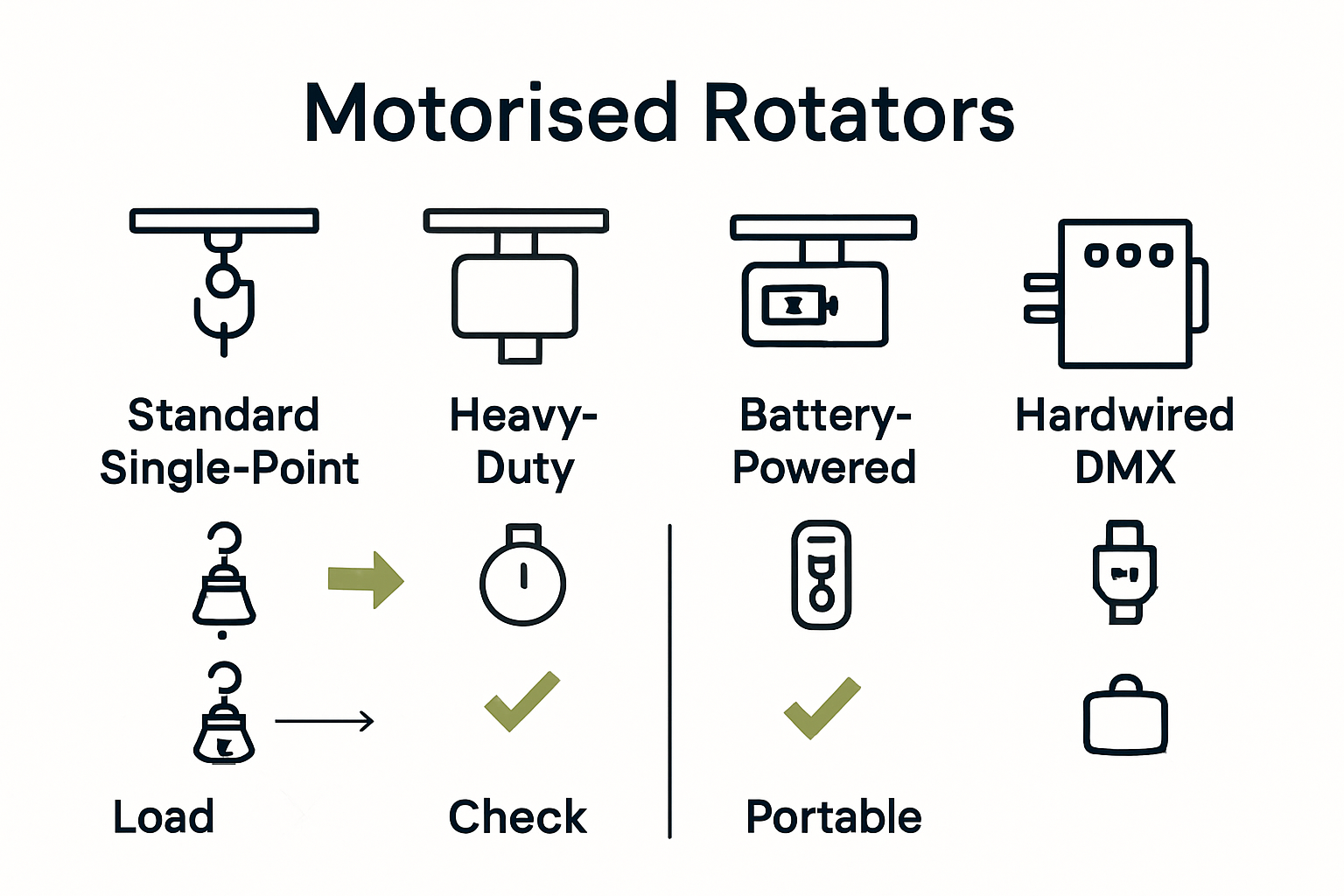
- Standard Single-Point Rotators: Ideal for smaller venues and home entertainment setups
- Heavy-Duty Rotators: Designed for large venues, capable of supporting substantial mirror ball weights
- Battery-Powered Rotators: Perfect for mobile events and temporary installations
- Hardwired DMX Rotators: Integrated with complex lighting control systems
When selecting a motorised rotator, professionals must consider several critical factors such as load capacity, rotation speed range, power source, and control interface. Battery-powered models offer exceptional flexibility for temporary events, while hardwired DMX rotators provide seamless integration with professional lighting rigs. What Are Mirror Ball Rotators explains that the choice depends on specific venue requirements, event type, and desired visual effect.
Specialised rotators also emerge for unique applications, including soundactive models that synchronise rotation with music beats, ultra-quiet models for theatre productions, and industrial-grade rotators for permanent installations. These precision devices transform mirror balls from static decorative elements into dynamic, immersive visual experiences, allowing event designers and lighting technicians to create mesmerising atmospheric effects across diverse entertainment environments.
How Motorised Rotators Operate Safely
Safety protocols are paramount when operating motorised rotators, requiring meticulous attention to installation, load management, and electrical considerations. Thomann emphasises the critical requirement of installing mirror ball motors with a secondary, independent suspension system and mandates professional inspection before initial use, underscoring the importance of expert verification in preventing potential accidents.
Key safety considerations for motorised rotators include:
- Maximum load capacity monitoring
- Secure mounting points
- Electrical connection integrity
- Regular mechanical inspection
- Proper weight distribution
- Vibration and stress tolerance assessment
Professional installations demand comprehensive safety protocols that extend beyond basic mechanical considerations. What Is a Rotating Motor highlights the necessity of understanding electrical load requirements, ensuring robust mounting hardware, and implementing fail-safe mechanisms that prevent unexpected motor stoppage or mechanical failure. Technicians must carefully calculate total suspended weight, including mirror ball mass and additional lighting accessories, to prevent structural overload.
Advanced motorised rotators incorporate multiple safety features such as automatic shut-off systems, overload protection circuits, and precision-engineered bearings that minimise mechanical stress. These sophisticated mechanisms ensure consistent performance while protecting both equipment and surrounding environment, making them essential for professional event production, theatrical installations, and high-stakes entertainment environments where equipment reliability is non-negotiable.
Installation and Practical Event Applications
Mirror ball motorised rotators represent a sophisticated technological solution for creating dynamic lighting experiences across diverse event environments. Thomann highlights the versatility of modern rotators, demonstrating their ability to operate in both standalone mode and via sophisticated DMX interfaces, providing event professionals unprecedented control and flexibility.
Practical installation requires careful consideration of several critical factors:
- Structural ceiling load-bearing capacity
- Precise mounting point selection
- Appropriate cable management
- Electrical power requirements
- Signal interface compatibility
- Safety certification standards
Event applications for motorised rotators span multiple professional domains. Rotating Mirror Ball Motors explains that these precision devices find utility in numerous settings, including nightclub environments, theatrical productions, corporate events, wedding receptions, and professional photography studios. Each application demands nuanced configuration, with rotation speeds, movement patterns, and synchronisation capabilities tailored to specific aesthetic and technical requirements.
The true artistry of motorised rotators lies in their ability to transform static spaces into immersive, dynamic environments. Sophisticated models enable programmable rotation patterns, allowing lighting technicians to create mesmerising visual narratives that synchronise perfectly with musical rhythms, dramatic stage movements, or atmospheric design concepts. From subtle background illumination to dramatic centrepiece effects, these precision devices offer event designers an unparalleled toolkit for crafting memorable sensory experiences.
Common Mistakes and Safety Precautions
Installation errors in motorised rotator systems can lead to catastrophic equipment failure and potential safety hazards. Thomann emphasises the critical importance of implementing a secondary, independent suspension system and mandating professional inspection before initial use to mitigate risks associated with improper installation techniques.
Common mistakes that professionals and event organisers must vigilantly avoid include:
- Exceeding maximum load capacity
- Inadequate mounting point verification
- Neglecting electrical safety protocols
- Ignoring manufacturer’s suspension guidelines
- Failing to perform regular mechanical inspections
- Using inappropriate cable management techniques
Professional risk mitigation requires a comprehensive approach to equipment management. Rotating Mirror Ball Motors recommends implementing systematic inspection protocols that include thorough pre-event equipment checks, stress load assessments, and continuous monitoring during operational periods. Technicians must develop a meticulous verification process that examines mechanical integrity, electrical connections, and structural support mechanisms before each deployment.
The most critical safety precaution involves understanding the complex interplay between mechanical load, electrical requirements, and environmental factors. Experienced professionals recognise that motorised rotators demand precision engineering, careful weight distribution, and ongoing maintenance. Potential failure points can emerge from seemingly minor oversights, such as microscopic bearing wear, slight cable tension variations, or subtle structural misalignments that compound over repeated use.
Discover the Perfect Motorised Rotator Solutions for Your Event Needs
Understanding the importance of precision, safety, and control in motorised rotators is essential for creating captivating visual experiences. Whether you are managing a professional venue or planning a private celebration, the challenges of load capacity, secure mounting, and smooth rotation must be met with reliable equipment. Our range of high-quality mirror balls and motorised rotators at mirror-balls.co.uk is designed to address these exact needs, offering professional-grade products that ensure your installations are both stunning and safe.
Enhance your event with expertly engineered rotators that support various load sizes and feature DMX compatibility for precise control. Browse our collection to find everything from small glitter balls for intimate occasions to heavy-duty models perfect for large-scale venues. Act now to experience seamless operation and transform your static décor into lively, dynamic displays. Start your search for the ideal motorised rotator today at mirror-balls.co.uk and take the first step towards lighting up your event with confidence and style.
Frequently Asked Questions
What is a motorised rotator?
A motorised rotator is a mechanical device designed to rotate mirror balls, lighting equipment, or decorative elements with controlled movement and speed, transforming static installations into dynamic visual displays.
What types of motorised rotators are available for mirror balls?
Motorised rotators for mirror balls come in several types, including standard single-point rotators, heavy-duty rotators, battery-powered rotators, and hardwired DMX rotators. Each type caters to specific performance requirements and installation environments.
How do motorised rotators enhance lighting displays?
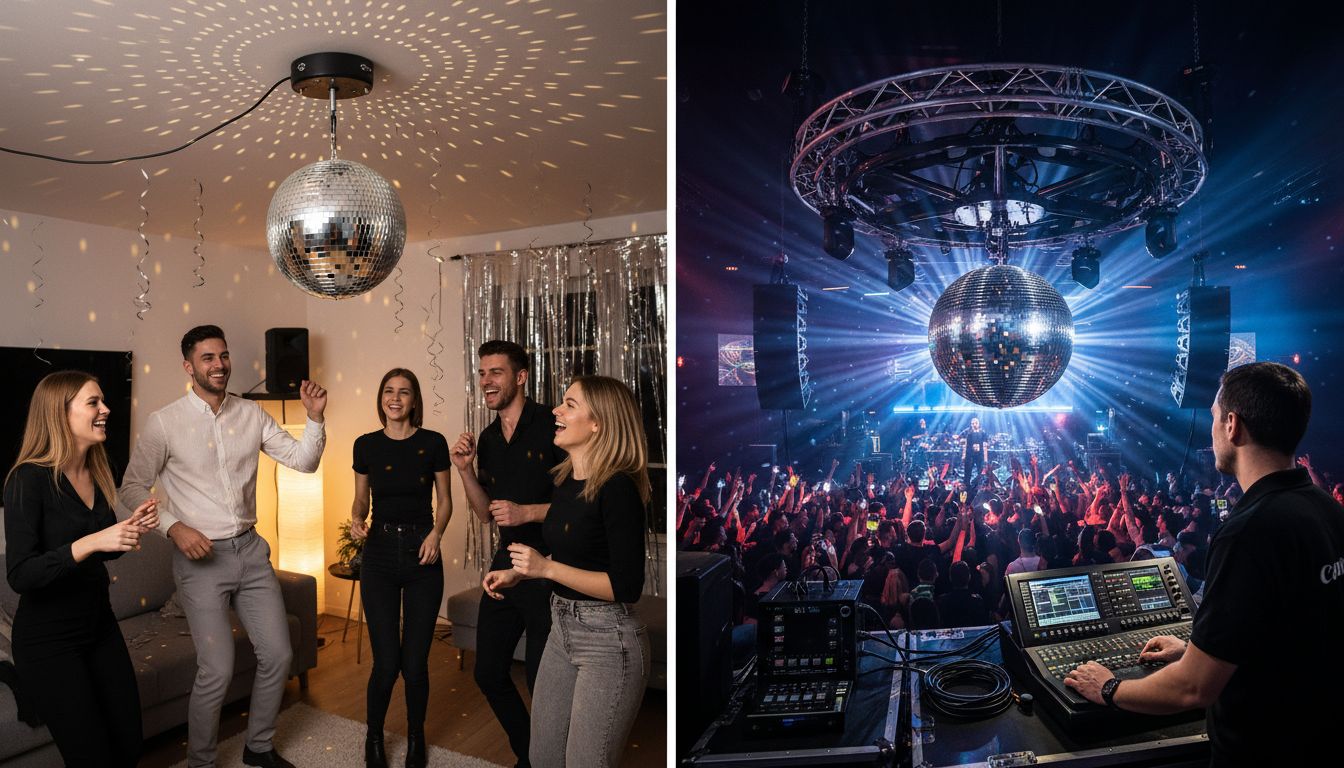
Motorised rotators enhance lighting displays by enabling controlled, continuous rotation, precise speed adjustments, and directional control, which allows event designers to create immersive visual experiences that sync with music and other elements.
What safety precautions should be taken when using motorised rotators?
Safety precautions for motorised rotators include monitoring maximum load capacity, ensuring secure mounting, verifying electrical connections, performing regular mechanical inspections, and appropriately distributing weight to prevent equipment failure.