Every british nightclub owes much of its magical atmosphere to a single innovation. A mirror ball paired with a rotator can produce more than ten times the visual excitement than static lighting alone, making any dance floor come alive. With so many options and technical details, selecting the right rotator is not just a technical decision but a creative one that transforms spaces across the United Kingdom. Discover what sets these devices apart and learn how the correct choice shapes every memorable lighting moment.
Table of Contents
- Rotators Explained: Purpose and Core Functions
- Types of Mirror Ball Rotators Compared
- How Rotators Operate Safely and Effectively
- Choosing the Right Rotator for Your Space
- Common Rotator Mistakes and Safety Risks
Key Takeaways
| Point | Details |
|---|---|
| Rotator Functionality | Rotators enable dynamic light displays by rotating mirror balls, enhancing visual effects in entertainment environments. |
| Types of Rotators | There are three primary types of mirror ball rotators: Standard Electric, Professional Performance, and Industrial-Grade, each suited for different ball sizes and venue requirements. |
| Safety Considerations | Proper installation and adherence to safety protocols are crucial to prevent accidents and ensure optimal performance of mirror ball rotators. |
| Selection Criteria | When choosing a rotator, consider technical specifications such as mirror ball size, venue acoustics, and required rotation speeds for effective lighting. |
Rotators Explained: Purpose and Core Functions
A rotator serves as a critical mechanism for creating dynamic lighting experiences, specifically designed to enhance the movement and visual impact of mirror balls. At its core, a rotator transforms a stationary reflective sphere into an electrifying display of spinning light patterns that captivate audiences across various entertainment settings.
The primary function of a rotator is precision movement. By steadily rotating a mirror ball at controlled speeds, these devices generate mesmerising light reflections that dance across walls, floors, and ceilings. Professional rotators offer multiple speed settings, allowing event organisers to adjust the intensity and rhythm of light projection. Whether you’re orchestrating a high-energy nightclub atmosphere or creating subtle ambient lighting for an intimate venue, rotators provide unparalleled flexibility in visual presentation.
Key features of professional rotators typically include:
- Adjustable rotation speeds (from slow, subtle movements to rapid spinning)
- Quiet motor mechanisms to prevent sound disruption
- Robust mounting options for various installation scenarios
- Compatibility with different mirror ball sizes and weights
- Low power consumption for extended performance
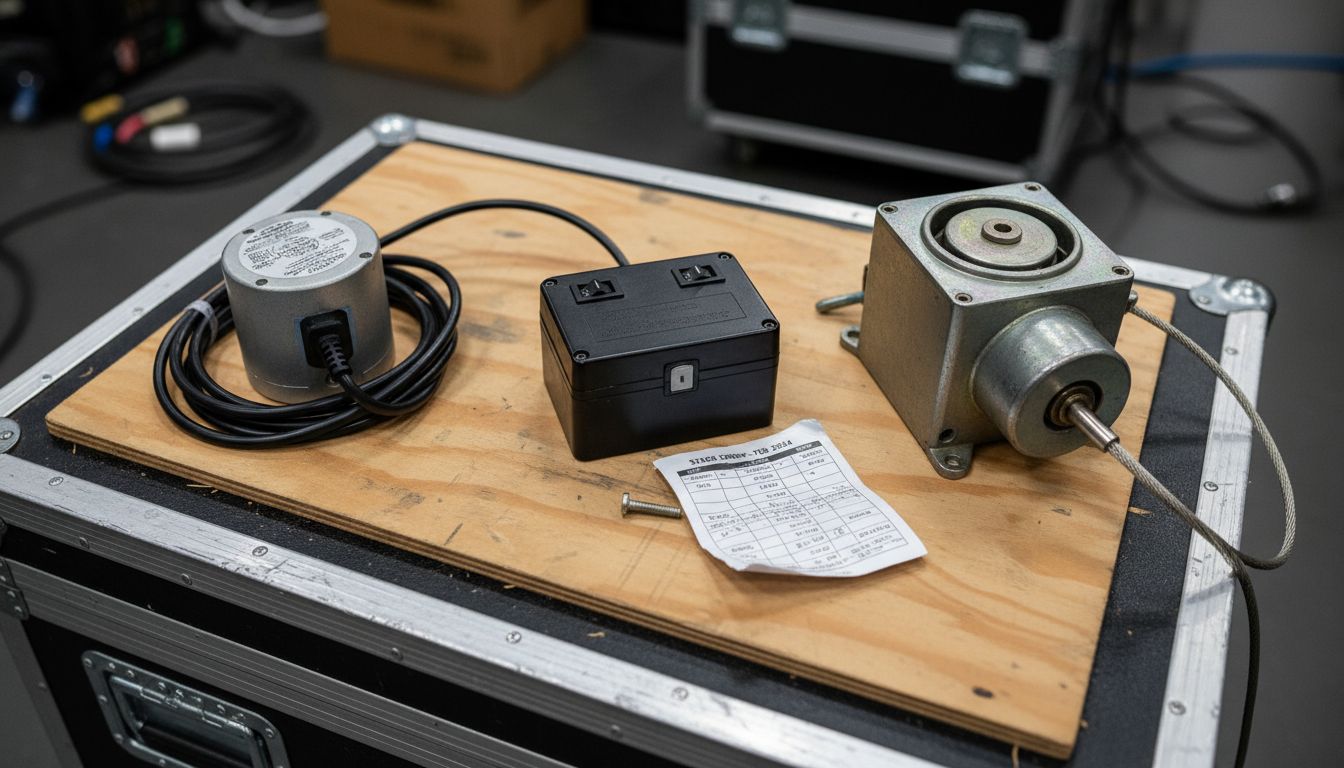
Technically, rotators work by utilising a small electric motor connected to a mounting bracket that supports the mirror ball. The motor generates consistent, smooth rotational movement, ensuring that light reflects in multiple directions simultaneously. This continuous motion creates a kaleidoscopic effect that transforms ordinary spaces into dynamic, immersive environments perfect for events, performances, and creative installations.
Types of Mirror Ball Rotators Compared
Mirror ball rotators come in diverse configurations designed to meet different performance requirements and venue specifications. Some models are engineered for smaller mirror balls up to 30cm, catering to lighter applications and more intimate entertainment spaces. Understanding these variations helps event professionals select the most appropriate rotator for their specific lighting needs.
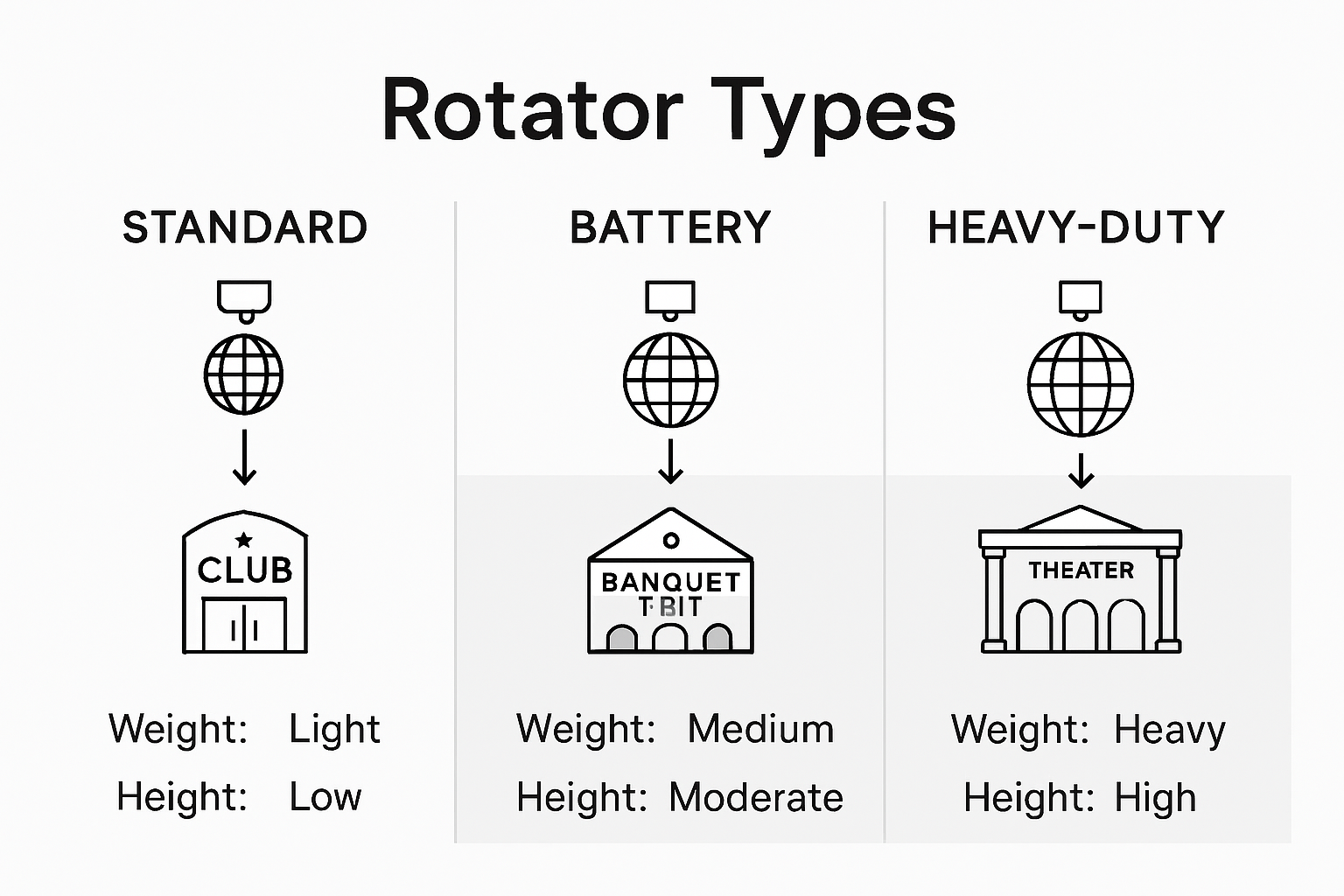
The primary categories of mirror ball rotators can be broadly classified into three main types:
- Standard Electric Rotators
- Suitable for small to medium-sized mirror balls
- Typically support balls between 20-40cm in diameter
- Operate at consistent, predictable rotation speeds
- Most cost-effective option for general entertainment venues
- Professional Performance Rotators
- Designed for larger mirror balls (40-80cm)
- Advanced speed control mechanisms
- Higher torque motors for smoother rotation
- Enhanced durability for frequent, intensive use
- Ideal for nightclubs, concert venues, and professional staging
- Industrial-Grade Rotators
- Support extremely large mirror balls (80cm+)
- Robust construction for permanent installations
- Precision engineering with minimal vibration
- Silent operation for theatrical and film production environments
- Customisable rotation speeds and directional control
Each rotator type offers unique advantages, allowing event designers and production teams to create precisely tailored lighting experiences. The selection depends on factors like mirror ball size, venue acoustics, installation environment, and desired visual effect. Professionals should carefully evaluate their specific requirements to choose a rotator that delivers optimal performance and aesthetic impact.
How Rotators Operate Safely and Effectively
Understanding the operational mechanics of mirror ball rotators requires careful attention to safety protocols and technical specifications. Professional use of mirror ball rotators demands compliance with specific machine directives and safety guidelines, ensuring both optimal performance and venue protection.
The core operational mechanism of a rotator involves several critical components working in precise synchronisation:
- Electric Motor: Provides consistent rotational power
- Mounting Bracket: Securely suspends the mirror ball
- Speed Control Module: Allows precise rotation speed adjustments
- Safety Suspension Cable: Prevents potential falling hazards
Key safety considerations include:
- Weight Distribution: Ensuring the mirror ball’s weight matches the rotator’s specifications
- Secure Mounting: Using multiple attachment points
- Regular Maintenance: Checking mechanical components for wear
- Electrical Safety: Verifying proper electrical connections
- Load Capacity Limits: Never exceeding recommended weight restrictions
Professional installations require additional precautions. Technicians must conduct thorough pre-installation assessments, verify structural integrity of mounting points, and implement secondary safety attachments. The goal is creating a spectacular lighting experience while maintaining absolute safety standards for performers, staff, and audience members. Proper installation transforms a simple rotating mechanism into a mesmerising visual spectacle that enhances any entertainment environment.
Choosing the Right Rotator for Your Space
Selecting the appropriate mirror ball rotator requires careful consideration of multiple technical and environmental factors. Venue professionals must evaluate specific parameters to ensure optimal performance and safety for their unique lighting installation.
Key selection criteria include:
Technical Specifications to Consider:
- Mirror ball diameter and total weight
- Ceiling height and mounting infrastructure
- Required rotation speed range
- Electrical power availability
- Acoustic environment
- Intended visual effect
Performance Matching Guidelines:
- Small Venues (20-50m²)
- Compact rotators (20-30cm mirror balls)
- Low to moderate rotation speeds
- Minimal power requirements
- Quiet operational mechanism
- Medium Venues (50-150m²)
- Mid-range rotators (30-50cm mirror balls)
- Variable speed controls
- Moderate torque requirements
- Balanced noise levels
- Large Venues (150m² and above)
- Industrial-grade rotators (50-80cm mirror balls)
- Advanced speed modularity
- High-power motor specifications
- Robust mounting capabilities
Professional installation demands precise alignment between the rotator’s technical capabilities and the specific spatial requirements. Sound engineers, lighting designers, and venue managers must collaborate to select a rotator that not only meets performance expectations but also integrates seamlessly with existing architectural and technical infrastructure. Thoughtful selection transforms a simple mechanical device into a dynamic visual centrepiece that elevates the entire sensory experience.
Common Rotator Mistakes and Safety Risks
Mirror ball rotators require meticulous attention to safety protocols to prevent potential accidents and equipment damage. Failing to implement secondary safety attachments and skipping expert approval before initial use represent critical safety risks that could compromise venue safety and equipment integrity.
Frequent Installation Mistakes:
- Incorrect weight distribution
- Inadequate mounting point assessment
- Overlooking electrical safety specifications
- Neglecting regular mechanical inspections
- Using inappropriate rotator for mirror ball size
Potential Safety Hazards:
- Structural Failure Risks
- Improper mounting leading to sudden detachment
- Exceeding rotator’s maximum load capacity
- Ignoring structural ceiling limitations
- Using damaged or worn mounting brackets
- Electrical Hazards
- Poor electrical connection management
- Using rotators without proper earthing
- Connecting to unstable power sources
- Ignoring voltage compatibility requirements
- Mechanical Malfunction Risks
- Inadequate lubrication of rotating mechanisms
- Overlooking motor strain indicators
- Continuing operation with unusual vibrations
- Neglecting manufacturer’s maintenance guidelines
Professional technicians understand that preventing accidents requires consistent vigilance, regular equipment assessment, and strict adherence to manufacturer specifications. By implementing comprehensive safety protocols and conducting thorough pre-installation evaluations, event professionals can mitigate risks and ensure a secure, spectacular lighting experience.
Enhance Your Mirror Ball Experience with the Perfect Rotator
Understanding the essential role of a rotator in transforming a static mirror ball into a captivating spinning light show highlights a common challenge faced by event organisers and venue managers. Whether you need precise speed control, quiet operation, or a rotator that matches your mirror ball size and venue size, selecting the right equipment is vital to achieve spectacular visual effects while maintaining safety and reliability.
Discover a wide range of high-quality mirror balls and compatible rotators at mirror-balls.co.uk. Our expert selection caters to every requirement from small home setups to professional-grade installations for nightclubs and theatres. Benefit now from our detailed product descriptions and expert advice to ensure your lighting installation is both stunning and secure. Visit mirror-balls.co.uk today to find the ideal rotator and mirror ball bundle designed to elevate your event ambiance with dynamic, reliable performance.
Frequently Asked Questions
What is the primary function of a mirror ball rotator?
The primary function of a mirror ball rotator is to create dynamic lighting experiences by rotating a mirror ball, allowing it to cast captivating light reflections across walls, floors, and ceilings.
What are the different types of mirror ball rotators?
Mirror ball rotators can be classified into three main types: Standard Electric Rotators for small to medium-sized mirror balls, Professional Performance Rotators for larger mirror balls, and Industrial-Grade Rotators for extremely large mirror balls, each designed to meet specific performance requirements.
How do you choose the right rotator for your venue?
Selecting the right rotator involves considering factors such as the diameter and weight of the mirror ball, the height of the ceiling, the required rotation speed, and the specific visual effects desired for the space.
What safety precautions should be taken when using a mirror ball rotator?
Key safety precautions include ensuring proper weight distribution, secure mounting, regular maintenance checks, verifying electrical safety, and adhering to load capacity limits to prevent accidents and equipment damage.
Recommended
- What Are Mirror Ball Rotators and How They Work – Mirror Balls
- What Is a Motorised Rotator? Complete Overview – Mirror Balls
- Complete Guide to Types of Mirror Ball Accessories – Mirror Balls
- Mirror Ball Mounting Kits: Complete Guide for 2024 – Mirror Balls
- Mastering Gymnastics Rings Training: Essential Guide – Gripnatic