Over 80 percent of professional venues depend on precision mirror ball rotators to create unforgettable lighting effects, transforming even modest spaces into spectacular visual displays. For British event planners and venue owners, choosing the right rotator is a decision that impacts safety, ambience, and overall guest experience. This guide explains what sets top-quality mirror ball rotators apart and outlines what every British venue needs to know before making their selection.
Table of Contents
- What Are Rotators For Mirror Balls?
- Motorised Vs Manual Rotators Compared
- Key Features: Load Capacity And Speed Ratings
- Safety Standards And Uk Regulations
- Selecting The Best Rotator For Your Venue
Key Takeaways
| Point | Details |
|---|---|
| Importance of Rotators | Mirror ball rotators enhance lighting effects by allowing smooth rotation and creating dynamic visual patterns in venues. |
| Motorised vs Manual | Motorised rotators offer automated and consistent performance, making them ideal for professional settings, whereas manual rotators require ongoing user input and can be less precise. |
| Load Capacity and Speed | It is crucial to select a rotator based on its load capacity and speed ratings to ensure optimal performance and safety during operation. |
| Venue-Specific Selection | Assess your venue’s characteristics and technical requirements to choose the best rotator for your lighting needs, considering factors like size, speed, and noise levels. |
What Are Rotators for Mirror Balls?
A mirror ball rotator transforms ordinary lighting displays into extraordinary visual spectacles. These precision devices enable mirror balls to spin smoothly, creating mesmerising light patterns across walls and dance floors. Mirror ball rotators are essential equipment for venues seeking dynamic illumination effects.
Rotators function as specialised motors designed specifically to suspend and rotate mirror balls at consistent speeds. They typically attach directly to mirror balls via sturdy mounting brackets, allowing precise controlled movement. Some rotators operate silently, making them ideal for professional entertainment settings like nightclubs, theatres, and event spaces where atmospheric lighting is crucial.
The technical specifications of mirror ball rotators vary significantly. Professional models can handle different mirror ball sizes and weights, with rotation speeds ranging from slow, elegant turns to rapid, high-energy spins. Key features often include adjustable speed controls, quiet motor mechanisms, and robust construction that ensures reliable performance across multiple event types.
Pro Tip: Select a rotator compatible with your specific mirror ball’s weight and diameter to guarantee smooth, consistent rotation and prevent potential mechanical strain.
Motorised vs Manual Rotators Compared
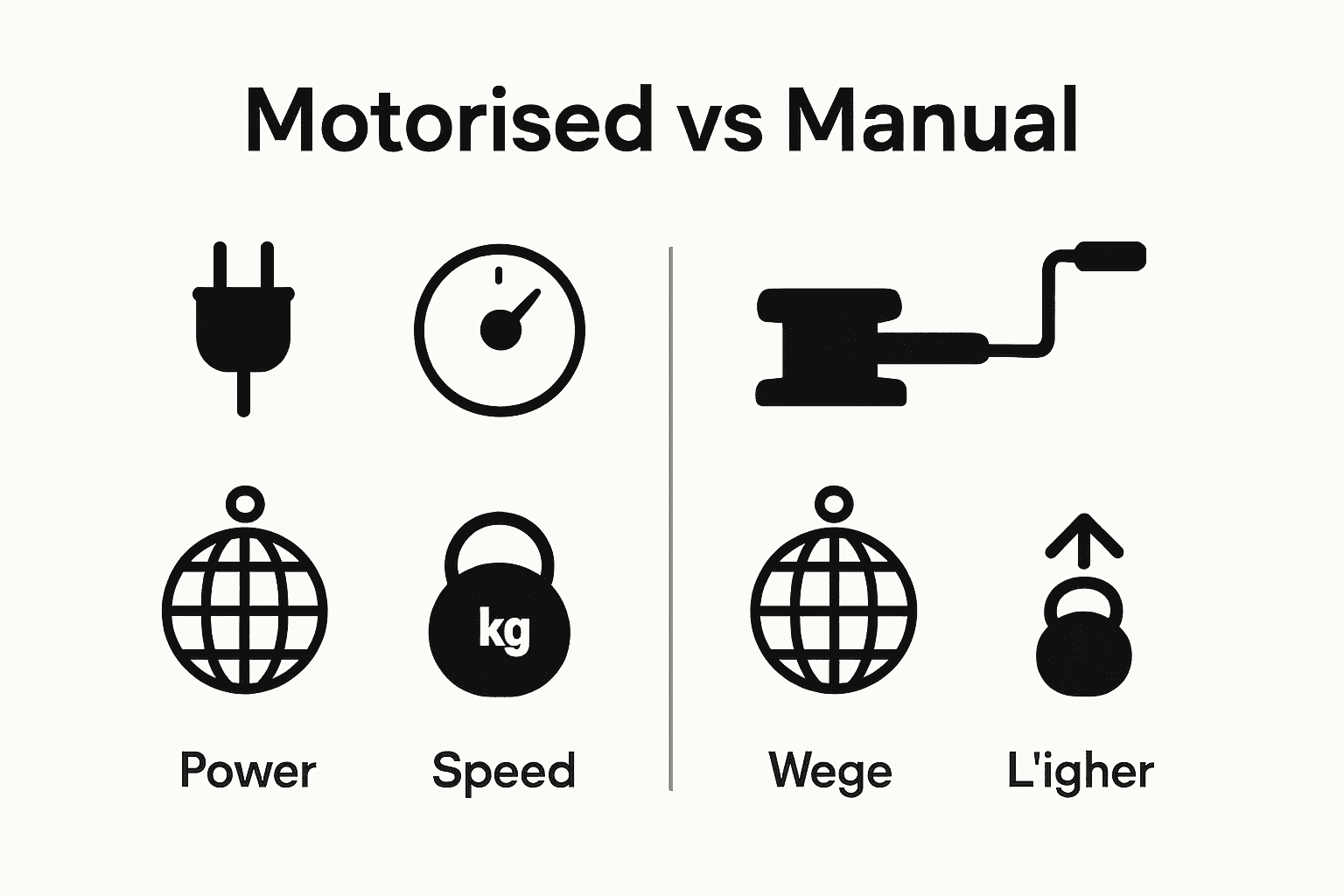
When selecting a mirror ball rotator, understanding the key differences between motorised and manual options becomes crucial for creating the perfect lighting experience. Motorised rotators offer consistent and automated rotation, delivering professional-grade illumination effects with minimal human intervention.
Manual rotators require physical interaction and personal effort to generate movement. These traditional devices rely on human rotation, which can create unpredictable and less precise lighting patterns. In contrast, motorised rotators provide smooth, controlled spinning mechanisms with adjustable speeds ranging from gentle turns to rapid, dynamic movements.
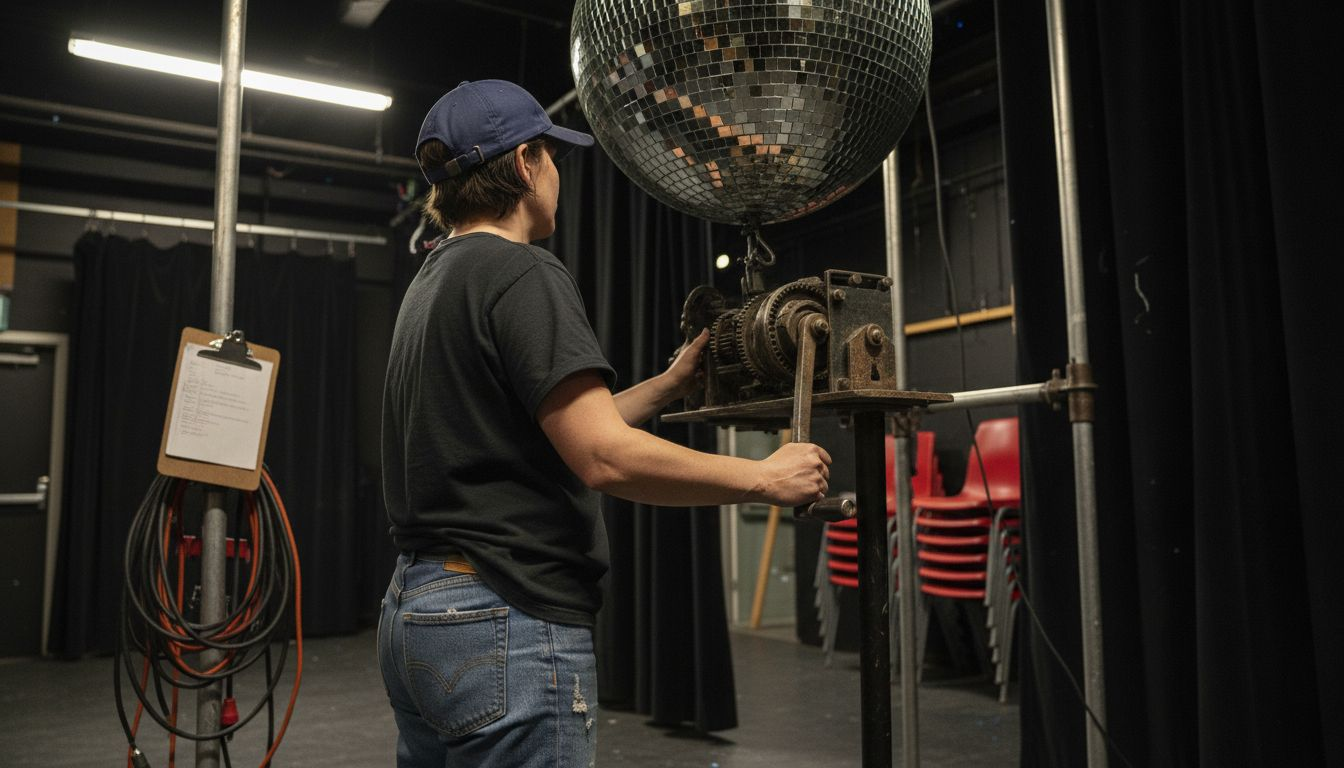
The technical distinctions between motorised and manual rotators are significant. Motorised options typically feature electronic speed controls, silent motor mechanisms, and consistent rotation capabilities. They excel in professional entertainment environments like nightclubs, theatres, and large event spaces where reliable, predictable lighting is essential. Manual rotators, while more affordable, demand continuous physical engagement and cannot maintain uniform rotation speeds.
Pro Tip: Consider venue requirements and budget when choosing between motorised and manual rotators, prioritising consistent performance and ease of use over initial cost savings.
Here’s a side-by-side comparison of motorised and manual mirror ball rotators:
| Aspect | Motorised Rotator | Manual Rotator |
|---|---|---|
| Rotation Consistency | Always smooth and uniform | Varies with user input |
| Suitable Venues | Nightclubs, theatres, large events | Small gatherings, home use |
| Effort Required | No ongoing effort post installation | Continuous manual involvement needed |
| Typical Price Range | Moderate to high, due to automation | Lower, budget-friendly |
| Noise Level | Often silent operation | Typically silent, unless cranking is used |
| Adjustment Options | Electronic speed control | Limited or no speed control |
Key Features: Load Capacity and Speed Ratings
Selecting the right mirror ball rotator requires careful consideration of load capacity and speed ratings, two critical technical specifications that directly impact performance. Mirror ball rotator specifications are fundamental to achieving optimal lighting effects in professional entertainment environments.
Load capacity represents the maximum weight a rotator can safely support without compromising mechanical integrity. Different rotators are engineered to handle varying mirror ball sizes and weights, ranging from lightweight 20cm decorative balls to substantial 60cm professional-grade installations. Professional venues typically require rotators capable of supporting heavier mirror balls while maintaining smooth, consistent rotation.
Speed ratings determine the rotational dynamics of mirror balls, offering range from slow, elegant turns to rapid, energetic spins. Most professional rotators provide adjustable speed controls, allowing precise manipulation of rotation speeds between 0.5 and 10 rotations per minute. These sophisticated mechanisms enable lighting technicians to create nuanced visual effects by controlling the mirror ball’s movement with remarkable precision.
Pro Tip: Always verify the rotator’s load capacity and speed specifications against your specific mirror ball’s dimensions and weight before making a purchase to ensure optimal performance and prevent potential mechanical failures.
Safety Standards and UK Regulations
Safety is paramount when installing and operating mirror ball rotators in professional entertainment environments. Safety standards for mirror ball rotators in the United Kingdom are governed by strict regulations designed to protect both equipment and personnel.
Key regulatory frameworks like the EN 60598-217 and EN 292 establish comprehensive guidelines for mirror ball rotator installation and operation. These standards mandate rigorous requirements for mechanical integrity, electrical safety, and structural stability. Professional venues must ensure that rotators are installed by certified technicians who understand these complex safety protocols, including proper mounting techniques, electrical connections, and load-bearing specifications.
Beyond initial installation, UK regulations emphasise ongoing maintenance and periodic safety inspections. Venue managers are required to maintain detailed documentation of equipment checks, including load testing, mechanical wear assessment, and electrical system evaluations. Critical safety elements include secure mounting mechanisms, robust suspension systems, weight distribution analysis, and protection against potential mechanical failures that could compromise performer or audience safety.
Pro Tip: Schedule annual professional safety inspections by certified technicians to maintain compliance with UK safety regulations and prevent potential equipment-related incidents.
Selecting the Best Rotator for Your Venue
Selecting the optimal mirror ball rotator requires careful assessment of your venue’s unique characteristics and lighting requirements. Rotator selection strategies involve evaluating multiple technical and spatial factors to ensure perfect performance.
Venue-specific considerations include ceiling height, available mounting points, electrical infrastructure, and the specific aesthetic goals of your space. Nightclubs might require high-speed rotators with dynamic movement capabilities, while theatre productions could demand more subtle, precisely controlled rotation. Professional venues should prioritise rotators with adjustable speed settings, robust load-bearing capacities, and silent operational mechanisms that won’t disrupt performances.
Technical specifications play a crucial role in matching a rotator to your venue. Key parameters include mirror ball weight compatibility, maximum rotation speeds, motor noise levels, and electrical requirements. Smaller venues with limited space might benefit from compact rotators, whereas larger entertainment spaces could accommodate more sophisticated, multi-directional spinning mechanisms. Always match the rotator’s technical specifications precisely with your mirror ball’s dimensions and weight to prevent potential mechanical strain or safety risks.
Pro Tip: Consult with a professional lighting technician to conduct a comprehensive venue assessment before selecting your mirror ball rotator, ensuring perfect compatibility and optimal performance.
Below is a summary of essential rotator selection factors for different types of venues:
| Venue Type | Recommended Features | Key Benefit |
|---|---|---|
| Nightclub | High-speed, heavy-duty, silent motor | Creates vibrant, immersive lighting effects |
| Theatre | Precise speed control, low noise | Allows subtle, controllable ambience |
| Event Hall | Adjustable capacity, robust design | Adapts to various event setups and ball sizes |
| Small Bar/Lounge | Compact size, basic operation | Fits tight spaces without overpowering effects |
Discover the Perfect Mirror Ball Rotator for Your Venue
Choosing the right rotator is key to achieving flawless lighting effects with your mirror ball. Whether you need a motorised rotator for consistent, silent rotation in a nightclub or a manual option for occasional home use, understanding load capacity and speed control will help you avoid technical problems and mechanical strain. Our range at mirror-balls.co.uk offers carefully selected rotators that match various mirror ball sizes and venue requirements to ensure smooth, reliable performance every time.
Ready to upgrade your lighting setup with precision-engineered rotators? Explore our comprehensive selection of mirror balls and rotators designed to meet professional safety standards and deliver dynamic ambience. Visit https://mirror-balls.co.uk today to find expert advice, detailed product specifications, and the right equipment for your venue’s unique needs.
Frequently Asked Questions
What is a mirror ball rotator?
A mirror ball rotator is a precision device that allows mirror balls to spin smoothly, creating dynamic light patterns for visual displays in venues like nightclubs and theatres.
What are the differences between motorised and manual mirror ball rotators?
Motorised rotators provide consistent, automated rotation with adjustable speeds, while manual rotators require physical effort to operate, resulting in less predictable lighting patterns.
How do I choose the right mirror ball rotator for my venue?
Consider factors such as ceiling height, available mounting points, the weight of the mirror ball, desired rotation speed, and the ambient noise level of your venue to select the best rotator.
What factors should I consider regarding load capacity and speed ratings when selecting a rotator?
Ensure the rotator’s load capacity matches your mirror ball’s weight and check for speed ratings that suit your lighting requirements, allowing for slow or fast rotations depending on the desired effect.