Rising energy costs hit UK event venues hard. Outdoor lighting bills drain budgets while frequent maintenance interrupts operations. Switching to LED street lights can slash outdoor lighting energy use by up to 70%, transforming these pain points into competitive advantages. This guide reveals how LED street lighting delivers measurable savings, enhances safety, and supports sustainability goals for venue managers across the UK.
Table of Contents
- Key Benefits Of LED Street Lights For UK Event Venues
- Introduction To LED Street Lighting For Event Venues
- How LED Street Lighting Saves Energy And Reduces Costs
- Improving Venue Safety And Ambiance With LED Lighting
- Environmental And Sustainability Benefits Of LED Street Lighting
- Common Misconceptions About LED Street Lights
- Real World Examples And Case Studies Relevant To UK Venues
- Making The Switch: Practical Steps For UK Event Venues
- Upgrade Your Venue Lighting With Mirror Balls
- Frequently Asked Questions About LED Street Lights For UK Venues
Key Benefits of LED Street Lights for UK Event Venues
| Point | Details |
|---|---|
| Energy Savings | Cut electricity consumption by 50 to 70% compared to traditional lighting systems. |
| Lower Maintenance Costs | LED lifespan of up to 100,000 hours reduces replacement frequency and labour expenses. |
| Enhanced Safety | Superior light quality and reduced dark spots improve visibility and security for visitors. |
| Environmental Impact | Significant CO2 emission reductions support UK climate commitments and venue sustainability goals. |
Introduction to LED Street Lighting for Event Venues
UK event venues face mounting pressure from energy bills and maintenance demands. Traditional high-pressure sodium lamps dominate outdoor lighting but deliver poor value. These systems consume excessive electricity, require frequent bulb replacements, and produce yellowish light that fails to showcase venues properly.
LED street lights flip this equation. They use far less energy than traditional alternatives, lasting decades instead of years. You get brighter, crisper illumination with adjustable colour temperatures. This flexibility lets you tailor lighting to match different event atmospheres without replacing fixtures.
Outdoor spaces like car parks, pathways, and entrance areas benefit most. These zones run lighting continuously, making energy efficiency critical. LED technology also supports dimming and motion sensors, optimizing electricity use during quiet periods.
The advantages extend beyond your electricity meter:
- Reduced carbon footprint aligns with UK environmental regulations
- Better light quality enhances visitor experience and security
- Lower maintenance frees staff to focus on events instead of ladder work
- Consistent performance in cold weather maintains reliability
Venue managers who understand these fundamentals make informed upgrade decisions. The initial investment pays back through cumulative savings and improved operations.
How LED Street Lighting Saves Energy and Reduces Costs
Numbers tell the story. LED street lights reduce energy consumption by 50 to 70% versus conventional lamps. A venue spending £10,000 annually on outdoor lighting could save £5,000 to £7,000 every year after switching.
Three mechanisms drive these savings:
- Efficient Light Production: LEDs convert more electricity into visible light with minimal heat waste. Traditional lamps burn energy heating filaments or exciting gases.
- Extended Lifespan: LED lifespan extends up to 100,000 hours, roughly 25 years at typical usage. You replace fewer bulbs and schedule less maintenance.
- Smart Controls: Dimming and lighting controls optimize usage based on occupancy or time. Motion sensors detect activity, brightening lights only when needed.
The table below compares LED against high-pressure sodium technology:
| Feature | LED Street Lights | Traditional Sodium Lamps |
|---|---|---|
| Energy Use per Fixture | 60 to 100 watts | 150 to 400 watts |
| Lifespan | 50,000 to 100,000 hours | 12,000 to 24,000 hours |
| Maintenance Frequency | Every 15 to 25 years | Every 3 to 6 years |
| Dimming Capability | Yes, adjustable | Limited or none |
Lifecycle cost analysis reveals the complete picture. Higher upfront LED costs get offset within two to three years. After payback, you bank pure savings for decades. Understanding LED lighting terms helps you evaluate specifications and avoid overpriced options.
Pro Tip: Request detailed energy projections from suppliers before purchasing. Compare your current utility bills against predicted LED consumption to calculate precise ROI for your specific venue layout.
Improving Venue Safety and Ambiance with LED Lighting
Bright, clear lighting protects people and property. LEDs produce directional light that illuminates specific areas without wasteful scatter. You eliminate shadowy corners where accidents or security incidents could occur.
Colour rendering matters more than most venue managers realize. Traditional sodium lamps cast everything in murky yellow tones. LEDs deliver natural white light that shows true colours, helping visitors navigate confidently and security staff identify faces clearly.
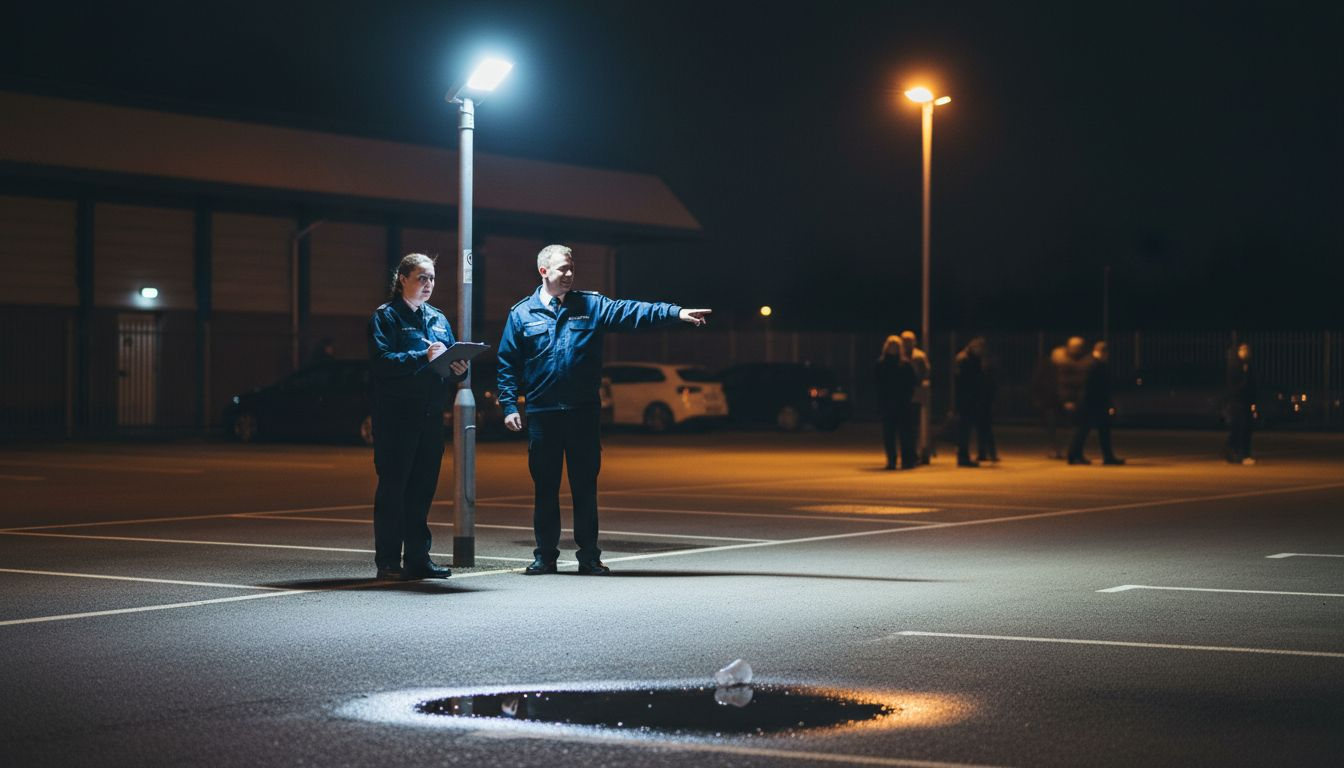
Ambiance flexibility adds another dimension. Adjustable colour temperature lets you shift from cool white for operational periods to warm tones for evening events. Dimming capabilities fine tune intensity without flickering.
The benefits of light accessories for events multiply when combined with quality base lighting. Key improvements include:
- Reduced trip hazards from better pathway visibility
- Enhanced CCTV effectiveness through consistent illumination
- Professional appearance that elevates venue perception
- Instant on capability without warm up delays
- Weather resistant construction for reliable outdoor performance
Safety and aesthetics work together. Guests feel secure in well lit environments, extending their stay and increasing satisfaction. Staff work more efficiently when they can see clearly without straining.
Pro Tip: Choose 3000K to 4000K colour temperature for versatile outdoor lighting. This range balances warmth with clarity, suiting both operational needs and event atmospheres. Explore LED lighting advantages for venues to match technology with your specific requirements. Proper ambient lighting transforms the entire venue experience.
Environmental and Sustainability Benefits of LED Street Lighting
Climate action moves from aspiration to requirement for UK businesses. LED street lighting reduces CO2 emissions by 40 to 60% compared to traditional systems. A mid sized venue could prevent 10 to 15 tonnes of carbon emissions annually through LED adoption.
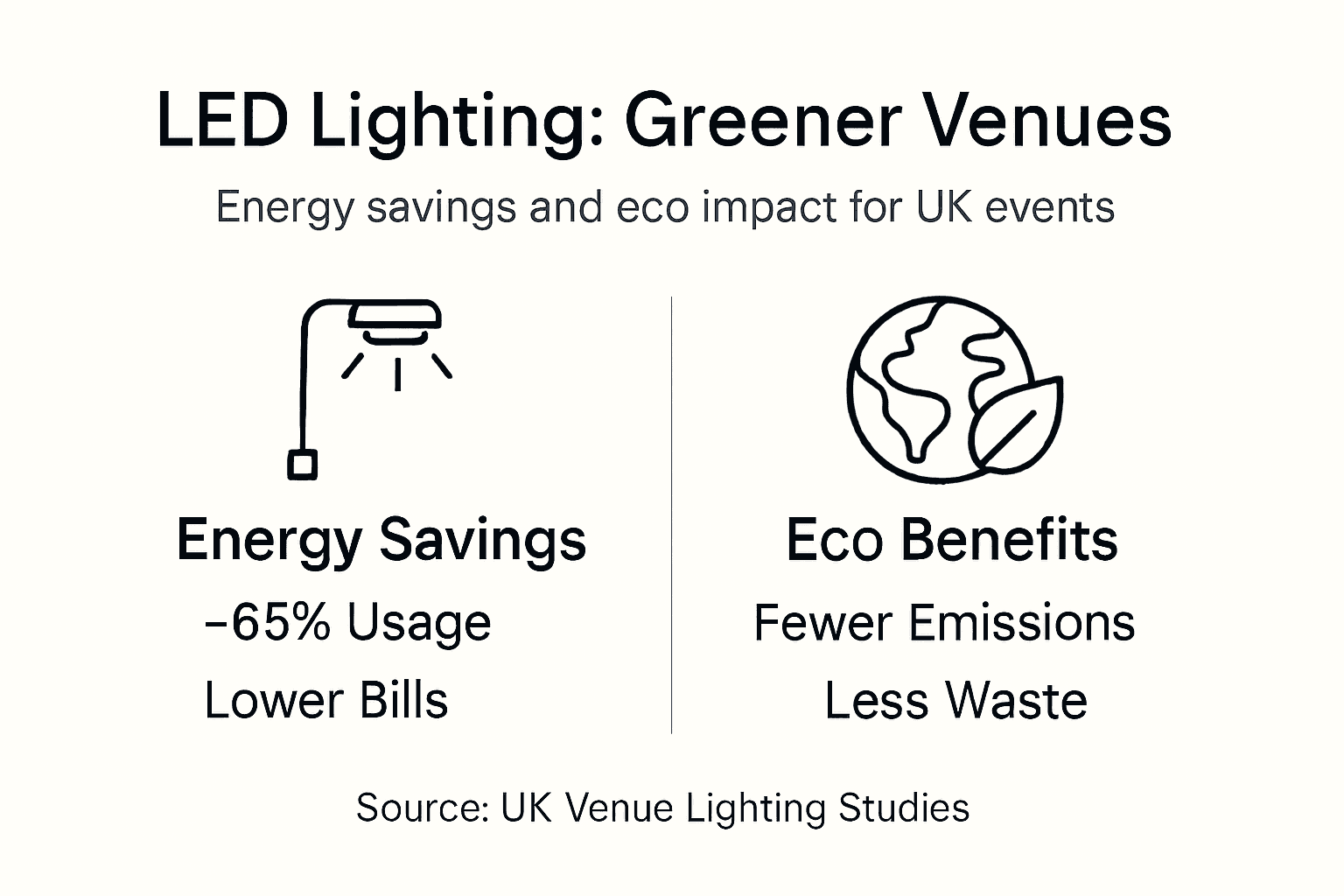
Energy efficiency translates directly into environmental impact. Less electricity demand means fewer fossil fuels burned at power stations. LED longevity reduces manufacturing waste since you replace fixtures far less frequently.
Light pollution concerns grow as ecological awareness increases. Traditional street lighting sprays light in all directions, disrupting wildlife and obscuring night skies. LED fixtures direct light downward precisely where needed. This focused beam pattern protects nocturnal ecosystems while delivering better ground illumination.
Government sustainability targets create additional pressure. Many local authorities now require venues to demonstrate environmental responsibility for licensing and planning approvals. LED street lighting provides measurable proof of commitment:
- Quantifiable emission reductions for carbon reporting
- Compliance with evolving building regulations
- Enhanced corporate social responsibility profile
- Reduced ecological footprint from lower energy consumption
- Support for UK net zero objectives
Venues pursuing green certifications find LED upgrades particularly valuable. These improvements contribute points toward environmental ratings while delivering immediate operational benefits. The dual advantage of cost savings and sustainability makes LED adoption strategically compelling.
Common Misconceptions About LED Street Lights
Myths about LED technology prevent many venues from upgrading. Clearing confusion helps you make decisions based on facts instead of outdated information.
Myth: LED lighting costs too much upfront. Reality: LED street lights achieve ROI within 2 to 3 years despite higher initial investment. Focus on lifecycle costs rather than purchase price alone. Energy savings and reduced maintenance quickly offset the premium.
Myth: LED light quality feels cold and industrial. Reality: Modern LEDs offer adjustable warmth from cool white to soft amber. You control colour temperature to match your venue aesthetic. Dimming capabilities add further customization impossible with traditional fixtures.
Myth: LEDs require specialized maintenance. Reality: Extended lifespan actually slashes maintenance by up to 50%. Standard electrical contractors handle LED installations. No exotic skills or equipment needed. Fewer replacements mean less disruption to your operations.
Myth: LED performance degrades quickly. Reality: Quality LED systems maintain over 70% brightness after 50,000 hours. Gradual dimming occurs so slowly you barely notice. Traditional lamps fail suddenly, creating dark spots and safety hazards.
Myth: All LED products deliver equal results. Reality: Specification matters enormously. Cheap imports often use inferior components that fail prematurely. Reputable suppliers provide warranties and performance guarantees. Understanding LED lighting terminology helps you spot quality differences.
These misconceptions cost venues money through delayed upgrades. Every month you wait means lost savings and continued environmental impact. Accurate information empowers better decisions.
Real World Examples and Case Studies Relevant to UK Venues
Actual results prove LED benefits extend beyond theory. A 2025 pilot programme across three UK cities replaced conventional street lighting with LED systems. The initiative achieved 65% average energy reduction while improving light quality throughout commercial districts.
Specific event venues report dramatic improvements. A Manchester conference centre cut outdoor lighting costs by £8,200 annually after LED installation. Maintenance calls dropped from monthly bulb replacements to virtually zero over two years.
A Birmingham entertainment complex halved car park lighting expenses while enhancing visitor safety. Security incidents declined 30% following the upgrade, attributed partly to better visibility deterring opportunistic crime.
The data speaks clearly:
| Metric | Before LED | After LED | Improvement |
|---|---|---|---|
| Annual Energy Cost | £12,600 | £4,400 | 65% reduction |
| Maintenance Frequency | 18 service calls/year | 2 service calls/year | 89% reduction |
| Average Light Level | 8 lux | 15 lux | 88% increase |
| System Lifespan | 4 years | 20+ years | 5x longer |
A Scottish festival ground reduced generator fuel consumption by 60% during multi day events. LED efficiency meant smaller generators sufficed, cutting noise pollution and carbon emissions simultaneously. Setup crews appreciated lighter fixtures that installed faster.
These examples share common threads. Venues achieve substantial savings while improving operations. Initial scepticism about LED performance vanishes once managers see actual results. Payback periods consistently fall within projected ranges, validating investment decisions.
Making the Switch: Practical Steps for UK Event Venues
Upgrading to LED street lighting requires planning but delivers lasting rewards. Follow this systematic approach:
- Audit Current Lighting: Document existing fixtures, energy consumption, and maintenance costs. Review utility bills for the past 12 months to establish baseline spending. Identify problem areas with poor visibility or frequent failures.
- Research LED Options: Compare products based on lumens, colour temperature, and warranty terms. Request samples if possible to evaluate light quality before bulk purchasing. Verify IP ratings ensure weather resistance for outdoor installation.
- Calculate Lifecycle Costs: Project energy savings, maintenance reductions, and replacement intervals over 15 to 20 years. Factor in potential utility rate increases to avoid underestimating future savings. Most LED investments pay back within 30 to 40 months.
- Plan Installation Timing: Schedule work during venue downtime to minimize disruption. Coordinate with suppliers on delivery and installation logistics. Consider phased rollouts for large properties to spread costs across budget cycles.
- Engage Professional Support: Consult lighting specialists who understand venue requirements. Discuss financing options including leasing or energy performance contracts. Verify installer credentials and request references from similar projects.
Pro Tip: Contact suppliers early in your planning process. Experienced vendors customize solutions based on your venue layout and budget constraints. They often identify savings opportunities you might miss reviewing specifications alone. Many offer energy audits at no cost to qualify potential projects.
Maintain realistic expectations about timelines. Small venues might complete upgrades in days while large complexes require weeks. Focus on long term benefits rather than rushing implementation. Proper planning prevents costly mistakes and ensures optimal results.
Upgrade Your Venue Lighting with Mirror Balls
Transforming your venue lighting starts with the right partner. Mirror Balls brings decades of expertise serving UK event spaces with premium lighting solutions.

Our lighting accessories guide helps you maximize LED street lighting investments. We stock professional grade fixtures designed for demanding venue environments. Products complement energy efficient outdoor systems while enhancing indoor ambiance.
Explore key benefits of light accessories to understand how coordinated lighting creates memorable experiences. Our team provides expert advice tailored to your specific venue challenges. Whether upgrading car parks or refreshing entrance lighting, we support projects from concept through installation.
Need temporary solutions? Our mirror ball hire services deliver flexibility for special events while you plan permanent upgrades. Contact us today to discuss how Mirror Balls can elevate your venue lighting to professional standards.
Frequently Asked Questions About LED Street Lights for UK Venues
What is the typical ROI for LED street lighting at UK event venues?
Most venues recover LED investments within two to three years through energy and maintenance savings. Larger venues with extensive outdoor lighting see faster payback. Total lifecycle savings over 15 years typically exceed five times the initial cost.
How do LED street lights improve venue safety?
LEDs provide brighter, more uniform illumination that eliminates dark spots where accidents occur. Better colour rendering helps security staff and cameras identify people clearly. Instant on capability ensures immediate lighting without warm up delays during emergencies.
Are there environmental benefits from switching to LED street lights?
Yes, LED adoption reduces carbon emissions by 40 to 60% compared to traditional lighting. Lower energy demand decreases fossil fuel consumption at power stations. Directional LED beams also minimize light pollution that disrupts wildlife and obscures night skies.
Can LED street lights be dimmed to suit different event atmospheres?
Modern LED systems support smooth dimming from 100% to 10% output without flickering. You adjust brightness to match event requirements or save energy during quiet periods. Some systems integrate motion sensors that automatically brighten when detecting activity.
What factors should I consider when choosing LED street lighting for my venue?
Evaluate lumens for brightness, colour temperature for ambiance, and IP ratings for weather resistance. Check warranty terms and supplier reputation to ensure quality. Consider smart controls that optimize energy use through dimming and scheduling. Calculate lifecycle costs rather than focusing solely on purchase price.