Finding vibrant, energy-efficient lighting that brings your UK venue to life can feel daunting with so many outdated myths about LED technology lingering. Efficient and adaptable lighting plays a crucial role in creating memorable atmospheres for parties, club nights, and special events. This guide explains how LED lights deliver superior brightness and versatility at lower energy costs, helping event organisers and nightclub owners confidently choose solutions that transform spaces with colour, impact, and reliability.
Table of Contents
- LED Lights Defined And Common Myths
- Main Types Of LED Lights For Events
- How LED Lighting Systems Work
- Key Event Benefits: Energy, Customisation, Impact
- Costs, Safety And Maintenance Considerations
Key Takeaways
| Point | Details |
|---|---|
| Energy Efficiency | LED lights reduce electricity consumption by up to 70%, leading to significant cost savings for event professionals. |
| Longevity and Maintenance | With a typical lifespan of 10–15 years, LED lights require minimal maintenance compared to traditional lighting solutions. |
| Versatility and Customisation | LEDs offer programmable features and instant adjustments to colour and intensity, enhancing the creative potential for events. |
| Safety Considerations | Ensuring proper installation and circuit protection is crucial to prevent electrical hazards and maintain reliable performance. |
LED Lights Defined and Common Myths
Light-emitting diode (LED) technology represents a revolutionary approach to illumination, particularly for event professionals seeking efficient and dynamic lighting solutions. These semiconductor devices transform electrical energy directly into bright, focused light, offering unprecedented control and versatility compared to traditional lighting technologies.
LED lighting offers multiple advantages for event organisers, especially in the UK entertainment sector. Key features include:
- Extremely low energy consumption
- Exceptional colour range and programmability
- Significantly longer operational lifespan
- Minimal heat generation
- Rapid switching capabilities
Contrary to historical misconceptions, modern LED technology has comprehensively debunked traditional lighting myths. Many event professionals previously believed LEDs were expensive, dim, or unreliable – but contemporary developments have completely transformed these perceptions.
LED lights now provide superior illumination at a fraction of traditional lighting’s energy costs.
The technological progression demonstrates remarkable improvements. Where early LED models struggled with brightness and colour consistency, current generations deliver professional-grade performance suitable for complex event environments. Nightclub owners, theatrical productions, and corporate event managers now rely on LED technology as their primary lighting solution.
Performance Characteristics:
- Instantaneous light activation
- Precise colour temperature control
- Minimal maintenance requirements
- Advanced programmable features
Pro tip: Always test LED lighting configurations during venue setup to ensure optimal performance and aesthetic impact.
Main Types of LED Lights for Events
The UK events industry utilises several distinct LED lighting types designed to create dynamic and versatile lighting environments. These lighting solutions range from specialised fixtures to adaptable illumination systems that can transform event spaces instantaneously.
LED Light Categories for Events:
- LED PAR Cans: Versatile stage and architectural lighting
- LED Strip Lights: Decorative and accent lighting
- Moving Head Lights: Dynamic, programmable illumination
- LED Wash Lights: Broad colour coverage for large areas
- Pixel-Mapped LED Panels: Precise, customisable visual displays
Each lighting type serves a unique purpose in event production. LED PAR Cans, for instance, provide concentrated beams perfect for stage highlighting, while LED strip lights offer seamless architectural accenting and mood creation.
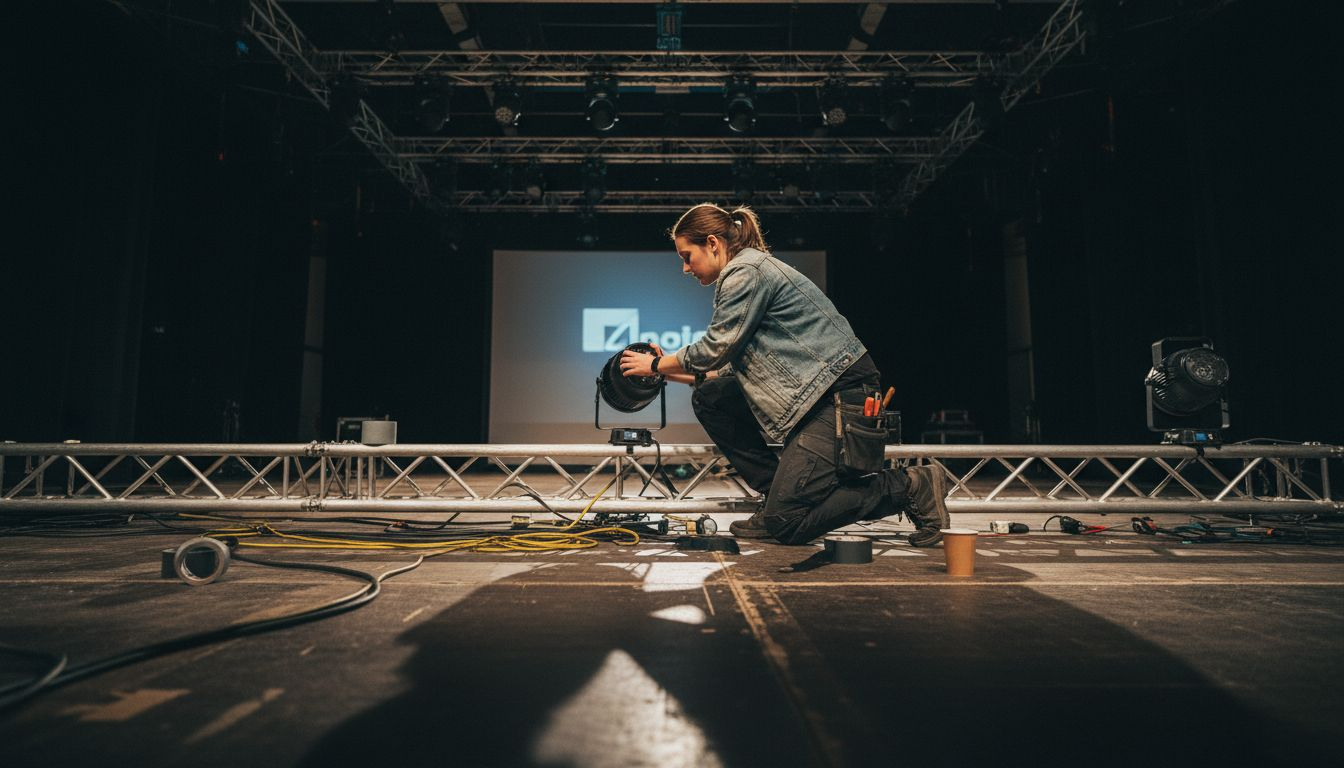
For clarity, here is a comparison of common LED event light types and their typical applications:
| LED Light Type | Typical Application | Unique Strength |
|---|---|---|
| LED PAR Can | Stage highlighting | Concentrated beam |
| LED Strip Light | Venue ambiance | Seamless accenting |
| Moving Head Light | Club and concert effects | Dynamic movement |
| LED Wash Light | Large space coverage | Broad colour spread |
| Pixel-Mapped LED Panel | Event visuals | Customisable display |
Professional event lighting requires understanding each LED type’s specific capabilities and deployment strategies.
Technical considerations are crucial when selecting LED lights. Factors such as voltage requirements, dimmer compatibility, and colour temperature range significantly impact performance. Professional event managers must consider bulb fitting types like GU10, MR16, and E27 to ensure proper installation and functionality.
Comparative LED Light Characteristics:
- Stage Lighting: High-intensity, programmable
- Decorative Lighting: Colour-changing, low heat
- Architectural Lighting: Precise beam control
- Mood Lighting: Soft, adjustable illumination
Pro tip: Always test LED lighting configurations during venue setup to ensure optimal colour rendering and seamless performance.
How LED Lighting Systems Work
LED lighting systems represent a sophisticated technological approach to illumination, fundamentally different from traditional lighting methods. Semiconductor technology transforms electrical energy into precise, controllable light through an intricate process of electron movement and energy conversion.
Core LED System Components:
- Semiconductor Chip: Primary light-generating element
- Power Driver: Regulates electrical current
- Heat Sink: Manages thermal dissipation
- Control Circuit: Manages colour and intensity
- Lens/Diffuser: Shapes light output
At the microscopic level, LEDs generate light through electroluminescence. When an electrical current passes through a semiconductor material, electrons move between energy bands, releasing photons that create visible light. This process is dramatically more efficient than traditional incandescent bulbs, which generate significant heat as a byproduct.
LED lighting converts electrical energy with remarkable precision, transforming up to 90% of input energy directly into light.
Modern LED systems incorporate advanced power management technologies that enable sophisticated lighting control. Professional event managers can now programme intricate lighting sequences, adjust colour temperatures, and create dynamic visual experiences with unprecedented flexibility.
Lighting Control Mechanisms:
- Pulse Width Modulation (Dimming)
- Constant Current Regulation
- Digital Addressable Lighting Interface (DALI)
- DMX512 Protocol Management
Pro tip: Invest in high-quality LED drivers to ensure consistent performance and prevent unexpected colour shifts during critical events.
Key Event Benefits: Energy, Customisation, Impact
LED lighting represents a revolutionary technology for UK event professionals, offering multiple strategic advantages beyond traditional illumination methods. These advanced lighting solutions transform event experiences through unprecedented flexibility and efficiency.
Key Performance Benefits:
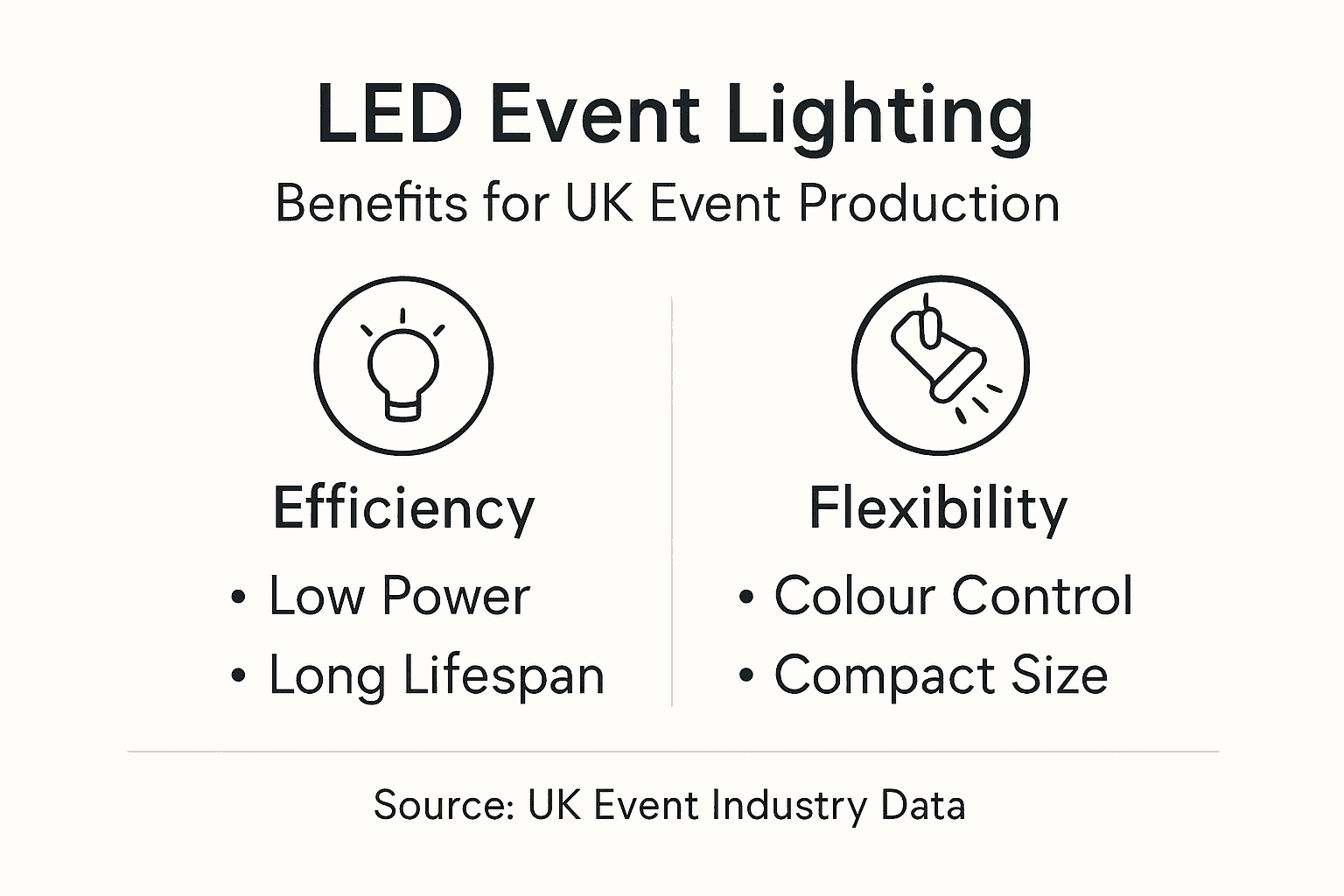
- Energy Efficiency: Reduces electricity consumption by up to 70%
- Cost Reduction: Lower operational expenses
- Creative Control: Instant colour and intensity adjustments
- Environmental Sustainability: Minimised carbon footprint
- Extended Lifespan: Dramatically reduced replacement frequency
The energy benefits are particularly compelling for event organisers. Modern LED systems consume dramatically less electricity compared to traditional lighting, translating into significant cost savings and reduced environmental impact. This efficiency does not compromise performance – in fact, LEDs deliver superior illumination with greater precision.
Professional event lighting now enables complete atmospheric transformation with minimal energy expenditure.
Customisation represents another critical advantage of LED technology. Event lighting technologies now allow instant colour transitions, programmable sequences, and granular control over brightness levels. Event managers can create immersive experiences by dynamically adjusting lighting to match musical rhythms, thematic requirements, or emotional narratives.
Customisation Spectrum:
- Colour temperature adjustment
- Instantaneous dimming capabilities
- Programmable light sequences
- Dynamic pattern generation
Pro tip: Invest in LED lighting systems with robust DMX control capabilities to maximise creative potential and technical flexibility.
Costs, Safety and Maintenance Considerations
LED lighting represents a significant investment for event professionals, with financial considerations extending far beyond initial purchase price. Long-term cost analysis reveals substantial savings through reduced energy consumption, minimal maintenance requirements, and exceptional operational longevity.
Financial Breakdown of LED Investments:
- Typical lifespan: 10-15 years
- Energy cost reduction: Up to 70%
- Maintenance frequency: Significantly lower than traditional lighting
- Replacement part expenses: Dramatically reduced
- Initial installation: Higher upfront cost
Safety emerges as a critical consideration in LED lighting deployment. Professional event managers must prioritise electrical compliance and systematic installation protocols. Proper circuit protection mechanisms are essential to prevent potential electrical hazards and ensure consistent performance.
Rigorous safety standards transform LED lighting from a technological innovation to a reliable event management solution.
Maintenance represents another crucial aspect of LED lighting management. Unlike traditional lighting systems, LED fixtures require minimal intervention but demand precise initial setup and periodic professional inspection. Event technicians should implement routine checks focusing on electrical connections, heat dissipation, and control system functionality.
To assist decision-making, this summary shows the financial and operational impact of LED investments:
| Impact Area | LED Lighting Solution | Traditional Lighting |
|---|---|---|
| Operational Lifespan | 10–15 years | 1–3 years |
| Energy Costs | Up to 70% lower | High and escalating |
| Maintenance Needs | Minimal annual checks | Frequent bulb replacement |
| Carbon Footprint | Significantly reduced | High environmental impact |
Maintenance Best Practices:
- Annual electrical system inspection
- Clean fixtures regularly
- Monitor thermal performance
- Update firmware and control systems
- Replace protective components proactively
Pro tip: Develop a comprehensive maintenance log for each LED lighting installation to track performance, anticipate potential issues, and maintain warranty compliance.
Enhance Your Event Lighting with Stunning Mirror Balls
The article highlights the transformative power of LED lighting in UK events, emphasising precision, energy efficiency and dynamic colour control. However, creating truly immersive event experiences also calls for eye-catching decorative elements that work seamlessly with modern LED systems. This is where high-quality mirror balls come into play. Combining the advanced programmability and colour versatility of LED lights with the classic brilliance of mirror balls creates unforgettable visual atmospheres for nightclubs, theatres and ballrooms.
Explore our extensive collection at Mirror Balls to find professional-grade disco balls that complement your LED lighting strategy. Our range supports diverse event scales, from intimate setups to large venues, giving event managers a creative edge alongside cutting-edge LED solutions. Act now to elevate your event’s impact with products designed for seamless integration and exceptional sparkle. Visit Mirror Balls Online and turn sophisticated LED lighting into an extraordinary sensory experience.
Frequently Asked Questions
What are LED lights and how do they work?
LED lights, or light-emitting diodes, are semiconductor devices that transform electrical energy directly into bright, focused light through a process called electroluminescence. This approach is more efficient than traditional lighting methods.
What are the benefits of using LED lights for events?
LED lights offer several advantages, including energy efficiency, long operational lifespan, minimal heat generation, and extensive programmability. They can reduce electricity consumption by up to 70% compared to conventional lighting.
How do different types of LED lights vary in their applications for events?
Different LED light types serve unique purposes. For example, LED PAR Can lights are ideal for stage highlighting, while LED Strip Lights are perfect for creating ambient mood lighting. Each type offers specific strengths that can enhance event settings.
What considerations should be made when selecting LED lights for events?
When choosing LED lights, consider factors such as voltage requirements, dimmer compatibility, and colour temperature. It’s also essential to select appropriate bulb fitting types to ensure proper installation and functionality.
Recommended
- 7 Key Advantages of LED Lighting for Event Spaces – Mirror Balls
- Understanding Why Choose LED Spotlights for Events – Mirror Balls
- Effect Lights: Transforming UK Discos and Events – Mirror Balls
- LED Lighting Terminology: Decoding Key Terms for Venues – Mirror Balls
- What Is Local Entertainment And Why It Matters | Flight Of Aloha