A single spotlight can transform an entire room, and pinspot lights offer that kind of impact with remarkable precision. Industry experts report that focused lighting like pinspots can increase visual engagement at events by up to 63 percent. For planners and designers, understanding how pinspot lighting works—and the different types available—makes all the difference between ordinary spaces and truly memorable ones.
Table of Contents
- Defining A Pinspot And Its Core Purpose
- Main Types Of Pinspot Lights Explained
- How Pinspot Lighting Works In Practice
- Uses Of Pinspots In Different Venues
- Choosing And Installing Pinspots Safely
- Common Mistakes When Using Pinspots
Key Takeaways
| Point | Details |
|---|---|
| Core Purpose of Pinspots | Pinspots are designed to provide focused illumination, enhancing visual interest and directing attention in event spaces. |
| Types of Pinspots | Various pinspot types, including LED and DMX-controlled models, offer unique advantages tailored for diverse applications and venue requirements. |
| Installation Safety | Proper installation safety protocols are crucial, including adequate ventilation, securing fixtures, and ensuring electrical safety to prevent hazards. |
| Avoiding Common Mistakes | Common pitfalls involve misalignment, incorrect beam angles, and inadequate heat management, necessitating meticulous setup and technical understanding. |
Defining a Pinspot and Its Core Purpose
A pinspot is a specialized lighting fixture that creates focused, precise illumination for events and performance spaces. According to Glowsticks, a pinspot is a “compact lighting fixture designed to project a narrow beam of light, often used to highlight specific areas or objects, such as mirror balls or table settings.”
In professional event lighting, pinspots serve a critical role in creating visual drama and directing audience attention. As Premier Ltd explains, these lights are “utilized to provide concentrated lighting on particular elements within a venue, enhancing visual interest and drawing attention to features like displays or centerpieces.”
The core purposes of pinspots typically include:
- Highlighting specific decor elements
- Creating dramatic focal points
- Enhancing stage or event space aesthetics
- Providing precise, controlled lighting for performances
- Adding depth and dimension to event environments
Unlike broad stage lighting, pinspots deliver surgical precision. They transform ordinary spaces by isolating and elevating specific visual elements, making them indispensable tools for event designers, production managers, and lighting professionals seeking to craft memorable visual experiences.
The strategic placement of pinspots can dramatically alter a room’s atmosphere, turning mundane setups into extraordinary environments with just a carefully directed beam of light.
Main Types of Pinspot Lights Explained
Pinspot lights have evolved significantly, offering event professionals a diverse range of options for precise illumination. According to BOPDJ, these lighting fixtures now include LED models that provide “energy efficiency and color versatility,” with advanced options like the LEDJ Event Spot RGBW MKII offering adjustable beam angles and multiple color settings.
Inox highlights another crucial development in pinspot technology: advanced DMX-controlled models. These sophisticated lights, such as the Gantom One DMX Pinspot, feature “precise lighting adjustments, magnetic accessory attachments, and suitability for both indoor and outdoor use.”
The main types of pinspot lights can be categorized as follows:
Here’s a comparison of the main types of pinspot lights:
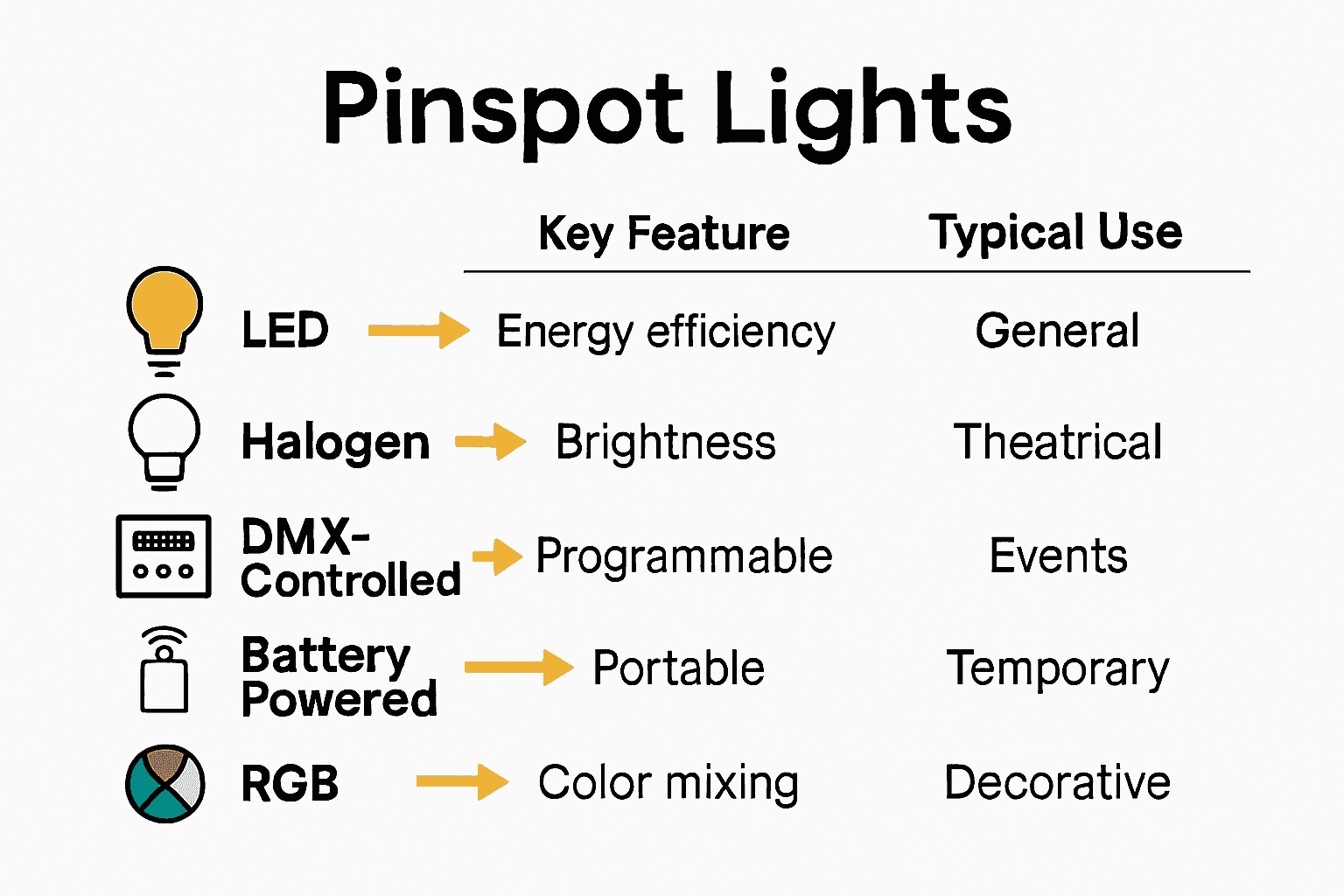
| Type of Pinspot | Key Features | Typical Applications |
|---|---|---|
| LED Pinspots | Energy-efficient Colour changing |
Weddings Nightclubs |
| Halogen Pinspots | Warm light Classic design |
Traditional theatres Events |
| DMX-Controlled Pinspots | Programmable settings Advanced controls |
Large events Stage shows |
| Battery-Powered Pinspots | Wireless Portable |
Temporary displays Outdoor venues |
| RGB Pinspots | Multiple colour options Dynamic effects |
Dance floors Special effects |
- LED Pinspots: Energy-efficient, color-changing options
- Traditional Halogen Pinspots: Classic, warm lighting solution
- DMX-Controlled Pinspots: Programmable with advanced control features
- Battery-Powered Pinspots: Wireless, portable lighting solutions
- RGB Pinspots: Capable of producing multiple color combinations
Each type of pinspot offers unique advantages, allowing event designers to select the perfect lighting solution based on specific venue requirements, aesthetic goals, and technical constraints. Whether you need surgical precision for highlighting a centerpiece or dynamic color-changing capabilities for a dance floor, there’s a pinspot designed to meet your exact needs.
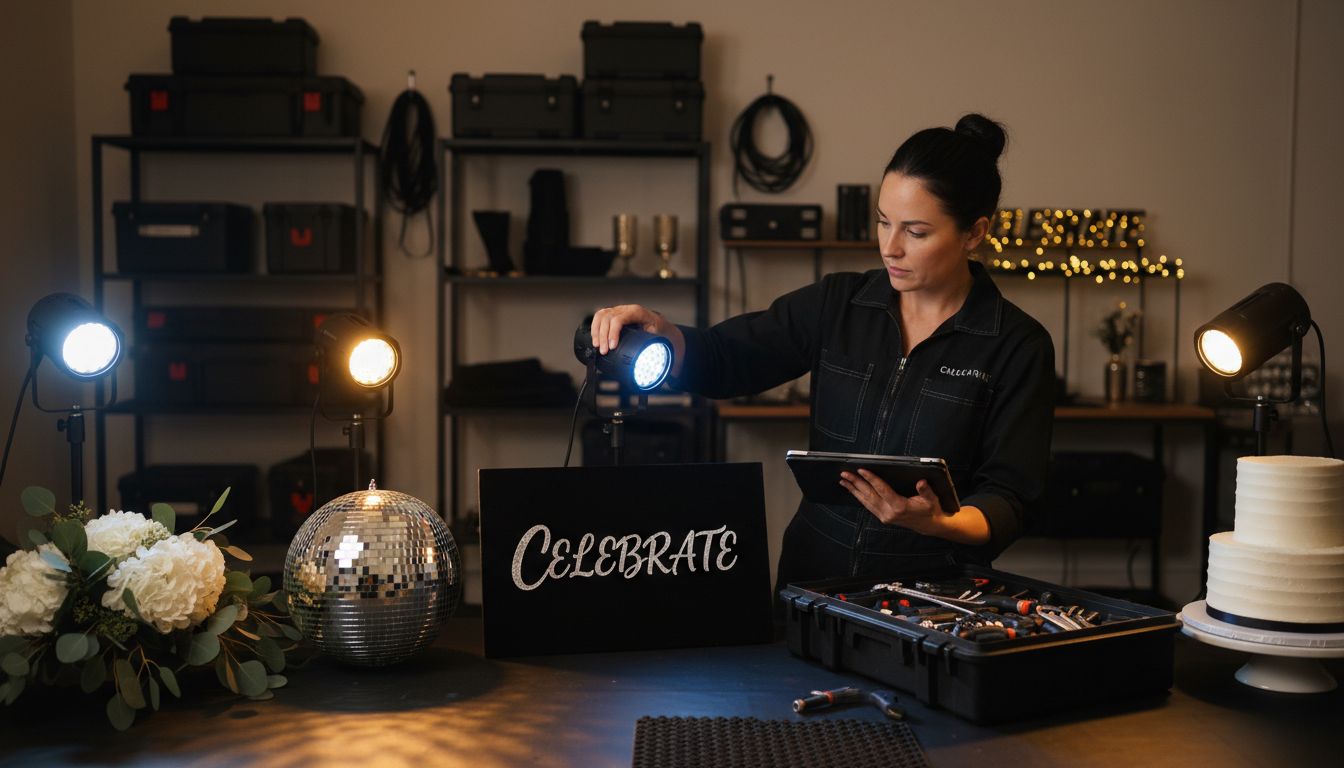
For professionals seeking versatile lighting solutions, exploring the role of pinspots in event design can provide deeper insights into maximizing these powerful lighting tools.
How Pinspot Lighting Works in Practice
Pinspot lighting is a precision art of targeted illumination that transforms event spaces through carefully controlled light. According to Glowsticks, these lights operate by “emitting a narrow, focused beam that can be directed onto specific objects or areas,” effectively highlighting features like mirror balls or intricate table settings to enhance overall event ambiance.
Premier Ltd explains that in practical applications, pinspot lights are strategically “positioned to illuminate particular elements within a venue, such as displays or centerpieces, providing targeted lighting that draws attention and adds depth to the overall lighting design.”
The practical implementation of pinspot lighting involves several key techniques:
- Precise angle positioning
- Careful beam width adjustment
- Strategic color temperature selection
- Thoughtful distance calculations
- Coordinated multiple light integration
Technical professionals typically employ pinspots using a methodical approach. This includes measuring exact distances, calculating optimal angles, and understanding how light interacts with different surface materials. The goal is always surgical precision: illuminating exactly what needs to be seen while maintaining the desired atmospheric mood.
For event designers looking to master lighting techniques, exploring our understanding why choose LED spotlights can provide additional insights into advanced lighting strategies.
Uses of Pinspots in Different Venues
Pinspots are incredibly versatile lighting tools that transform spaces across multiple venues and event types. Glowsticks highlights their specific application in creating “dynamic light reflections that enhance the atmosphere of parties and dance floors,” particularly when used to illuminate mirror balls.
According to Premier Ltd, pinspots are strategically “employed to spotlight displays, table settings, or architectural features, adding visual interest and focusing attention on specific areas” across diverse environments.
Different venues leverage pinspot lighting in unique ways:
- Nightclubs: Creating dramatic dance floor atmospheres
- Weddings: Highlighting centerpieces and key decor elements
- Theatres: Providing precise accent lighting for performances
- Conferences: Illuminating presentation stages and key speakers
- Museums: Drawing attention to specific exhibits or artworks
- Restaurants: Enhancing table settings and creating intimate ambiances
The adaptability of pinspot lighting means these compact fixtures can dramatically transform any space, from creating a pulsing nightclub environment to establishing an elegant wedding reception mood. Lighting professionals appreciate their ability to direct audience attention precisely where it’s most impactful.
For event designers seeking to expand their lighting design capabilities, exploring our LED pinspot accessories can provide additional insights into maximizing these versatile lighting tools.
Choosing and Installing Pinspots Safely
Pinspot installation requires careful consideration of safety protocols and technical specifications to ensure optimal performance and venue protection. Manuals emphasizes that proper installation involves “ensuring adequate air circulation around the fixture, securing the device to prevent it from falling, and adhering to national safety standards to mitigate risks of injury or damage.”
Safety begins with selecting the right mounting equipment and understanding the specific requirements of your venue. Professional lighting technicians recommend thoroughly inspecting mounting surfaces, using appropriate load-bearing hardware, and maintaining clear zones around electrical connections to prevent potential hazards.
Key safety considerations for pinspot installation include:
- Structural Integrity: Verifying load-bearing capacity of mounting points
- Electrical Safety: Using properly rated cables and connections
- Heat Management: Maintaining sufficient ventilation around fixtures
- Cable Management: Securing cables to prevent tripping hazards
- Weight Distribution: Balancing fixture weight across multiple attachment points
- Environmental Protection: Considering moisture and temperature factors
Event professionals must also prioritize ongoing maintenance, which includes regular inspections, cleaning of optical surfaces, and checking mounting hardware for signs of wear or stress. This proactive approach ensures both the safety of attendees and the longevity of the lighting equipment.
For those looking to dive deeper into professional lighting techniques, our spotlight for mirror balls guide provides additional insights into advanced installation practices.
Common Mistakes When Using Pinspots
Pinspot lighting requires precision and technical expertise, with numerous potential pitfalls that can compromise both performance and safety. Manuals warns that “improper installation, such as inadequate securing of the fixture, can lead to safety hazards like the device falling during operation” – a critical error that underscores the importance of meticulous setup.
Event lighting professionals frequently encounter several recurring mistakes that can significantly diminish the effectiveness of pinspot installations. These errors often stem from a lack of understanding about the nuanced requirements of precise lighting techniques, ranging from technical miscalculations to creative misapplications.
Common pinspot usage mistakes include:
- Incorrect Beam Angle: Failing to match the beam width to the target area
- Poor Positioning: Misaligning lights relative to intended focal points
- Overlooking Heat Management: Neglecting proper ventilation around fixtures
- Inconsistent Color Temperature: Mixing different color temperatures unexpectedly
- Inadequate Cable Management: Creating potential tripping or entanglement risks
- Ignoring Electrical Load: Overloading circuits with multiple fixtures
Successful pinspot implementation demands a holistic approach that combines technical knowledge, creative vision, and rigorous safety protocols. Lighting designers must continuously educate themselves, practice precise positioning techniques, and remain attentive to both aesthetic and functional considerations.
For those seeking to refine their lighting design skills, our spotlight for mirror balls guide offers comprehensive insights into avoiding common technical pitfalls.
Elevate Your Event Lighting with Perfect Pinspots and Mirror Balls
Bringing precise pinspot lighting into your event can truly transform the atmosphere, creating striking focal points and unforgettable experiences. Yet finding the right mirror ball and accessories designed to work perfectly with pinspots can be challenging. Whether you are aiming to highlight a dazzling centerpiece or craft a dynamic nightclub vibe, achieving flawless illumination starts with choosing quality products tailored for targeted lighting effects.

Discover an exceptional range of professional-grade mirror balls and essential accessories at https://mirror-balls.co.uk, expertly curated to complement pinspot lighting setups. From small glitter balls for intimate gatherings to large-scale disco balls for theatres and nightclubs, every item is selected to enhance the visual impact and precision lighting you need. Don’t settle for ordinary lighting solutions. Visit the site now to explore how you can make your event shine with focused, vibrant illumination and expert support every step of the way.
Frequently Asked Questions
What is a pinspot and what is its core purpose?
A pinspot is a specialized lighting fixture that creates focused, precise illumination for events. Its core purpose is to highlight specific decor elements, enhance aesthetics, and direct audience attention to key features within a venue.
What are the main types of pinspot lights available?
The main types of pinspot lights include LED pinspots, halogen pinspots, DMX-controlled pinspots, battery-powered pinspots, and RGB pinspots, each offering unique features suitable for various applications and environments.
How does pinspot lighting work in practical applications?
Pinspot lighting works by emitting a narrow, focused beam directed at specific objects or areas, enhancing visual interest and ambiance. Techniques include precise angle positioning, beam width adjustment, and coordinated integration with other lighting elements.
What are common mistakes to avoid when using pinspots?
Common mistakes when using pinspots include incorrect beam angle adjustment, poor positioning relative to focal points, neglecting heat management, mixing different color temperatures, and inadequate cable management, which can compromise both performance and safety.