Most diners remember the atmosphere of a restaurant just as much as the food. With a single well-placed mirror ball, even a simple dining room can be transformed into a captivating space full of movement and sparkle. More than just a nostalgic throwback, a mirror ball uses hundreds of tiny mirrors to scatter light and create a sensory experience. Discover how this surprisingly versatile design tool can completely reimagine restaurant ambience and guest impressions.
Table of Contents
- Defining Mirror Balls For Restaurant Spaces
- Types And Sizes Of Mirror Balls Available
- Enhancing Ambience And Customer Experience
- Creative Design Uses In Dining Environments
- Practical Benefits And Installation Considerations
Key Takeaways
| Point | Details |
|---|---|
| Transformative Lighting | Mirror balls enhance restaurant atmospheres by creating dynamic visual experiences that engage diners. |
| Selection Criteria | Key considerations for mirror ball selection include size, light intensity, and desired ambience to suit various restaurant environments. |
| Psychological Impact | Strategic light placement influences diners’ emotional responses, fostering social interaction and enhancing the overall dining experience. |
| Installation Considerations | Successful integration requires attention to technical factors like ceiling height, support systems, and electrical compatibility for optimal functionality. |
Defining Mirror Balls for Restaurant Spaces
A mirror ball, also known as a disco ball, represents a decorative lighting element designed to transform restaurant atmospheres through dynamic light reflection and visual excitement. These spherical objects typically consist of hundreds of small mirrored tiles meticulously arranged to create a spectacular light-scattering effect when illuminated. Unlike standard lighting fixtures, mirror balls create an immersive sensory experience that can dramatically alter the mood and aesthetic of dining spaces.
Restaurant environments leverage mirror balls as sophisticated design elements that serve multiple purposes beyond mere illumination. They function as statement pieces that can instantly elevate the visual complexity of a space, creating intricate patterns of reflected light across walls, floors, and dining areas. By strategically positioning these reflective spheres, restaurant designers can transform mundane spaces into vibrant, energetic environments that captivate diners’ visual attention. Mirror Balls for Events: Complete Expert Guide provides additional insights into their versatile applications.
The technical construction of mirror balls for restaurant spaces involves precision engineering. Professional-grade mirror balls feature carefully cut glass or reflective tiles ranging from 2 to 50 centimetres in diameter, each precisely angled to maximize light dispersion. When illuminated by targeted lighting sources such as spotlights or specialised disco lights, these spheres generate complex, ever-shifting light patterns that can range from subtle, elegant shimmer to dramatic, high-energy visual displays. This adaptability makes mirror balls an invaluable tool for restaurants seeking to create flexible, dynamic dining atmospheres that can transition seamlessly between different service styles and evening moods.
Restaurants typically select mirror balls based on several key considerations:
- Size of the dining space
- Desired light intensity
- Overall interior design aesthetic
- Specific ambience requirements
- Technical lighting infrastructure
Through careful selection and strategic placement, mirror balls transcend their traditional nightclub associations, emerging as sophisticated design elements capable of transforming dining experiences through the artful manipulation of light and reflection.
Types and Sizes of Mirror Balls Available
Restaurant mirror balls come in a diverse range of sizes and styles, offering remarkable versatility for different dining environments. Professional venues can select from compact 20 cm models perfect for intimate spaces to expansive 80 cm statement pieces that transform entire dining rooms. 7 Best Mirror Ball Sizes for Every Event and Venue provides comprehensive guidance on selecting appropriate sizes for various restaurant settings.
According to wmestore, professional mirror balls like the 80 cm diameter model are specifically engineered for venues requiring significant visual impact. These larger spheres are ideal for spacious restaurant areas, nightclub-style dining spaces, and venues seeking dramatic lighting effects. Conversely, halo demonstrates that smaller 40 cm mirror balls offer elegant solutions for more compact restaurant zones, providing classic disco-inspired illumination without overwhelming smaller spaces.
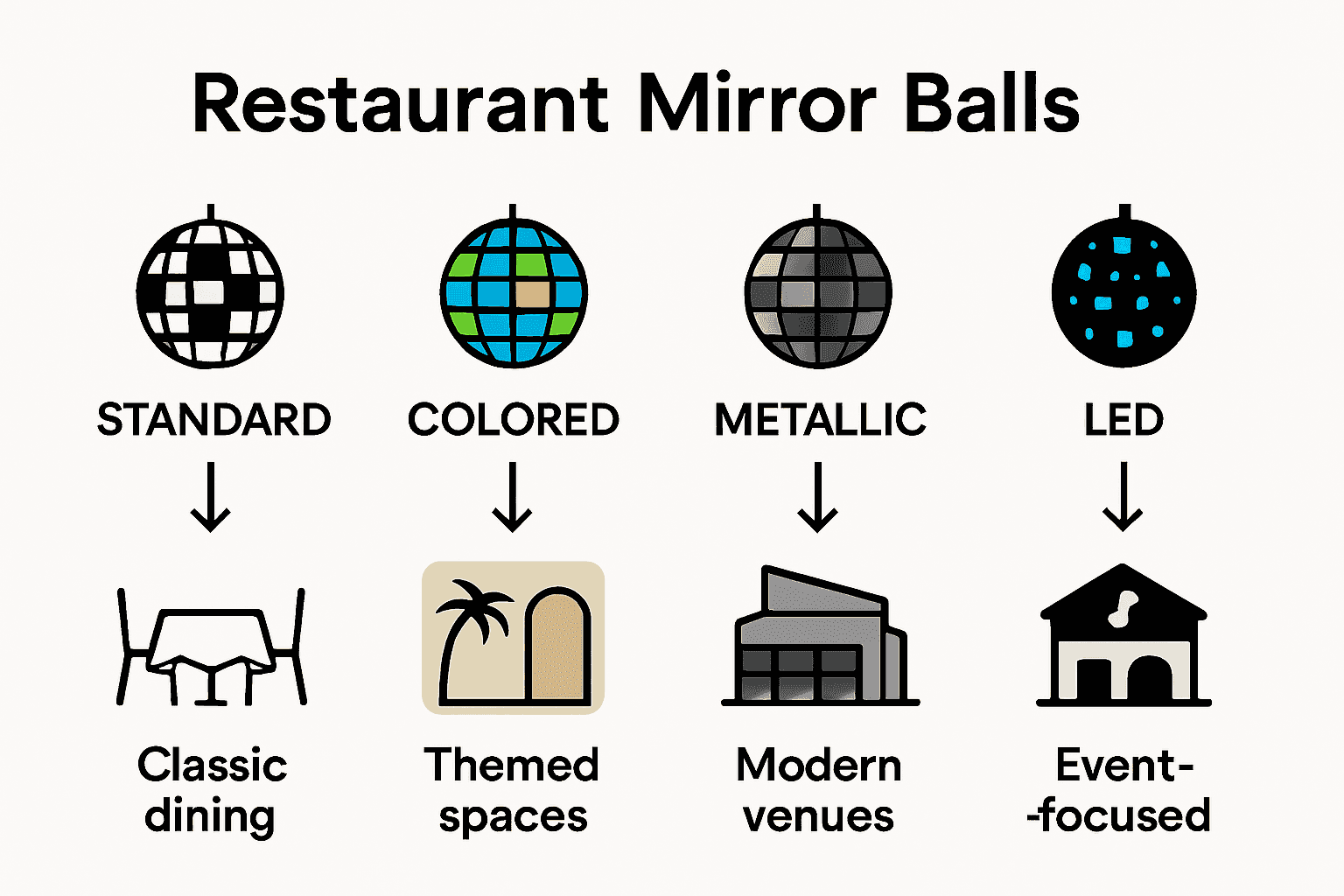
Mirror ball configurations typically encompass several key variations:
Here’s a summary of mirror ball types and their typical design features for restaurant settings:
| Mirror Ball Type | Description | Typical Use Cases |
|---|---|---|
| Standard Reflective Tiles | Classic mirrored surface, silver or neutral | Traditional light scatter, all venues |
| Coloured Mirror Balls | Tinted mirrors in varied hues | Themed dining, unique atmospheres |
| Metallic Finish | Brushed or polished metal look | Modern design, alternative aesthetics |
| LED-Integrated Models | Built-in LED lighting for advanced effects | Dynamic lighting, events, flexible moods |
- Standard Reflective Tiles: Traditional mirrored surfaces creating classic light scatter
- Coloured Mirror Balls: Tinted reflective surfaces for unique atmospheric effects
- Metallic Finish: Brushed or polished metal surfaces offering alternative visual textures
- LED-Integrated Models: Advanced mirror balls with built-in lighting capabilities
Restaurant designers should consider multiple factors when selecting mirror balls, including ceiling height, room dimensions, existing lighting infrastructure, and desired ambience. Some venues prefer multiple smaller mirror balls for distributed light reflection, while others opt for a single large centrepiece that becomes a dramatic focal point. The strategic selection ensures that mirror balls enhance rather than dominate the dining experience, creating sophisticated, dynamic environments that engage and delight patrons.
Enhancing Ambience and Customer Experience
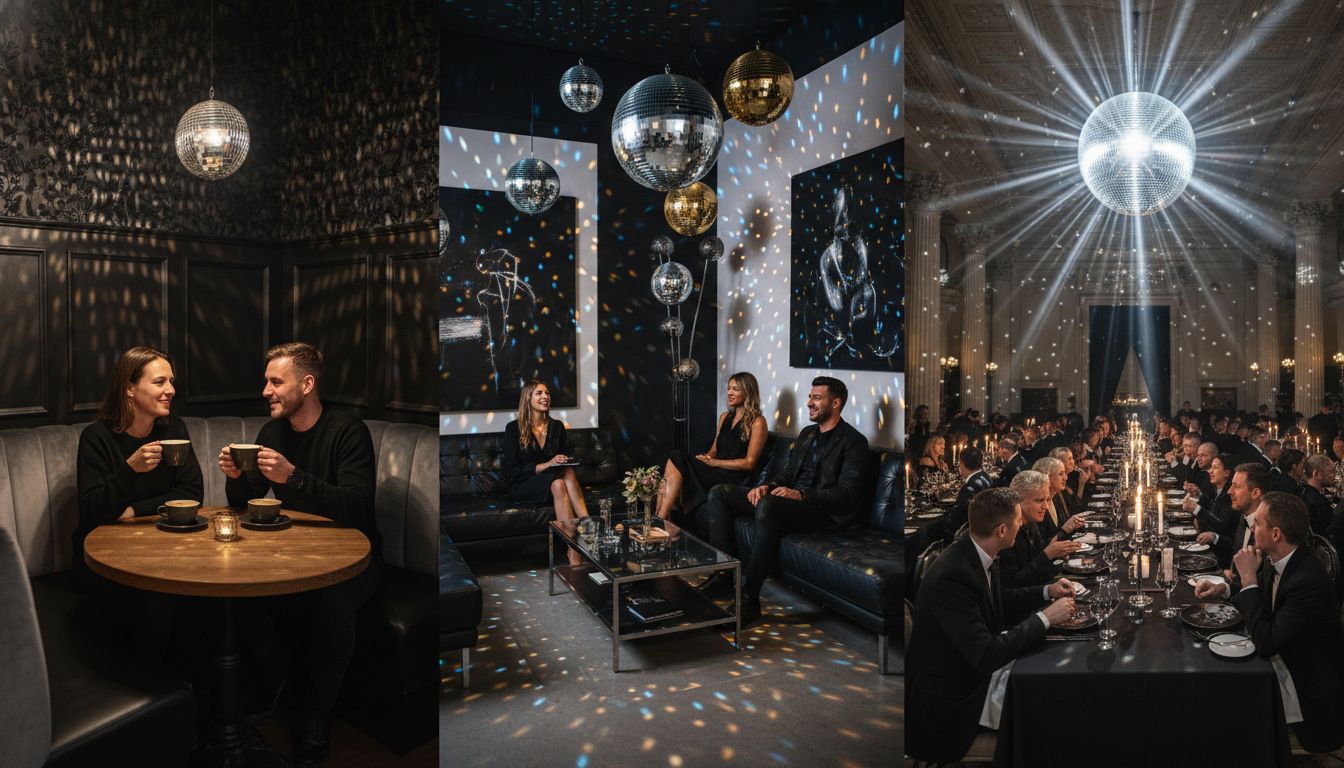
Mirror balls represent a sophisticated lighting technique that transforms restaurant environments, elevating customer experience through dynamic visual interactions. These reflective spheres do more than illuminate spaces – they create immersive atmospheres that engage diners’ sensory perceptions, turning ordinary meals into memorable experiences. Understanding the Purpose of Disco Lights in Events reveals the psychological impact of strategic lighting design in hospitality settings.
The strategic placement of mirror balls enables restaurants to manipulate emotional responses and social dynamics. Different lighting intensities and reflection patterns can subtly influence dining behaviors, encouraging longer stays, increased social interaction, and enhanced mood. For instance, softer, more diffused light creates intimate dining environments, while more vibrant, scattered reflections can generate energetic social spaces that encourage conversation and excitement.
Restaurants can leverage mirror balls to achieve various atmospheric goals:
- Romantic Settings: Soft, gentle light reflections for intimate dining experiences
- High-Energy Spaces: Dynamic, rapid light movements for younger, more vibrant crowds
- Fine Dining Elegance: Subtle, controlled light dispersal creating sophisticated ambiences
- Themed Environments: Customized lighting effects matching specific restaurant concepts
The psychological impact of mirror ball lighting extends beyond visual aesthetics. By creating unexpected visual landscapes, these lighting elements trigger curiosity, surprise, and engagement. They transform dining from a mere functional activity into a multisensory journey, where light becomes an active participant in the culinary experience. Restaurants that understand and master this lighting technique can differentiate themselves, creating unique, memorable environments that resonate deeply with their target clientele.
Creative Design Uses in Dining Environments
Mirror balls transcend traditional lighting concepts, emerging as versatile design elements that transform restaurant spaces into dynamic, interactive environments. These reflective spheres offer designers unprecedented creative flexibility, enabling the creation of immersive dining experiences that engage multiple sensory dimensions. By strategically integrating mirror balls, restaurants can craft unique visual narratives that reflect their brand identity, mood, and culinary philosophy.
Designers explore multiple innovative approaches to incorporating mirror balls into dining spaces. Some venues suspend multiple smaller mirror balls at varying heights, creating a constellation-like effect that generates complex, ever-changing light patterns. Others integrate large statement mirror balls as dramatic centrepieces, transforming them into sculptural elements that serve both aesthetic and functional lighting purposes. 7 Creative Mirror Ball Uses for Events and Venues provides deeper insights into these creative implementation strategies.
Restaurant design applications for mirror balls include:
- Themed Dining Zones: Creating distinct atmospheric areas within larger spaces
- Performance Spaces: Enhancing live music or entertainment environments
- Seasonal Decorations: Adapting lighting effects for holiday or special event designs
- Brand storytelling: Using lighting to communicate restaurant’s unique narrative
The most innovative restaurants view mirror balls not merely as lighting fixtures, but as dynamic design elements that actively shape customer perception and emotional experience. By understanding light’s psychological impact, designers can manipulate reflections to create intimate, energetic, or transformative dining environments that transcend traditional aesthetic boundaries, turning each meal into a multisensory journey of discovery and delight.
Practical Benefits and Installation Considerations
Mirror ball installations require careful planning and strategic consideration to maximize their transformative potential in restaurant environments. Understanding the technical and aesthetic requirements ensures that these dynamic lighting elements integrate seamlessly into diverse dining spaces, delivering both visual impact and functional illumination. Mirror Ball Buying Guide offers comprehensive insights into selecting the right mirror ball for specific restaurant configurations.
Practical installation considerations encompass several critical technical factors. Ceiling height plays a pivotal role in determining appropriate mirror ball size and positioning, with standard recommendations ranging from 30 cm diameter balls for rooms under 4 metres to 80 cm statement pieces for larger venues. Restaurant designers must also evaluate existing lighting infrastructure, electrical load capabilities, and mounting mechanisms. Professional installations typically require robust support systems, precision mounting hardware, and carefully calculated weight distribution to ensure safety and optimal light reflection.
Key technical considerations for mirror ball implementation include:
- Structural Support: Ensuring secure ceiling attachments
- Electrical Compatibility: Matching power requirements with existing systems
- Maintenance Accessibility: Designing installation for easy cleaning and replacement
- Heat Management: Preventing potential overheating from adjacent lighting sources
- Acoustic Considerations: Minimizing potential noise from rotating mechanisms
Beyond technical aspects, successful mirror ball integration demands a holistic approach that balances aesthetic vision with practical functionality. Restaurants must consider factors such as cleaning requirements, potential glare reduction, and the ability to create adaptable lighting environments that can transition smoothly between different dining experiences. The most successful implementations treat mirror balls not as standalone decorative elements, but as sophisticated lighting tools that dynamically shape customer perception and spatial atmosphere.
Transform Your Restaurant Ambience with Expertly Crafted Mirror Balls
If you are striving to enhance your restaurant atmosphere with stunning light effects and dynamic visual appeal then carefully chosen mirror balls are the ideal solution. The article highlights key challenges such as selecting the right size for your dining space, achieving the perfect light intensity, and creating the desired ambience without overwhelming the environment. Customers seek sophisticated lighting designs that go beyond traditional fixtures and offer subtle interplay of reflections to elevate the dining experience.
At mirror-balls.co.uk you will find a comprehensive range of professional-grade mirror balls tailored to restaurant needs. From compact 20 cm models for intimate areas to large 80 cm statement pieces for spacious venues, every product is engineered with precision to deliver optimal light dispersion and durability. Whether your goal is a romantic setting or a vibrant energetic vibe you can explore detailed product descriptions and packages designed to match your aesthetic and technical requirements.
Bring your vision to life today by visiting the mirror balls shop and discover how expertly designed mirror balls can convert any restaurant into a memorable multisensory space. Don’t wait to transform your dining area with lighting that captivates and delights every guest. For tailored advice and seamless purchasing explore mirror-balls.co.uk now and elevate your restaurant ambience with confidence.
Frequently Asked Questions
What is a mirror ball and how is it used in restaurant settings?
A mirror ball, or disco ball, is a decorative lighting element featuring small mirrored tiles that reflect light to create dynamic patterns. In restaurants, they enhance the ambiance by transforming spaces and elevating the dining experience through engaging light displays.
What factors should restaurants consider when selecting a mirror ball?
Restaurants should consider factors such as ceiling height, dining space size, desired light intensity, interior design aesthetic, and existing lighting infrastructure to select the most suitable mirror ball type and size for their environment.
What are the different types of mirror balls available for restaurants?
Mirror balls come in various types, including standard reflective tiles, colored mirror balls, metallic finishes, and LED-integrated models. Each type offers unique lighting effects and aesthetic appeal, allowing for diverse design possibilities in dining spaces.
How can mirror balls enhance the customer experience in restaurants?
Mirror balls create immersive atmospheres by manipulating light to influence emotions and social dynamics. They can evoke intimacy, energy, or elegance, thus enhancing the overall dining experience and making meals more memorable.