Every UK event planner knows the challenge of turning a plain venue into a space guests will talk about for months. Light decor is more than just a finishing touch—it shapes atmosphere, directs attention, and can radically transform the perception of your entire event. With creative solutions like affordable, high-quality mirror balls, you can achieve unforgettable effects, making your next party or corporate gathering truly stand out with immersive lighting that captures every eye.
Table of Contents
- What Is Light Decor and Why It Matters
- Popular Types of Light Decor for Events
- Creative Applications in Large UK Venues
- Safety, Costs, and Common Pitfalls
Key Takeaways
| Point | Details |
|---|---|
| Importance of Light Decor | Light decor enhances event atmosphere, directs guest attention, and sets the tone, contributing significantly to the overall event experience. |
| Investment Returns | Quality light decor increases guest satisfaction, improves photography opportunities, and justifies premium pricing, ultimately expanding venue utilisation. |
| Types of Lighting | Various lighting types serve distinct purposes; understanding their applications helps in creating the desired ambience and visual impact. |
| Planning and Safety | Thorough planning is crucial for successful light decor; address safety, power management, and technical rehearsals to avoid common pitfalls and ensure a seamless event. |
What Is Light Decor and Why It Matters
Light decor transforms venues from ordinary spaces into immersive environments that captivate guests. For UK event planners organising large-scale parties or corporate gatherings, understanding light decor goes beyond aesthetics—it shapes how attendees experience your entire event.
Light decor encompasses all decorative lighting elements used to enhance ambiance, create focal points, and establish mood within a venue. This includes mirror balls, uplighters, LED strips, spotlights, and specialised fixtures that work together to craft a cohesive visual narrative.
Why Light Decor Matters for Your Events
Effective light decor accomplishes several critical functions simultaneously:
- Creates atmosphere – Transforms bland, functional spaces into themed environments that match your event’s purpose
- Directs guest attention – Highlights key areas like dance floors, stages, or display tables
- Enhances safety – Provides adequate illumination whilst maintaining mood and visual appeal
- Sets the tone – Establishes whether your event feels intimate, energetic, professional, or celebratory
- Improves photography – Creates flattering light that makes your venue and guests look exceptional
Electric lighting fundamentally changed how we experience indoor spaces, moving beyond the limitations of candlelight to provide flexible, controllable illumination. This evolution means today’s event planners can manipulate light with precision to craft experiences previously impossible.
For corporate events, light decor signals professionalism and attention to detail. For parties, it elevates entertainment value and creates Instagram-worthy moments your guests genuinely remember.
Light Decor vs. General Lighting
General venue lighting keeps spaces functional. Light decor transforms them. Where standard fixtures provide uniform brightness, decorative lighting introduces colour, movement, pattern, and drama.
Consider mirror balls—they scatter light across a venue, creating dynamic movement and sparkle that static lighting cannot achieve. This transforms a conference room into a celebration space, or a ballroom into an enchanted environment.
The Business Case for Proper Light Decor
Investment in quality light decor delivers measurable returns:
- Guest satisfaction increases – Attendees perceive events as more professional and memorable
- Photography improves – Better lighting means better social media content and word-of-mouth promotion
- Venue utilisation expands – Creative lighting allows venues to host diverse event types
- Premium pricing justifies – Well-lit events command higher budgets and attract better clients
Conscious lighting choices mitigate negative effects whilst enhancing both ambiance and safety, demonstrating that thoughtful decor planning benefits your venue, your guests, and the wider environment.
Getting Started With Light Decor
You don’t need elaborate setups to transform a venue. Start by identifying focal points—areas where light naturally draws attention—then layer in strategic, affordable pieces that complement your venue’s existing features.
The right light decor can transform a £100,000 venue into a £150,000 experience in terms of perceived value and guest satisfaction.
Pro tip: Begin your lighting plan by identifying your venue’s strongest architectural features, then use light decor to highlight rather than compete with them—this approach maximises budget whilst creating professional results.
Popular Types of Light Decor for Events
UK event planners have access to diverse lighting options that work together to create stunning atmospheres. Each type serves specific purposes—some provide ambient glow, others create focal points, and some generate movement and excitement.
Choosing the right combination depends on your venue size, event type, budget, and desired mood. Understanding each option helps you make informed decisions that maximise impact.
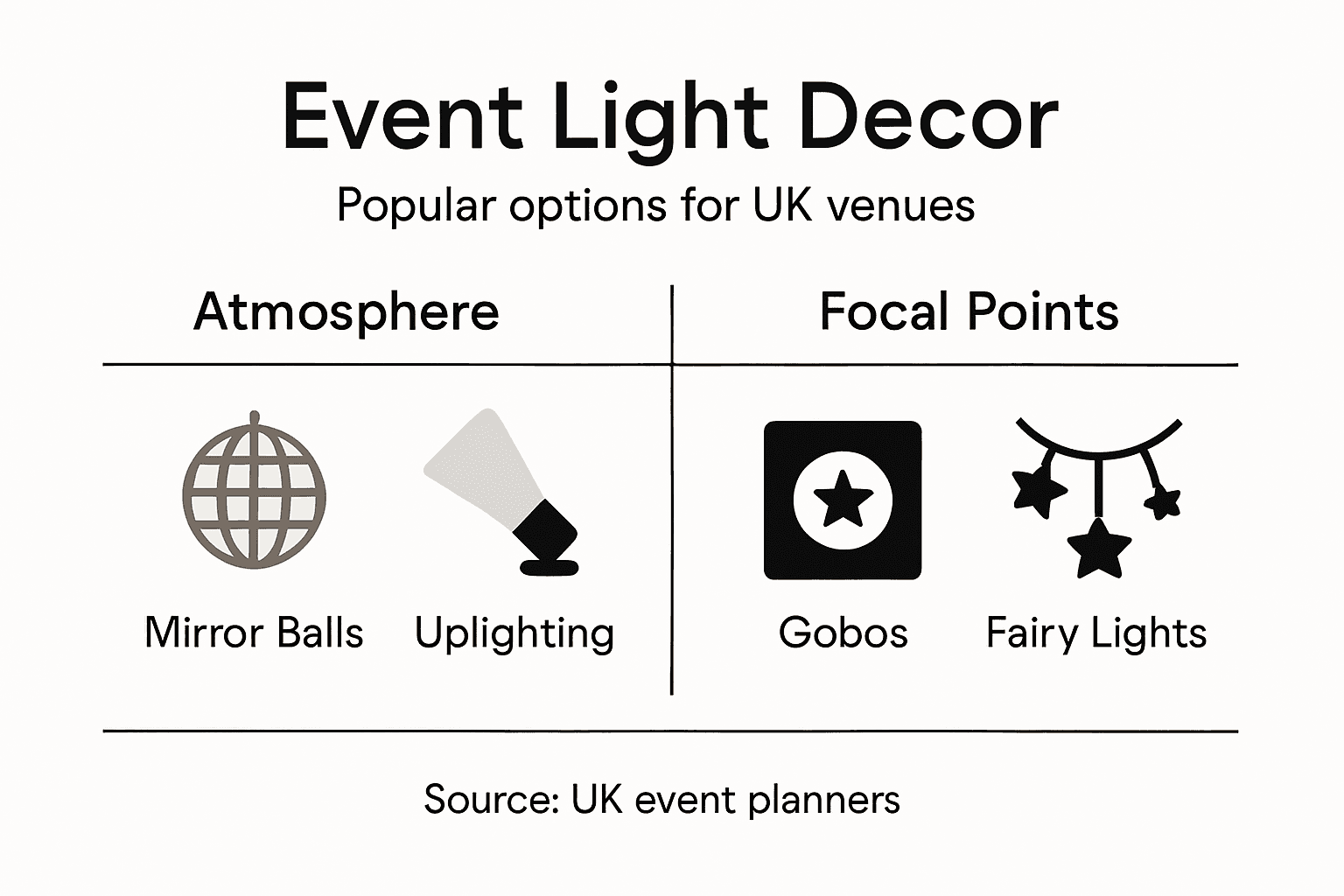
Here’s a comparison of popular decorative lighting types and their ideal applications:
| Lighting Type | Best For | Typical Effect |
|---|---|---|
| Mirror balls | Energetic celebrations | Dynamic movement, sparkle |
| LED uplighters | Corporate, galas | Mood and wall highlighting |
| Gobos/projectors | Branding, themed events | Custom patterns & logos |
| Fairy/string lights | Weddings, outdoor marquees | Gentle, romantic ambiance |
| Moving heads | Concerts, large parties | Changing colour and motion |
Mirror Balls
Mirror balls remain the most iconic piece of light decor for parties and celebrations. They scatter reflected light across a venue, creating dynamic sparkle and movement that energises any space.

These work best when paired with a focused light source such as a spotlight. The rotating ball reflects light continuously, creating patterns that change throughout your event. Mirror balls suit ballrooms, nightclubs, conference spaces during evening celebrations, and outdoor marquee events.
LED Lighting Solutions
LED bars and battens offer versatility with low heat output and extensive colour options. They form the backbone of modern event lighting because they adapt to any aesthetic without generating uncomfortable warmth.
LED wall washes create dramatic backgrounds or highlight architectural features. You can adjust beam angles—narrow spreads concentrate light on specific areas, whilst wide spreads illuminate entire wall sections. This flexibility means the same fixture works in intimate venues and massive ballrooms.
- Uplighters – Place these on the floor to illuminate walls or create colour washes behind speakers
- Strip lights – Line architectural edges, dance floor perimeters, or stage fronts for definition
- Par cans – Project focused beams for spotlighting performers or focal points
- Moving heads – Create dynamic effects that change throughout your event
Gobos and Projection Lighting
Gobos project custom patterns or logos onto walls, floors, or ceilings. They transform blank surfaces into branded environments instantly. Projection mapping creates even more sophisticated effects, displaying videos or animations on large surfaces.
These suit corporate events where branding matters, weddings with monograms, and parties with themed designs.
Uplighting and Accent Lighting
Uplighting changes how guests perceive a venue’s architecture and mood. Placing lights at floor level pointing upwards creates drama, intimacy, and visual interest.
Colour choice matters significantly. Warm amber tones feel welcoming and elegant. Cool blues create energy and modernity. Purple and pink tones suit celebrations. Strategic uplighting costs less than most people expect but delivers disproportionate visual impact.
Strand and Fairy Lights
These create intimate, romantic atmospheres without being overly formal. String lights work brilliantly in marquees, gardens, and around bars or display tables.
They provide gentle ambient light whilst looking decorative during daylight hours.
The most effective light decor strategies layer multiple types together—never rely on a single lighting solution to transform an entire venue.
Pro tip: Start with one primary light source (such as mirror balls or uplighting), then add accent pieces that complement rather than compete—this creates professional results without overwhelming your guests or your budget.
Creative Applications in Large UK Venues
Large UK venues have transformed from static event spaces into immersive environments through strategic light decor applications. Universities, cathedrals, historic buildings, and purpose-built event spaces now leverage lighting technology to create unforgettable experiences for thousands of attendees.
These installations demand careful planning, specialised equipment, and seamless coordination between technical and creative teams. The results justify the investment—guests remember these experiences for years.
Transforming Architectural Features
Dynamic light and 3D projection mapping combined with sound create immersive storytelling experiences that engage audiences on multiple sensory levels. Building facades become canvases for visual narratives. Historic stone becomes temporary art installations.
Architectural projection transforms how venues operate. A university building used for daytime lectures becomes an evening celebration venue. A cathedral’s facade shifts from solemn to celebratory within minutes.
Case Studies From Major UK Venues
Large-scale venues demonstrate what’s possible when light decor planning gets serious:
- University buildings – Transform entire campuses into glowing art installations for graduation celebrations and community events
- Historic cathedrals – Create immersive visual narratives that bridge fine art and technology on sacred architecture
- Stately homes – Use lighting to highlight period features and create themed atmospheres for corporate events
- Purpose-built venues – Deploy multiple lighting systems working in concert for maximum visual impact
Planning Large-Scale Light Installations
Successful applications require extensive collaboration. Technical teams manage power distribution, safety compliance, and equipment positioning. Artistic directors conceptualise effects and narrative flow. Venue managers ensure operations run smoothly.
Budget matters, but thoughtful planning maximises impact. Starting with rotating light fixtures that create dynamic effects costs significantly less than full projection mapping whilst delivering impressive results.
Layering Effects for Maximum Impact
The most impressive installations layer multiple lighting types:
- Base layer – Ambient uplighting establishes mood and guides guest movement
- Feature layer – Accent lights highlight architectural elements or focal points
- Dynamic layer – Moving lights, gobos, or projections create visual interest and change
- Integration – Sound synchronisation amplifies the immersive experience
Each layer serves a purpose. Remove any single layer and the installation loses impact.
Practical Considerations for Your Venue
Large venues face specific challenges: power access, sight lines, guest safety, and equipment visibility. Professional planners address these constraints creatively rather than letting them limit ambition.
Start by auditing your venue’s strengths—architectural features, sightlines, electrical capacity. Then build a lighting plan that showcases those strengths.
The most memorable events don’t use the most expensive equipment—they use the right equipment, properly positioned, with thoughtful creative direction.
Pro tip: Plan your large-venue light decor around one compelling focal point first (such as a stage, architectural feature, or dance floor), then add supporting lighting that enhances rather than distracts from that primary element.
Safety, Costs, and Common Pitfalls
Light decor transforms venues, but poor planning creates real risks. Fire hazards, excessive costs, environmental damage, and guest safety issues emerge when planners skip critical steps. Understanding these pitfalls helps you deliver stunning events without compromising safety or budgets.
Fire Safety and Risk Assessment
Proper fire risk assessments must consider ignition sources like pyrotechnics and combustible materials when planning events with decorative lighting and effects. This isn’t optional—it’s a legal requirement in UK venues.
Fire safety includes managing crowd capacity, maintaining clear escape routes, and ensuring all materials are fire-resistant. Professional event planners work with venue operators and fire safety officers before confirming lighting plans.
Common fire-safety oversights:
- Blocking emergency exits with lighting equipment or cables
- Using non-fire-resistant fabrics or decorations near heat-generating fixtures
- Failing to conduct proper risk assessments before installation
- Overcrowding venues beyond safe capacity limits
- Neglecting regular equipment maintenance and safety checks
Cost Management and Budget Reality
Light decor costs vary dramatically based on complexity, equipment quality, and installation requirements. A basic mirror ball system costs significantly less than full projection mapping or custom lighting rigs.
Budget pitfalls emerge when planners don’t understand what drives costs:
- Equipment hire – Professional-grade fixtures cost more but deliver better results and last longer
- Installation time – Complex setups require skilled technicians, adding labour costs
- Power requirements – Extensive lighting demands electrical upgrades or generator hire
- Maintenance – Poor-quality equipment fails mid-event, creating expensive emergency replacements
Start with realistic budgets. Quality lighting at 60% of your budget delivers better results than mediocre equipment at 100%.
Environmental Impact and Energy Waste
Poorly designed lighting wastes energy, leads to excessive carbon emissions, and contributes to light pollution through glare and skyglow. These aren’t just environmental concerns—they affect your event’s reputation and operational costs.
Common environmental pitfalls include overly bright fixtures, misdirected lighting, and failure to comply with planning regulations regarding light spillage.
Energy-efficient choices:
- Use LED fixtures instead of older halogen technology
- Position lights to illuminate intended areas, not surrounding neighbourhoods
- Turn off lighting during daylight hours or low-attendance periods
- Plan with your venue’s electrical capacity, not against it
Common Technical Mistakes
Experienced event planners avoid these recurring errors:
Undersized power supply – Demanding more electrical load than your venue provides causes equipment failure and safety risks.
Poor cable management – Cables running across walkways create trip hazards and equipment damage.
Inadequate rehearsal time – Testing lighting before guests arrive prevents mid-event disasters.
Ignoring sight lines – Equipment positioned where guests can’t see focal points wastes investment.
Neglecting backup plans – Single-point failures (one broken light) shouldn’t ruin your entire event.
Most lighting disasters aren’t caused by bad equipment—they result from skipped planning steps and inadequate testing before guests arrive.
Pro tip: Always conduct a full lighting rehearsal 24 hours before your event with all systems running, full capacity crowds simulated, and backup equipment on standby—this catches 90% of problems before they impact your guests.
To assist planners, here is a summary of common pitfalls and recommended solutions:
| Pitfall | Consequence | Best Practice Solution |
|---|---|---|
| Blocking fire exits | Safety hazard, legal breach | Ensure clear, marked exits |
| Overloading power supply | Equipment failure, event delays | Plan load, use safe distribution |
| Poor cable management | Trip risks, technical faults | Route cables securely, tape edges |
| Inadequate testing/rehearsal | Mid-event lighting problems | Schedule full pre-event rehearsals |
| Neglecting backup equipment | Single failure impacts event | Bring spares for critical fixtures |
Elevate Your Event Atmosphere with Stunning Mirror Balls and Light Decor
Transforming UK venues with perfect light decor means mastering atmosphere, guest focus, and memorable moments. The article highlights challenges such as creating dynamic movement, enhancing mood, and ensuring professional impact while managing budget and safety. If you aim to captivate guests and amplify your event’s visual appeal, mirror balls remain an iconic and versatile solution that delivers sparkling, moving light effects impossible to replicate with standard fixtures.
Discover how our extensive range of mirror balls at https://mirror-balls.co.uk can help you highlight focal points like dance floors or stages effortlessly. From small glitter balls ideal for intimate settings to large professional mirror balls perfect for ballrooms and nightclubs, we offer solutions to meet diverse event demands. Start crafting immersive light experiences now by exploring our detailed product listings and package deals. Visit Mirror Balls to bring dynamic sparkle into your venue and create unforgettable events today.
Frequently Asked Questions
What is light decor?
Light decor refers to decorative lighting elements used to enhance ambiance and create focal points in event venues, including items like mirror balls, uplighters, LED strips, and spotlights.
How does light decor impact the atmosphere of an event?
Light decor transforms ordinary spaces into themed environments, establishes the desired mood, directs guest attention to key areas, and enhances safety while improving photography.
What are the common types of light decor used in events?
Common types of light decor include mirror balls for dynamic movement, LED uplighters for mood enhancement, gobos for branding, and fairy lights for gentle ambiance.
How can I effectively use light decor within a venue?
To effectively use light decor, start by identifying focal points in the venue, then layer different lighting types to create a cohesive atmosphere. Highlight architectural features with uplighting and add dynamic elements like moving heads or gobos for visual interest.