Nightlife across British cities thrives on bold visuals and captivating atmospheres, yet the choice between glass or plastic mirror balls can dramatically affect both ambience and safety. With over 80 percent of premier British venues opting for custom lighting features, understanding the specific advantages of each mirror ball type matters more than ever. This guide unpacks how each material influences décor impact, performance quality, and operational demands for modern British event spaces.
Table of Contents
- Mirror Balls Defined And Common Myths
- Types And Construction Of Glass Mirror Balls
- Plastic Mirror Balls: Features And Varieties
- Reflective Quality And Visual Performance Compared
- Safety, Durability, And Maintenance Differences
- Cost, Sourcing, And Venue Suitability
Key Takeaways
| Point | Details |
|---|---|
| Mirror Balls Are Multifunctional | Mirror balls serve not only as decorative items but as sophisticated tools for light manipulation across various environments. |
| Material Choice Impacts Performance | Glass mirror balls offer superior reflective quality, while plastic variants provide enhanced safety and portability. |
| Maintenance Considerations Vary | Glass requires meticulous upkeep to maintain performance, whereas plastic mirror balls are easier to handle and clean. |
| Evaluate Venue Needs Thoroughly | Consider venue characteristics such as ceiling height and load capacity when selecting the appropriate mirror ball type. |
Mirror Balls Defined and Common Myths
A mirror ball is a spherical object meticulously crafted to transform light into a mesmerising dance of reflections. First popularised in nightclubs during the 1920s, these enchanting devices have become synonymous with dynamic entertainment spaces. The core design involves hundreds or thousands of tiny mirrored facets strategically arranged to scatter light in multiple directions, creating an immersive visual experience.
Contrary to popular belief, mirror balls are not merely decorative accessories but sophisticated light manipulation tools. While many assume they are exclusively associated with disco culture, these versatile spheres have applications spanning event management, theatrical productions, and architectural lighting design. Their ability to transform a mundane space into a vibrant, energetic environment makes them far more than a nostalgic relic.
Some persistent myths surrounding mirror balls include the misconception that they are fragile or challenging to maintain. In reality, modern mirror balls are engineered with durability in mind, using robust materials and precise manufacturing techniques. Whether constructed from glass or plastic, these spherical wonders are designed to withstand the rigours of professional entertainment environments.
Pro tip: When selecting a mirror ball, consider the venue’s lighting conditions and ceiling height to maximise its reflective potential and create the most stunning visual impact.
Types and Construction of Glass Mirror Balls
Glass mirror balls represent the pinnacle of precision engineering in reflective entertainment technology. Traditional glass mirror balls feature hundreds of precisely cut mirrored glass facets, meticulously arranged to create a seamless spherical surface capable of transforming ordinary lighting into a spectacular visual display. Unlike their plastic counterparts, glass mirror balls offer unparalleled optical clarity and a sophisticated aesthetic that elevates venue ambience.
The construction process for glass mirror balls involves several intricate steps. Skilled artisans carefully select high-quality glass panels, cutting them into uniform shapes and sizes with remarkable precision. Each individual facet is then silvered and polished to ensure maximum light reflection. Using precise manufacturing techniques, manufacturers create spheres that can range from compact 10-centimetre decorative pieces to elaborate 1-metre professional installations designed for large entertainment venues.
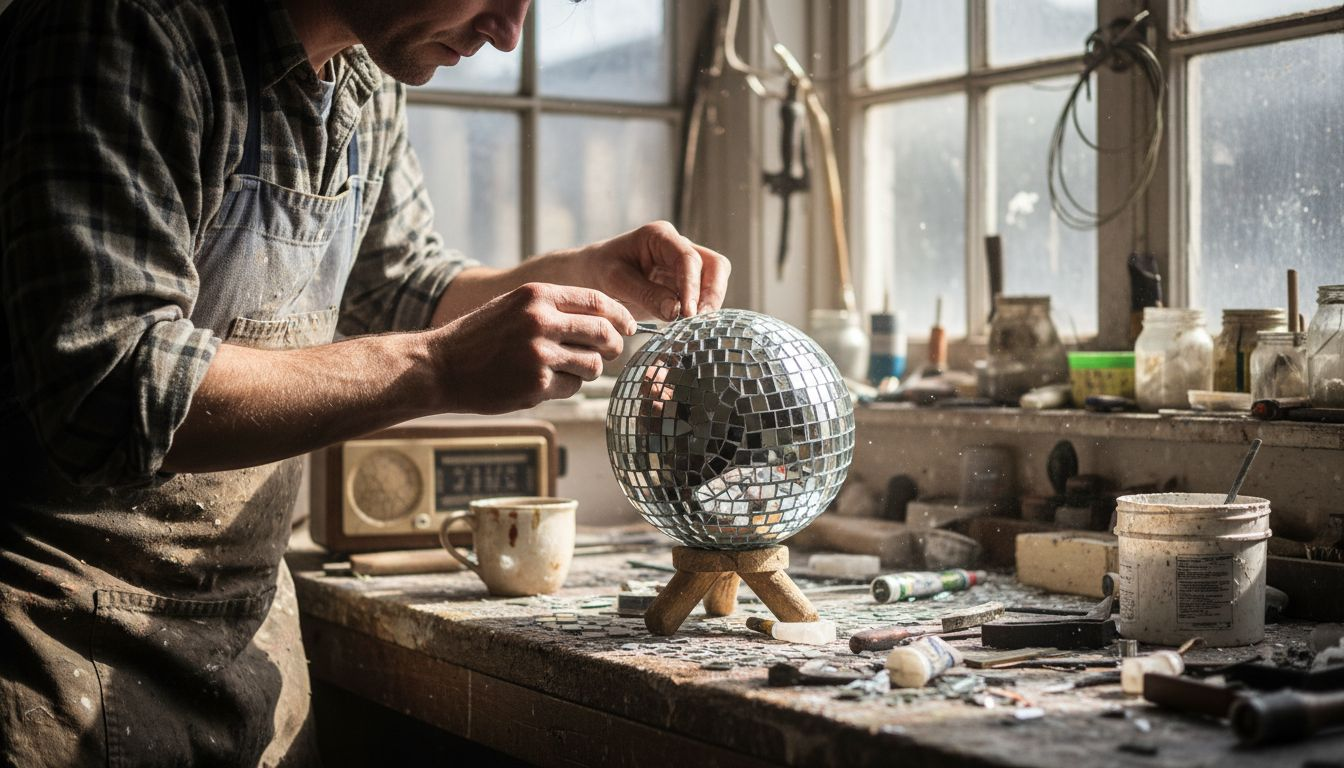
Key characteristics of glass mirror balls distinguish them from alternative materials. Their superior reflective properties stem from the inherent qualities of glass – a material known for its exceptional light-dispersing capabilities. Professional event designers often prefer glass mirror balls for their durability, optical brilliance, and ability to create complex light patterns. The weight and rigidity of glass also contribute to more stable and predictable light refraction, making them ideal for sophisticated lighting designs.
Pro tip: When installing a glass mirror ball, always ensure robust mounting hardware and professional installation to prevent potential damage and maximise its spectacular light-reflecting potential.
Plastic Mirror Balls: Features and Varieties
Plastic mirror balls represent an innovative approach to reflective lighting design, offering unique advantages over traditional glass alternatives. Acrylic mirror balls provide a lightweight and shatter-resistant solution that makes them particularly suitable for dynamic event spaces, educational environments, and entertainment venues. Their versatility allows event designers to create captivating visual experiences without the fragility associated with glass constructions.
The range of plastic mirror ball varieties is remarkably diverse. Inflatable mirror balls offer an extraordinary option for large outdoor events, providing unprecedented portability and ease of transportation. These innovative designs create a softer, more diffused light shimmer compared to traditional glass mirror balls, making them ideal for festivals, corporate events, and temporary installations where quick setup and minimal equipment handling are crucial.
Manufacturers have developed sophisticated production techniques to enhance the performance of plastic mirror balls. Modern acrylic mirror balls can be engineered with advanced coatings that improve light reflection, reduce glare, and provide enhanced durability. Professional event designers appreciate their adaptability – from compact 10-centimetre decorative pieces to substantial 1-metre installation units designed for large venues. The material’s inherent flexibility also allows for creative applications in sensory environments, therapeutic spaces, and interactive design contexts.
Pro tip: When selecting a plastic mirror ball, consider the specific lighting conditions and intended use to ensure optimal visual impact and performance.
Reflective Quality and Visual Performance Compared
The nuanced differences between glass and plastic mirror balls reveal complex trade-offs in optical performance and practical application. Glass mirrors offer brilliant shine and exceptionally precise reflective properties, delivering razor-sharp light distribution that professional event designers consistently praise for its exceptional visual clarity. The microscopic precision of glass surfaces enables near-perfect light refraction, creating crisp, mirror-like reflections that transform venue atmospheres with unparalleled sophistication.
Conversely, plastic mirror balls demonstrate remarkable alternative advantages that make them increasingly attractive for contemporary event environments. Acrylic mirrors provide significant benefits in high-traffic or safety-sensitive contexts, offering lightweight construction and impact resistance that glass cannot match. While exhibiting slight visual distortions, plastic mirror balls compensate through their durability, reduced injury risk, and adaptability across diverse installation scenarios.
Professional lighting designers must carefully evaluate specific performance parameters when selecting between glass and plastic mirror balls. Optical fidelity remains highest with glass constructions, which maintain superior light transmission and minimal surface irregularities. Plastic mirror balls, however, excel in scenarios demanding robustness, portability, and cost-effectiveness. The choice ultimately depends on precise venue requirements, anticipated environmental conditions, and desired visual aesthetic.
Pro tip: Conduct a thorough venue assessment to match mirror ball material with your specific lighting and safety performance needs.
Here is a comparative overview of key differences between glass and plastic mirror balls:
| Criterion | Glass Mirror Balls | Plastic Mirror Balls |
|---|---|---|
| Reflective Sharpness | Superior, crisp light reflections | Slightly diffused reflections |
| Weight | Heavy, requires strong mounting | Lightweight, easier to suspend |
| Durability | Fragile but rigid, risk of shattering | Impact-resistant, cracks rather than shatters |
| Maintenance | Needs careful cleaning and handling | Easier maintenance, less risk during transport |
| Cost | More expensive, premium installations | More budget-friendly, good for temporary events |
| Venue Suitability | Large, permanent or high-end venues | Varied spaces, including portable or outdoor use |
Safety, Durability, and Maintenance Differences
Mirror ball safety represents a critical consideration for event professionals and venue managers selecting reflective lighting equipment. Acrylic mirror sheets demonstrate significantly enhanced safety characteristics compared to traditional glass alternatives, offering remarkable impact resistance and reduced injury potential. Plastic mirror balls handle mechanical stress by cracking rather than shattering explosively, creating a substantially safer environment in high-traffic venues, entertainment spaces, and public installations.
Durability variations between glass and plastic mirror balls reveal nuanced performance differences that directly impact long-term maintenance requirements. Glass mirror balls, while optically superior, demand meticulous handling and precise installation protocols. Plastic mirror balls, conversely, provide remarkable resilience against environmental challenges, resisting moisture damage and temperature fluctuations with greater consistency. Their lightweight construction enables easier transportation, quicker installation, and reduced risk of structural compromise during setup or relocation.
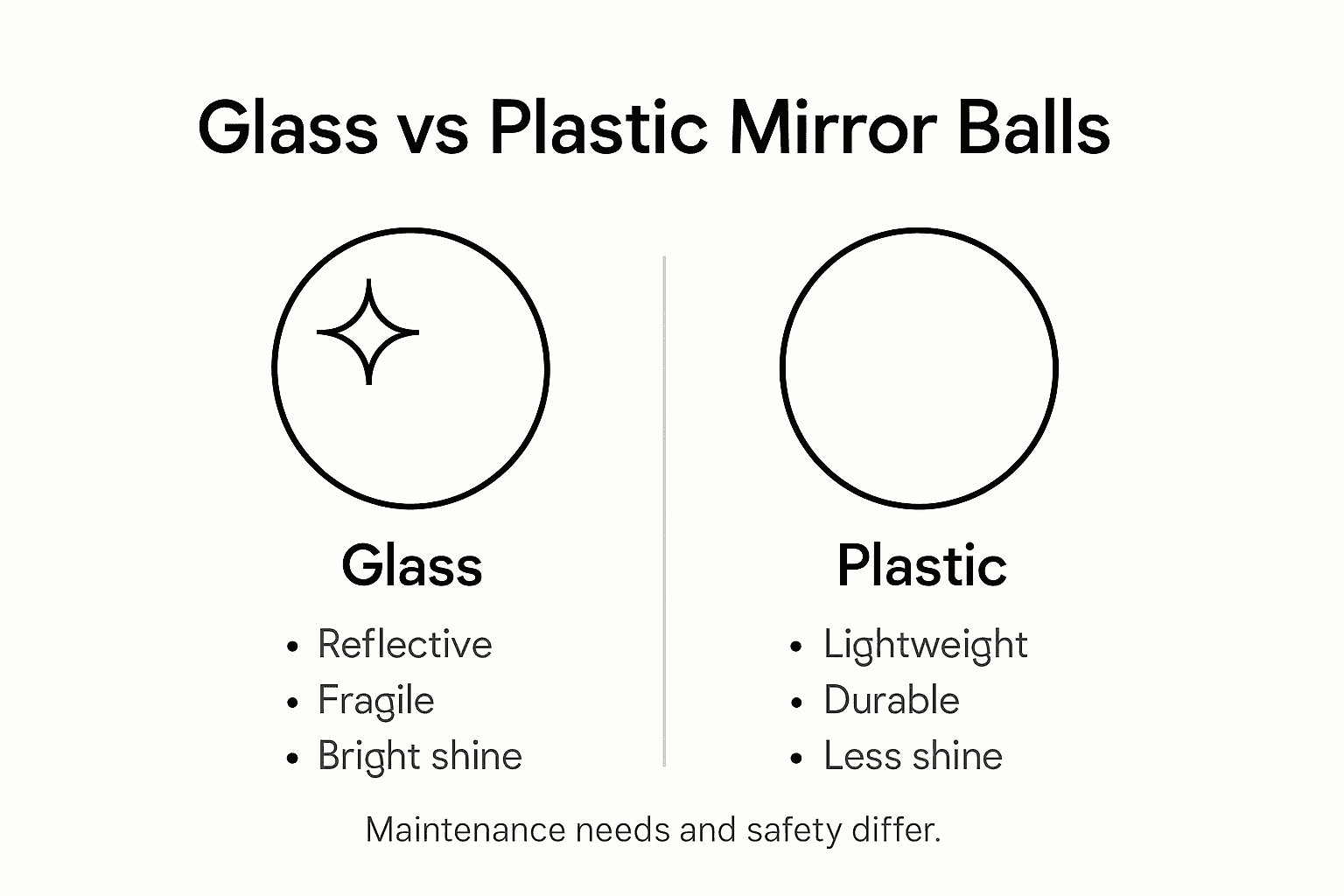
Maintenance protocols differ significantly between glass and plastic mirror ball technologies. Acrylic mirror surfaces require gentler cleaning techniques, using soft microfibre cloths and specialised cleaning solutions to prevent microscopic scratching. Glass mirror balls demand more rigorous maintenance, with specific handling requirements to prevent surface degradation or potential breakage. Professional event designers must carefully evaluate these maintenance considerations, understanding that material selection impacts not only initial performance but ongoing operational efficiency.
Pro tip: Implement a regular inspection and maintenance schedule tailored to your specific mirror ball material to maximise longevity and performance.
Cost, Sourcing, and Venue Suitability
Choosing the optimal mirror ball involves a complex evaluation of cost, material performance, and venue-specific requirements. Mirror ball hire services offer extensive sizing options from 30cm to 1m diameters, enabling event designers to precisely match their reflective lighting needs to specific venue characteristics. Pricing varies significantly between glass and plastic variants, with glass mirror balls typically commanding higher investment due to superior optical properties and more intricate manufacturing processes.
Venue suitability emerges as a critical consideration when selecting mirror balls, with weight, mounting requirements, and ceiling height playing pivotal roles. Glass mirror balls, ranging from a few kilograms to over 40kg, demand robust mounting infrastructure and careful structural assessment. Plastic mirror balls offer greater flexibility, providing lightweight alternatives that simplify installation and reduce structural loading, making them particularly attractive for venues with limited load-bearing capacity or complex architectural constraints.
Cost considerations extend beyond initial purchase price, encompassing long-term maintenance, replacement expenses, and potential venue-specific adaptation requirements. Professional event designers must conduct comprehensive cost-benefit analyses that factor in material durability, optical performance, safety considerations, and potential repair or replacement expenses. Plastic mirror balls generally present lower initial and ongoing costs, while glass variants offer superior visual aesthetics that might justify their higher investment for premium entertainment spaces.
Pro tip: Conduct a detailed venue survey and budget analysis to determine the most cost-effective mirror ball solution that meets your specific aesthetic and performance requirements.
The following table summarises recommended usage scenarios for each mirror ball type:
| Venue/Use Case | Best Mirror Ball Choice | Reason for Preference |
|---|---|---|
| Nightclubs & Theatres | Glass | Purest reflections and dramatic visual impact |
| School Halls & Community Events | Plastic | Enhanced safety, lightweight for easy setup |
| Outdoor Festivals | Inflatable/Acrylic Plastic | Portability, resilience in varied weather |
| High-Traffic Public Spaces | Plastic | Reduced injury risk, durable construction |
| Architectural Installations | Glass | High clarity, stable light patterns |
Elevate Your Venue Ambience with the Perfect Mirror Ball Choice
Choosing between glass and plastic mirror balls is a crucial step to transform your venue’s atmosphere effectively. The article highlights key challenges such as balancing reflective sharpness, safety, durability, and cost to ensure visual impact without compromising on practical requirements. Whether your goal is to create razor-sharp light reflections with glass or prioritise lightweight, shatter-resistant options with plastic, understanding these distinctions is essential for a stunning and safe installation.
Discover how mirror balls can redefine your space at Mirror Balls where we offer expertly curated products tailored to various venue needs. From professional-grade glass spheres that command attention in nightclubs and theatres to versatile acrylic balls ideal for community events and outdoor festivals, our selection caters to every scenario.
Ready to capture the perfect light and atmosphere for your venue today Explore our collection to find detailed specifications, pricing, and expert guidance available at Mirror Balls. Take the next step to enhance your event’s ambience with confidence by visiting our landing page now and let us help you select the ideal mirror ball solution tailored to your distinct requirements.
Frequently Asked Questions
What are the main differences between glass and plastic mirror balls?
Glass mirror balls provide superior reflective sharpness and brilliant shine, while plastic mirror balls are lightweight, impact-resistant, and offer slightly diffused reflections.
How do I choose the right mirror ball for my venue?
Consider the venue’s ceiling height, load-bearing capacity, and the desired visual effect. Glass mirror balls are ideal for high-end venues wanting crisp reflections, while plastic ones are better for dynamic environments requiring safety and portability.
Are glass mirror balls more durable than plastic mirror balls?
While glass mirror balls offer superior optical clarity, they are more fragile and can shatter. Plastic mirror balls are more durable, capable of withstanding impacts without shattering, making them suitable for high-traffic areas.
What maintenance do glass and plastic mirror balls require?
Glass mirror balls need meticulous cleaning and care to prevent damage, whereas plastic mirror balls can be cleaned more easily using gentler techniques due to their resilience against scratching.