Choosing between acrylic and glass mirror balls can be surprisingly tricky for anyone planning a british event or interior transformation. While acrylic mirror balls weigh about half as much as glass and offer ten times the impact resistance, many people overlook these key differences when searching for the perfect reflective centrepiece. Understanding how each material performs in terms of safety, durability, and cost helps you select the right option for your next british gathering, creative venue, or home enhancement.
Table of Contents
- Defining Acrylic And Glass Mirror Balls
- Key Material Differences And Benefits
- Comparing Durability And Safety Factors
- Visual Effects And Application Settings
- Cost, Maintenance, And Long-Term Value
Key Takeaways
| Point | Details |
|---|---|
| Material Composition | Acrylic mirror balls are made from PMMA and are lightweight and shatter-resistant, whereas glass mirror balls are traditional but more fragile. |
| Safety and Durability | Acrylic mirrors are ideal for high-traffic environments due to their impact resistance, while glass mirrors offer better optical clarity but pose higher injury risks. |
| Cost Efficiency | Acrylic mirrors are more affordable initially and for customisation, while glass mirrors have higher maintenance costs and a longer lifespan. |
| Visual Performance | Acrylic mirrors may show slight distortions but are flexible for creative designs, unlike the rigidity and superior reflection of glass mirrors. |
Defining Acrylic And Glass Mirror Balls
In the world of decorative and functional reflective surfaces, mirror balls come in two primary material types: acrylic and glass. According to Sanait, these materials are fundamentally different in their composition and manufacturing process. Acrylic mirror balls are crafted from polymethyl methacrylate (PMMA) sheets, while glass mirror balls involve coating a glass surface with a thin reflective layer, typically using aluminum or silver.
Acrylic mirror balls offer unique advantages that set them apart from traditional glass options. Cut Plastic Sheeting highlights their key characteristics: they are lightweight, shatter-resistant, and incredibly flexible. These properties make them particularly suitable for applications where safety, durability, and ease of installation are paramount. Event organisers, theatre production teams, and home decorators often prefer acrylic mirror balls for their practical benefits.
The primary differences between acrylic and glass mirror balls extend beyond their basic material composition. Glass mirror balls typically provide a more traditional, classic reflective surface with superior optical clarity, while acrylic versions offer enhanced durability and impact resistance. Each material brings distinct advantages depending on the specific use case.
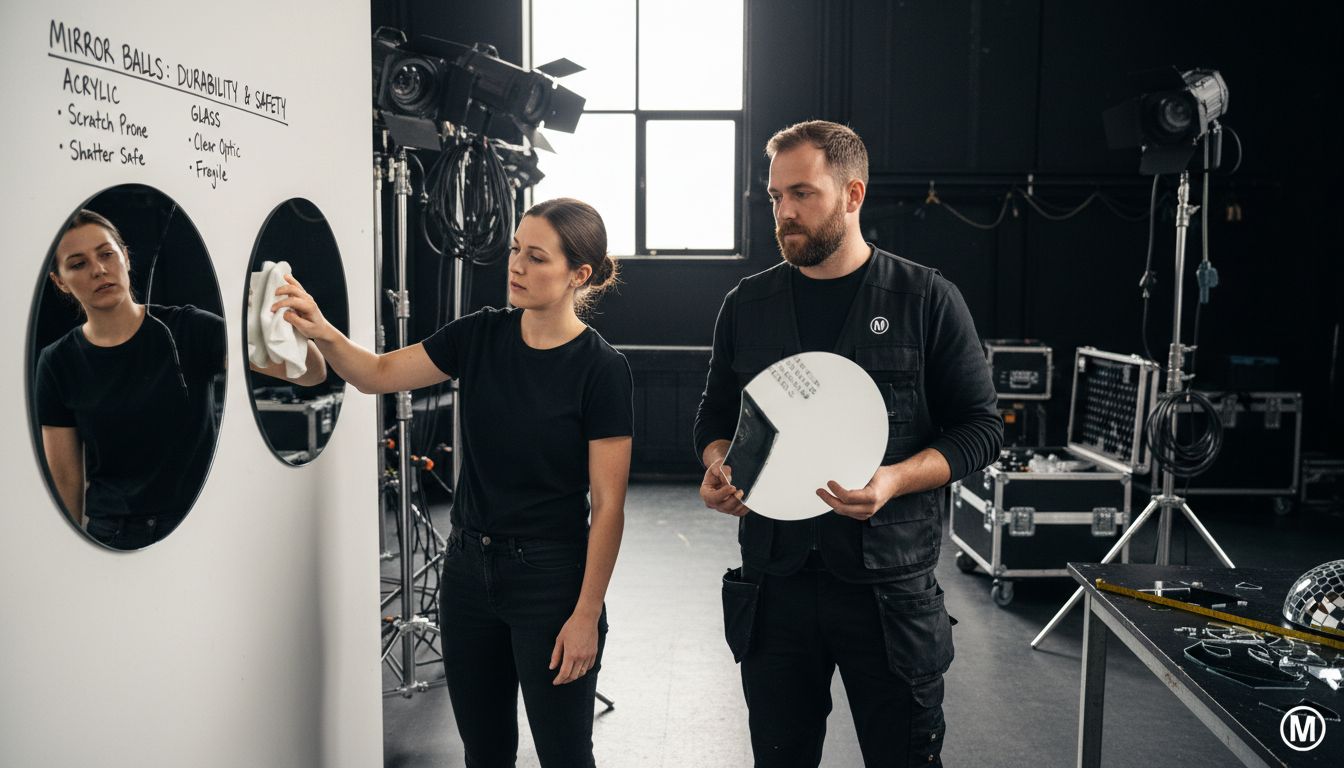 For large entertainment venues requiring robust decorative elements, acrylic might prove more practical. Conversely, high-end installations seeking pristine light reflection might lean towards glass mirror balls.
When selecting between acrylic and glass mirror balls, consider factors like installation environment, budget, potential impact risks, and desired aesthetic quality. Understanding these material nuances will help you make an informed decision tailored to your specific lighting and decorative requirements.
Key Material Differences And Benefits
The material composition of mirror balls dramatically influences their performance, durability, and suitability for various environments. Acrylic Leasinder reveals a compelling statistic: acrylic mirrors weigh approximately half as much as glass mirrors while boasting ten times the impact strength. This remarkable characteristic makes them an exceptional choice for dynamic settings where traditional glass might be too fragile or risky.
Specific environments demand specific material properties. According to Aulen, acrylic mirrors excel in health and safety-critical spaces like gyms, dance studios, and educational institutions. Their shatterproof nature provides an additional layer of protection, reducing potential injury risks associated with traditional glass mirror balls.
The lightweight design also simplifies installation and transportation, offering unprecedented flexibility for event organisers and production teams.
Beyond safety considerations, material differences extend to optical performance and aesthetic qualities. Glass mirror balls typically offer superior light reflection and a more classic, pristine appearance, making them ideal for high-end architectural or theatrical installations. Acrylic mirror balls, conversely, provide robust durability with a slightly softer reflection, which can be advantageous in settings requiring impact resistance and consistent performance.
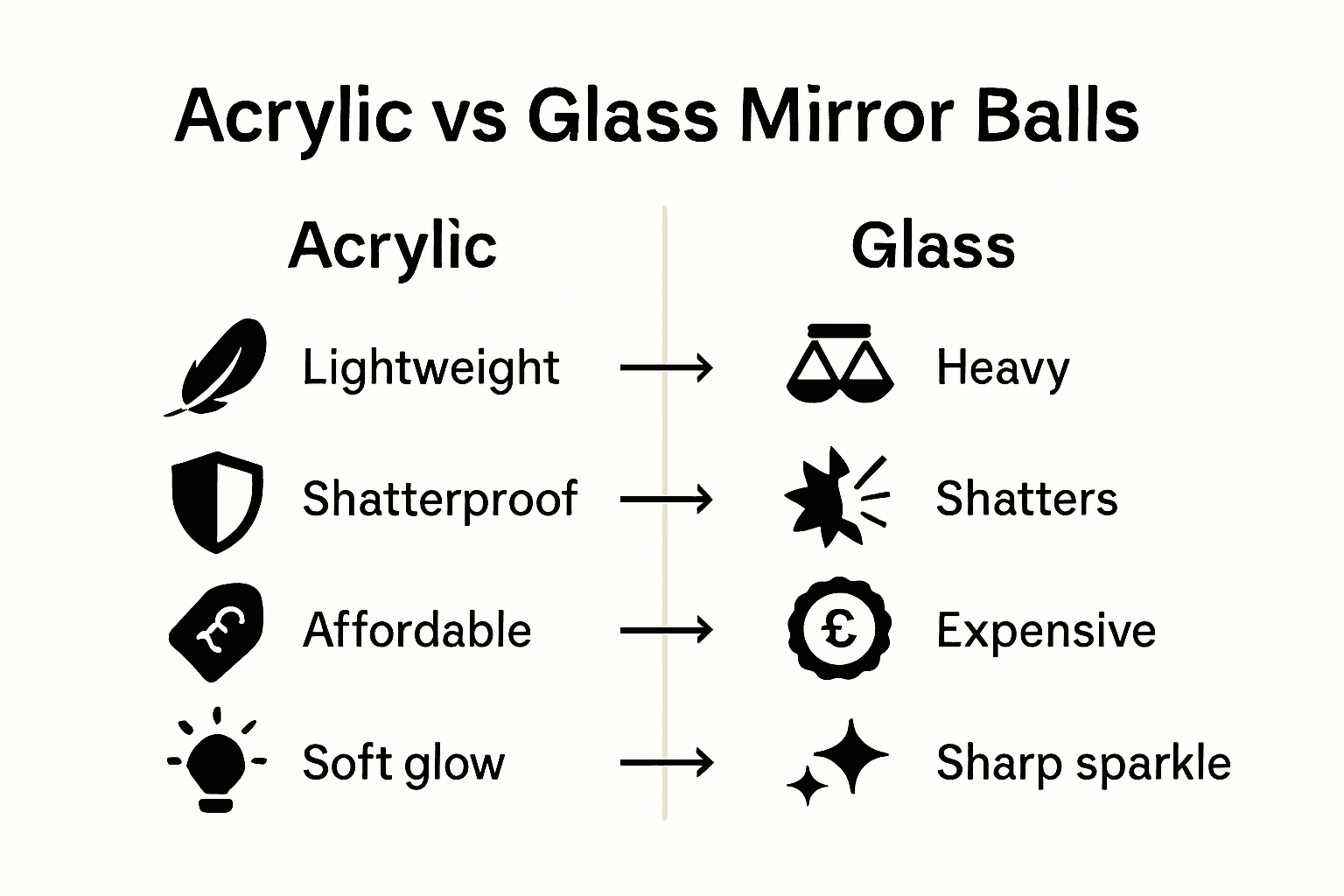
To help professionals and enthusiasts make informed decisions, here’s a quick comparison of key material characteristics:
- Glass Mirror Balls:
- Superior optical clarity
- More traditional aesthetic
- Precise light reflection
- Heavier and more fragile
- Acrylic Mirror Balls:
- Lightweight design
- Extremely impact-resistant
- Shatterproof construction
- More versatile installation options
- Slightly softer light reflection
Comparing Durability And Safety Factors
Safety considerations are paramount when selecting mirror balls for various environments. Pleasant Plastic highlights a critical safety advantage of acrylic mirrors: they are highly impact-resistant and do not shatter into hazardous fragments. This unique property significantly reduces injury risks compared to traditional glass mirrors, making them an ideal choice for spaces with high human traffic or potential physical interactions.
However, durability is a nuanced consideration. Cut Plastic Sheeting points out that acrylic mirrors are more susceptible to surface scratching due to their softer material composition. This vulnerability requires more careful handling and maintenance compared to glass mirrors. Event organisers, theatre production teams, and venue managers must implement specific care protocols to preserve the aesthetic and functional integrity of acrylic mirror balls.
The safety profile of mirror balls extends beyond initial impact resistance. Glass mirror balls, while offering superior optical clarity, pose greater risks in high-energy environments. Their tendency to fracture into sharp fragments makes them less suitable for spaces like dance studios, gymnasiums, schools, or interactive entertainment venues. Acrylic mirror balls provide a robust alternative that combines safety with reasonable durability.
To help professionals make informed decisions, here’s a comprehensive safety and durability comparison:
- Acrylic Mirror Balls:
- Highly impact-resistant
- Non-shattering design
- Lower injury risk
- More vulnerable to surface scratches
- Requires careful cleaning and handling
- Glass Mirror Balls:
- Superior optical clarity
- More scratch-resistant surface
- Higher risk of dangerous fragmentation
- Less suitable for high-impact environments
- Requires careful installation and handling
Visual Effects And Application Settings
The visual performance of mirror balls varies significantly between acrylic and glass materials, with each offering unique optical characteristics. Acrylic Leasinder reveals an important consideration: acrylic mirrors can exhibit slight distortions or warping, particularly in larger sizes or thinner sheets. These subtle imperfections might impact the clarity of reflected images, making them less ideal for precision lighting or high-resolution visual applications.
Aulen highlights a remarkable advantage of acrylic mirrors: their ability to be curved or bent, offering unprecedented design flexibility. This unique property makes them exceptionally versatile for creative installations, stage designs, and unconventional architectural applications. Glass mirrors, by contrast, remain rigid and flat, which significantly limits their potential for innovative visual presentations.
The choice between acrylic and glass mirror balls depends heavily on the intended visual environment and specific performance requirements. Theatre productions might prefer glass for its pristine reflection, while dynamic event spaces could benefit from acrylic’s adaptable nature. Dance studios, interactive museums, and educational environments often leverage acrylic mirror balls for their safety and design malleability, creating immersive visual experiences that traditional glass cannot replicate.
To help professionals select the most appropriate mirror ball, here’s a comparative breakdown of visual characteristics:
- Acrylic Mirror Balls:
- Potential for slight image distortion
- Flexible design options
- Suitable for curved or non-traditional installations
- Softer light reflection
- More adaptable to creative environments
- Glass Mirror Balls:
- Superior optical clarity
- Precise, undistorted light reflection
- Rigid, traditional design
- Ideal for high-precision lighting scenarios
- Classic, professional aesthetic
Cost, Maintenance, And Long-Term Value
Acrylic Leasinder reveals a compelling economic advantage: acrylic mirrors are substantially more cost-effective than glass mirrors, particularly when evaluating long-term maintenance and installation expenses. This financial consideration becomes crucial for event organisers, venue managers, and production teams working within constrained budgets who must balance initial investment with ongoing maintenance requirements.
Aulen highlights another significant cost benefit: acrylic mirrors can be cut into custom shapes more easily and economically compared to glass mirrors. This flexibility reduces fabrication expenses and allows for more creative design implementations without incurring prohibitive manufacturing costs. Smaller organisations, educational institutions, and independent event planners can particularly benefit from this adaptable and budget-friendly approach.
Maintenance costs represent a critical long-term consideration that extends beyond initial purchase price. Acrylic mirror balls require gentler cleaning techniques and are more prone to scratching, which means users must invest in specialized care products and handle them with greater caution. Glass mirrors, while more scratch-resistant, demand professional cleaning and are significantly more expensive to replace if damaged. The total cost of ownership thus becomes a nuanced calculation involving initial purchase price, maintenance complexity, and potential replacement expenses.
To help professionals make informed financial decisions, here’s a comparative breakdown of cost and maintenance factors:
- Acrylic Mirror Balls:
- Lower initial purchase cost
- More affordable custom fabrication
- Cheaper transportation due to lightweight design
- Higher maintenance requirements
- Shorter potential lifespan
- Glass Mirror Balls:
- Higher initial investment
- More expensive custom modifications
- Heavier transportation costs
- Lower maintenance complexity
- Longer potential lifespan
- Superior durability against surface damage
Choose the Perfect Mirror Ball for Your Space with Confidence
Deciding between acrylic and glass mirror balls can be challenging when safety, durability and visual impact all matter deeply. Whether you prioritise lightweight, shatterproof materials or crave the ultimate clarity and classic reflection, understanding these differences helps you avoid costly mistakes and frustration. You want a solution that matches your environment and budget without compromising style or safety.
Explore our extensive selection of mirror balls at https://mirror-balls.co.uk to find options tailored to your specific needs.
Take control of your event or venue’s atmosphere today by choosing from our range of high-quality disco balls. Visit our main site to browse all products, discover detailed descriptions and secure your perfect mirror ball effortlessly. Don’t wait until setup day to realise you need the right material for your space. Act now and ensure brilliance, durability, and safety in every reflection.
Frequently Asked Questions
What are the main differences between acrylic and glass mirror balls?
Acrylic mirror balls are made from polymethyl methacrylate (PMMA) and are lightweight, shatter-resistant, and flexible, making them ideal for dynamic environments. Glass mirror balls, however, provide superior optical clarity and a more traditional aesthetic but are heavier and more fragile.
Which type of mirror ball is safer for use in high-traffic areas?
Acrylic mirror balls are considered safer for high-traffic areas due to their impact-resistant and non-shattering properties. This significantly reduces the risk of injury compared to glass mirror balls, which can break into dangerous shards.
How do the optical properties of acrylic and glass mirror balls compare?
Glass mirror balls typically offer superior optical clarity and precise light reflection, making them ideal for high-end installations. In contrast, acrylic mirror balls may exhibit slight distortions or a softer light reflection, which can be suitable for different, more creative environments.
What are the cost implications of using acrylic versus glass mirror balls?
Acrylic mirror balls are generally more cost-effective upfront and easier to custom fabricate. However, they require more careful maintenance and handling to avoid scratches, while glass mirrors have a higher initial investment but offer lower maintenance complexity over time.
Recommended
- Pros and Cons of Mirror Balls Explained – Mirror Balls
- DIY Mirror Ball Lighting: Transform Your Space Today – Mirror Balls
- Complete Guide to How Mirror Balls Diffuse Light – Mirror Balls
- Understanding Why Use Mirror Balls at Home for Atmosphere – Mirror Balls
- Understanding Matte vs Glossy Tiles: Key Differences Explained – Tile Choices