Most british event venues now rely on precision-engineered ceiling rotators to deliver stunning mirror ball effects and dynamic lighting shows. As demand for immersive audience experiences grows, over 80 percent of professional venues in the United Kingdom invest in advanced rotator systems to achieve flawless visuals. This guide uncovers the commercial-grade solutions trusted by british organisers to transform overhead installations into seamless, engaging spectacles.
Table of Contents
- Ceiling Rotator Defined For Event Venues
- Types Of Ceiling Rotators Explained
- How Ceiling Rotators Operate Safely
- Key Features And Technical Specifications
- Installation, Safety And Legal Standards UK
- Costs, Common Mistakes And Best Practices
Key Takeaways
| Point | Details |
|---|---|
| Ceiling Rotators Enhance Lighting Dynamics | They allow for precise control and dynamic movement of lighting elements, creating interactive visual experiences in event venues. |
| Selection of Rotator Types Matters | Choosing between manual, motorised, and programmable rotators is crucial based on venue size and lighting complexity. |
| Safety Compliance is Essential | Adhering to Health and Safety Executive regulations ensures safe operation and usage of ceiling rotators. |
| Proper Installation and Maintenance are Key | Engaging certified technicians and maintaining detailed records can mitigate potential hazards and comply with legal standards. |
Ceiling Rotator Defined For Event Venues
A ceiling rotator is a specialised piece of technical equipment designed specifically for transforming event lighting dynamics in professional venues. These precision-engineered devices enable seamless rotation of suspended lighting fixtures, mirror balls, and decorative elements mounted overhead, creating dynamic visual experiences for audiences.
Ceiling rotators are fundamentally motor-driven mechanisms that facilitate precise positioning and rotation of overhead equipment according to Health and Safety Executive specifications. These devices allow event technicians to control the movement and orientation of lighting elements with remarkable accuracy, ensuring smooth transitions and dramatic visual effects. The core functionality involves a motorised mechanism that can rotate suspended items through various angles and speeds, transforming static ceiling installations into interactive, dynamic visual environments.
Professional event venues utilise ceiling rotators across multiple contexts – from nightclub installations and theatrical productions to corporate events and wedding receptions. The equipment enables lighting designers to create immersive experiences by dynamically changing the direction, angle, and movement of overhead lighting fixtures. Key technical capabilities typically include variable rotation speeds, programmable movement patterns, and robust weight-bearing capacities designed to support different types of lighting equipment safely.
Pro tip: When selecting a ceiling rotator for your venue, always verify its maximum load capacity and ensure it complies with current Health and Safety Executive regulations for suspended equipment installation.
Types Of Ceiling Rotators Explained
Ceiling rotators represent a sophisticated category of technical equipment with multiple configurations designed to meet diverse event lighting requirements. These specialised devices are engineered to provide dynamic movement and precise control over suspended lighting elements, ensuring versatile performance across different venue environments.
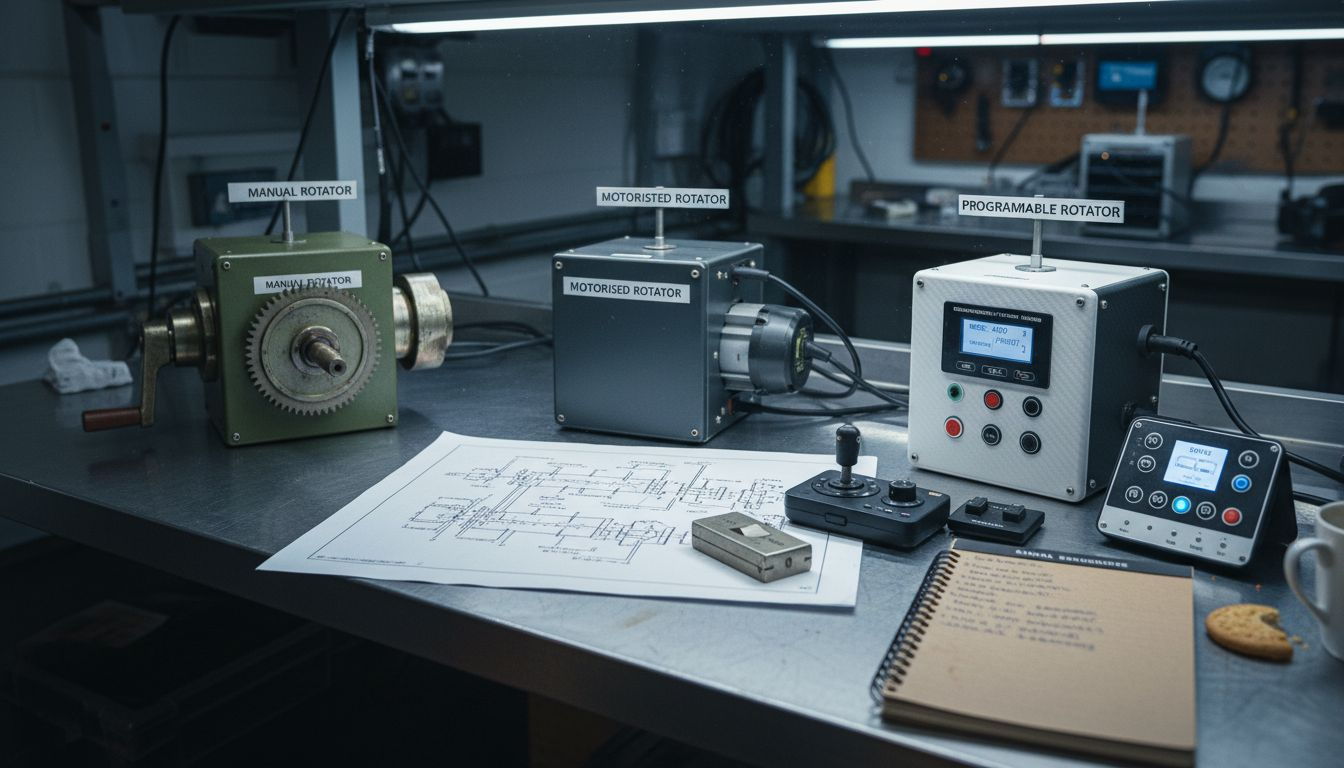
The primary categories of ceiling rotators include manual, motorised, and programmable mechanical systems, each offering unique operational characteristics. Manual rotators require direct human intervention for positioning, making them suitable for smaller venues with limited lighting complexity. Motorised electric rotators provide automated rotation through electrical mechanisms, enabling smoother and more consistent movement across larger event spaces. Programmable rotators represent the most advanced technology, allowing lighting technicians to pre-set complex rotation patterns and synchronise multiple units for intricate visual displays.
Professional lighting designers distinguish between several subtypes of ceiling rotators based on technical specifications and application contexts. Standard single-axis rotators enable 360-degree horizontal rotation, while advanced multi-axis models can manipulate lighting fixtures through complex three-dimensional movements. Some specialised rotators are designed for specific equipment like mirror balls, while others accommodate broader ranges of lighting fixtures. Weight capacity, rotation speed, and precision of movement are critical factors that determine a rotator’s suitability for different event environments.
The main types of ceiling rotators offer distinct advantages for various event needs:
| Type of Rotator | Control Mechanism | Best Use Case | Flexibility Level |
|---|---|---|---|
| Manual | Direct human control | Small venues, simple set-ups | Limited |
| Motorised | Electrical operation | Medium to large venues | Moderate |
| Programmable | Automated programming | Synchronized, complex shows | High |
Pro tip: When selecting a ceiling rotator, always consider the specific weight of your lighting equipment and verify the device’s maximum load-bearing capacity to ensure safe and reliable performance.
How Ceiling Rotators Operate Safely
Safety protocols are paramount when operating ceiling rotators in professional event environments. These sophisticated mechanical systems require meticulous attention to prevent potential risks and ensure seamless performance during complex lighting installations.
The Health and Safety Executive mandates rigorous safety standards for mechanical equipment operation and risk management in event settings. Professional rotator systems must undergo comprehensive pre-event inspections, including structural integrity checks, electrical system evaluations, and mechanical component assessments. Critical safety measures involve examining load-bearing capacities, verifying motor performance, and ensuring all moving parts are properly guarded to prevent accidental contact or mechanical failure.
Operational safety for ceiling rotators extends beyond initial equipment assessment. Trained lighting technicians must implement precise control mechanisms, including emergency stop protocols, weight distribution calculations, and systematic movement programming. Advanced rotator systems incorporate multiple failsafe features such as automatic load sensors, torque limitation controls, and real-time diagnostic monitoring. These technological safeguards help prevent potential mechanical stress, unexpected movements, or structural compromises that could potentially endanger event personnel or audience members.
Pro tip: Conduct a comprehensive pre-event safety audit of your ceiling rotator, documenting load capacities, electrical connections, and mechanical tolerances to ensure optimal performance and risk mitigation.
Key Features And Technical Specifications
Ceiling rotators represent complex technological systems with intricate design parameters that distinguish professional-grade equipment from standard lighting accessories. Understanding their technical specifications is crucial for event professionals seeking precise lighting control and optimal performance.
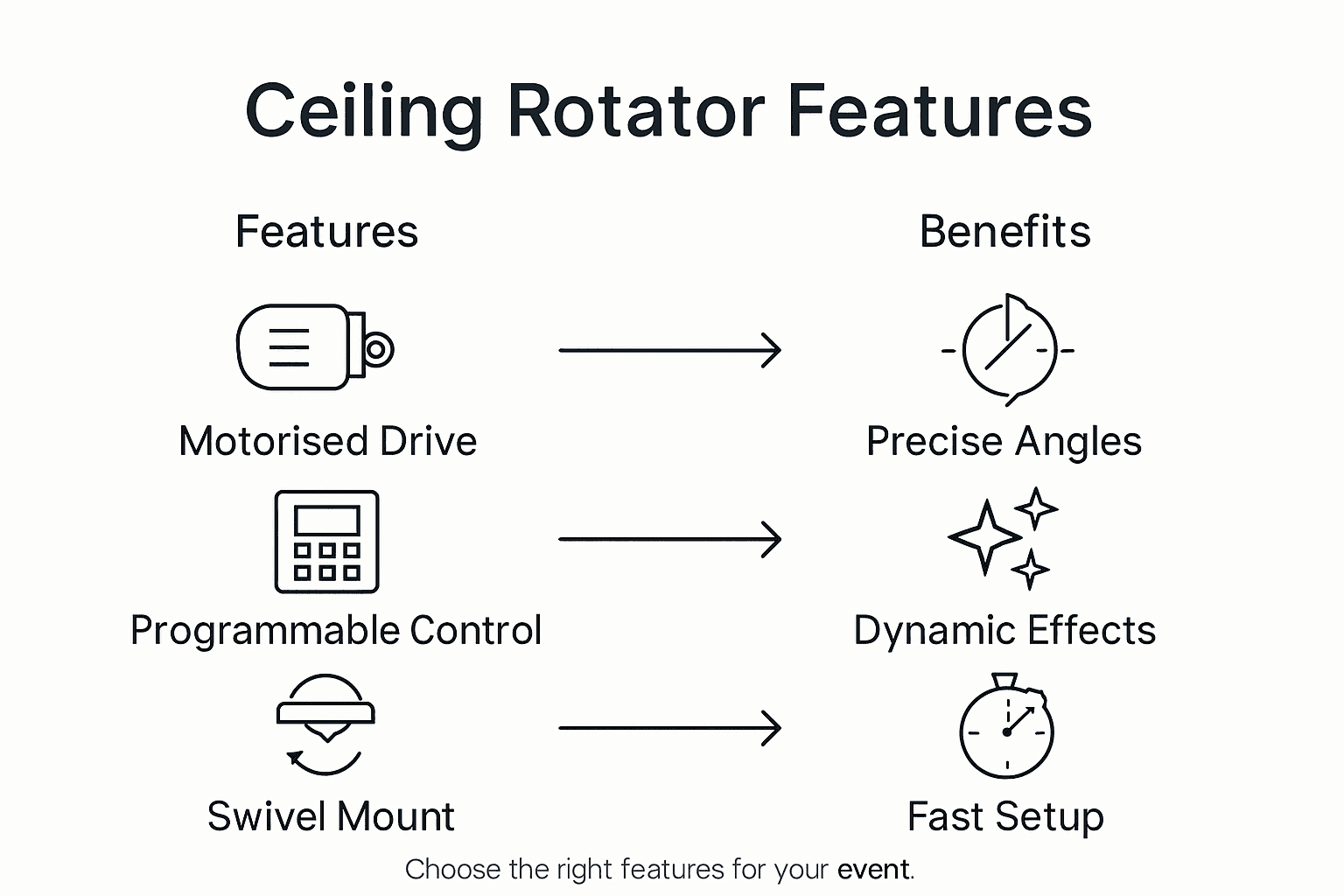
The Institution of Lighting Professionals outlines comprehensive technical specifications for advanced rotator systems, including critical features such as motor configurations, control interfaces, and mechanical tolerances. Professional ceiling rotators typically incorporate either alternating current (AC) or direct current (DC) motors, with sophisticated control systems enabling multiple operational modes. These include manual positioning, automated programming, and integration with complex DMX lighting networks. Key electrical specifications involve voltage requirements, power consumption, and compatibility with standard event venue electrical infrastructures.
Technical performance parameters extend beyond basic electrical specifications. Critical design elements include maximum load-bearing capacity, rotation speed ranges, angular precision, and mechanical durability. Advanced rotators feature precision-engineered mounting systems capable of supporting significant weight while maintaining smooth, controlled movement. Additional sophisticated features might encompass programmable rotation patterns, remote control capabilities, integrated safety sensors, and real-time diagnostic monitoring systems that prevent potential mechanical failures during live event performances.
Below is a summary of essential technical features and their event impact:
| Feature | What It Provides | Event Benefit |
|---|---|---|
| Variable rotation speed | Smooth lighting transitions | Enhanced audience engagement |
| Programmable patterns | Automated, repeatable movements | Greater creative control |
| Weight capacity | Supports various fixture sizes | Safe operation for heavy equipment |
| Precision control | Accurate angular positioning | Consistent visual effects every event |
Pro tip: Always verify the precise technical specifications of your ceiling rotator against your specific venue’s electrical and structural requirements to ensure seamless integration and optimal performance.
Installation, Safety And Legal Standards UK
Legal compliance is the cornerstone of professional ceiling rotator installation in event venues across the United Kingdom. Event organisers and technical professionals must navigate a complex landscape of regulatory requirements to ensure safe and lawful equipment deployment.
The UK’s Lifting Operations and Lifting Equipment Regulations (LOLER) establish comprehensive guidelines for installing and maintaining ceiling rotators. These regulations mandate rigorous protocols including mandatory load testing, regular professional inspections, and detailed documentation of equipment usage. Specifically, event venues must ensure that all ceiling rotators are installed by certified technicians, undergo annual comprehensive examinations, and maintain meticulous records demonstrating ongoing safety and mechanical integrity.
Beyond initial installation, the Provision and Use of Work Equipment Regulations (PUWER) impose additional critical requirements for ongoing equipment management. These regulations compel venue managers to conduct thorough risk assessments, provide comprehensive operator training, and develop systematic maintenance programmes. Key legal obligations include verifying equipment suitability for specific environmental conditions, implementing emergency shutdown protocols, and ensuring that all operators possess appropriate technical competence and safety awareness.
Pro tip: Maintain a comprehensive logbook documenting every inspection, maintenance procedure, and technical modification for your ceiling rotator to demonstrate ongoing regulatory compliance and protect your venue’s operational licence.
Costs, Common Mistakes And Best Practices
Navigating the financial and technical landscape of ceiling rotator installations requires careful strategic planning and comprehensive understanding of potential pitfalls. Event professionals must balance technical requirements with budgetary constraints while maintaining the highest standards of safety and performance.
The comprehensive financial considerations for event lighting equipment reveal multiple layers of investment beyond initial purchase. Total cost of ownership encompasses equipment procurement, professional installation, ongoing maintenance, safety certifications, and potential system upgrades. Typical budget allocations range from £500 to £5,000 depending on venue size, rotator complexity, and specific technical requirements. Common financial mistakes include underestimating installation costs, neglecting maintenance budgets, and failing to factor in potential equipment recalibration or replacement expenses.
Technical best practices centre on comprehensive risk management and systematic approach to equipment selection and deployment. Critical considerations include verifying load-bearing capacities, ensuring electrical compatibility, implementing robust training programmes for technical staff, and maintaining meticulous documentation of equipment performance. Event venues must prioritise professional installation by certified technicians, conduct regular comprehensive inspections, and develop clear operational protocols that minimise potential mechanical failures or safety risks.
Pro tip: Create a comprehensive spreadsheet tracking all ceiling rotator-related expenses, including initial purchase, installation, annual maintenance, and potential replacement costs, to maintain precise financial control and budgetary transparency.
Elevate Your Event Lighting with Expert Mirror Ball Solutions
Creating dynamic and unforgettable event lighting often hinges on how well your ceiling rotators and mirror balls work together. This article highlights the importance of precise rotation, weight-bearing capacity, and programmable control for overhead fixtures. Many venues struggle with finding high-quality mirror balls that perfectly match the technical demands of their ceiling rotators while ensuring compliance with safety standards and delivering stunning visual effects.
At Mirror Balls, we understand these challenges deeply. We offer a wide range of professional-grade mirror balls designed for use with ceiling rotators in nightclubs, theatres, and formal venues. Our products combine robust construction with elegant aesthetics, making them ideal for creating the dynamic lighting experiences that your audience expects. Plus, with our detailed product descriptions and expert support, you can confidently select mirror balls that meet your venue’s technical specifications and safety regulations.
Discover how our extensive collection can transform your space by integrating perfectly with your ceiling rotator setup. Visit Mirror Balls today and take the first step towards delivering breathtaking event lighting that captivates your guests from the ceiling down.
Frequently Asked Questions
What is a ceiling rotator?
A ceiling rotator is a motor-driven device designed to rotate overhead lighting fixtures and decorative elements in event venues, enabling dynamic visual experiences for audiences.
How do ceiling rotators operate safely?
Ceiling rotators must adhere to strict safety protocols, including comprehensive pre-event inspections, weight distribution calculations, and the implementation of emergency stop mechanisms to ensure safe operation during events.
What are the different types of ceiling rotators available?
The main types of ceiling rotators include manual, motorised, and programmable systems. Manual rotators require human control, while motorised rotators automate movement. Programmable rotators allow technicians to pre-set complex movement patterns for synchronized displays.
What features should I consider when choosing a ceiling rotator?
Key features to consider when selecting a ceiling rotator include its maximum load-bearing capacity, variable rotation speeds, precision control capabilities, and whether it supports automated programming for enhanced creative control.