Most British nightclubs and theatres rely on mirror balls to create captivating atmospheres, yet only a handful achieve truly immersive lighting effects using advanced light diffusion techniques. For venue managers and event planners, mastering diffusion unlocks the secret to transforming harsh beams into soft, mesmerising radiance that elevates any event. This guide reveals practical approaches to light control, helping you craft elegant environments that delight every audience.
Table of Contents
- Light Diffusion And Its Core Principles
- Types Of Light Diffusion In Event Settings
- How Diffusion Works With Mirror Balls
- Technique Choices For Effective Diffusion
- Mistakes To Avoid In Venue Installations
Key Takeaways
| Point | Details |
|---|---|
| Understanding Light Diffusion | Light diffusion transforms harsh light into soft illumination through scattering, enhancing visual comfort and controlling glare. |
| Types of Diffusion Techniques | There are three primary types: transmission, reflection, and refraction, each offering unique advantages for event settings. |
| Importance of Strategic Planning | Proper installation requires meticulous venue assessments and avoiding common mistakes to ensure successful lighting designs. |
| Experimenting with Techniques | Layering diffusion methods and materials can create multidimensional lighting effects that adapt to various event atmospheres. |
Light Diffusion and Its Core Principles
Light diffusion represents a sophisticated optical phenomenon where incident light is systematically scattered and redistributed, transforming harsh illumination into soft, uniform radiance. Unlike direct light transmission, diffusion involves complex interactions between light particles and surrounding media, producing elegant, gentle illumination.
The core principles of light diffusion centre on understanding how electromagnetic waves interact with various materials. When light encounters particles or boundaries, it undergoes scattering mechanisms that fundamentally alter its directional properties. These interactions determine how light spreads, creating a nuanced effect that softens shadows, reduces glare, and generates visually pleasing illumination environments. Professional event designers and theatrical lighting experts leverage these principles to craft immersive atmospheric experiences.
Key characteristics of light diffusion include:
- Uniform light distribution
- Reduced direct light intensity
- Minimised harsh shadows
- Enhanced visual comfort
- Controlled illumination spread
Professional lighting technicians recognise that light diffusion prevents direct focused transmission, enabling more sophisticated control over environmental luminosity. By strategically managing light scattering, practitioners can transform stark, aggressive lighting into gentle, enveloping radiance.
Pro tip: When selecting diffusion materials, consider the specific light transmission percentage and material transparency to achieve your desired atmospheric effect.
Types of Light Diffusion in Event Settings
Light diffusion in event settings encompasses sophisticated techniques that transform raw illumination into nuanced, atmospheric experiences. Volume and surface-relief diffusers represent two fundamental approaches professional event designers employ to manipulate light quality, each offering unique methods for softening and redistributing illumination.
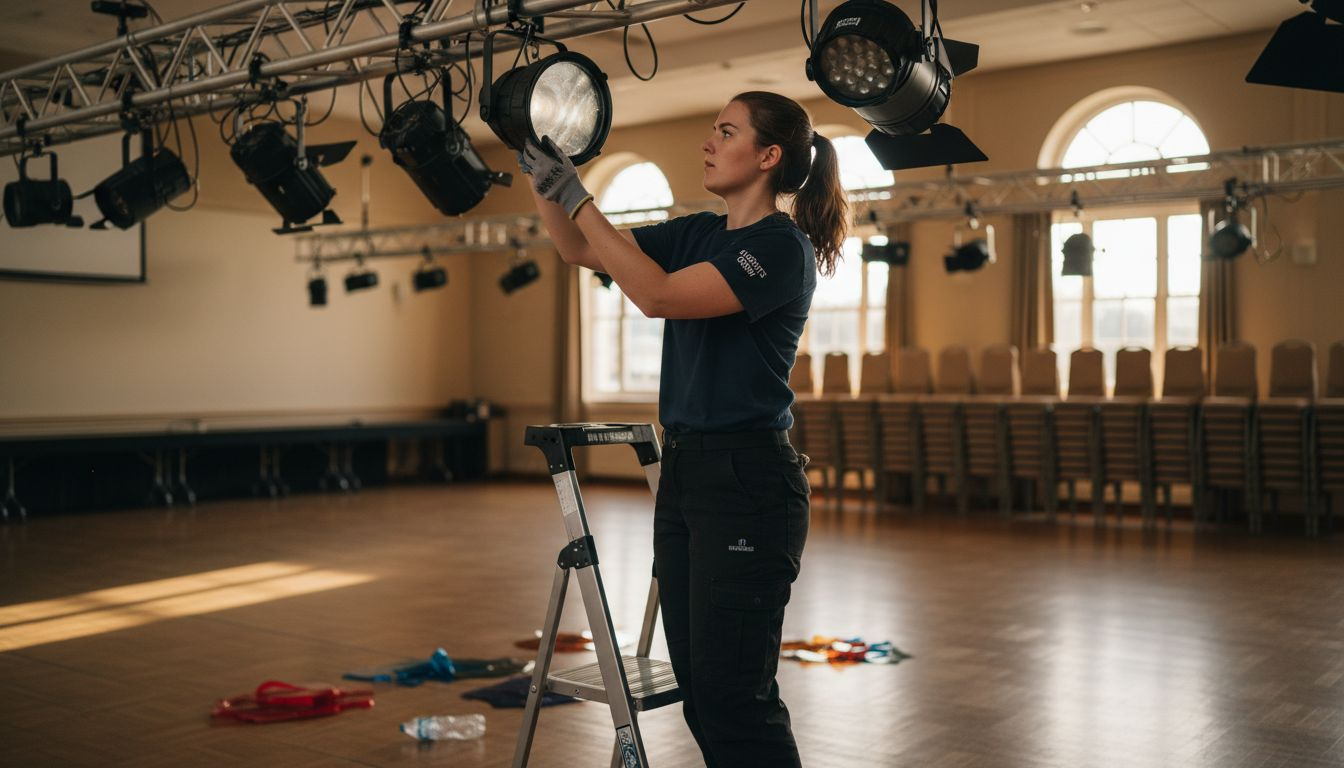
Professional lighting technicians typically work with three primary diffusion types: transmission, reflection, and refraction. Transmission diffusion involves light passing through translucent materials, creating soft, dispersed illumination that reduces harsh shadows and eliminates direct glare. This technique proves particularly effective in theatrical productions and corporate events where visual comfort is paramount.
Diffusion techniques can be categorised as follows:
Transmission Diffusion
- Light passes through translucent materials
- Produces soft, even illumination
- Ideal for reducing direct light intensity
Reflection Diffusion
- Light scattered from surface interactions
- Creates ambient, indirect lighting
- Enhances depth and texture in event spaces
Refraction Diffusion
- Light bends and scatters between optical mediums
- Generates complex light patterns
- Provides dynamic lighting effects
By understanding and strategically implementing these diffusion methods, event designers can dramatically transform atmospheric environments, turning ordinary spaces into extraordinary experiences that captivate and engage audiences.
Pro tip: Experiment with multiple diffusion techniques and layering to create sophisticated, multidimensional lighting designs that adapt to different event moods and requirements.
The following table compares common light diffusion techniques used in event settings:
| Diffusion Technique | Typical Uses | Main Advantage |
|---|---|---|
| Transmission Diffusion | Stage and conference halls | Reduces sharp glare |
| Reflection Diffusion | Art installations, ballrooms | Enhances ambience and depth |
| Refraction Diffusion | Concerts, themed events | Produces dynamic effects |
How Diffusion Works With Mirror Balls
Mirror balls represent a sophisticated tool for light manipulation, transforming ordinary illumination into dynamic, multidimensional visual experiences. Advanced diffusion models simulate complex light interactions with reflective surfaces, enabling event designers to create stunning atmospheric effects that captivate audiences.
The physical mechanism of light diffusion through mirror balls involves intricate optical principles. When a focused light source strikes the ball’s highly polished surface, each individual mirrored facet reflects light at a slightly different angle, creating a scattered, omnidirectional light distribution. This unique characteristic breaks up concentrated light beams, casting countless small light fragments across walls, floors, and surrounding spaces, generating a mesmerising, shimmering effect that adds depth and movement to event environments.
Key interactions between light and mirror balls include:
- Reflection Angles: Each mirrored surface segment reflects light independently
- Scatter Patterns: Light fragments spread across multiple directions
- Intensity Distribution: Uniform light dispersion across the venue
- Spatial Dynamics: Creating visual rhythm and energy
Event lighting professionals strategically position mirror balls to maximise their diffusive potential, understanding that their true magic lies in transforming rigid, directional illumination into fluid, dynamic visual landscapes. By carefully considering factors such as light source intensity, ball diameter, and surrounding surface characteristics, designers can craft immersive lighting experiences that transcend traditional illumination approaches.
Pro tip: Experiment with multiple light sources and mirror ball positions to discover unique diffusion patterns that create unexpected and captivating visual textures.
Technique Choices for Effective Diffusion
Event lighting professionals have a sophisticated arsenal of diffusion techniques to elevate lighting design, transforming raw illumination into nuanced atmospheric experiences. Understanding these techniques allows designers to manipulate light quality, creating immersive environments that engage and captivate audiences.
Diverse diffusion materials offer unique light manipulation strategies, each providing distinct characteristics for event lighting. Professionals can select from an array of options including paper-lined shadow boxes, woven fabrics, frosted glass, acrylic panels, and specialised filters that scatter and soften light, enabling precise control over illumination quality and mood.
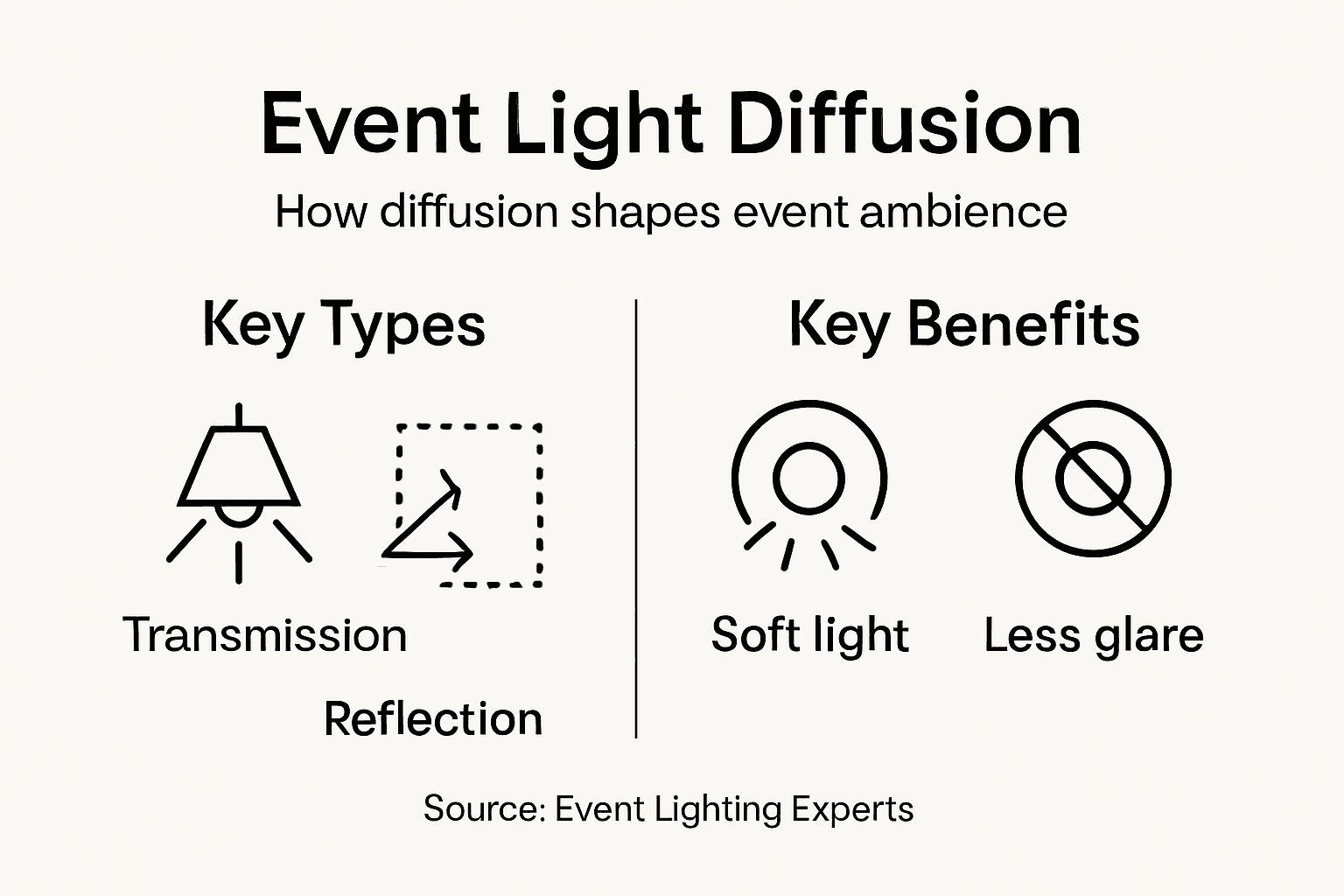
Key diffusion technique categories include:
Filtering Techniques
- Colour-based light modification
- Shadow softening
- Contrast management
- Mood creation
Material-Based Approaches
- Translucent fabric layers
- Frosted glass panels
- 3D-printed diffuser structures
- Textured acrylic surfaces
Layering Strategies
- Combining multiple diffusion methods
- Mixing light sources
- Creating depth and complexity
- Developing unique visual textures
Successful event lighting requires a nuanced understanding of how different materials and techniques interact, allowing designers to craft dynamic, responsive lighting environments that adapt to changing emotional and atmospheric requirements.
Pro tip: Experiment with layering different diffusion materials and techniques to develop a signature lighting approach that sets your event design apart from standard implementations.
Mistakes To Avoid in Venue Installations
Event lighting requires meticulous planning, and understanding potential pitfalls is crucial for creating exceptional atmospheric experiences. Common venue lighting mistakes can dramatically compromise design quality, transforming potentially stunning installations into technical nightmares that undermine the entire event’s visual aesthetic.
Professional lighting designers must navigate a complex landscape of technical and creative challenges. Critical errors often stem from insufficient preparation, including inadequate venue assessment, poor fixture selection, and neglecting fundamental optical principles. These oversights can lead to uneven light distribution, harsh shadows, compromised safety, and ultimately, a disappointing audience experience that fails to capture the intended emotional ambience.
Key mistakes to avoid during venue installations include:
Technical Errors
- Ignoring unique venue architectural features
- Overlooking natural light interactions
- Insufficient light source planning
- Inadequate safety equipment placement
- Poor fixture mounting techniques
Design Considerations
- Failing to create layered lighting schemes
- Neglecting colour temperature variations
- Underestimating beam angle requirements
- Disregarding audience sightlines
- Overlooking electrical load limitations
Strategic Missteps
- Random fixture placement
- Insufficient power distribution planning
- Ignoring potential glare zones
- Limited understanding of light diffusion principles
- Neglecting backup lighting strategies
Successful venue lighting demands a holistic approach that balances technical precision with creative vision, requiring continuous learning and adaptability from lighting professionals.
Here is a quick reference table outlining typical mistakes and their impacts in venue lighting installations:
| Mistake Type | Example Issue | Potential Impact |
|---|---|---|
| Technical Blunder | Poor fixture mounting | Safety risk and uneven lighting |
| Design Oversight | Ignoring colour temperature | Inconsistent mood or atmosphere |
| Strategic Error | Insufficient power distribution | Lights failing during the event |
Pro tip: Always conduct a comprehensive venue site survey and create a detailed lighting plot before installation to mitigate potential technical and design complications.
Enhance Your Event Ambience with Expert Light Diffusion and Mirror Balls
Creating the perfect atmosphere for your event requires mastering light diffusion techniques that soften harsh illumination and add captivating movement. As explored in “What Is Light Diffusion? Transforming Event Ambience” light diffusion transforms direct light into gentle, immersive radiance that reduces glare and enhances visual comfort. The challenge event designers face is achieving this nuanced lighting effect that blends technology with artistic vision.
Discover how high-quality mirror balls and accessories can become your go-to solution for dynamic light diffusion. Each mirror ball scatters light exquisitely, creating the shimmering, multidirectional glow that elevates your venue ambience effortlessly. Whether you seek a small glitter ball for home use or a professional-grade mirror ball for theatres and nightclubs, Mirror Balls offers expertly curated options designed for diverse scales and budgets. Embrace sophisticated diffusion techniques in your event design by exploring our extensive range and advice at Mirror Balls. Start transforming your event lighting today and create immersive, unforgettable atmospheres that truly captivate guests.
Frequently Asked Questions
What is light diffusion?
Light diffusion is the process of scattering and redistributing light, transforming harsh illumination into soft, uniform radiance through interactions with various materials.
How does light diffusion benefit event lighting?
Light diffusion enhances visual comfort by minimising glare, reducing harsh shadows, and providing a more even distribution of light, creating a more immersive and inviting environment.
What are the main types of light diffusion techniques used in events?
The primary types of light diffusion techniques include transmission diffusion (light passing through translucent materials), reflection diffusion (light scattered from surfaces), and refraction diffusion (light bending between optical mediums).
What mistakes should be avoided when implementing light diffusion in event venues?
Common mistakes include ignoring architectural features, not assessing natural light interactions, insufficient planning for light source distribution, and neglecting to create layered lighting schemes.