Reflective surfaces have captivated people for generations, yet few realize that polished obsidian mirrors trace back over 6,000 years. This fascination paved the way for mirror balls, which blend ancient curiosity with modern engineering. More than a relic of disco, these shimmering spheres have transformed everything from sacred rituals to blockbuster dance floors. Discover how mirror balls evolved from primitive artifacts into powerful icons that shape light, culture, and unforgettable moments.
Table of Contents
- Origins And Early Use Of Mirror Balls
- Evolution Through Nightlife And Ballrooms
- Cultural Significance And Iconic Moments
- Technological Advances And Design Changes
- Modern Uses In Events And Entertainment
Key Takeaways
| Point | Details |
|---|---|
| Historical Evolution | Mirror balls originated from ancient reflective technologies, evolving through significant advancements in glass-making and artistic expression over millennia. |
| Cultural Impact | Primarily associated with the disco era, mirror balls symbolize cultural movements, representing freedom and collective joy in social spaces. |
| Technological Advances | Modern mirror balls incorporate sophisticated manufacturing techniques, enhancing their functionality and versatility in diverse entertainment applications. |
| Contemporary Applications | Today, mirror balls are utilized in various contexts, including weddings, theatrical productions, and corporate events, elevating visual aesthetics and creating immersive experiences. |
Origins and Early Use of Mirror Balls
Reflective surfaces have fascinated humans for millennia, with archaeological evidence suggesting an intricate history of mirrored objects predating modern mirror balls by thousands of years. According to Brown University, polished obsidian surfaces represent the earliest known ‘mirrors’ in human history, dating back to approximately 4000 BCE. These primitive reflective tools demonstrate humanity’s long-standing desire to capture and manipulate light.
The evolution of reflective technologies progressed slowly. As Cooper Hewitt Museum documents, glass mirrors emerged as early as the third century A.D., with significant innovations occurring in the 14th century when artisans developed curved, blown glass mirrors. These technological advancements laid crucial groundwork for the decorative and functional mirror balls we recognize today.
Modern mirror balls emerged from this rich historical context, combining artistic creativity with optical engineering. Their design reflects multiple technological and cultural influences: theatrical lighting techniques, disco culture of the 1970s, and sophisticated light manipulation principles. By fragmenting and reflecting light across spaces, mirror balls transformed entertainment environments, creating immersive visual experiences that transcended traditional lighting approaches.
Key milestones in mirror ball development include:
- Early glass mirror experiments in medieval Europe
- Theatrical lighting innovations in the late 19th century
- Nightclub and dance culture popularization in the 1960s and 1970s
- Advanced precision manufacturing techniques enabling more complex reflective surfaces
For deeper insights into how these remarkable objects manipulate light, explore our Complete Guide to How Mirror Balls Diffuse Light.
Evolution Through Nightlife and Ballrooms
The transformation of mirror balls from simple reflective objects to cultural icons traces a fascinating journey through entertainment spaces, particularly in nightlife and ballroom settings. During the 18th century, significant advancements in glass manufacturing set the stage for more sophisticated reflective technologies. As Cooper Hewitt Museum documents, glass-making techniques evolved to produce thin panes of uniform thickness, enabling highly reflective surfaces with minimal distortion.
Earlier mirror-making techniques were remarkably intricate. Kent DeLord House reveals that during the early Renaissance, artisans developed complex fire-gilding methods involving tin-mercury amalgams to create even, highly reflective glass coatings. These sophisticated techniques laid critical groundwork for the precision engineering behind modern mirror balls.
The mid-20th century marked a pivotal moment for mirror balls, as they transitioned from decorative objects to central features of dance and entertainment culture. Nightclubs and discotheques in the 1960s and 1970s embraced mirror balls as quintessential elements of immersive lighting design. Their ability to fragment and scatter light across dance floors created mesmerizing visual experiences, transforming ordinary spaces into dynamic, pulsating environments.
Key cultural developments in mirror ball evolution included:
- Integration into jazz and swing dance halls in the 1940s
- Prominent role in disco culture during the 1970s
- Adoption in theatrical and concert lighting designs
- Expansion beyond entertainment into architectural and decorative applications
For a comprehensive understanding of how these remarkable objects manipulate light, explore our Mirror Balls for Events Guide.
Cultural Significance and Iconic Moments
Reflective objects have held profound cultural significance across civilizations, far beyond mere decorative purposes. Cambridge University research reveals that ancient Maya cultures considered mirrors as complex artifacts with deep symbolic meaning, suggesting reflective surfaces were more than simple technological innovations.
In some ancient societies, reflective objects played ritualistic and spiritual roles. Archaeological findings from Cambridge University demonstrate that at Kaminaljuyu, reflective objects were integral to ballgame player equipment, indicating their significance extended beyond visual entertainment into cultural and potentially ceremonial domains.
In modern contexts, mirror balls represent more than lighting technology – they symbolize cultural movements and social transformations. The disco era of the 1970s transformed these objects into powerful cultural icons, representing liberation, self-expression, and collective joy. Nightclubs became spaces where mirror balls represented freedom, breaking traditional social boundaries through music, dance, and immersive lighting experiences.
Significant cultural moments featuring mirror balls include:
- Studio 54’s legendary disco nights in New York City
- Saturday Night Fever film popularizing disco culture
- New Wave and punk music scenes adopting mirror ball aesthetics
- Contemporary art installations exploring light and reflection
For deeper insights into the fascinating world of mirror ball design, explore our How Mirror Balls Work Guide.
Technological Advances and Design Changes
The evolution of mirror ball technology represents a fascinating journey of scientific innovation and artistic expression. A critical turning point came in 1835, when significant advancements transformed reflective surface manufacturing. Cooper Hewitt Museum documents that the development of a thin silver nitrate layer on glass revolutionized mirror production, making these reflective objects dramatically more accessible and affordable for the first time in history.
German chemist Justus von Liebig played a pivotal role in this technological transformation. As Kent DeLord House explains, his wet deposition process involved chemically reducing silver nitrate to create a thin metallic silver layer on glass. This breakthrough meant mirror production could shift from being a rare, expensive craft to a scalable manufacturing process, dramatically expanding their potential applications.
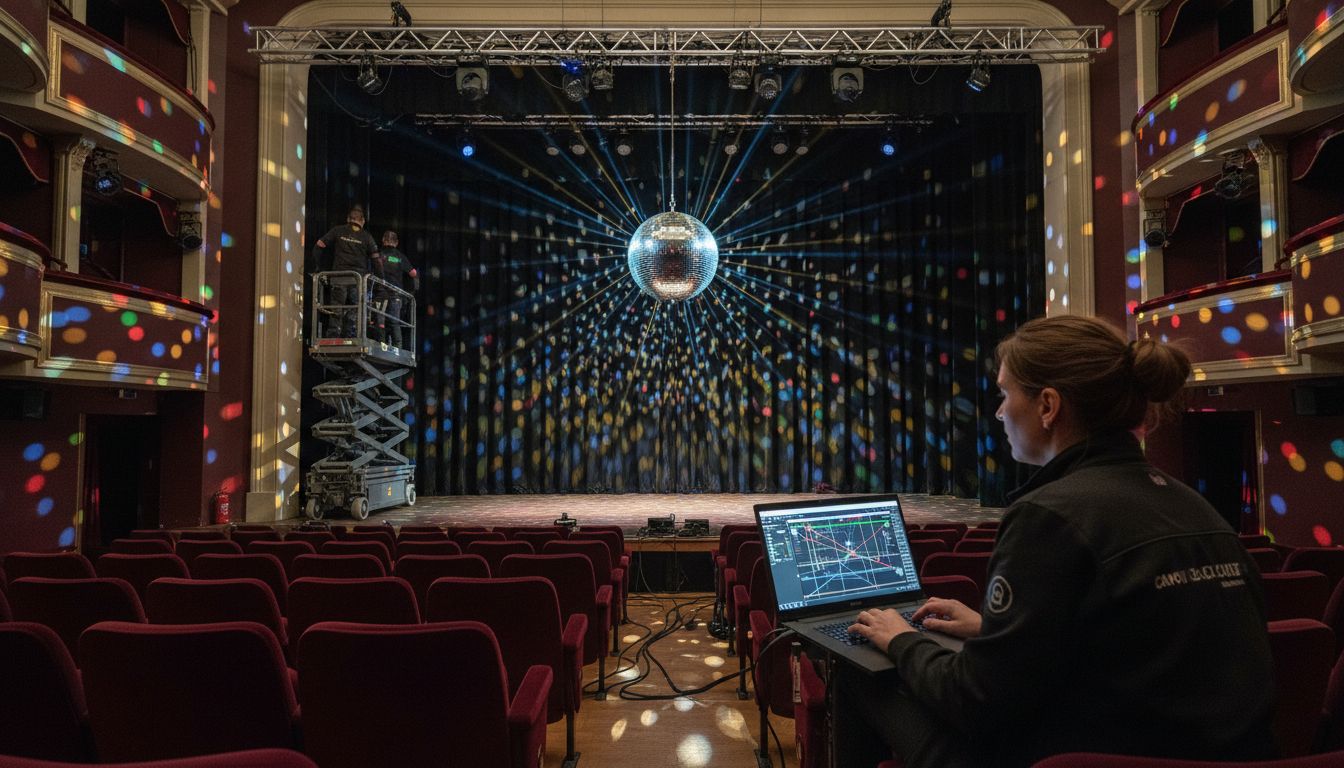
Modern mirror ball design has continued to evolve through advanced materials science and precision engineering. Contemporary mirror balls now incorporate sophisticated techniques like computer-aided design, laser cutting for precise facet creation, and lightweight materials that enable larger, more complex reflective surfaces. These technological innovations have expanded mirror balls from simple dance floor accessories to versatile lighting instruments used in theatrical productions, architectural installations, and cutting-edge entertainment environments.
Key technological milestones in mirror ball development include:
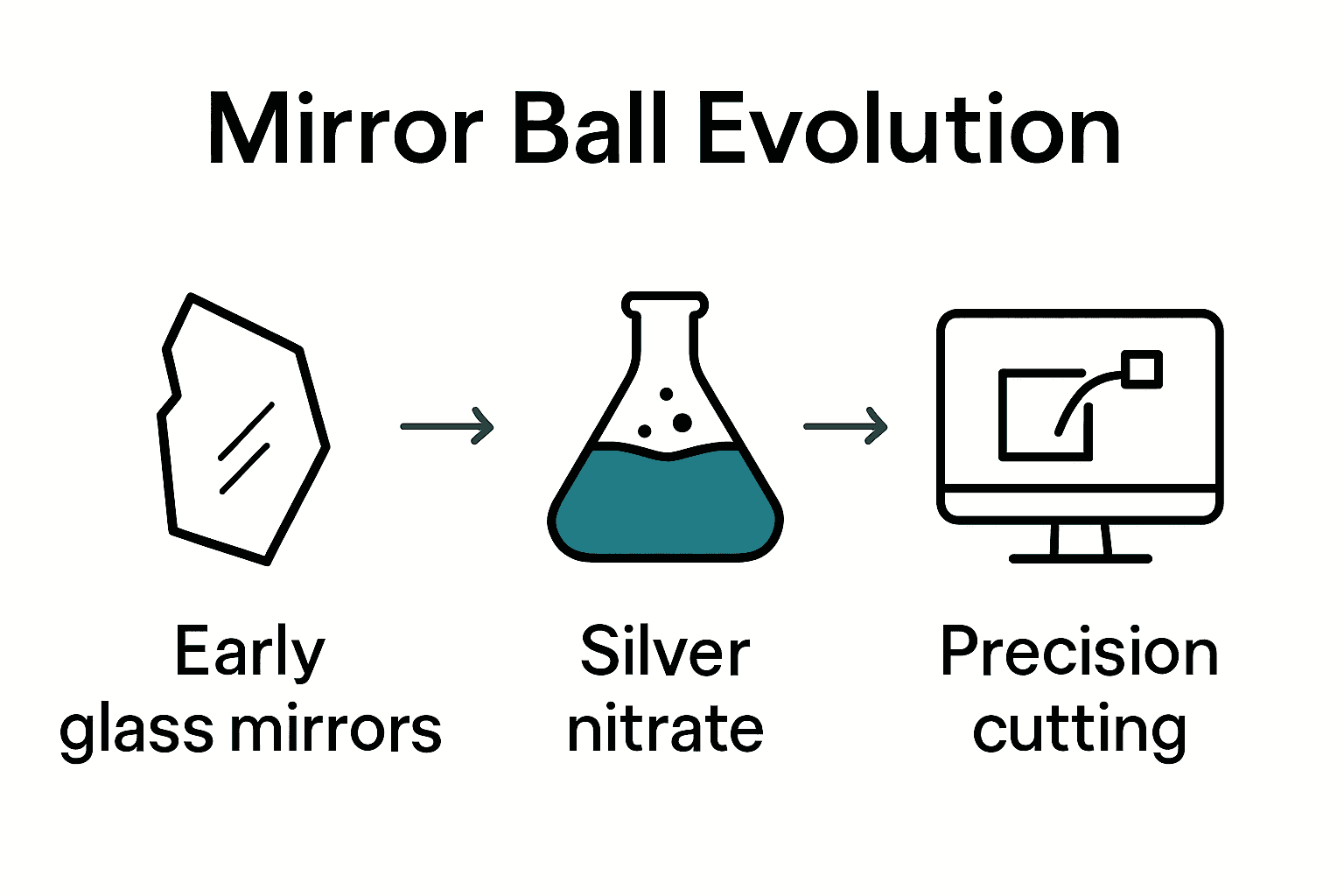
- Introduction of precise computer-controlled cutting techniques
- Development of lightweight, durable synthetic reflective materials
- Advanced coating technologies for enhanced light reflection
- Integration of LED and digital lighting technologies
For a comprehensive exploration of how these remarkable objects manipulate light, explore our Complete Guide to How Mirror Balls Diffuse Light.
Modern Uses in Events and Entertainment
Mirror balls have transcended their disco-era origins to become versatile lighting instruments across numerous entertainment and performance contexts. In dance education, International Association for Dance Medicine & Science research highlights the critical role of reflective surfaces in teaching and performance environments, demonstrating how these objects have become essential tools for artistic expression and technical training.
Contemporary event professionals leverage mirror balls to create transformative atmospheric experiences across diverse settings. From corporate events and weddings to theatrical productions and music festivals, these dynamic lighting instruments can instantly elevate a space’s visual aesthetic. Their ability to fragment and scatter light creates immersive environments that engage audience senses, turning ordinary venues into magical, dynamically lit spaces.
The technical sophistication of modern mirror balls has expanded their applications dramatically. Advanced manufacturing techniques now allow for precision-cut reflective surfaces, computer-controlled lighting integrations, and customizable designs that can be tailored to specific event requirements. These innovations have transformed mirror balls from simple decorative elements into sophisticated lighting technologies capable of creating complex, programmable visual experiences.
Key modern applications of mirror balls include:
- Wedding reception and celebration lighting
- Theatrical and stage production design
- Music festival and concert visual effects
- Corporate event and conference atmospheric enhancement
- Film and television set design
- Photography and video production lighting
For innovative ideas on incorporating mirror balls into your next event, explore our 7 Creative Mirror Ball Uses for Events and Venues.
Discover How History Meets Your Next Event with Premium Mirror Balls
The journey of mirror balls from ancient reflective surfaces to iconic symbols of celebration highlights a timeless desire to captivate and transform spaces through light. If you have been inspired by the rich history and cultural impact detailed in our article, you might be wondering how to bring that enchanting atmosphere into your own venue or event. The challenge often lies in finding the right mirror ball that combines authentic design, technical precision and ease of use to recreate those mesmerizing light effects.
Explore our expertly curated selection at mirror-balls.co.uk, where quality meets tradition to produce stunning disco balls perfect for any occasion. Whether you seek a small glitter ball for home decoration or a professional-grade mirror ball to energise a nightclub or theatre, our range caters to diverse budgets and scales. Dive deeper into the possibilities by visiting our Complete Guide to How Mirror Balls Diffuse Light to understand the science behind the magic. Ready to elevate your event with dazzling reflections and immersive lighting that honour centuries of craftsmanship and celebration? Visit our store today and take the first step in turning history into your own unforgettable experience.
Frequently Asked Questions
What are the historical origins of mirror balls?
Mirror balls have a rich history that traces back to ancient reflective surfaces, such as polished obsidian dating to around 4000 BCE. Their evolution continued with glass mirror innovations in medieval Europe, leading to the decorative functions we see today.
How did mirror balls become cultural icons during the disco era?
During the disco era of the 1970s, mirror balls transformed into symbols of liberation and self-expression, becoming central features in nightclubs. Their ability to scatter light across dance floors created immersive experiences that defined the era’s nightlife.
What technological advancements contributed to the manufacturing of modern mirror balls?
Key advancements include the introduction of silver nitrate layers on glass in 1835, which made mirror production more accessible and affordable, as well as modern techniques like computer-controlled cutting and lightweight materials that enhance their design and functionality.
What are the modern uses of mirror balls in events and entertainment?
Today, mirror balls are used in a variety of settings including weddings, theatrical productions, music festivals, and corporate events. Their ability to create dynamic lighting effects makes them versatile tools for enhancing visual experiences.